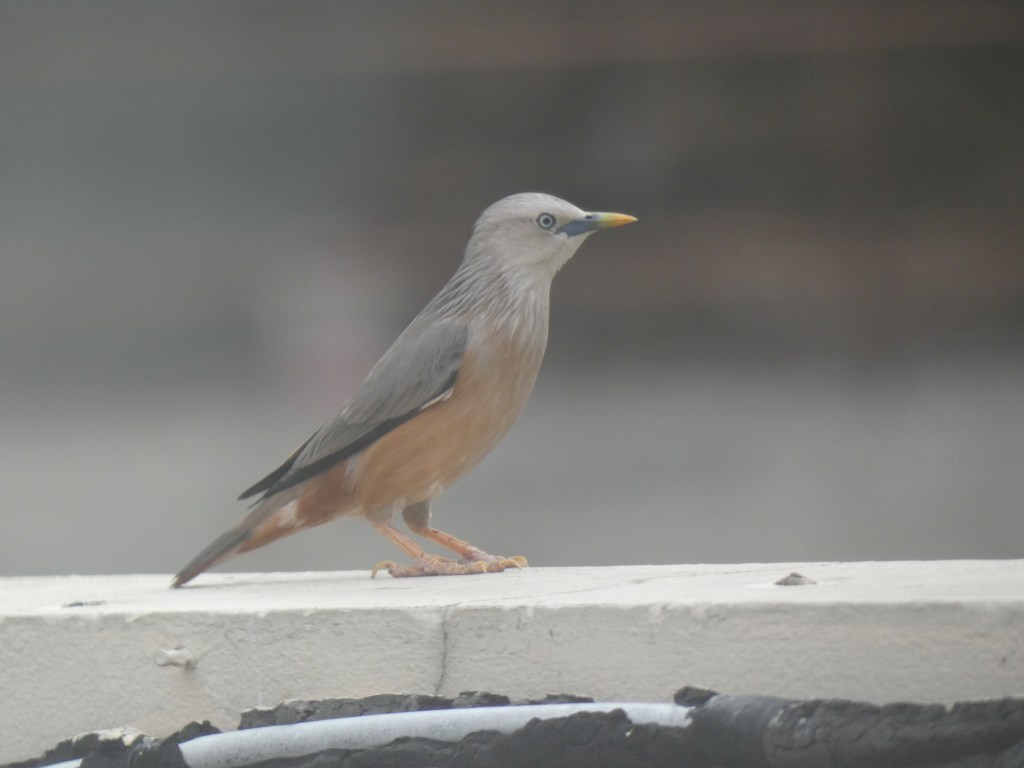
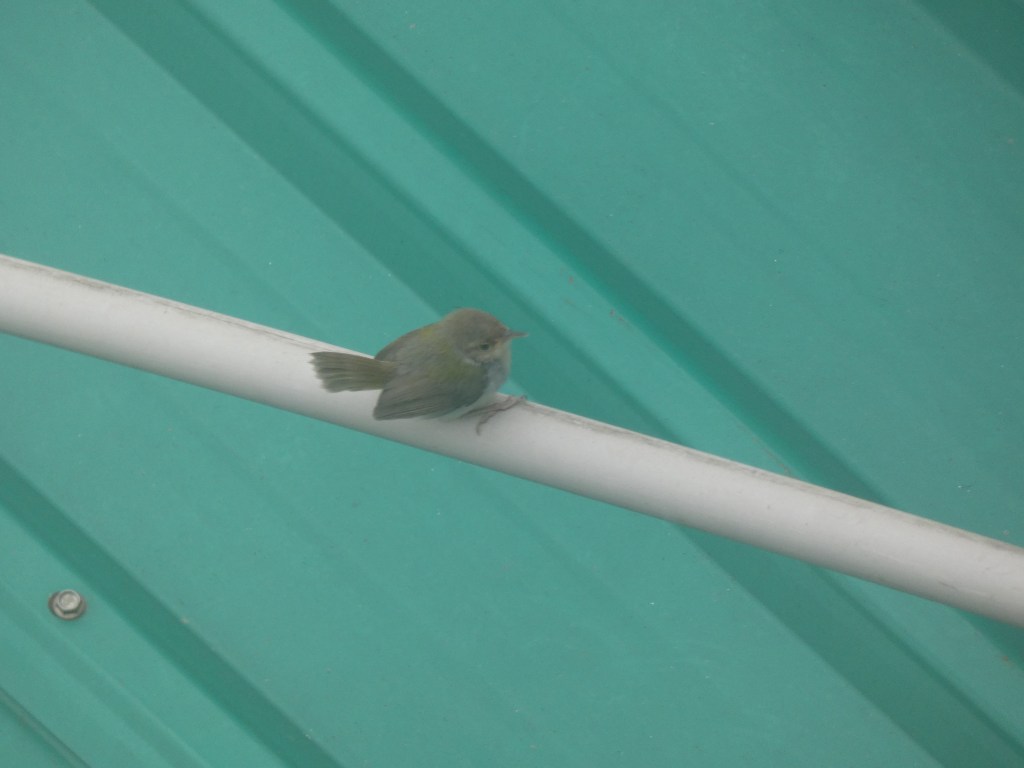
Birding New Vision: Pygmy Geese and a Pheasant-tailed Jacana

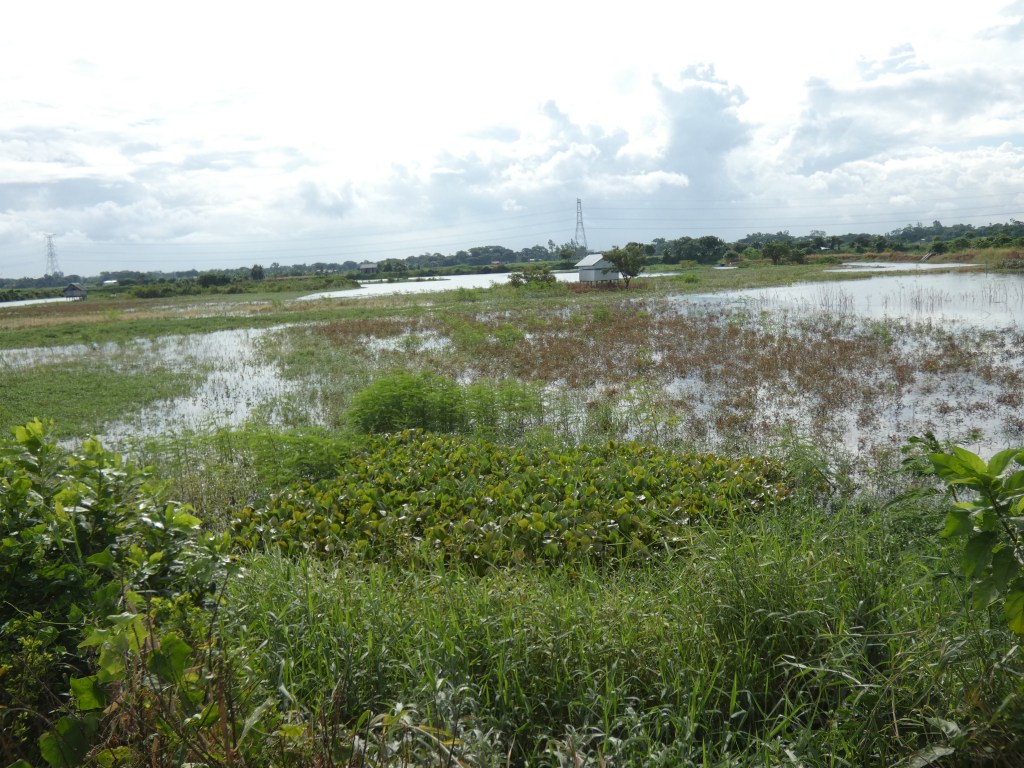
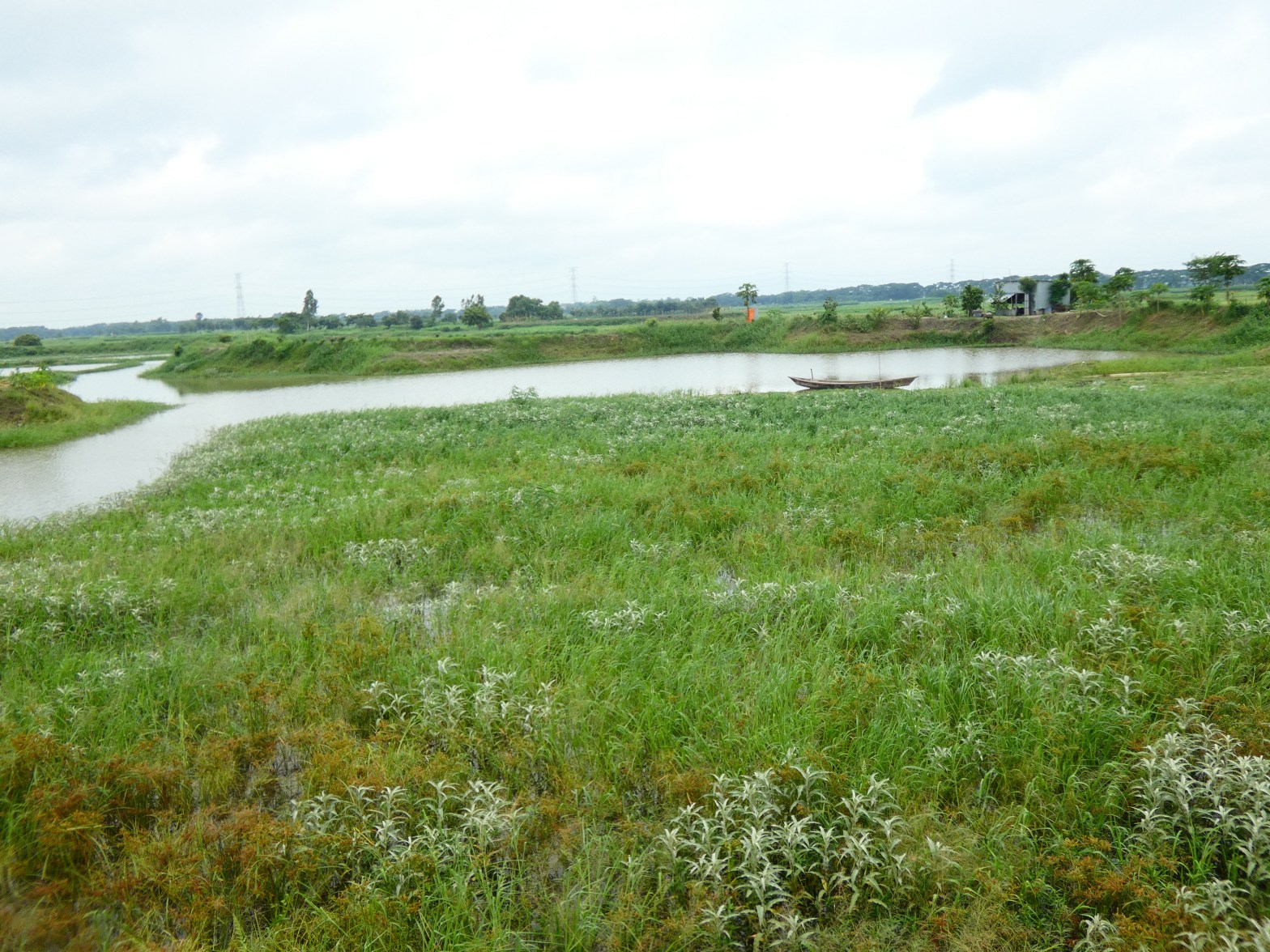
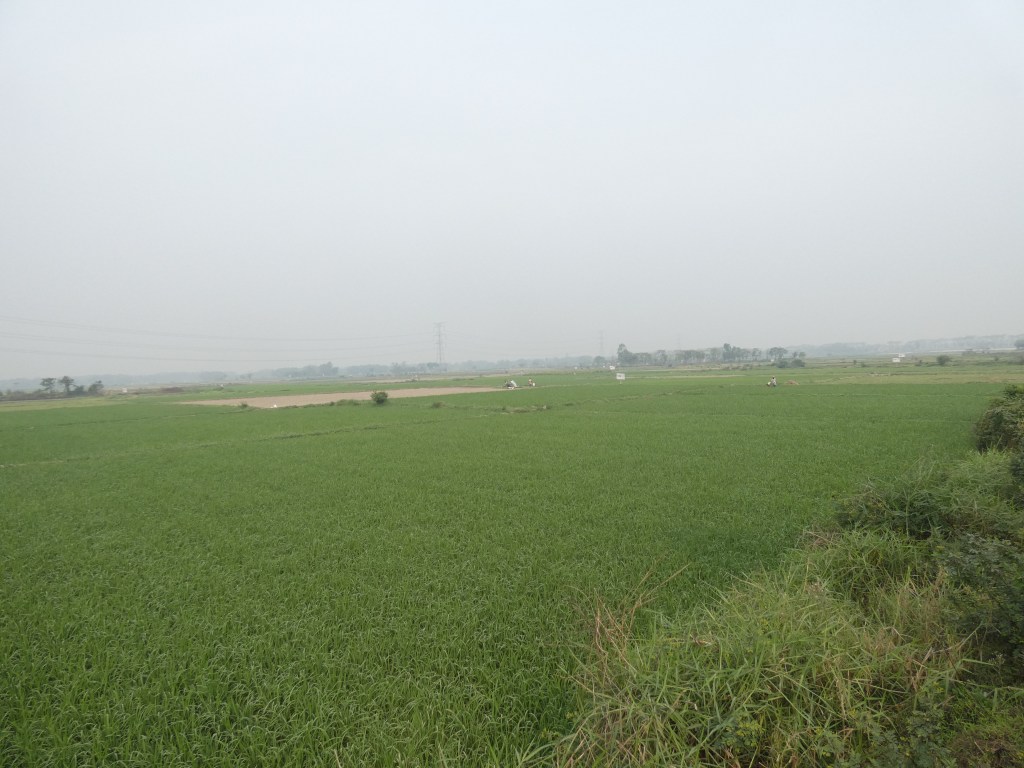
Last weekend Nic and I were joined by our young birding friend Elias Thomas for birding at New Vision. It’s definitely the middle of the monsoons right now, and as soon as we got to New Vision I could see the water level was even higher than the week before. We weren’t expecting too many interesting birds, but we were expecting Black Bittern which would’ve been a year bird for Elias and maybe a Pied Cuckoo which would’ve been a lifer for him.
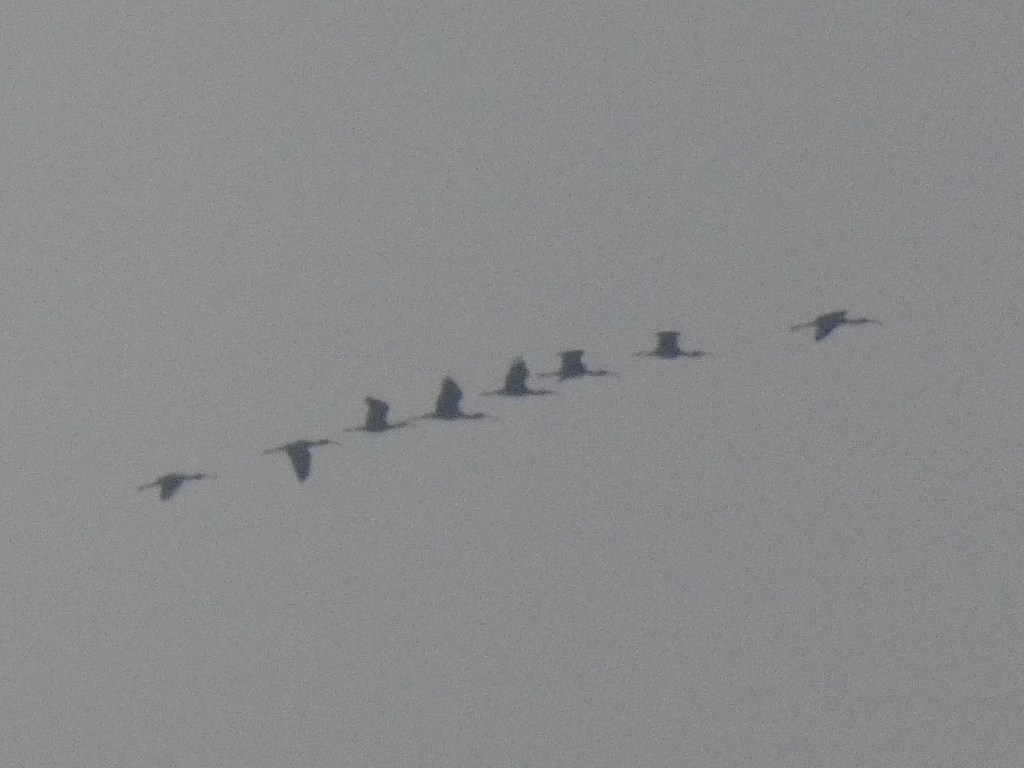
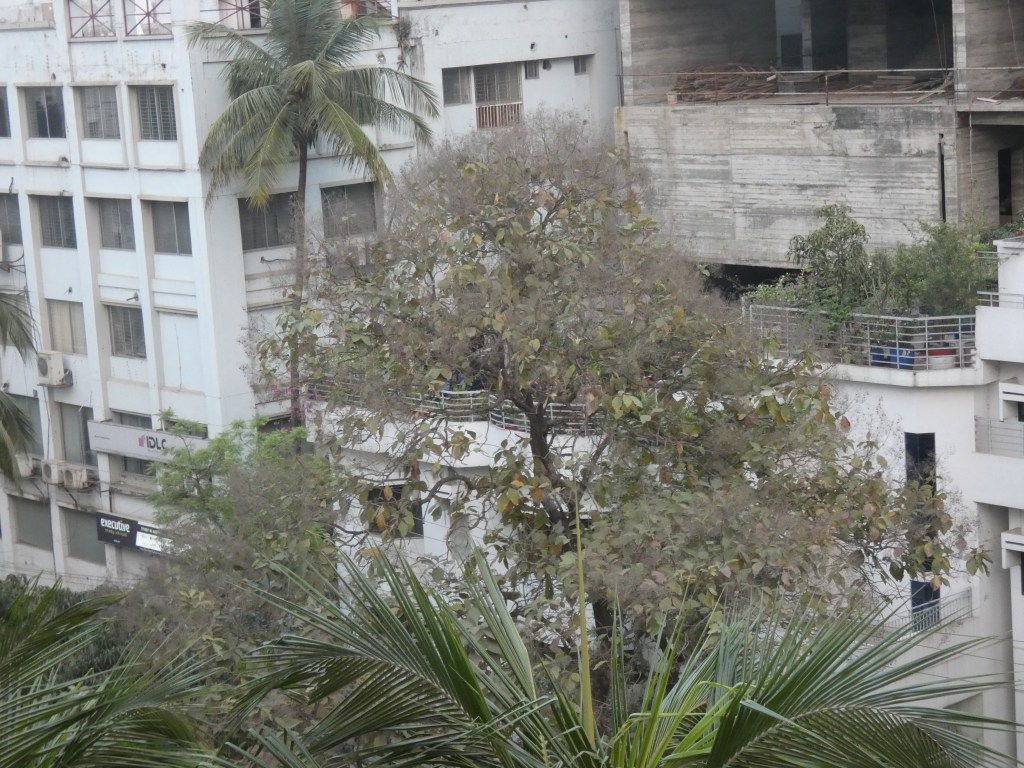
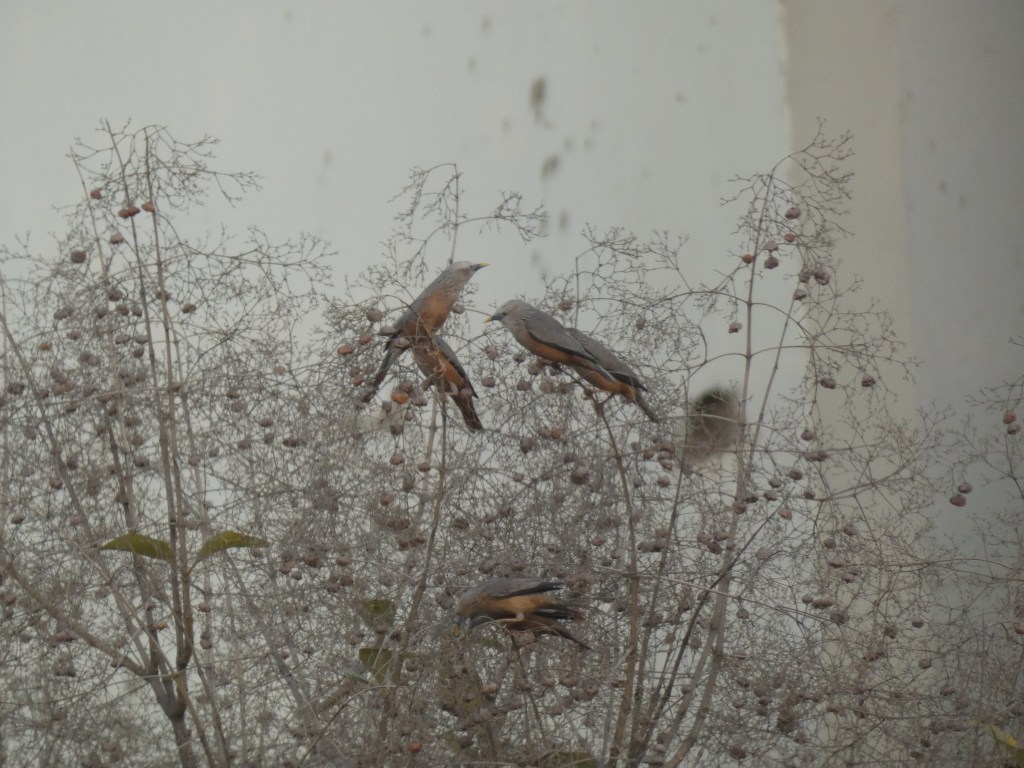
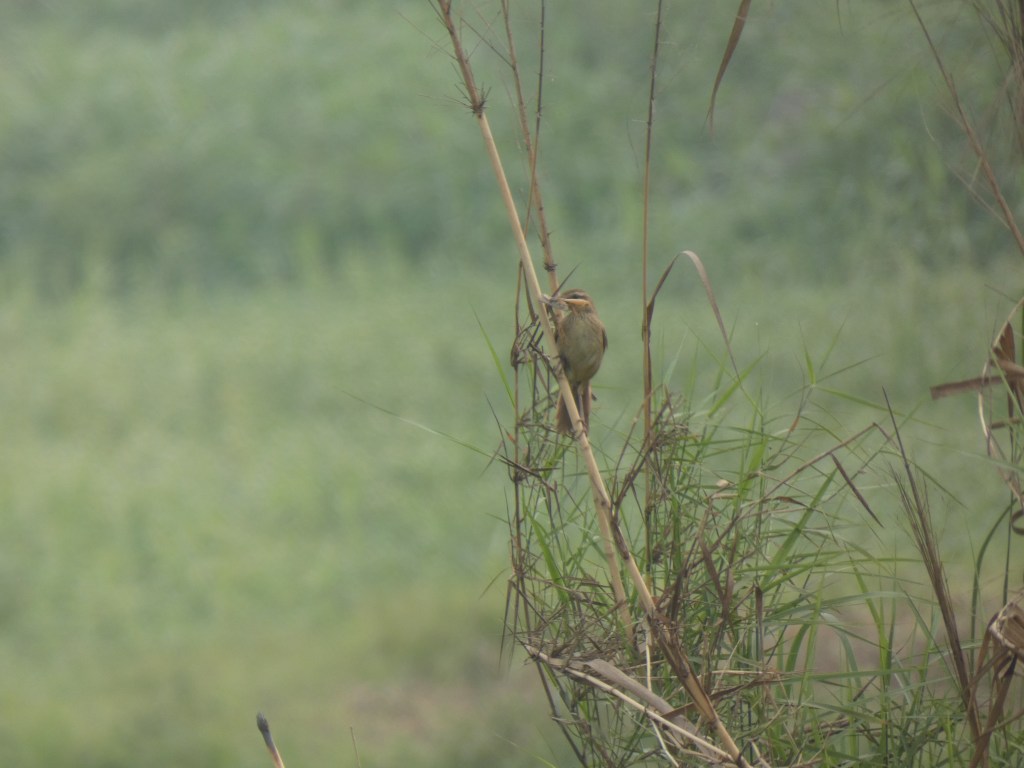
I saw three birds with white on their wings flying out across the water and guessed that they were Asian Pied Starlings, but I realized they were too large and flight style wasn’t right for a starling so I looked through my binos. I was quite surprised to see that it was 3 Cotton Pygmy Geese! I quickly got Nic and Elias onto them before they turned and disappeared to the south east over the trees. Elias was pumped as this was a lifer for him! As far as I can tell this is the first ever sighting of pygmy geese at this hotspot, which is cool!
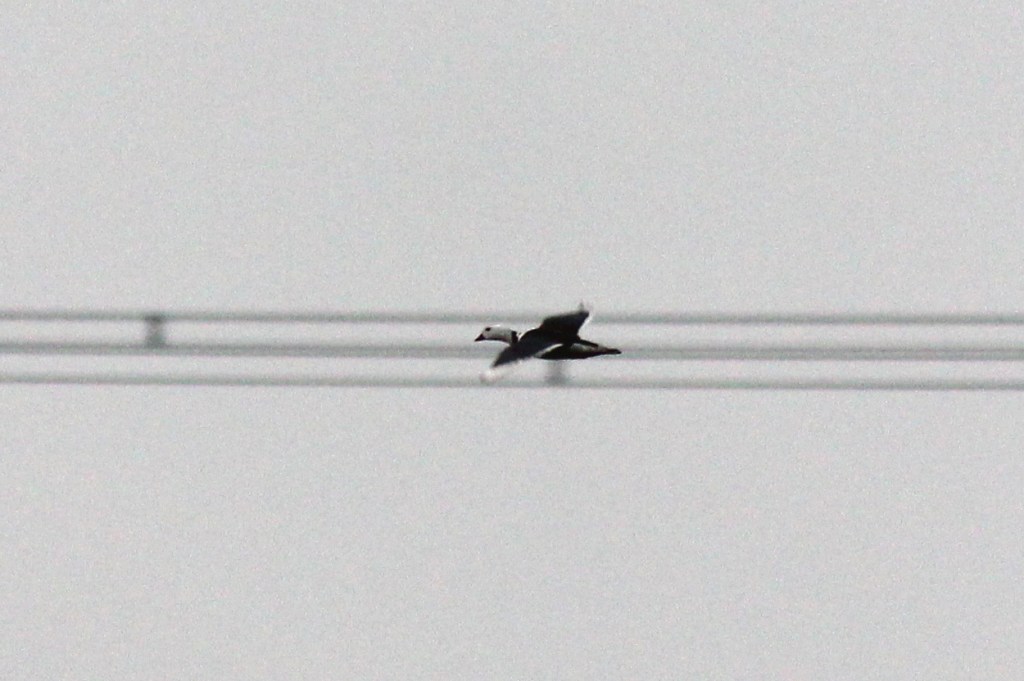
Long distance record shot of one of the pygmy geese.
©Elias Thomas

*note that some of the photos in this post are not mine. If they aren’t mine it is noted in the caption

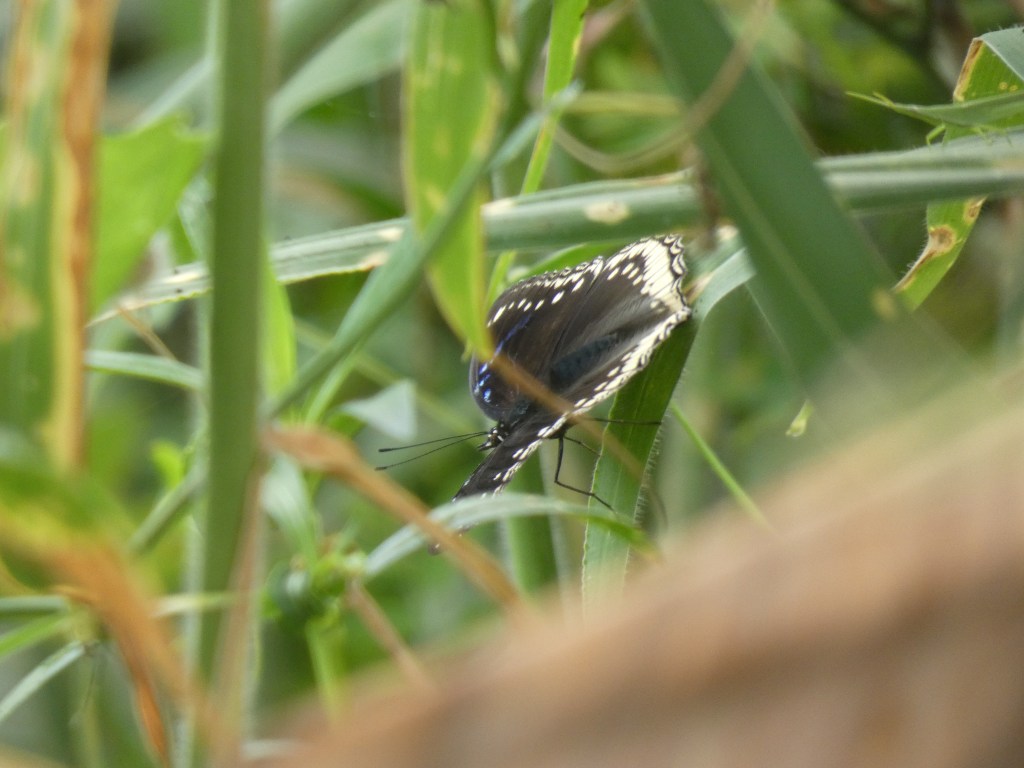
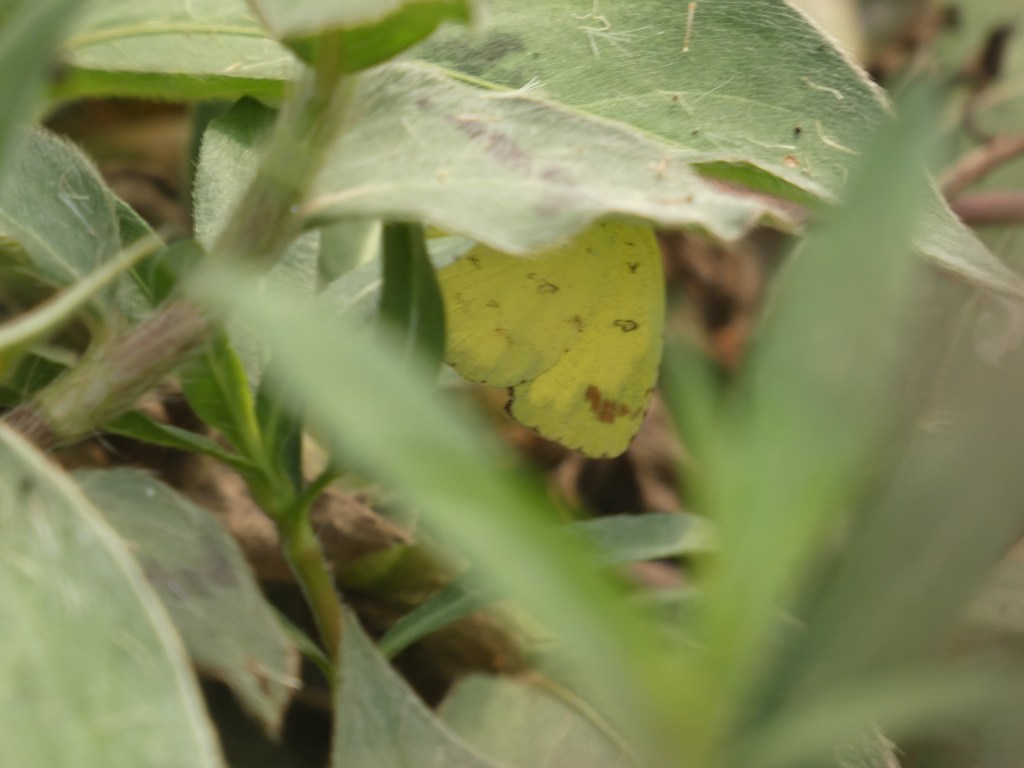
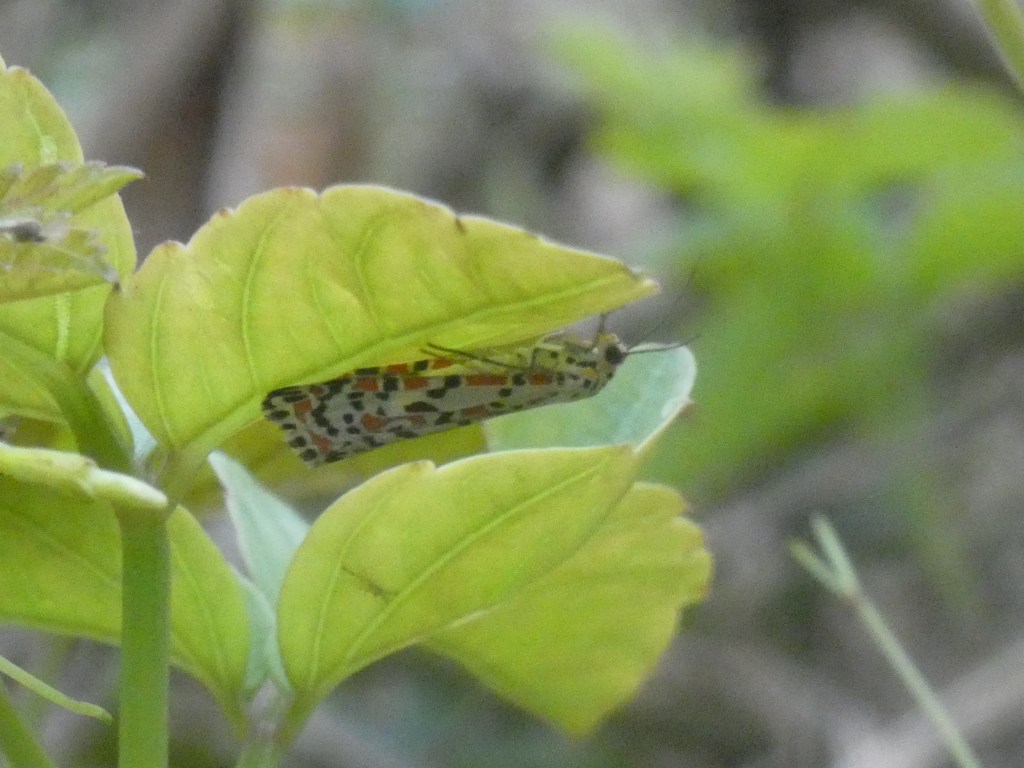
Our next find wasn’t a bird, but a cool looking moth I’ve wanted to see for awhile. Not easily identifiable to species without dissection… Unfortunately couldn’t get good shots as the camera was fogging over much of the morning.
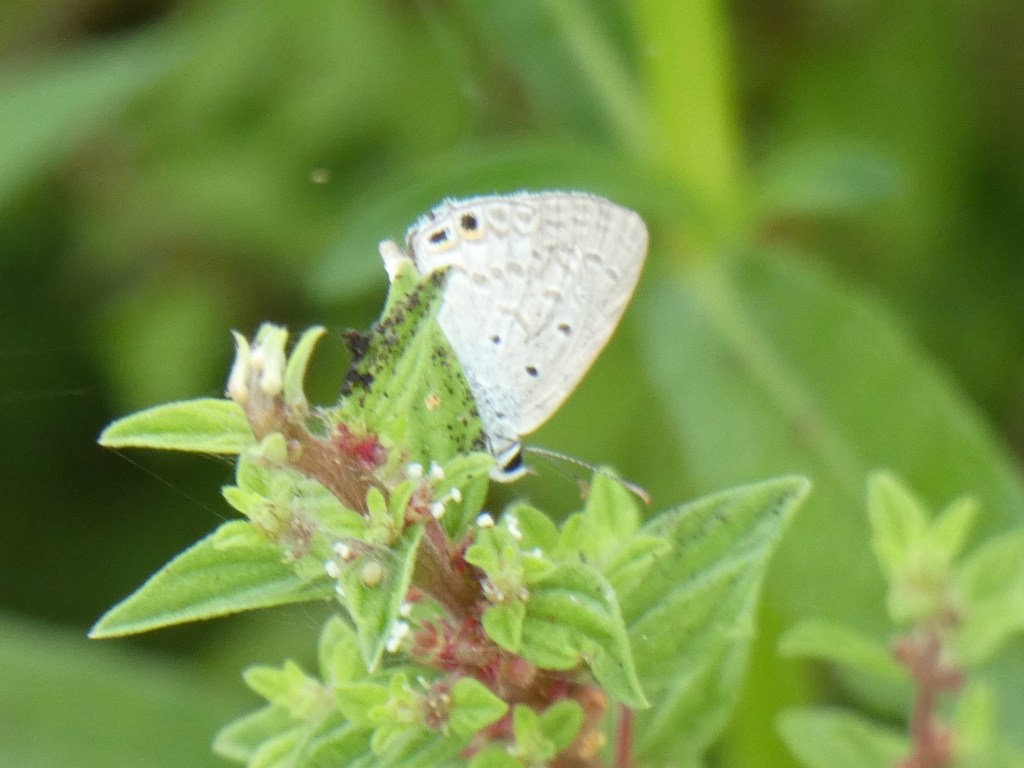
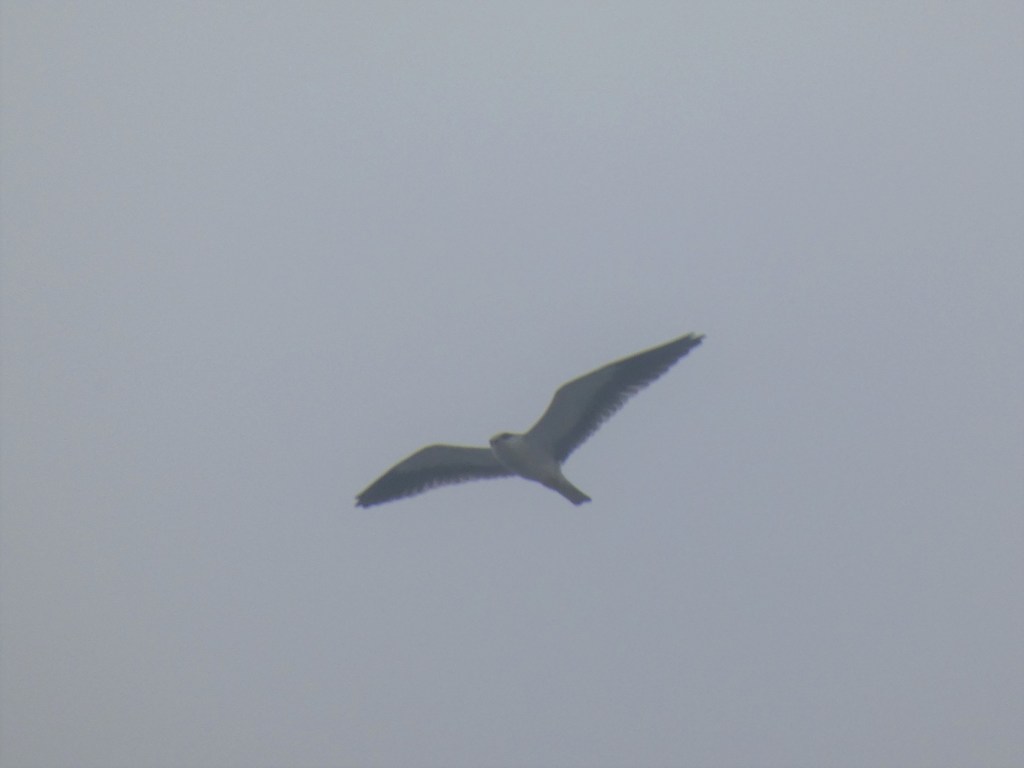
Birding was a little slow because it was very overcast and fewer butterflies and dragonflies were around than last time, but a few Gram Blues and Plains Cupids (butterfles) were fun. There were 6 or 7 very active Brahminy Kites around, and some of the other usual suspects.
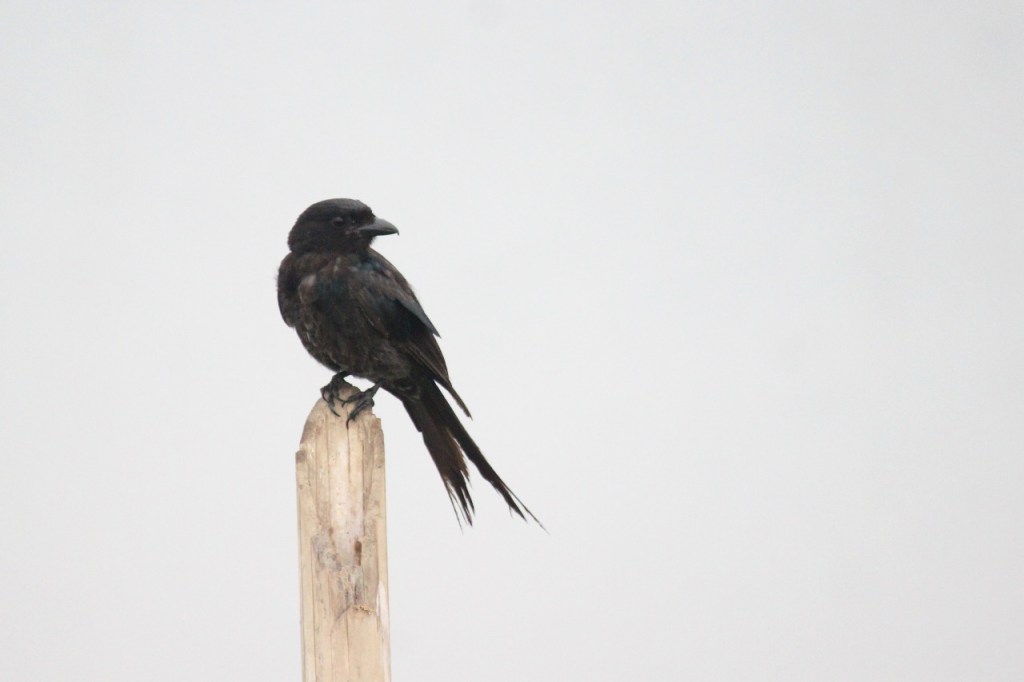
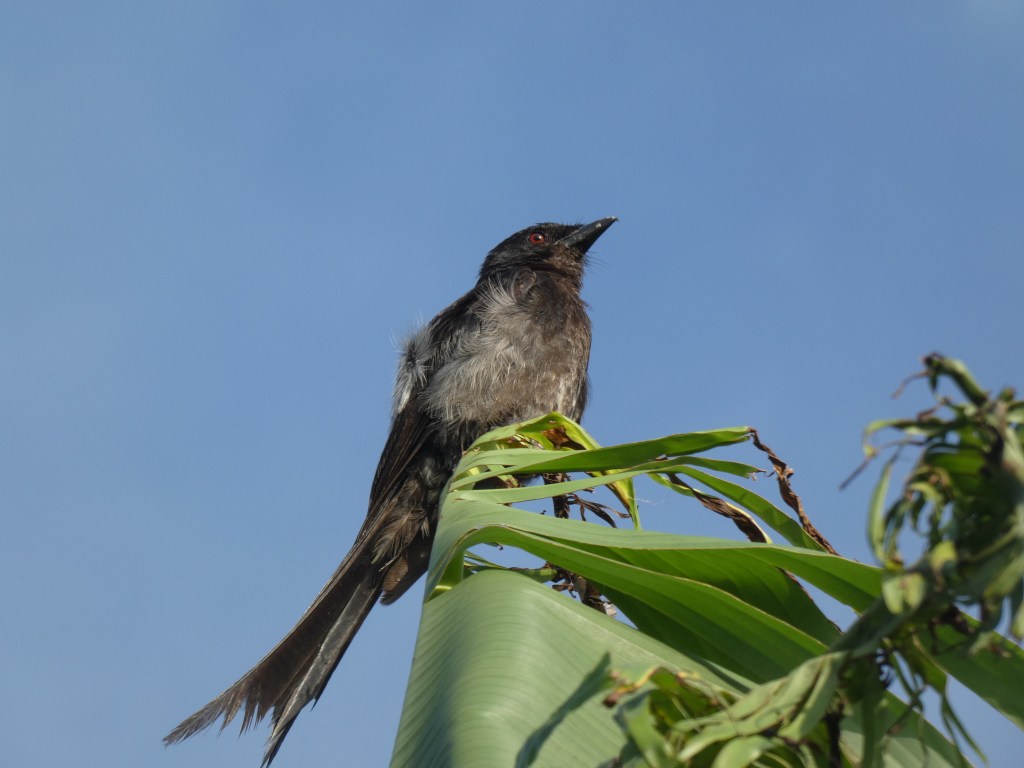
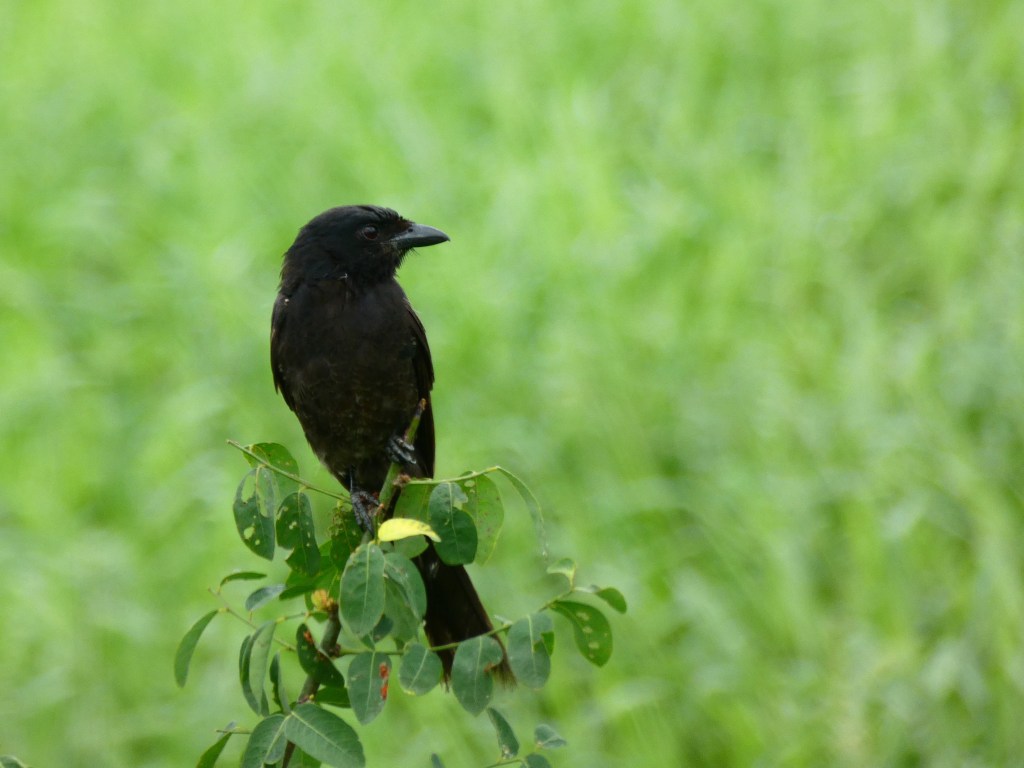
A youngish Black Drongo
©Elias Thomas

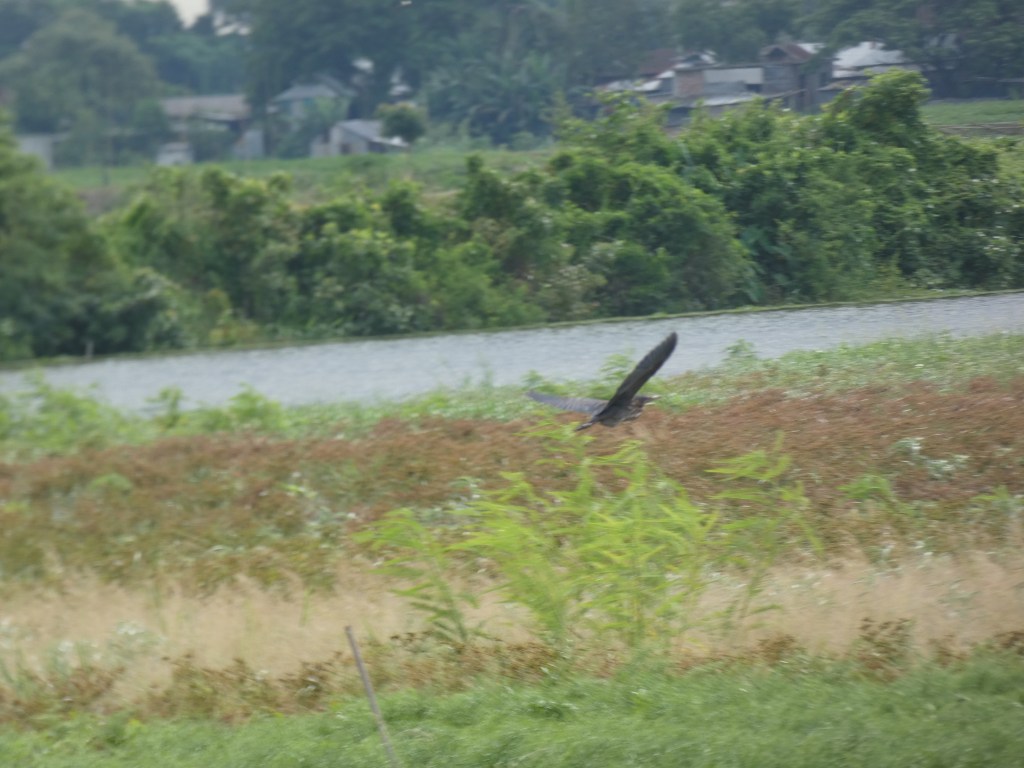
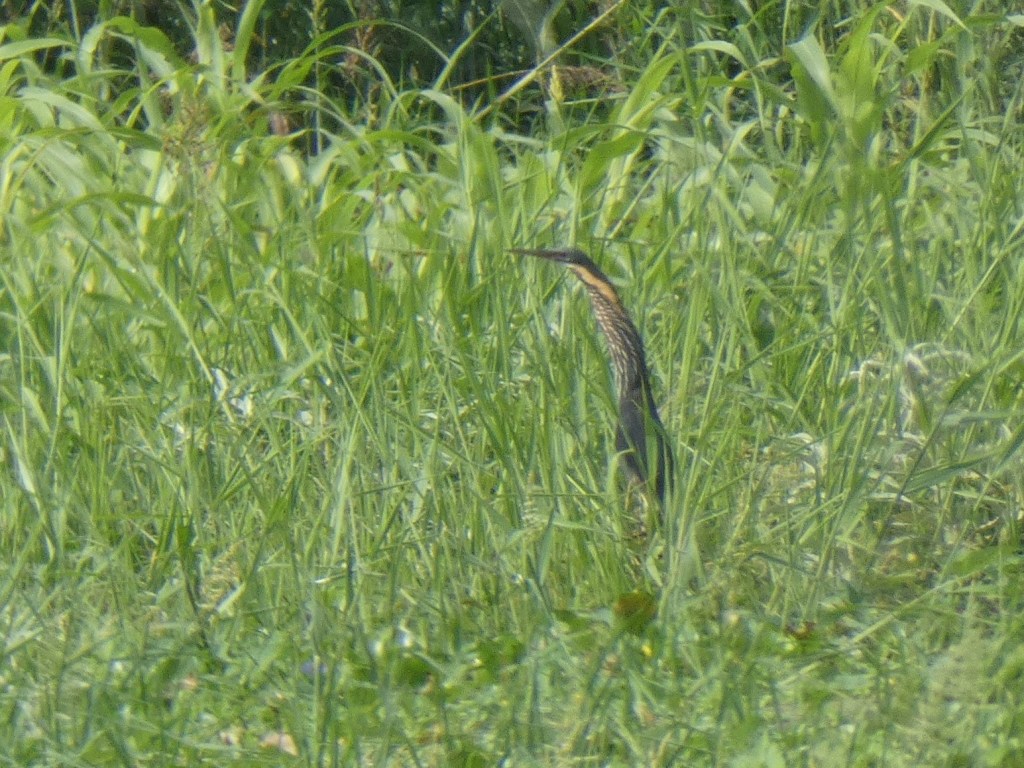
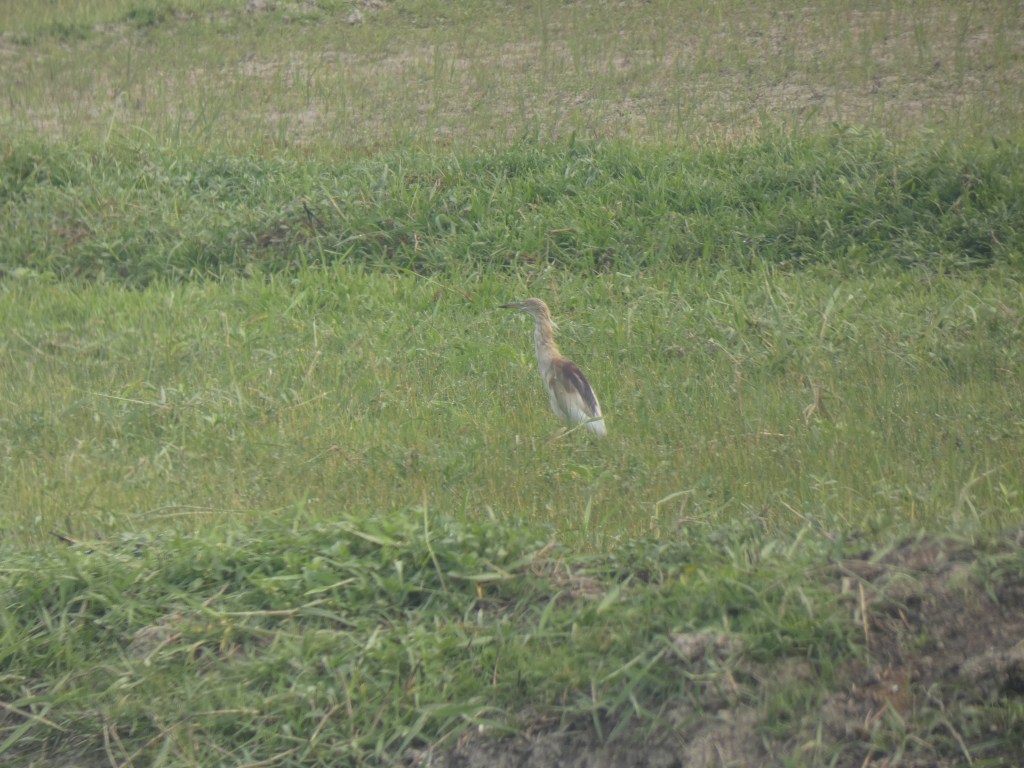
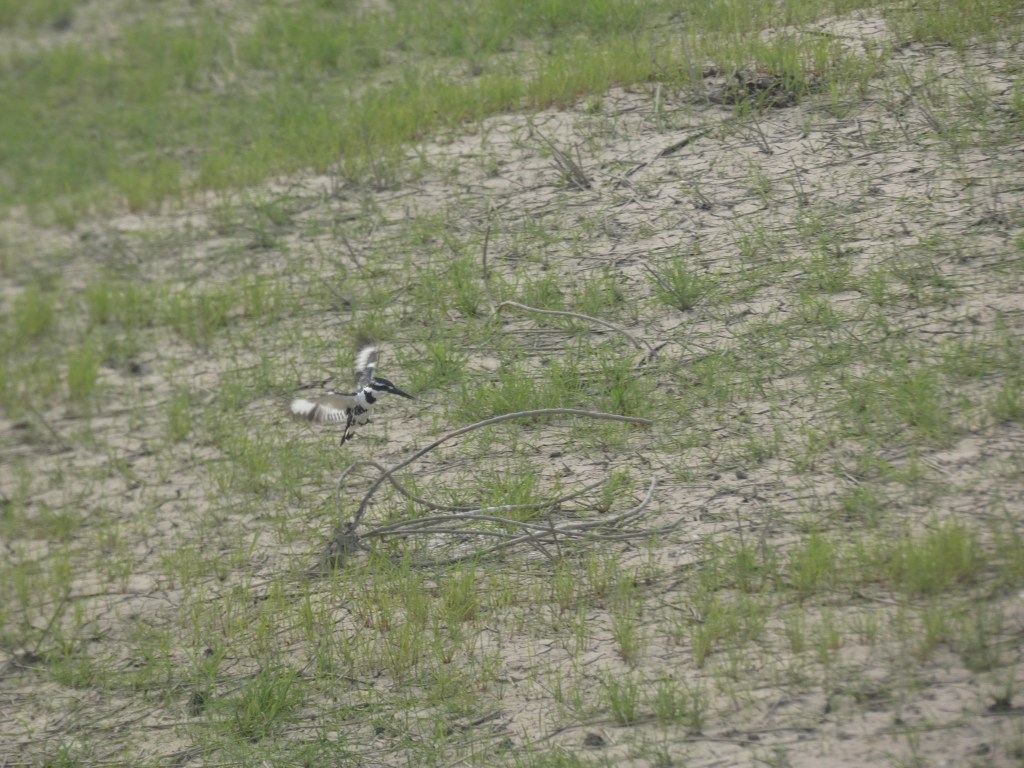
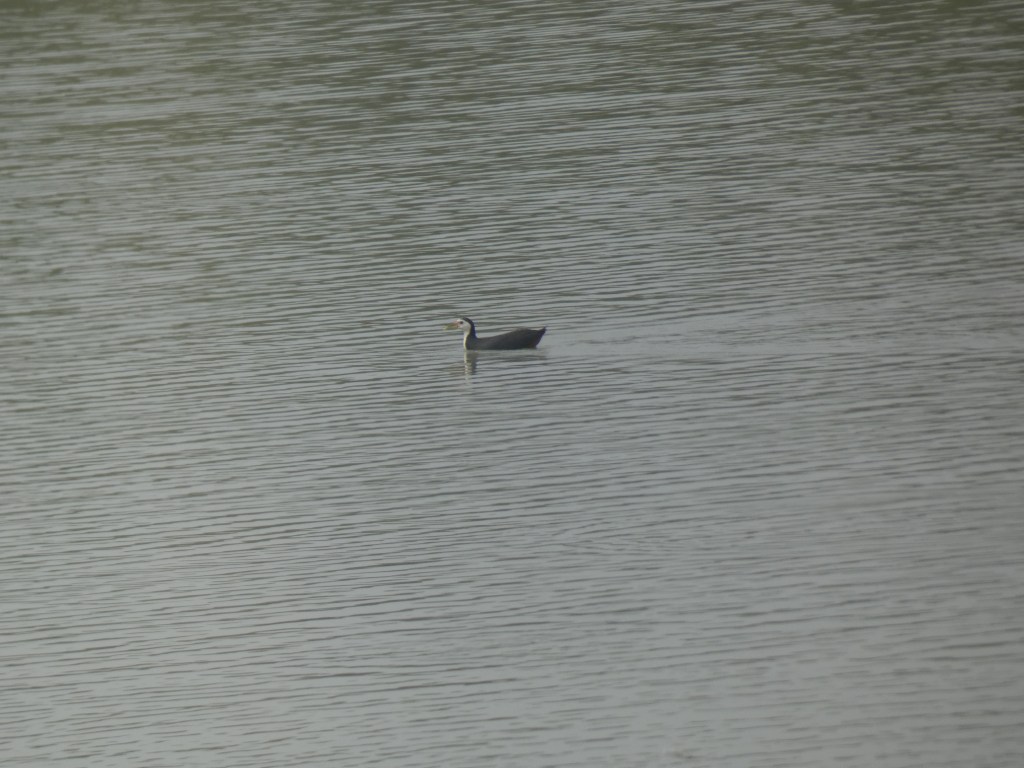
As we worked our way along the path beside the largest swamp/pond I saw a white winged waterbird and almost passed it off as a pond heron, but again I realized the flight was different and the colors really weren’t quite right for a pond heron. So I checked it with my binos and realized it was a gorgeous Pheasant-tailed Jacana in breeding plumage! Yet another lifer for Elias!
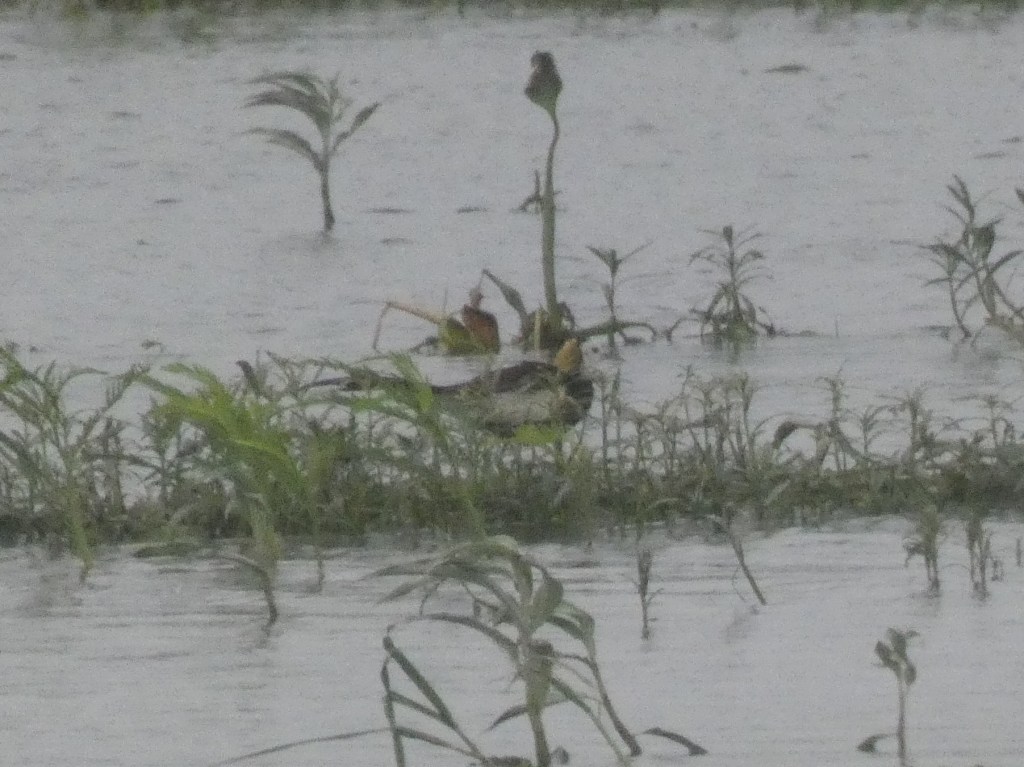
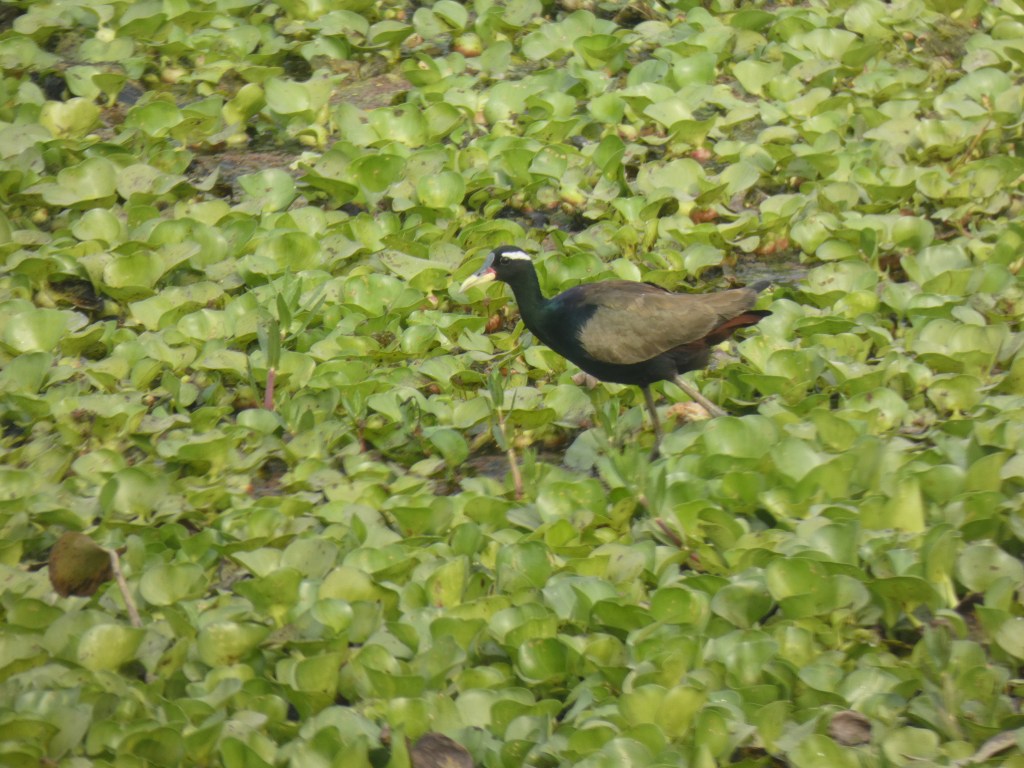
My distant shot of the jacana.

The jacana landed on some vegetation in the middle of the “pond” and stayed there for 5-10 minutes before flying back to the north west. Hopefully they’re breeding here!

Pheasant-tailed Jacanas are pretty uncommon around Dhaka, and this is maybe the second or third record from this location, but I think the first possible breeding record.

Black Bitterns were around as usual, we saw them several times and one was a young one. I’d love to find a nest here, but that may be difficult.
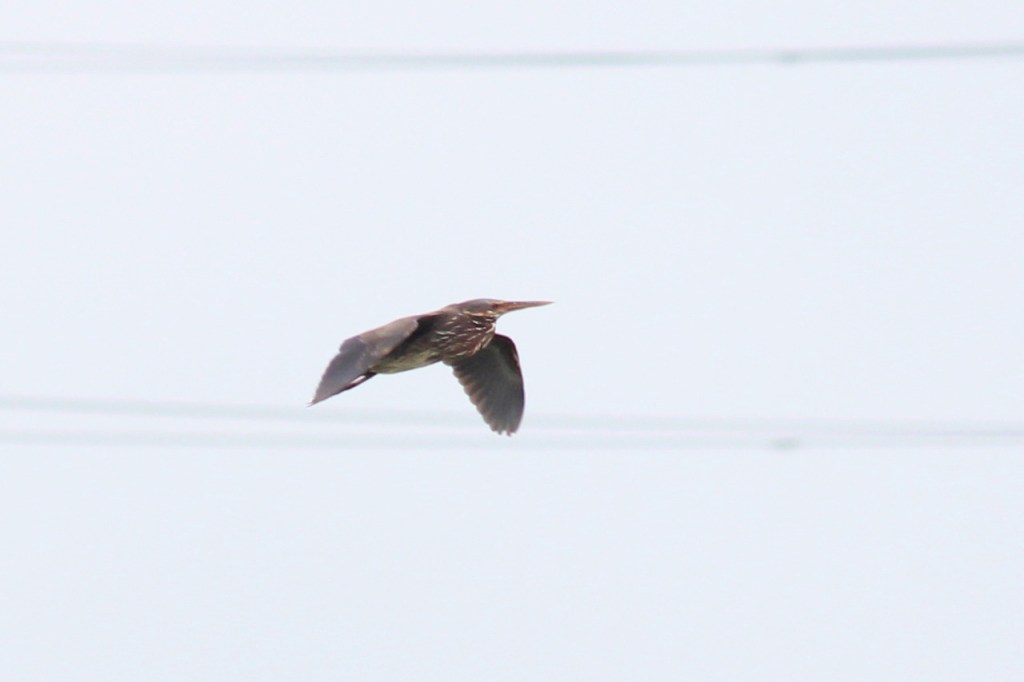
Young Black Bittern
©Elias Thomas

There was a huge flock of at least 100 Barn Swallows out in swampy area farther to the north. That’s huge increase in numbers from the last few weeks and possibly means these are migrants not the few local swallows. We had nice views of one juv and adult a piece of Striated and night herons.
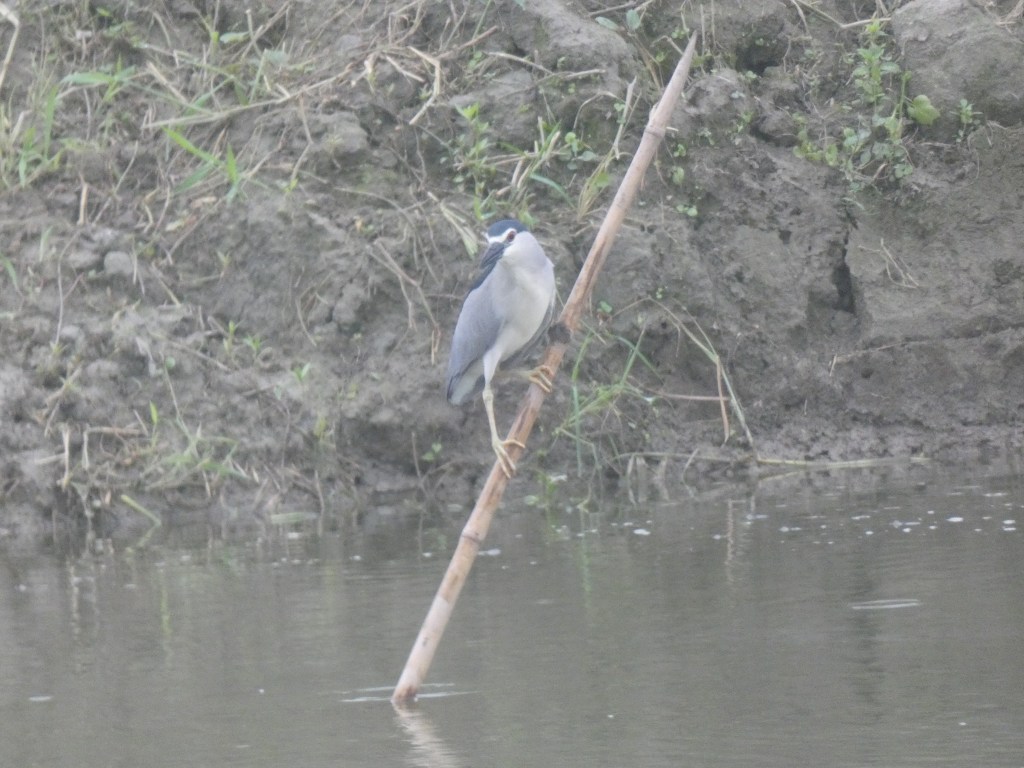
adult Black-crowned Night-heron

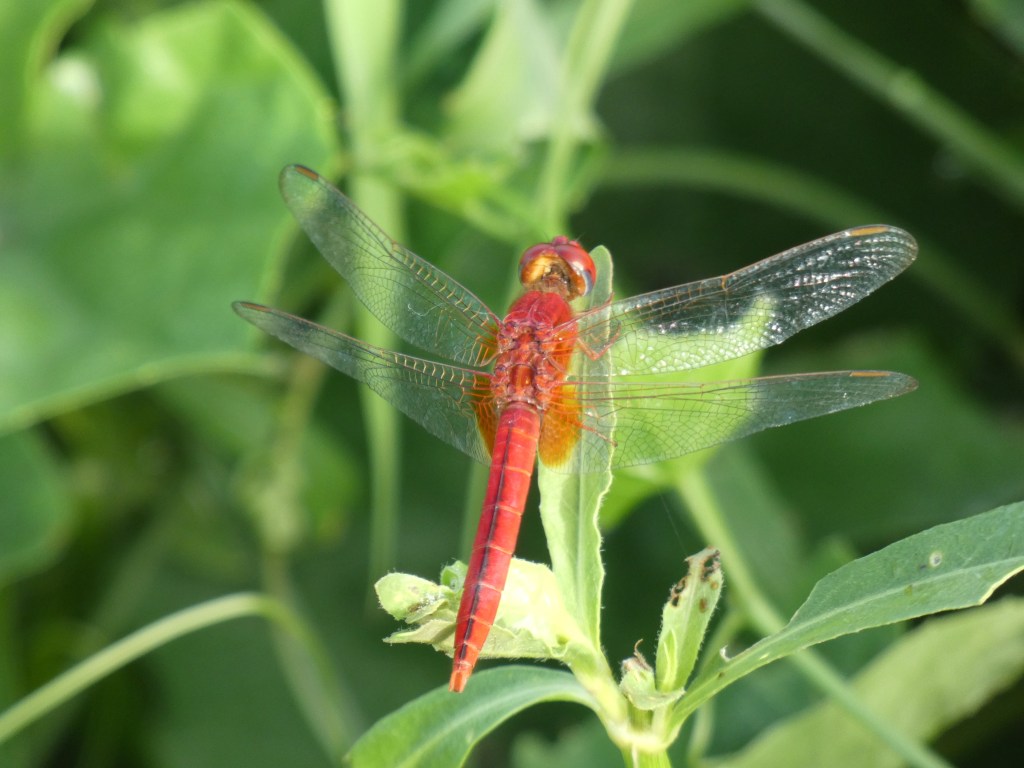
We had a number of dragonflies and butterflies. No new butterflies for me, but a Greater Crimson Glider (Urothemis signata) was a new dragonfly for me!
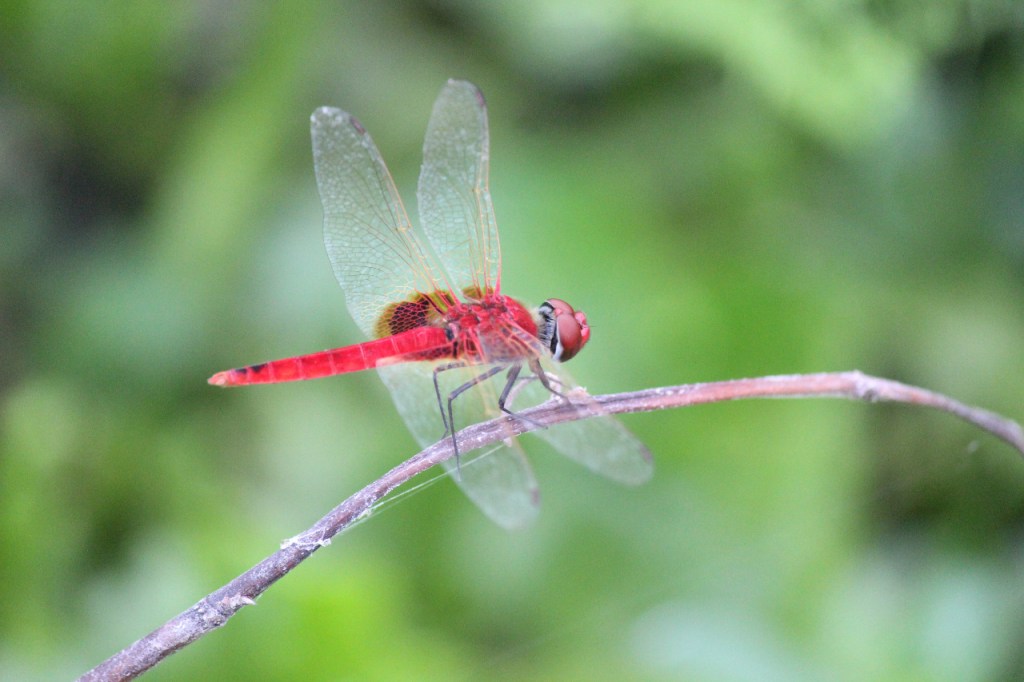
Greater Crimson Glider
©Elias Thomas
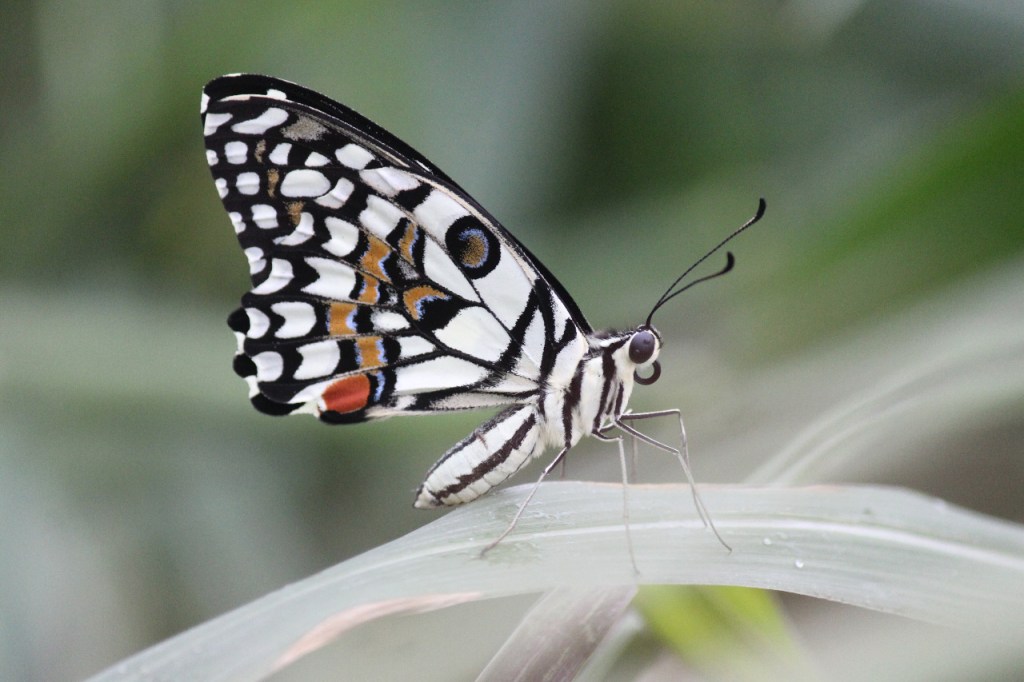
A beautiful Common Lime
©Elias Thomas

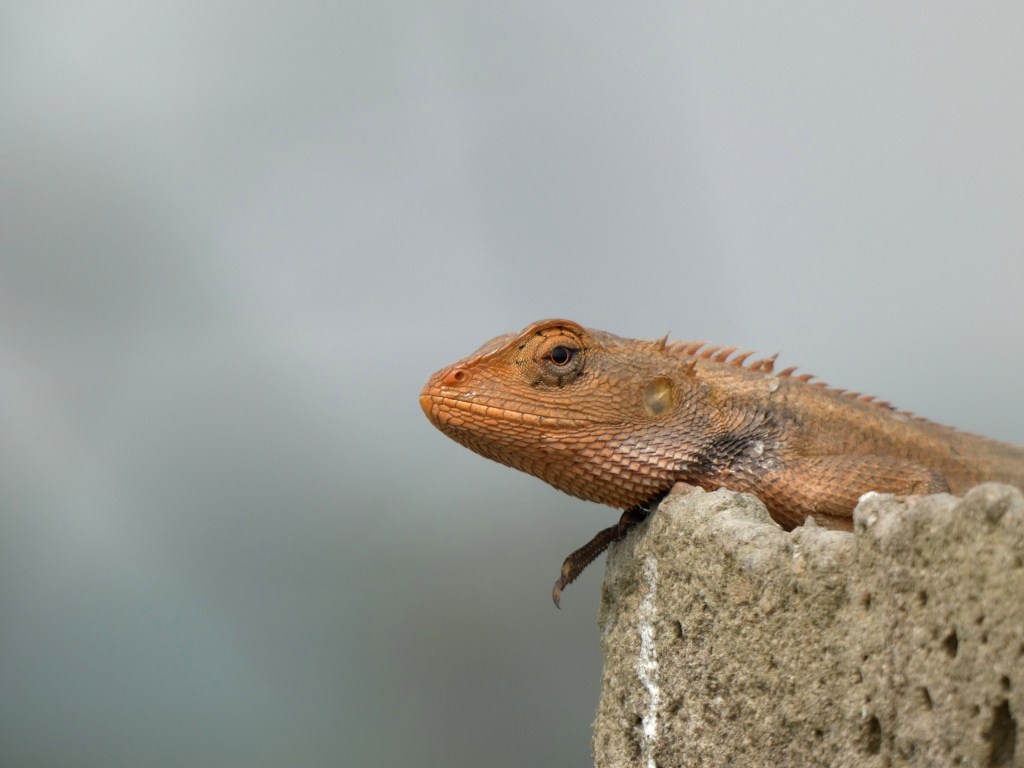
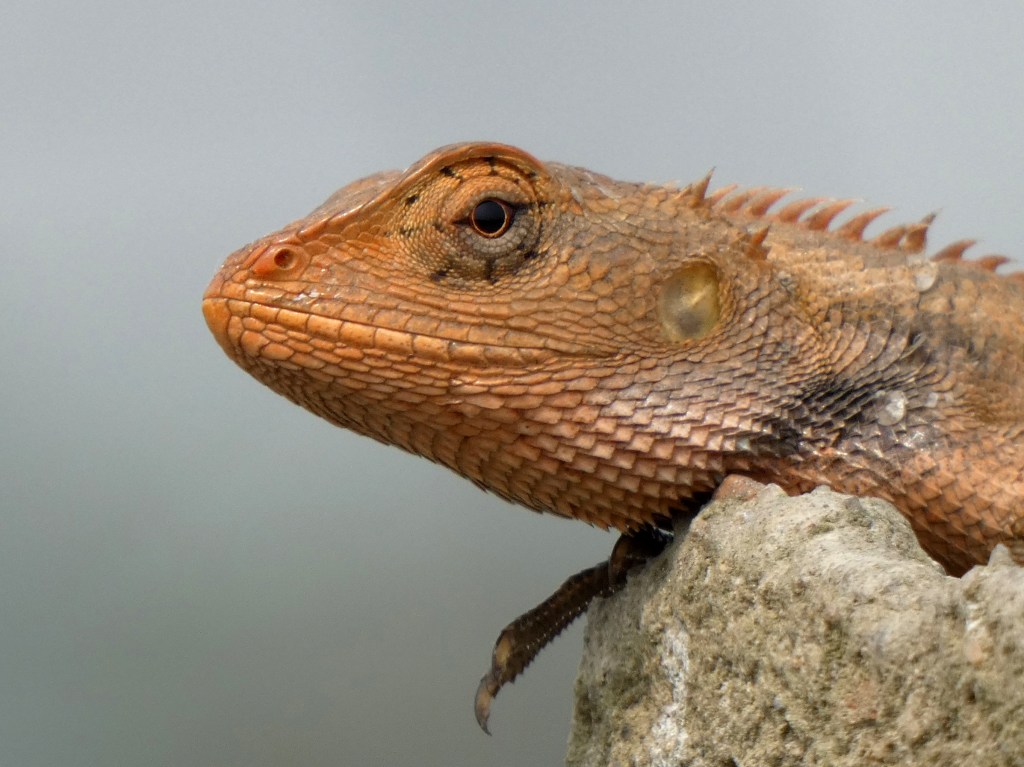
We also briefly saw a Yellow Monitor (huge lizard) a first for me!
Our total count ended at 43 species (of birds) which is decent though a few species lower than the last two times, but that included 3 new hotspot birds for me, two of which were new for my 5MR! (the geese, jacana were new 5MR birds and two flyover Indian Silverbills were the other new hotspot birds). My hotspot list is up to 115, my 5MR year list is up to 128 and my 5MR lifelist is at 148!
eBird checklist: https://ebird.org/checklist/S71338087

If you enjoyed this post, please subscribe for more. As always, feel free to comment!
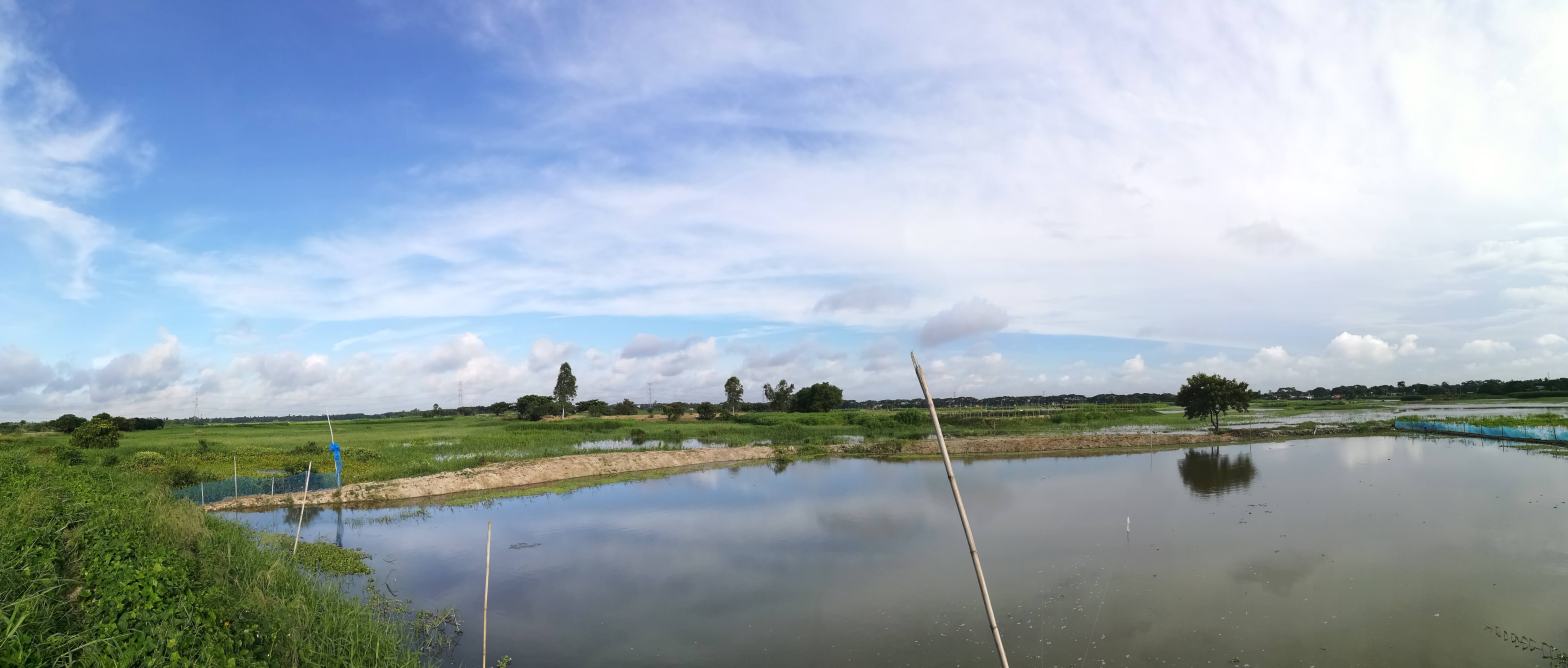
Black Bitterns and a Wandering Pennant

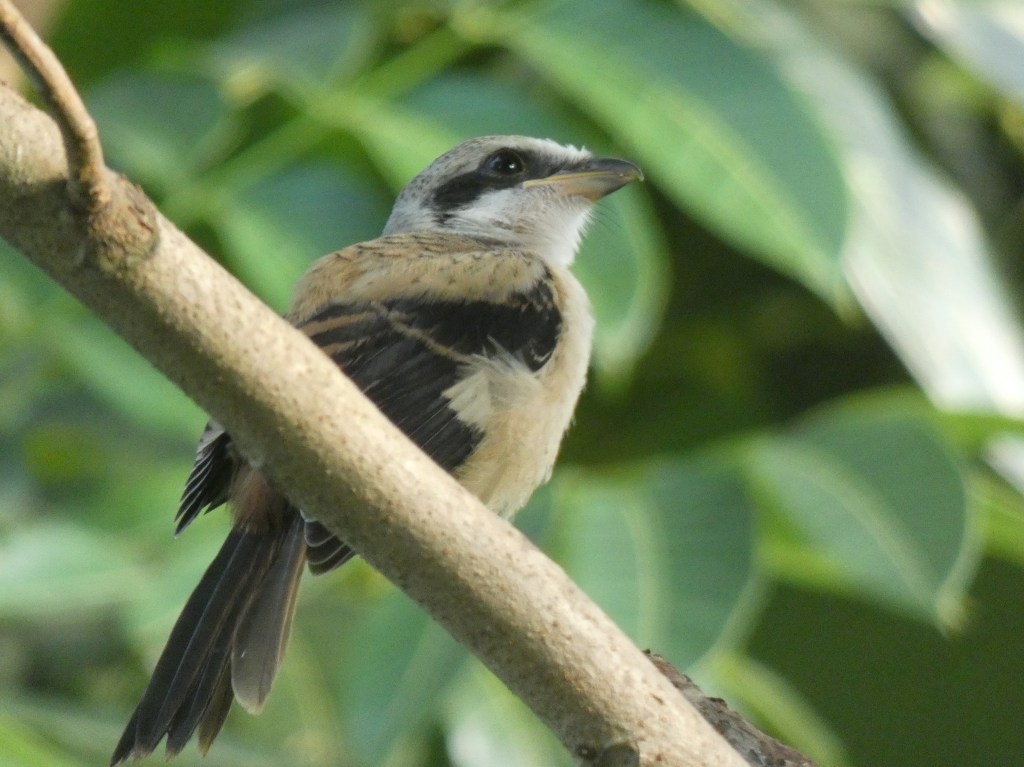
This weekend I was able to make it out to New Vision again. Nic didn’t come this time, but it’s sometimes fun to bird alone. Some of my first birds after locking up my bicycle were two juvenile Long-tailed Shrikes along with an adult.

juvenile Long-tailed Shrike

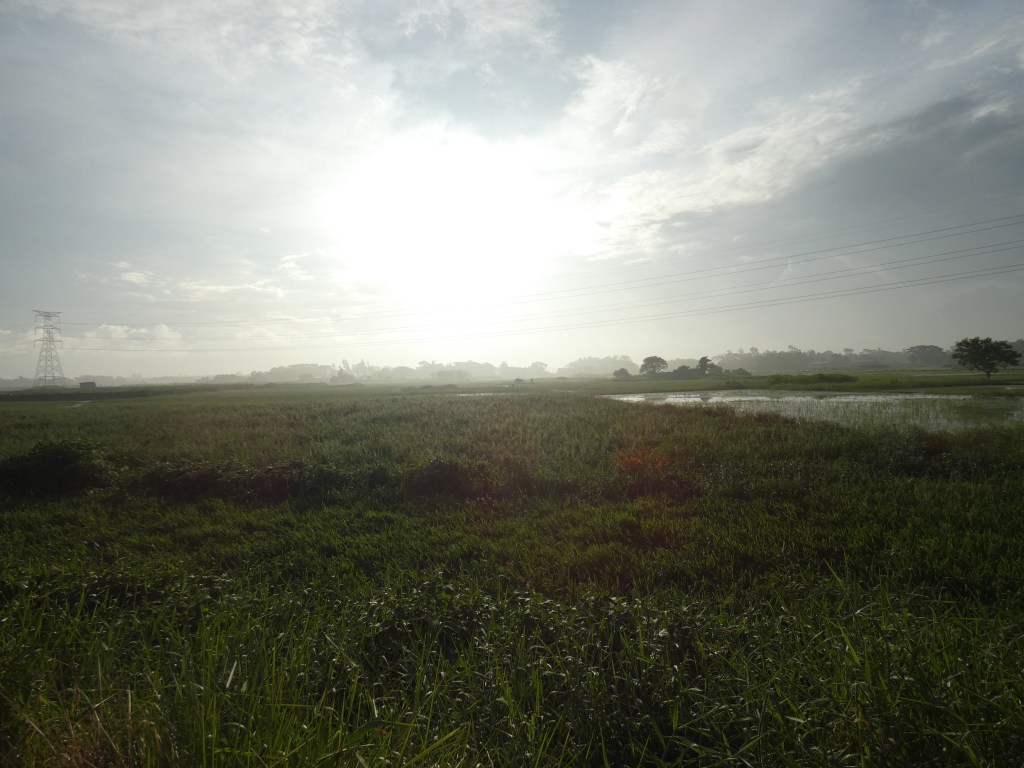
The beginning of the trail has small trees along it so it’s a bit cooler, but once you’re out in sun it feels very hot even with temps in the low to mid 80s. Thankfully clouds were blocking the sun at least some of the time, making it more bearable.

Yes, it was as hot as that looks!

Everything was super green just like two weeks ago, but the rain since then was definitely noticeable as everything was even more flooded.

This was a low path I took last time, but it’s now completely flooded. During the winter I often see yellow wagtails right on that path

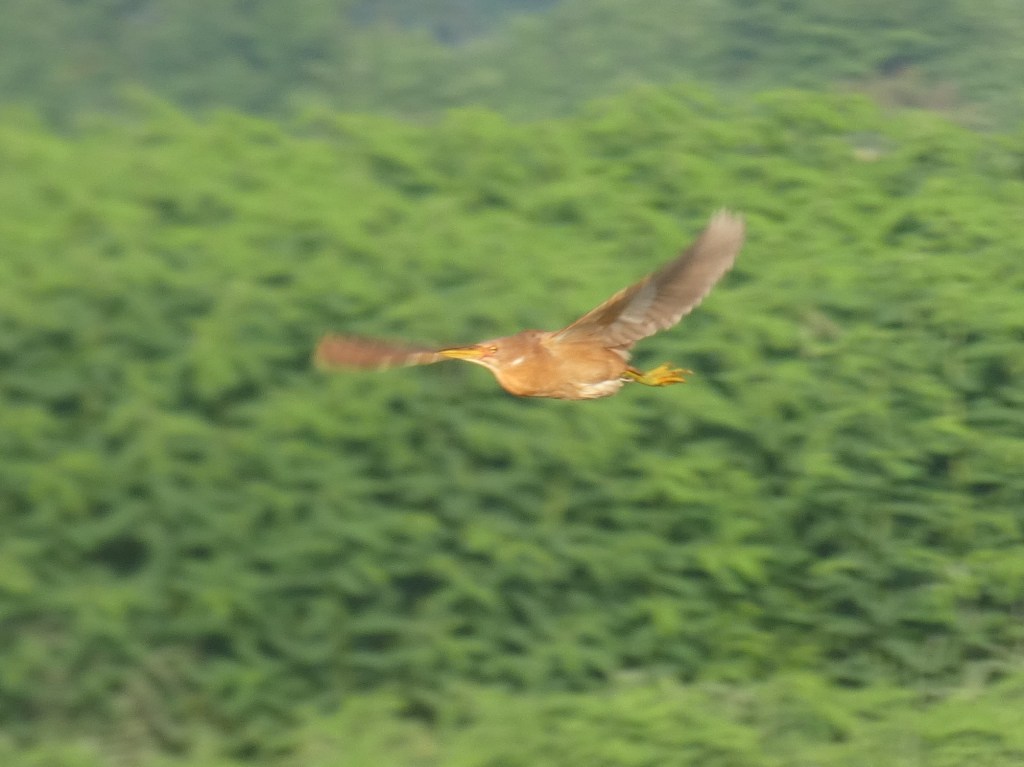
Bird movement in general seemed a bit slower than two weeks ago, but that may well have been because of the hotter weather. I did see a Cinnamon Bittern flying towards me, and was able to get my best in flight shots of the species yet. Not a super sharp shot, but the colors are very vivid.

Cinnamon Bittern

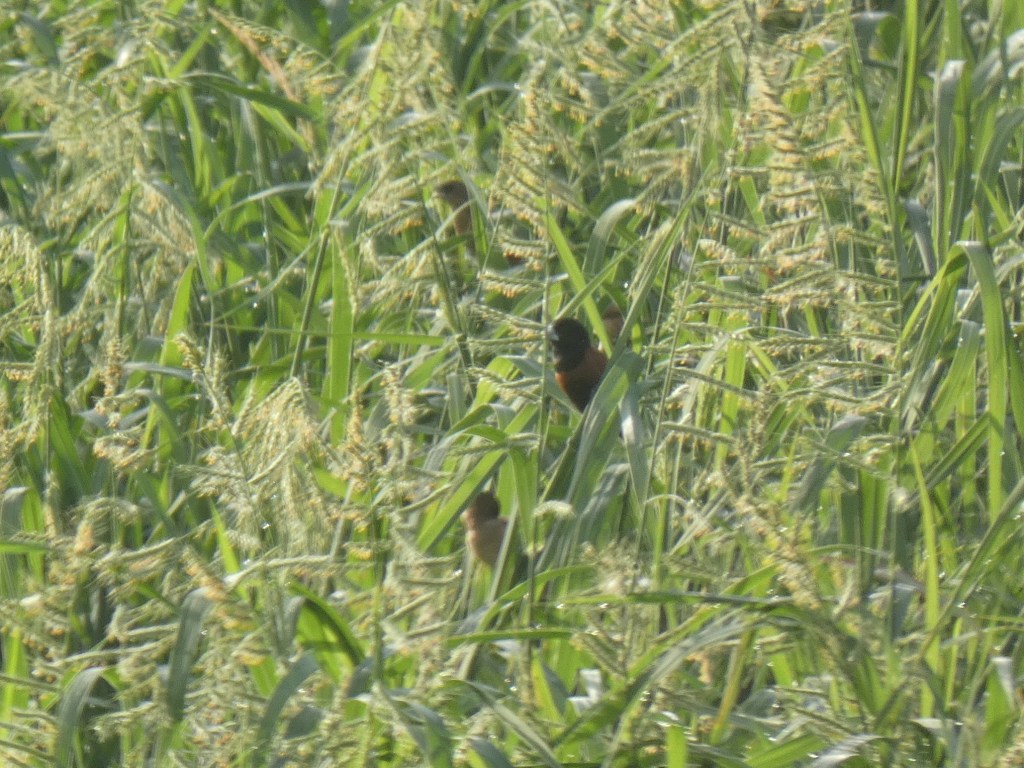
Just before and after the bittern I saw my only munias of the day: two Scaly-breasted Munias and then six Chestnut Munias all in some reeds/grasses just beside the trail.

Several Chestnut Munias

I also enjoyed seeing the pond herons in breeding plumage again. During the winter they’re so drab, but during breeding season their plumage is really beautiful!

Indian Pond Heron in breeding plumage. The blue bill and red feet really add some color
Young Black Drongo posing in nice lighting
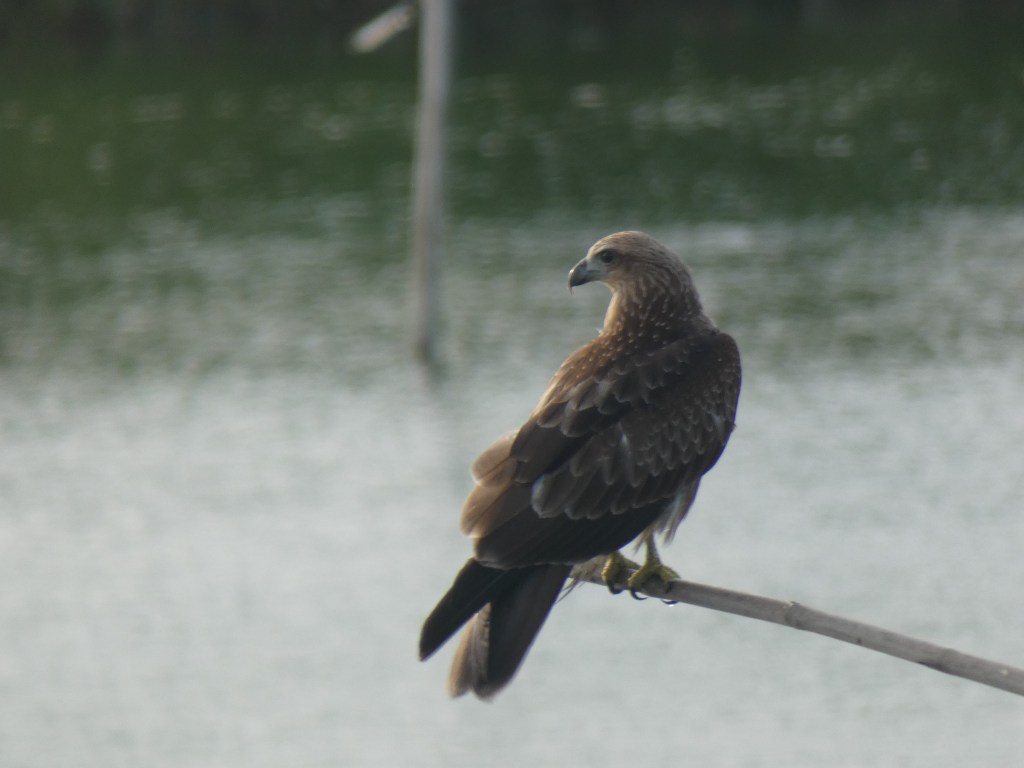
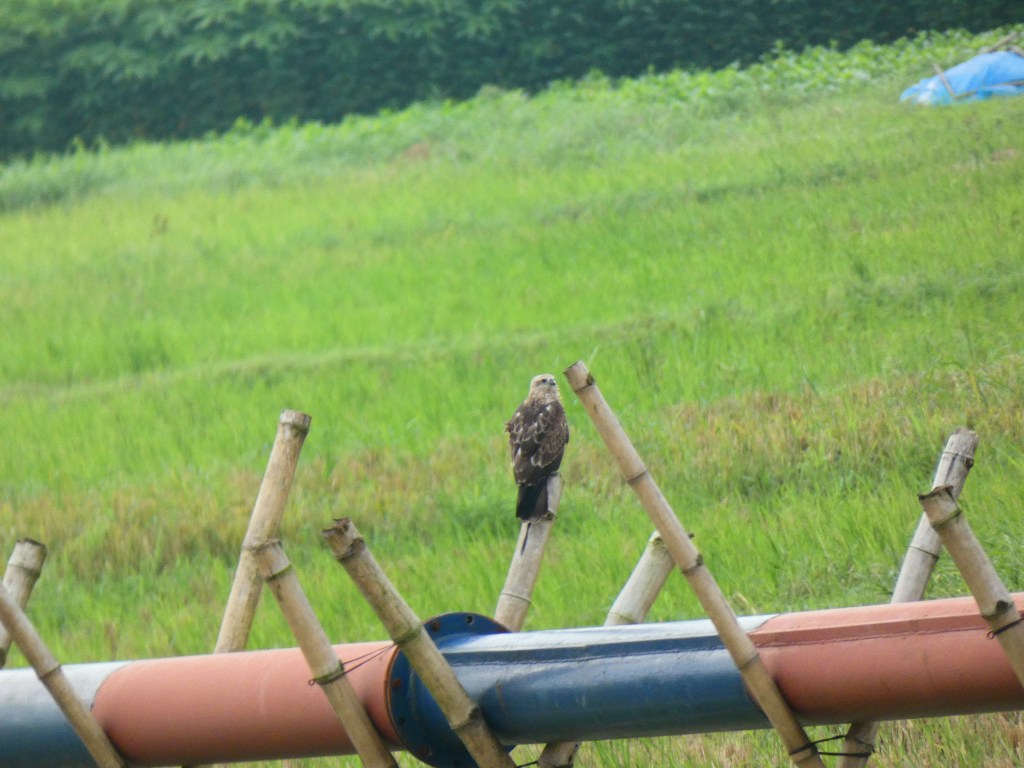
A subadult Brahminy Kite perched on a bamboo pole watching for fish

The one swampy area was absolutely chock full of pond herons. I counted 70+ pond herons along with at least 20 Little Cormorants.

There are at least 50 pond herons in the area in the photo, but not all visible. If you look closely you can also see some baya weavers nests on the one tree.
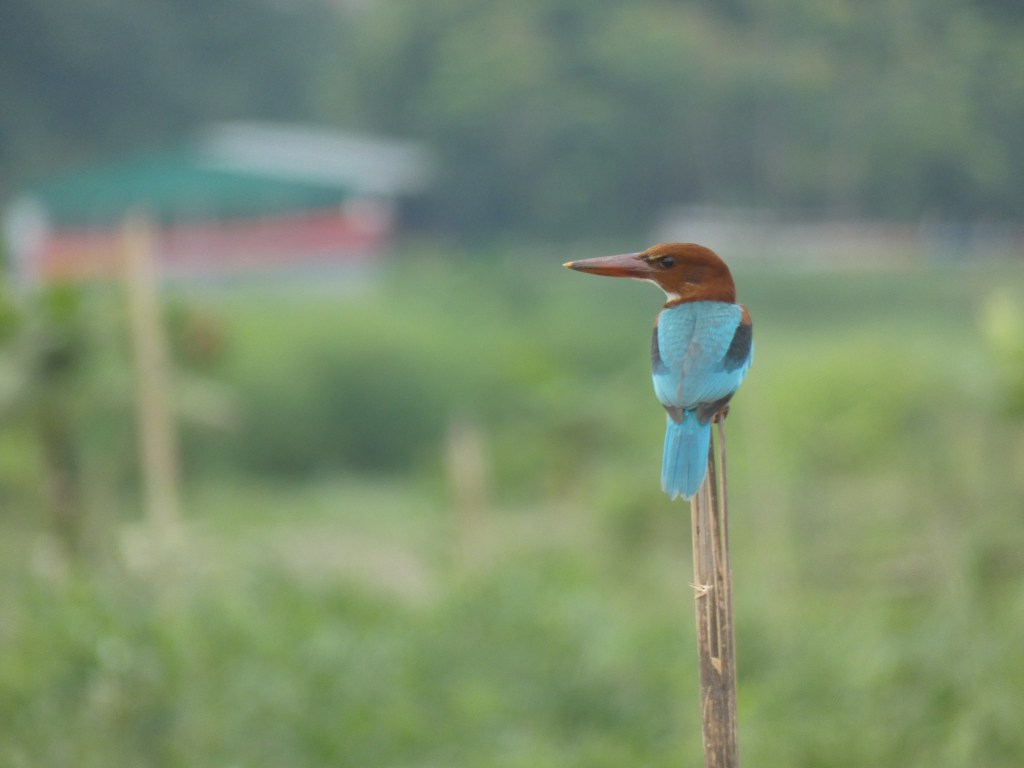
White-throated Kingfisher posing nicely

I was sad to see the spot where I had suspected the black bitterns to be breeding last time was completely cut leaving only open water.

Not nice and swampy anymore for the bitterns 😦

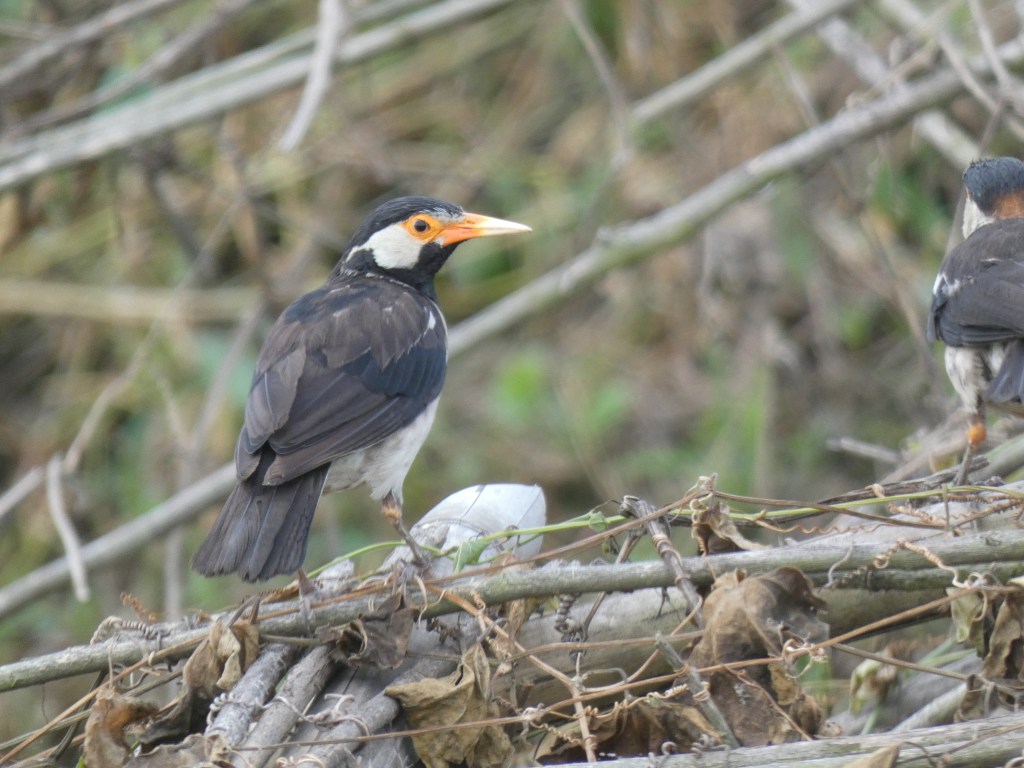
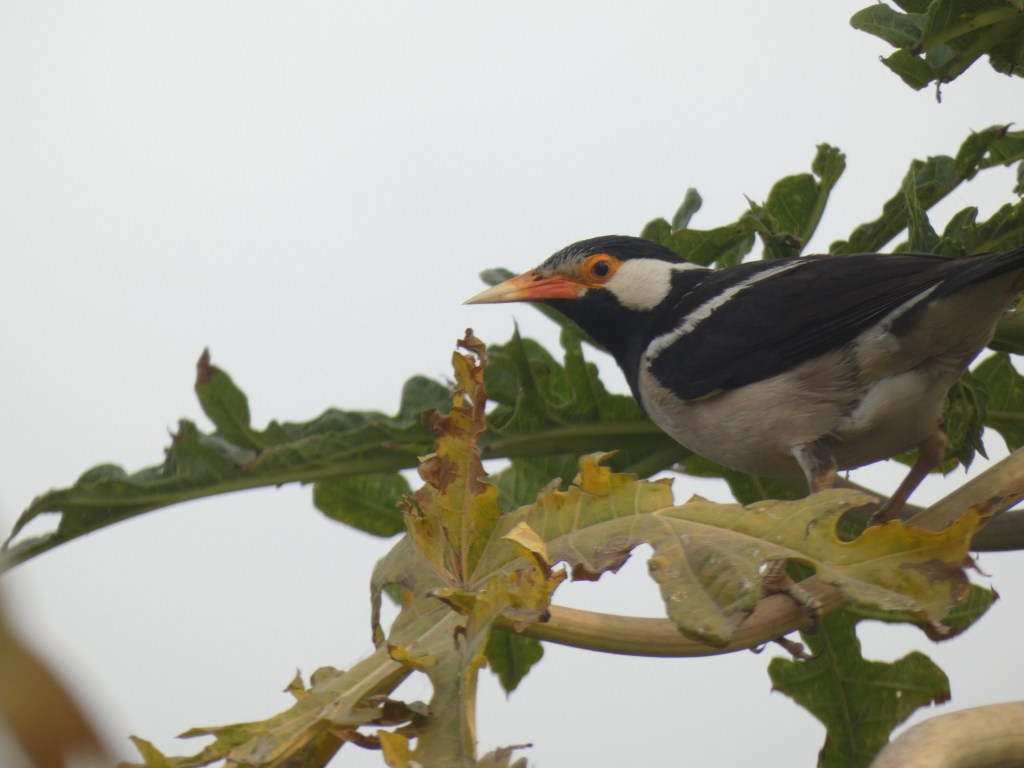
Asian Pied Starlings were everywhere, and definitely the most numerous bird closely followed by pond herons.

Asian Pied Starling

I soon saw a Black Bittern flying, so I was assured they hadn’t moved on. Plus I soon started seeing other swampy areas that hadn’t been cut which was reassuring. At this point I had birded around an hour and a half and had covered nearly all the area that took me 3 hours last time, so bird movement was definitely down, but then I remembered the one trail that goes along the south side of the swampy area that had been full of pond herons. Two weeks ago the trail hadn’t been in great shape and I had already birded a fair bit so I didn’t take it, but this time I had plenty of time so I decided to take that trail.

Immediately I was seeing loads of dragonflies which was fun again so I took some time to photograph them. (those photos are coming shortly in my insect section of the post 😉
Also found a young Long-tailed Shrike that was getting close to adult plumage. It was quite bold and allowed me a few closeup photos before moving on.

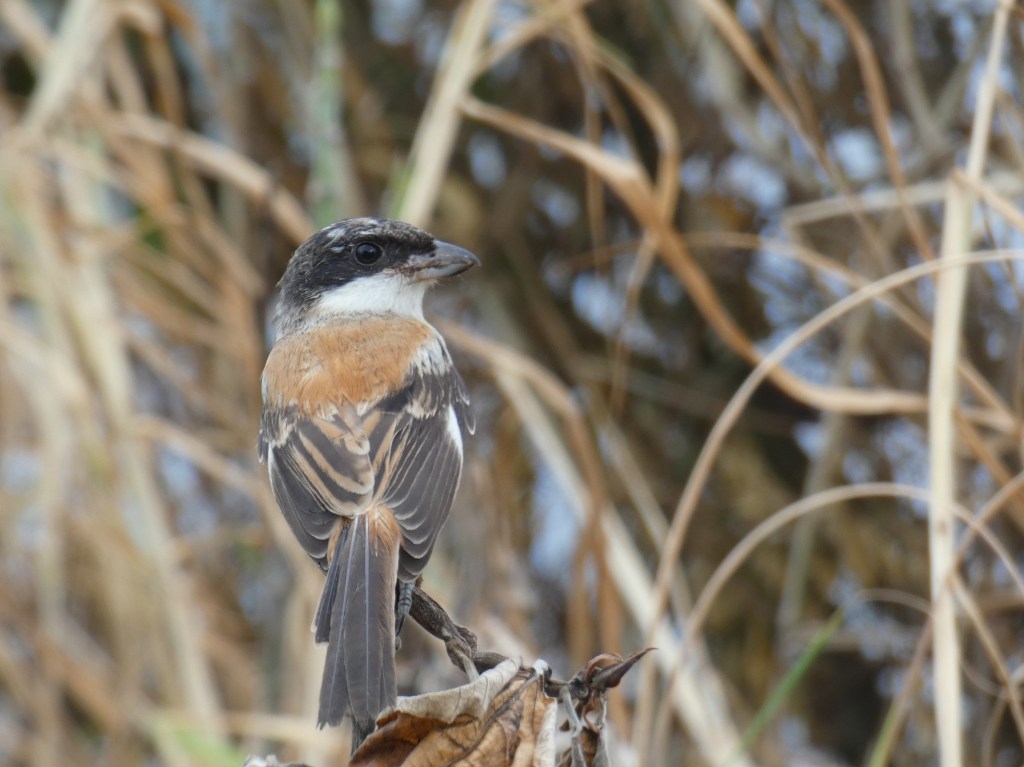
Long-tailed Shrike

Two flyover Lesser Whistling Ducks were some of the first I had seen, and a Striated Heron was good to see here again. Then I got that shot of adrenaline when suddenly a Black Bittern flushed from right near the path!

The standard view of a Black Bittern

I watched it as it landed in some thick vegetation, and as usual it just disappeared as soon as it landed.

The bittern took off right near the path here, then landed out near the little shed

Also along this path were the only two really active Baya Weaver colonies. They were both fairly small, but all the other colonies that I saw two weeks ago were barely active at all this time.

I also saw many cool insects, especially butterflies and odonata with 8 identified species of butterflies (that I remember) and 10 odonata species. I had one butterfly lifer: a Gram Blue.

Blurry shot of one of the several Gram Blues. It was starting to rain a little bit so I was trying to hurry and snap a shot before I put the camera away.

This one had me excited at the time, until I later heard it was just a female Great Eggfly. The males look quite different as they’re all black with four large purple spots, and I’ve seen the males multiple times, but never the female before.

A camera shy female Great Eggfly. They’re really gorgeous!

I also had several of the very common butterfly species

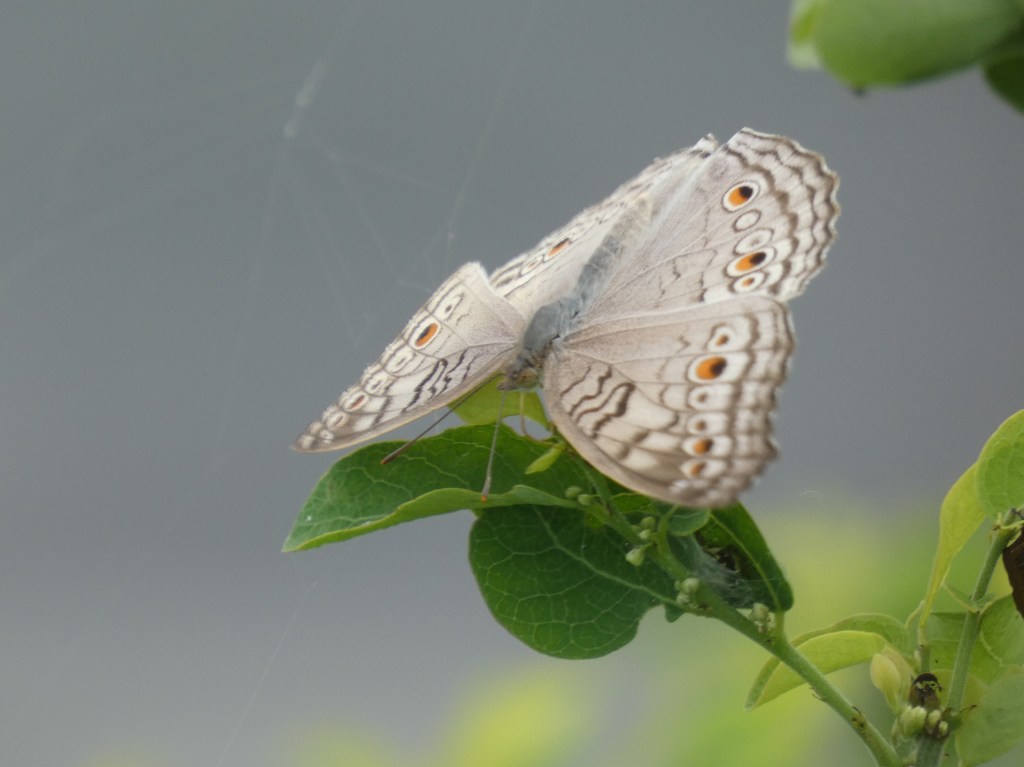
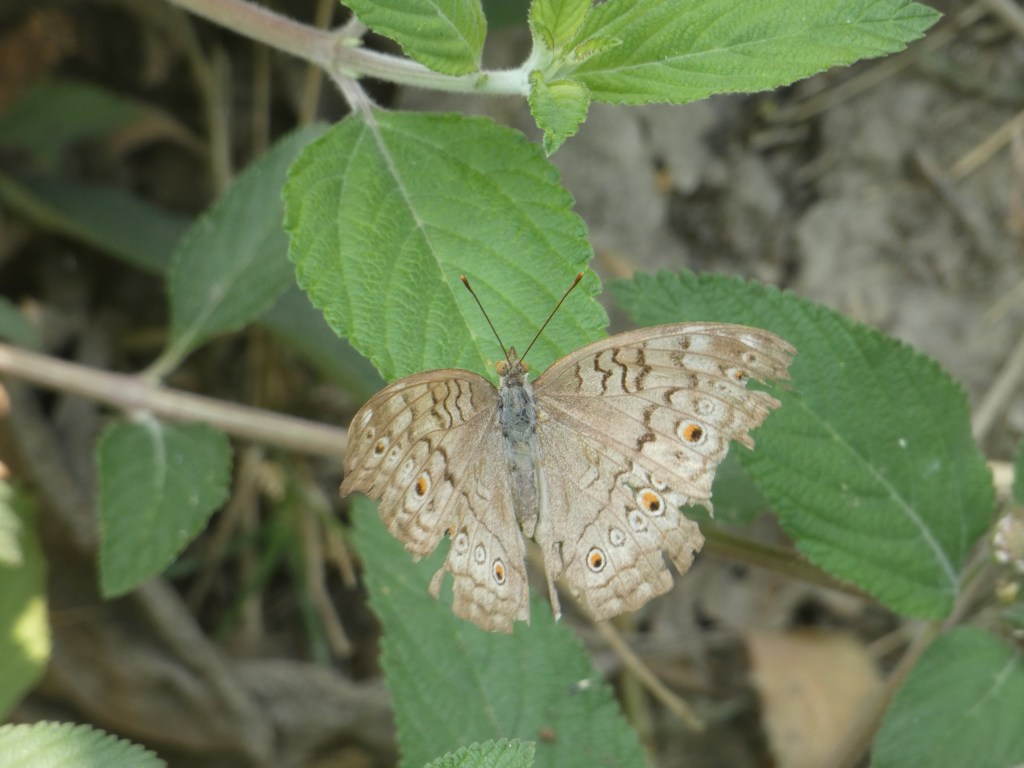
Grey Pansy
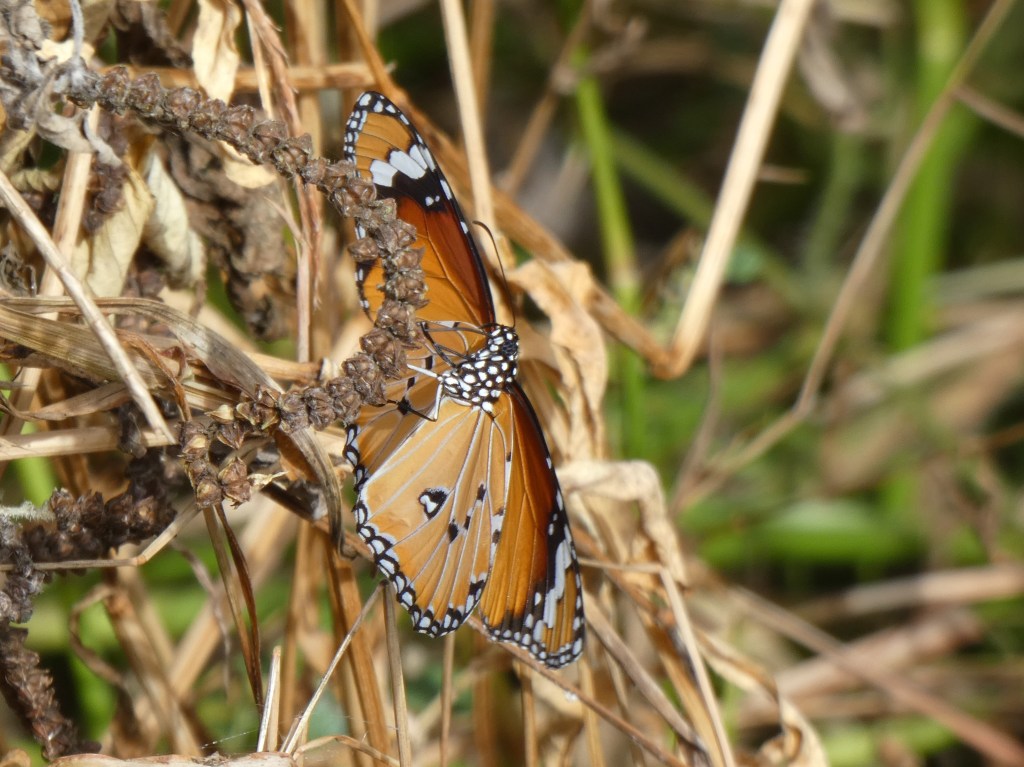
Plain Tiger. Always fun to see one of these!

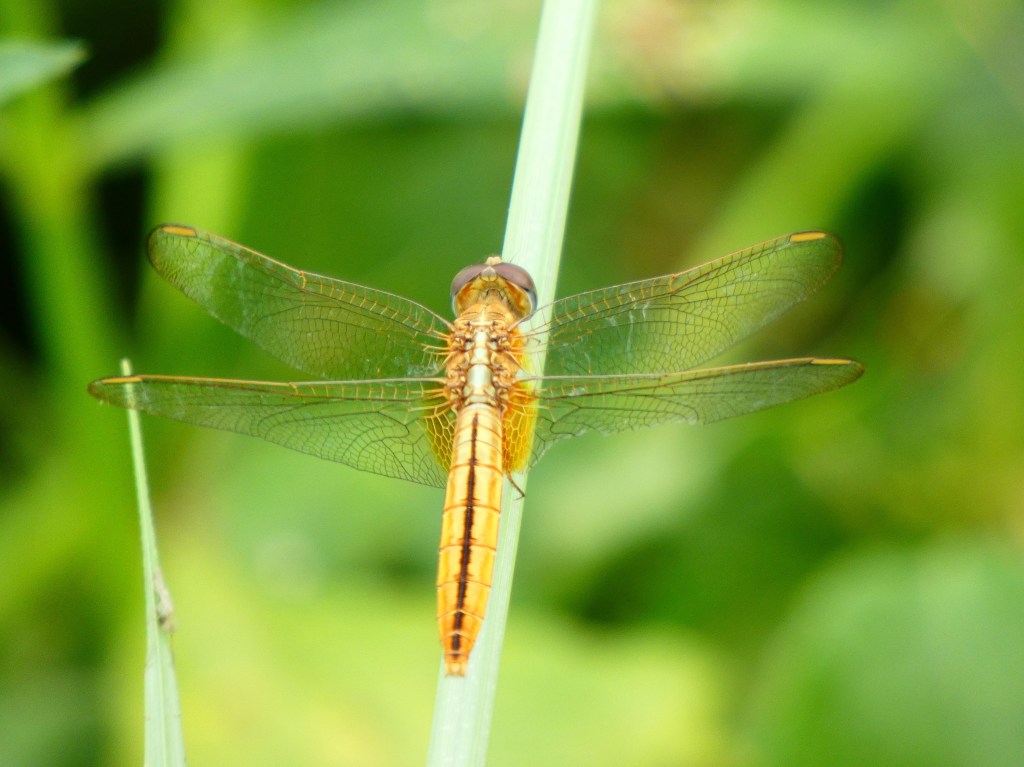
The best surprise for insects was a Wandering Pennant (Macrodiplax cora). I didn’t know what it was, but knew it was different from the other similar looking dragonflies I’ve seen, so I posted on a BD odonata group and was happy to here it was actually something pretty rare! They’re usually a coastal species, and this appears to be the first record from a non coastal division in Bangladesh!

Wandering Pennant

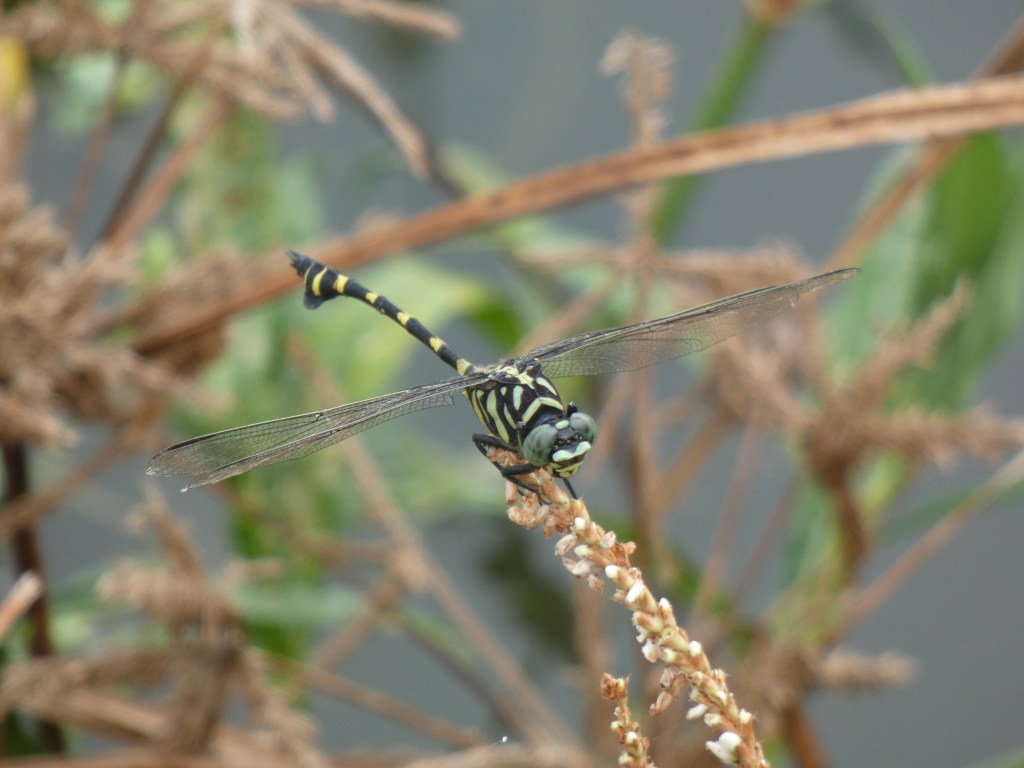
Another dragonfly lifer was a Common Clubtail. They’re common in BD, but I’m very much a newbie with dragonflies and have only seen 15 species in country, so it’s not too hard to find something new.

Common Clubtail

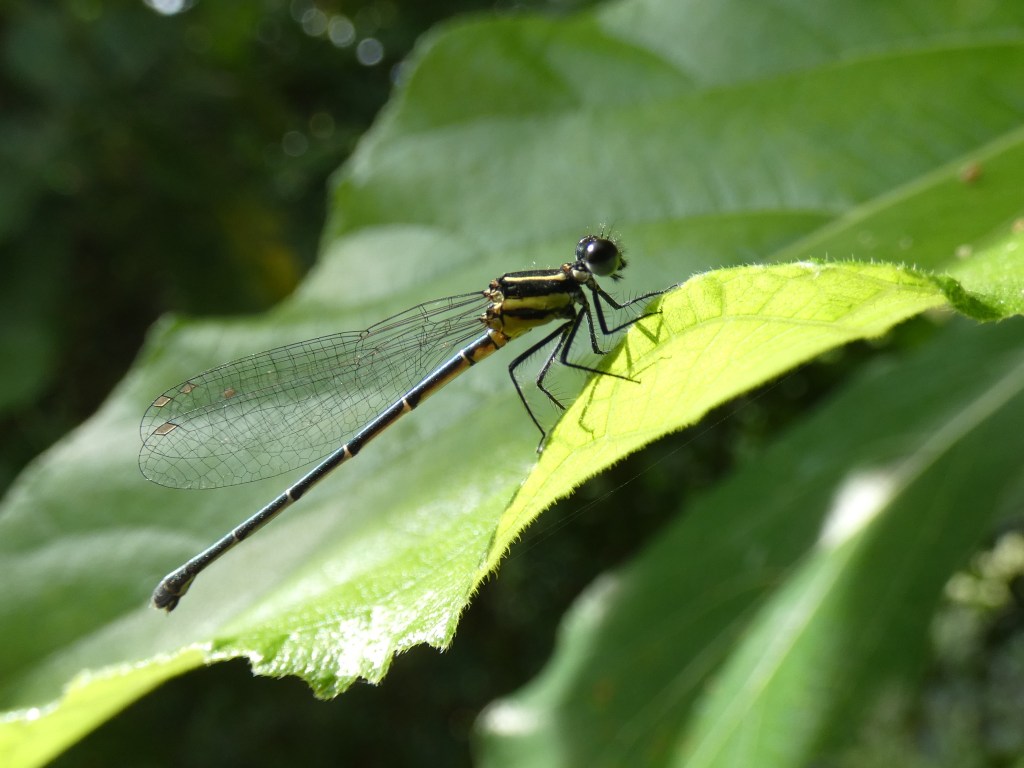
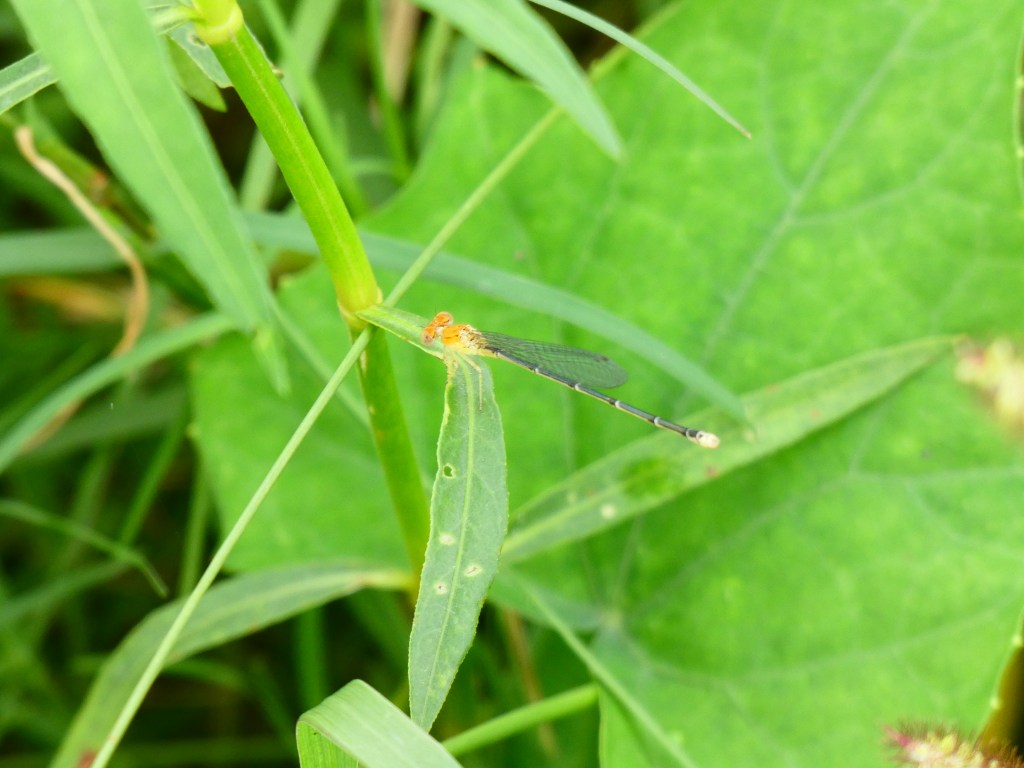
A Marsh Dancer (damselfly) was also fun.

Marsh Dancer

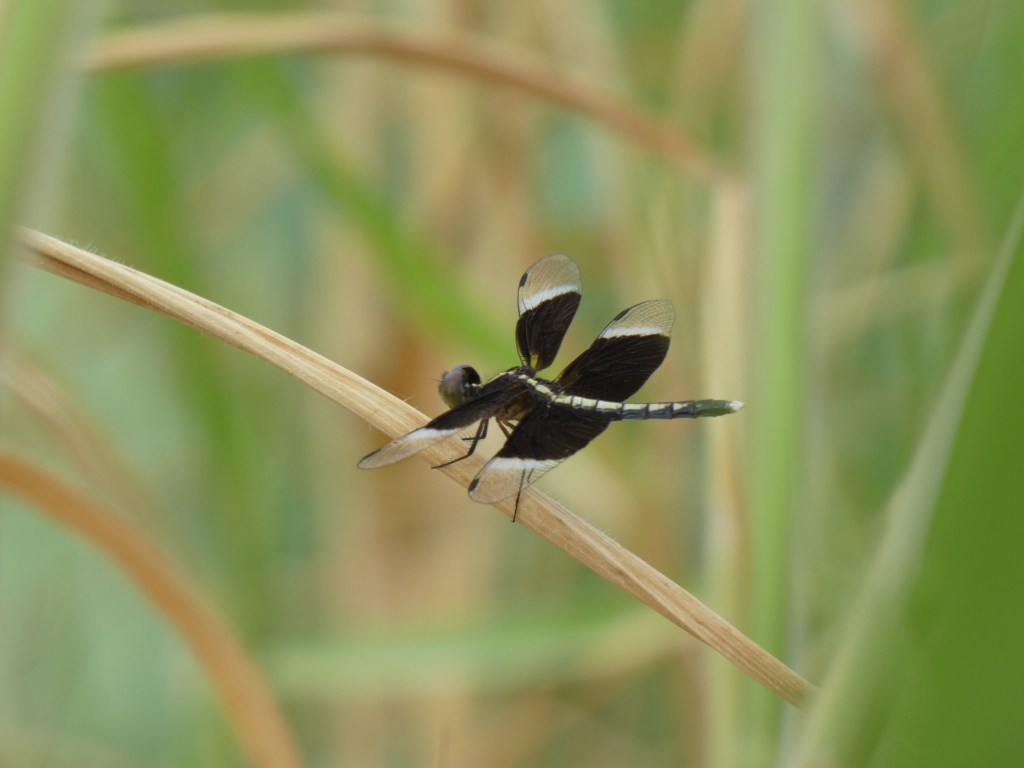
I had several other common odonata species as well, with Pied Paddy Skimmer being a first of year (FOY) for me.

Pied Paddy Skimmer

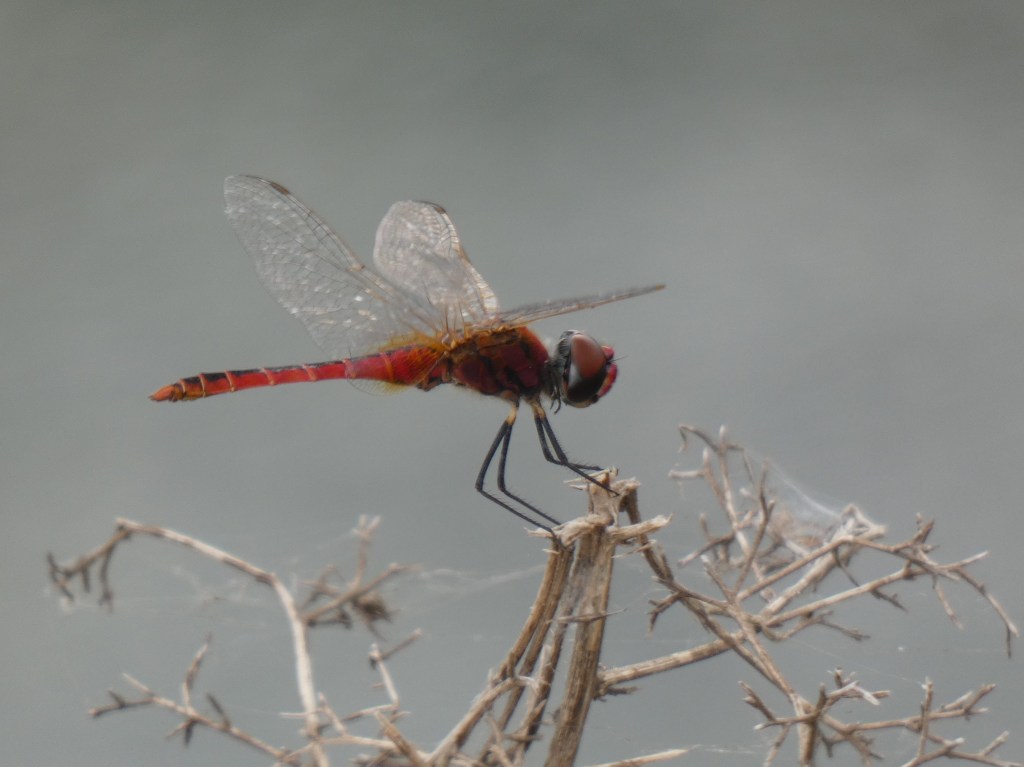
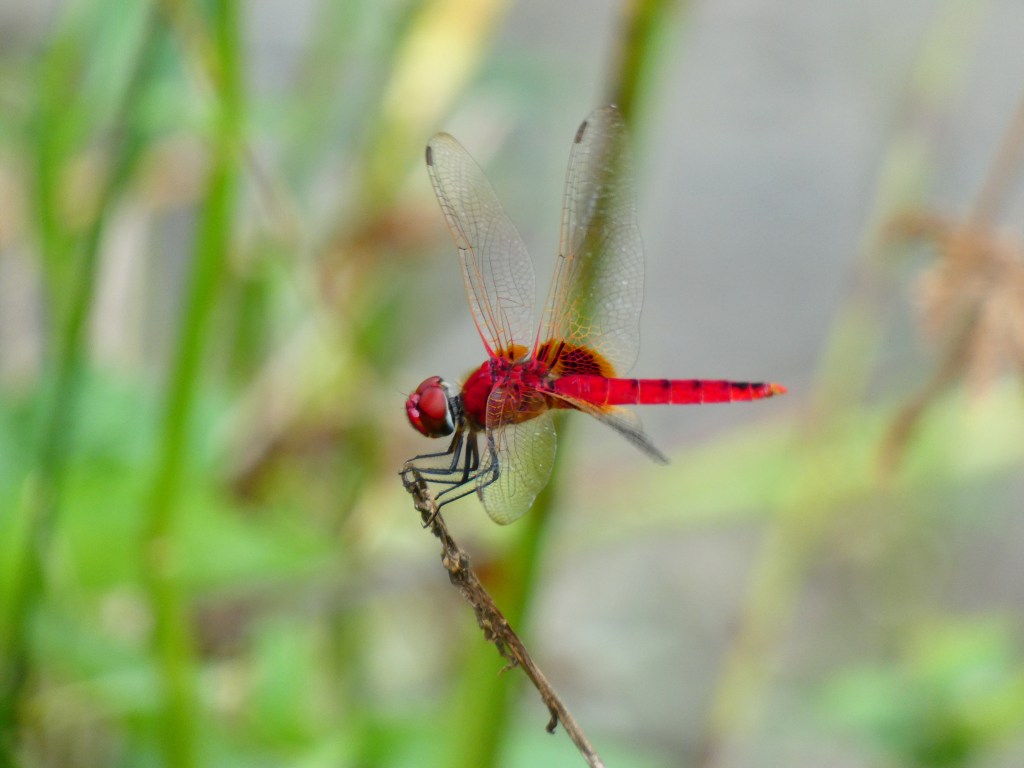
Scarlet Skimmers are super common, but they’re such an awesome vibrant red that they always make me look twice!

Scarlet Skimmer

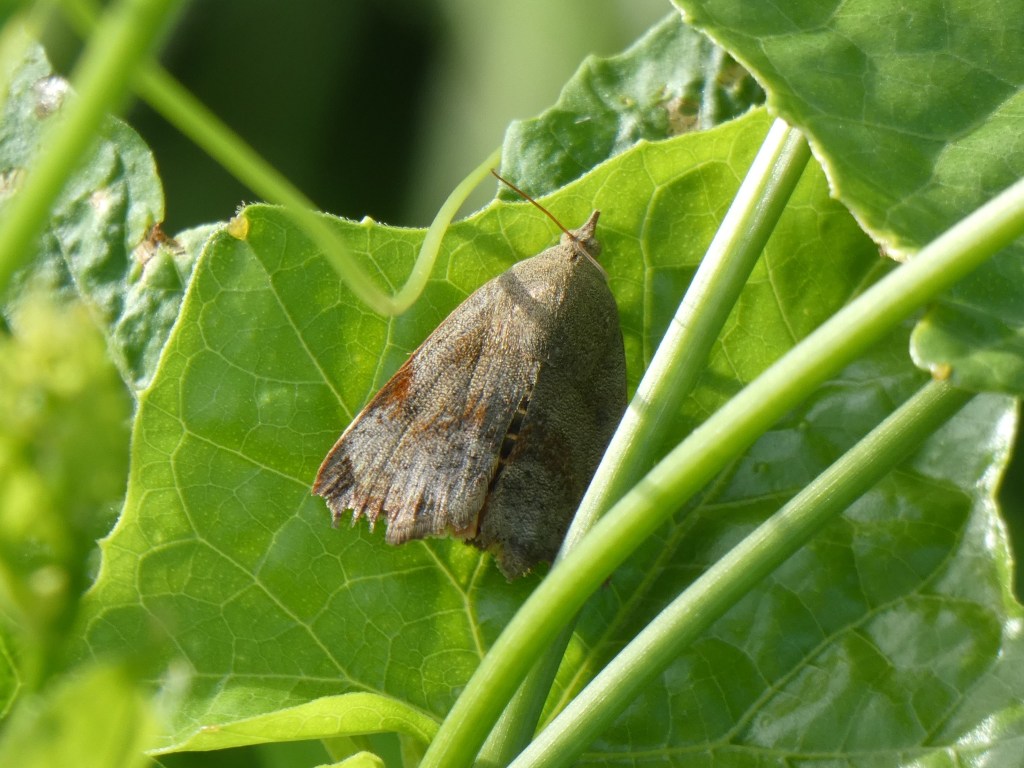
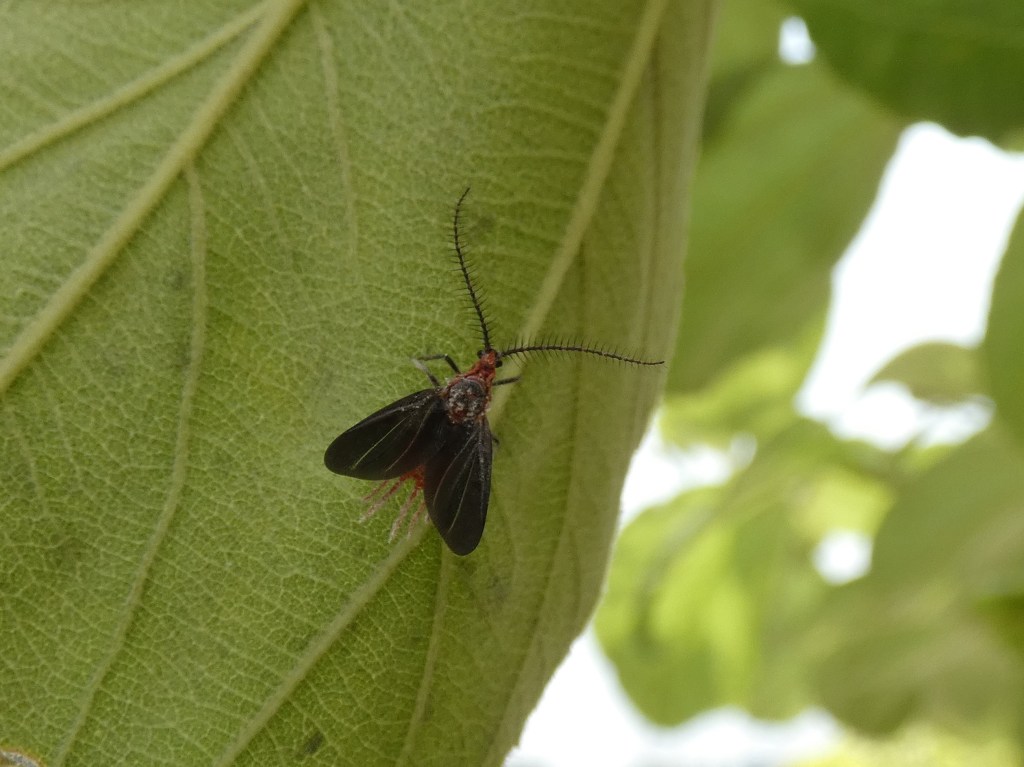
Another insect highlight was a Hyblaea puera, a new moth species for me though that doesn’t mean a whole lot since my moth lifelist is around 10…

Hyblaea puera

Back to birds: the last and best surprise of the whole was when I saw a Black Bittern in flight then saw it land and stay somewhat out in the open! This is the first time I’ve ever seen a Black Bittern when it wasn’t in flight, and it’s a fun rare sight!

Black Bittern. How awesome does that look??

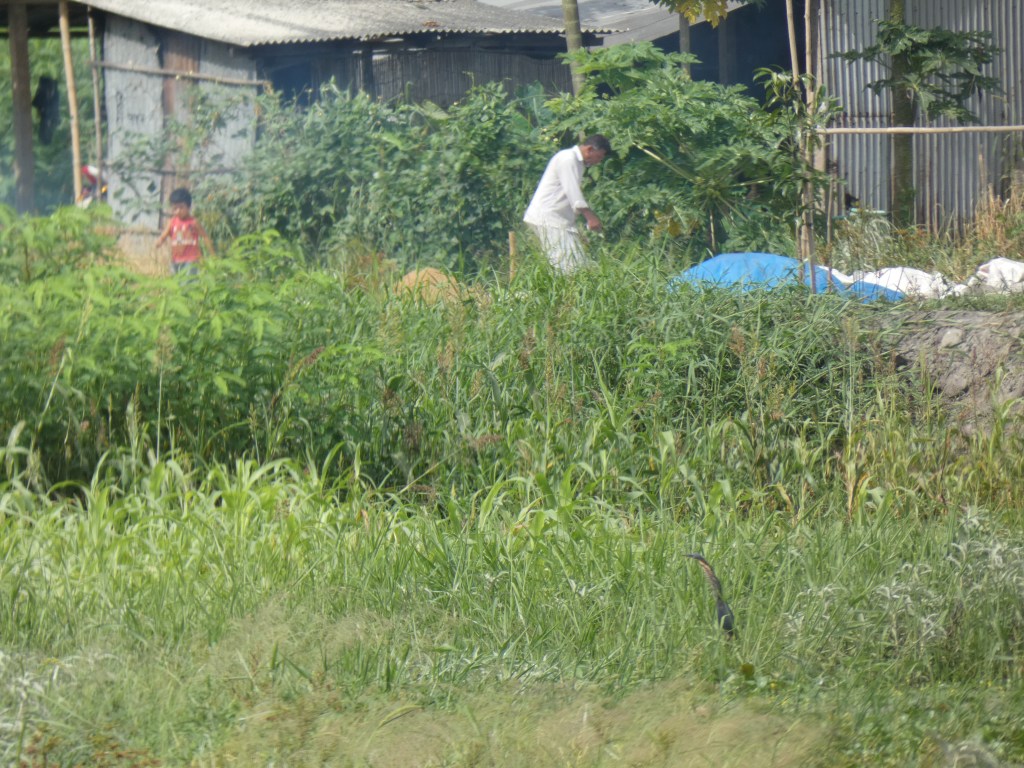
Even weirder was how close this shy bittern was to some of the locals!

That sure ended the day on a high! I quickly biked to the other entrance path as I had seen a possible cuckooshrike fly that direction earlier, but didn’t see anything there, though I did hear my only Plaintive Cuckoo for the day.
I ended up with 46 species (of birds) which is really quite good for monsoon season and shows what an amazing hotspot this bit of farmland area is! And when you include the 8 species of butterflies, 10 odonata, 1 amphibian, 1 mammal, and the many different insects I saw you realize what an incredible amount of diversity this place has. Now it’s only a matter of time before this gets developed as it’s so close to the city, but we will enjoy it while it lasts!
eBird checklist: https://ebird.org/checklist/S71109209

If you enjoyed this post, please subscribe for more. As always, feel free to comment!
After 3 months!

After exactly 3 long months of only being able to bird from home I was finally able to go birding away from home on Saturday morning! We left by 5:30 in order to not miss to much of the early morning bird movement, and even as we were biking on the roads getting close to New Vision I was seeing birds I hadn’t seen in months like: Red-collared Doves and some faraway bitterns in flight. As soon as we turned onto the little dirt road where we normally park our bikes I was seeing birds everywhere! Everything was a vibrant green, totally unlike Dhaka, and very refreshing!
We started for the path we normally take with short stops by some of the ponds where we saw a Yellow Bittern straight away, had brief views of a Cinnamon Bittern, several Bronze-winged Jacanas, Striated Grassbirds, Baya weavers, and two Chestnut Munias were our first year bird! We met a local farmer as we tried to make our way to the trail we normally take, but he warned us to be careful of “boro shap” (big snakes) and cut a few stick for us to hit the high grass in front of us. The trail was completely overgrown with grass up to our waists and after a few minutes of wading through it while whacking with our snake sticks we gave up and decided to try the trail by the villagers’ houses because that should be open. I never enjoy going that path as much because one reason I love being out here is just getting away from people, but if that trail was passable it was worth it.

On the short several hundred yard bike ride to the other trail I was distracted by a Long-tailed Shrike diving into the grass then flying up and going off to feed its young which were perched on a nearby tree. No photos of this sadly since my camera isn’t working and Nic wasn’t nearby with his. I soon caught up with the others and we locked up our bikes and went down the other trail which was in much better condition. There were butterflies and dragonflies everywhere as well as plenty of birds!

Nic and I birding. Photo taken by my dad who had come along to make sure everything was fine for birding these days.
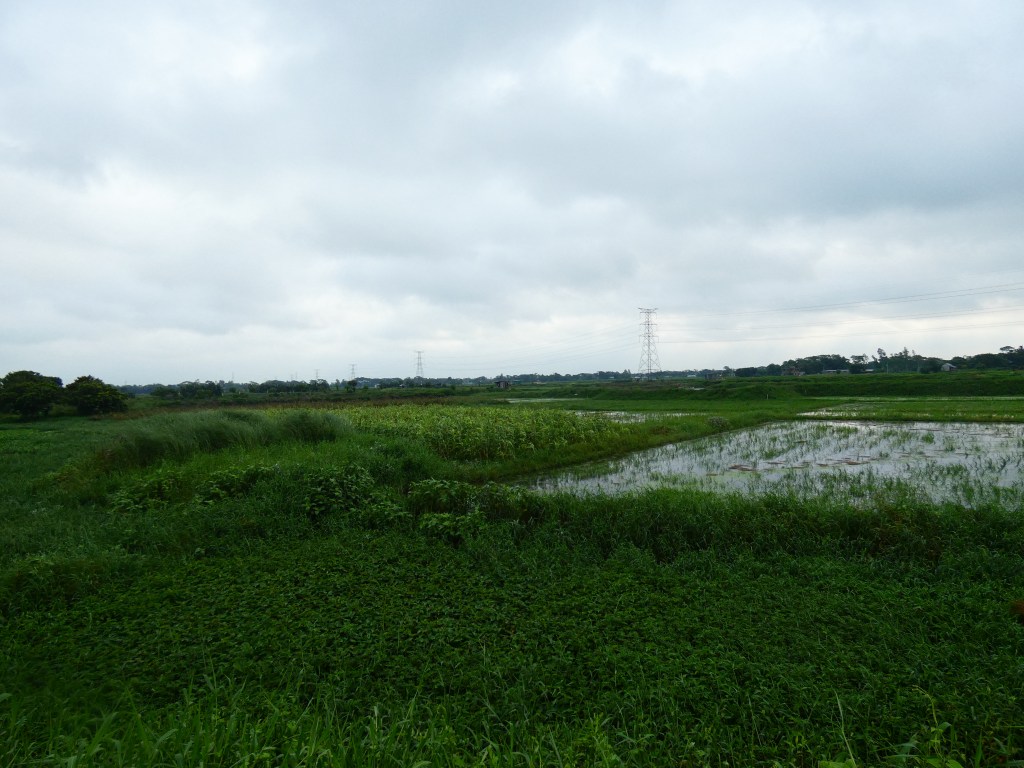
Notice how green everything is!
This juvenile Brahminy Kite somehow looked odd through the binos even though I knew what it had to be…
ⒸNiccolas Miller

A fun surprise was a Black Bittern flushing from somewhere right along the path. They’re usually quite elusive and hard to see even though they’re breeding residents here, but we soon discovered they were very active today! This was year bird #2 for the day and #206 for the year!

Black Bittern from a little later that morning. They’re such awesome looking birds!

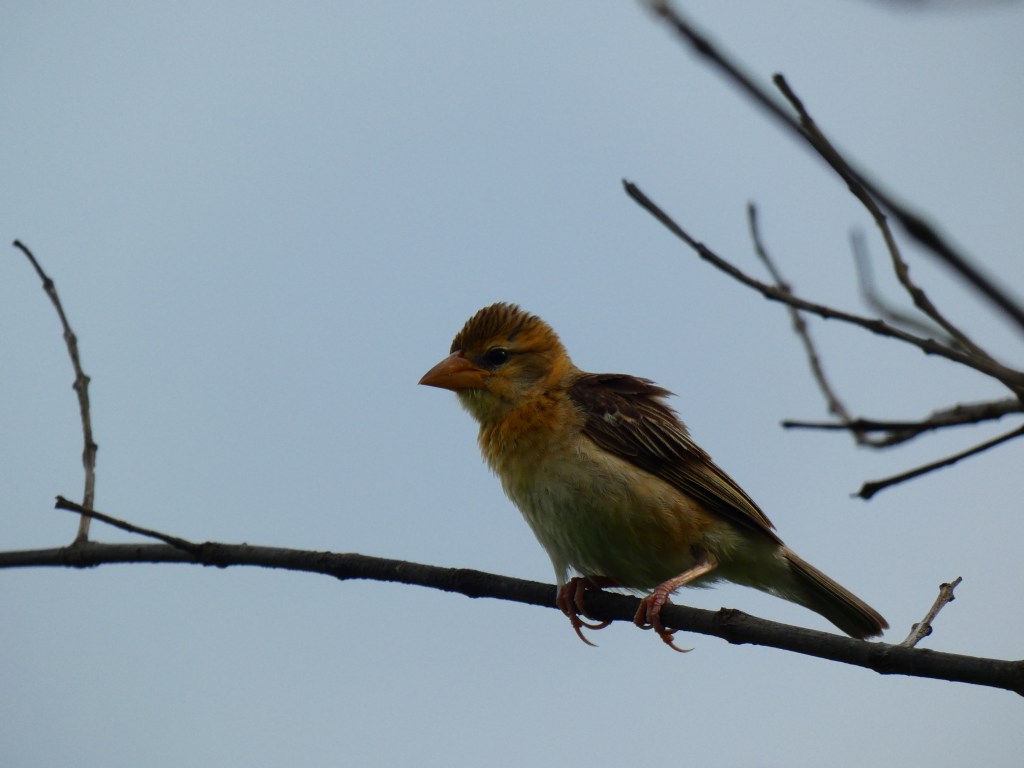
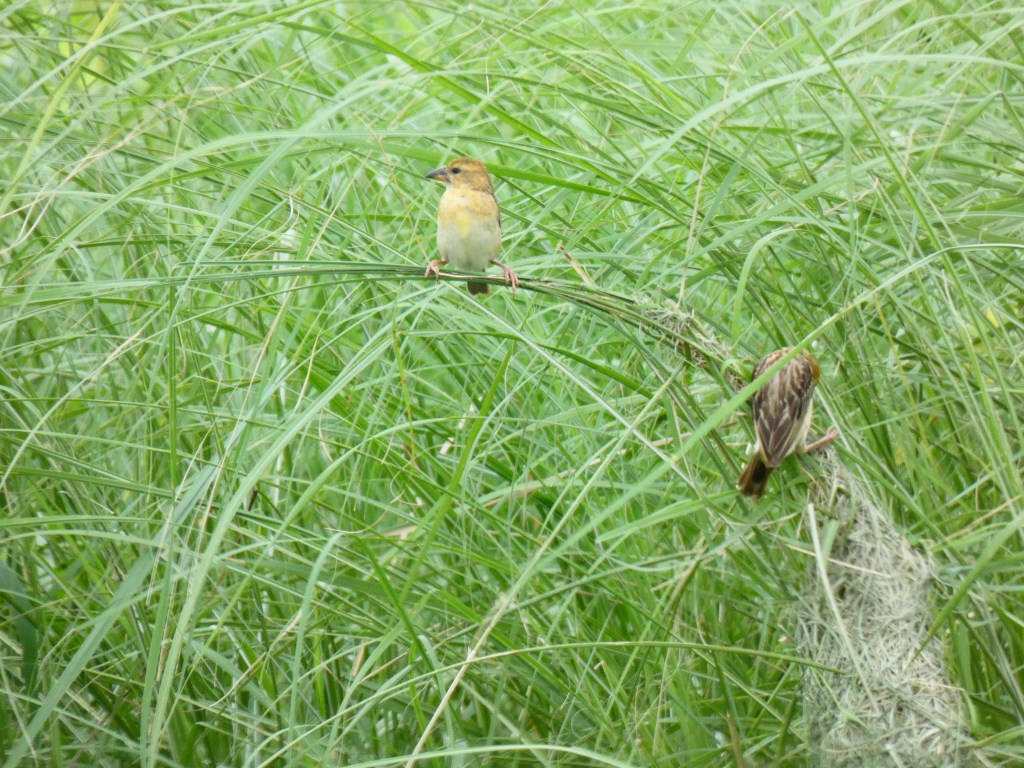
Baya Weavers were everywhere along the beginning of the path, along with a Tricolored munia which was another year bird!

Baya Weaver
ⒸNiccolas Miller
Weavers building their nest. Sadly didn’t get any photos of the males apparently…
ⒸNiccolas Miller

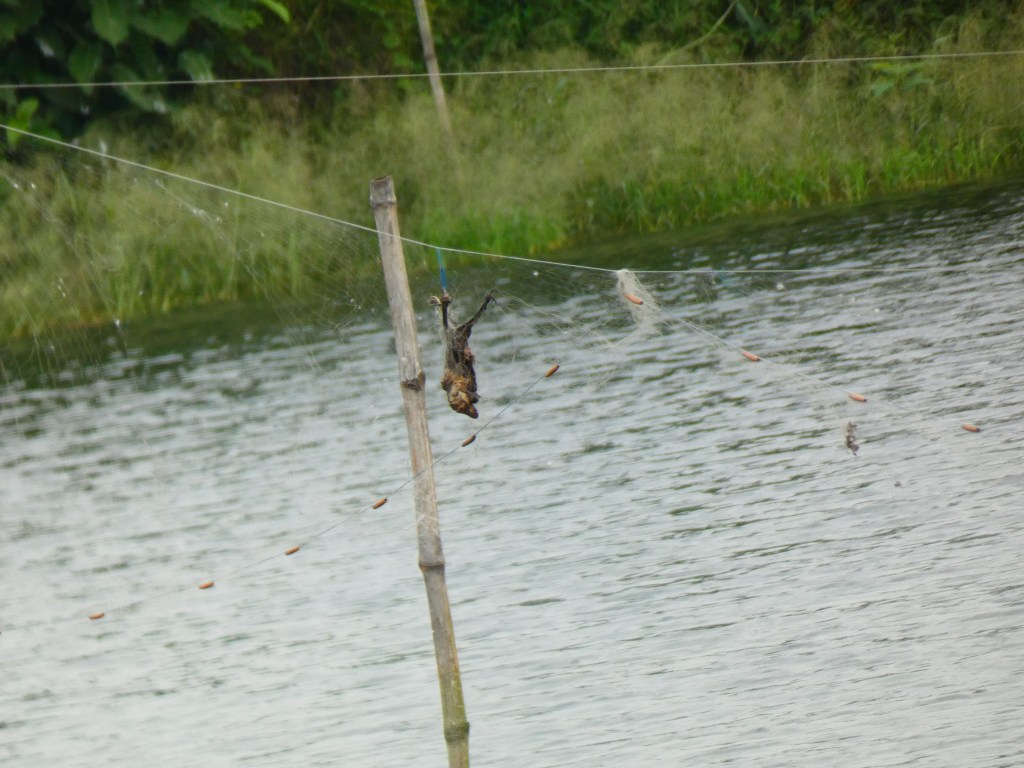
Sadly, we saw some more deaths from the netting the villagers put up over the fish ponds.

dead White-throated Kingfisher
ⒸNiccolas Miller
dead bat. Not completely sure on species, but possibly Great Asiatic Yellow Bat?
ⒸNiccolas Miller
Everything is so green!!
ⒸNiccolas Miller
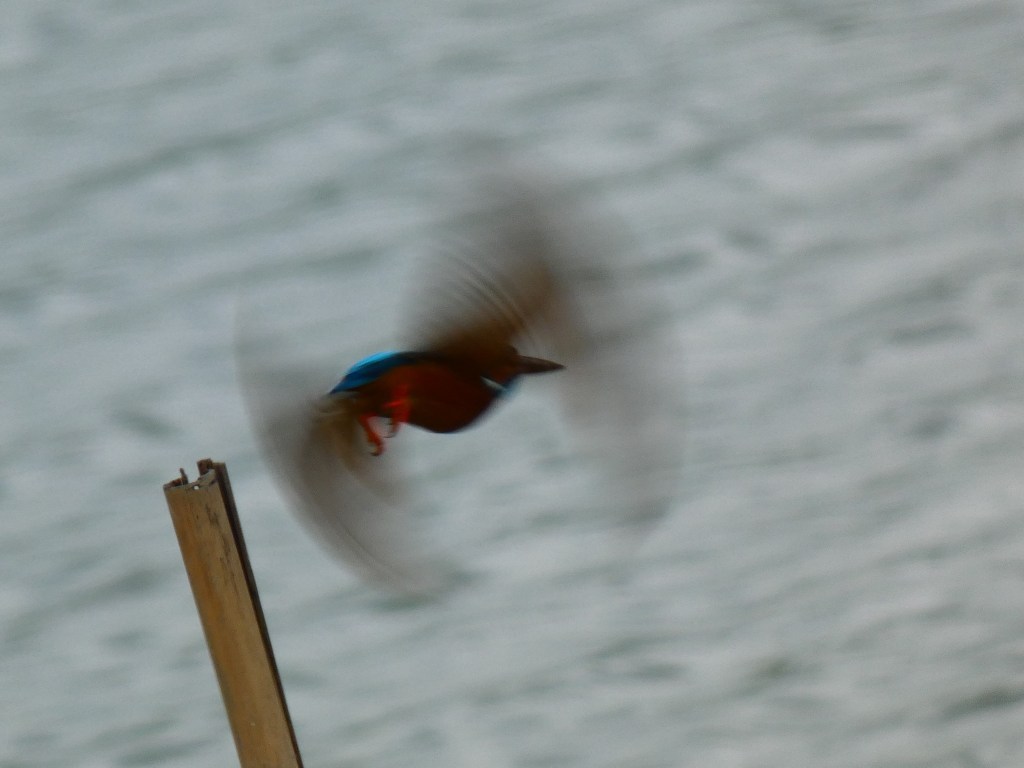
Common Kingfisher taking off!
ⒸNiccolas Miller
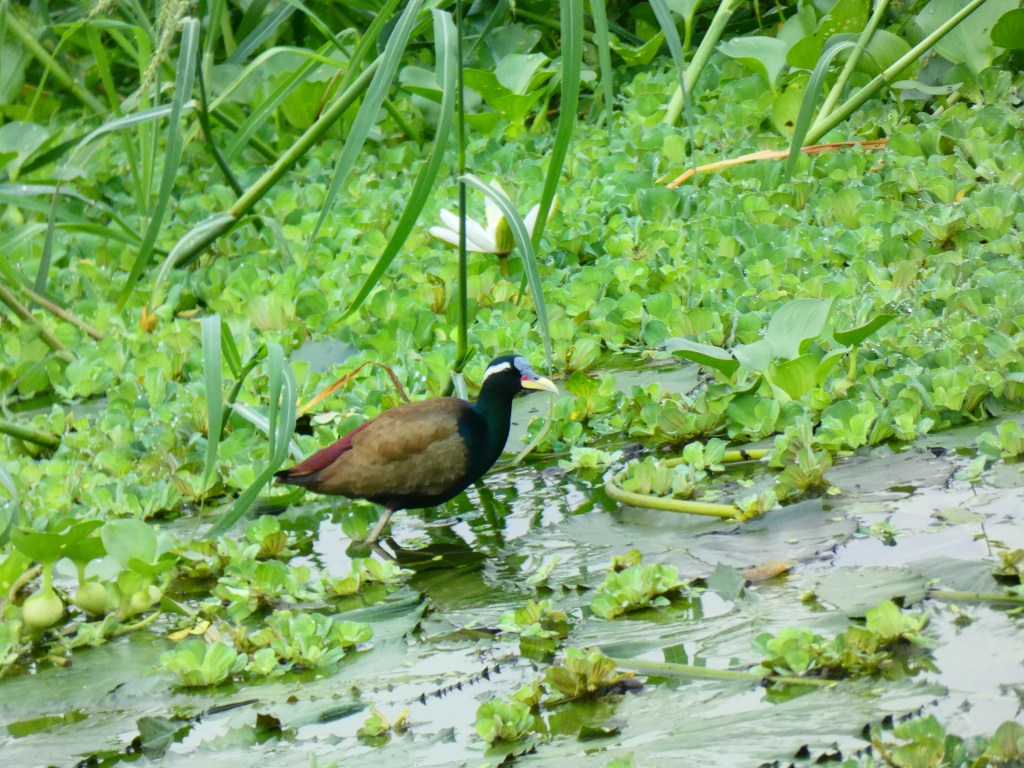
One of the many Bronze-winged Jacanas

As we followed the trail to the largest pond which by now is full again after being nearly completely dry when I last went in March, we found a large flock of at least 50 Asian Palm Swifts. There were also lots of bulbuls on a bare strip of ground alongside the path.

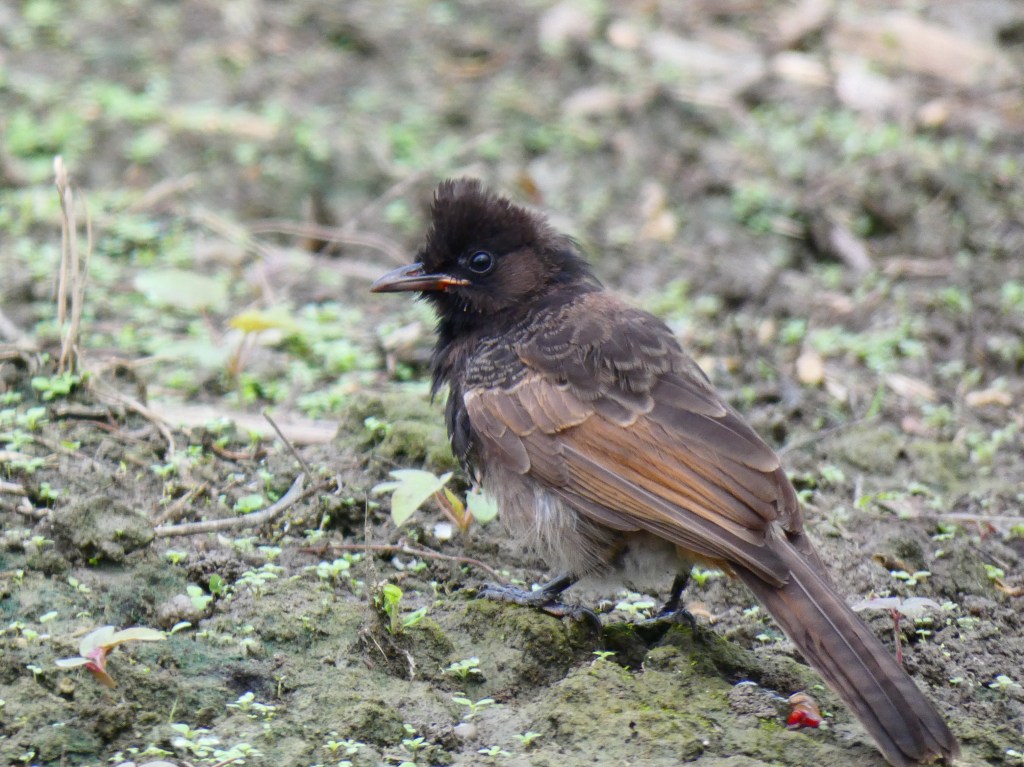
juvenile Red-vented Bulbul
ⒸNiccolas Miller

After checking the entrance to the tree row where I’ve seen Brown Boobook, we decided not to try to go through it since the grass was pretty high and looked like another great place for snakes! We started down the path leading to where I found a rare Streak-throated Swallow last year, but I soon got very very sidetracked when I discovered all sorts of cool insects in the low plants along the path. So I spent the next 20 minutes carefully going through photographing all the insects I could while Nic ate chanacur (spicy local snack mix) and kept an eye out for birds. While I was looking for insects I caught a glimpse of a bird that turned out to be a Pied Cuckoo, the last year bird for the day and #208 total.

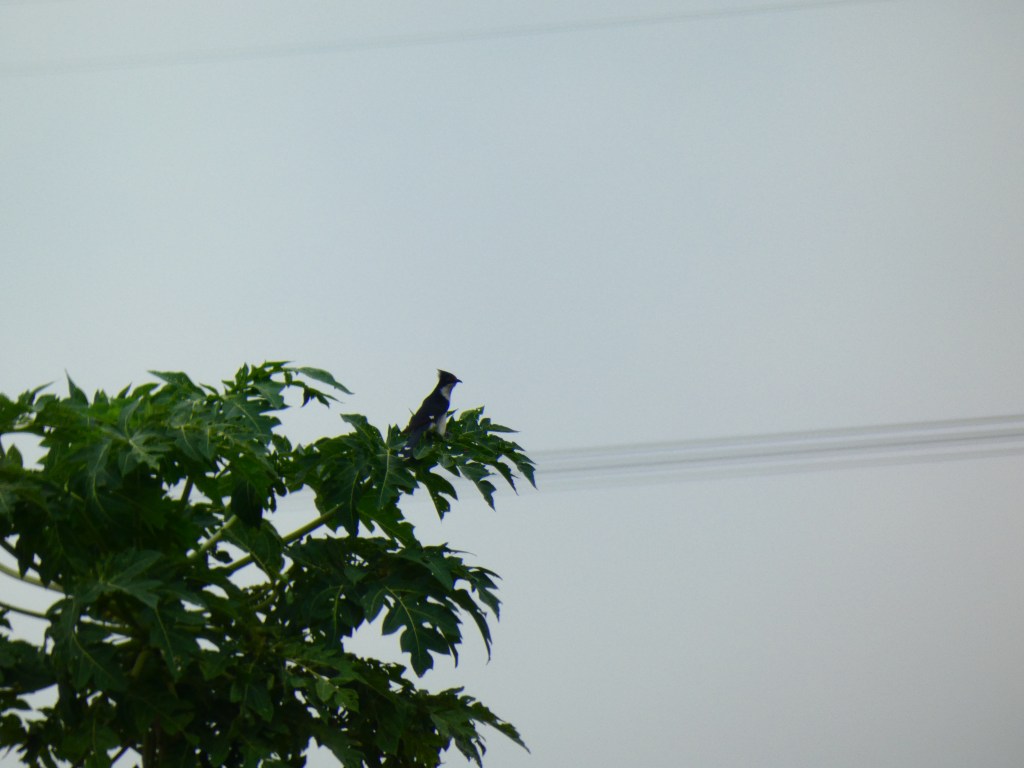
Pied Cuckoo that flew off before Nic could get closer
ⒸNiccolas Miller

If you’re not interested in awesome insects then you can skip down to the bottom, but otherwise enjoy!

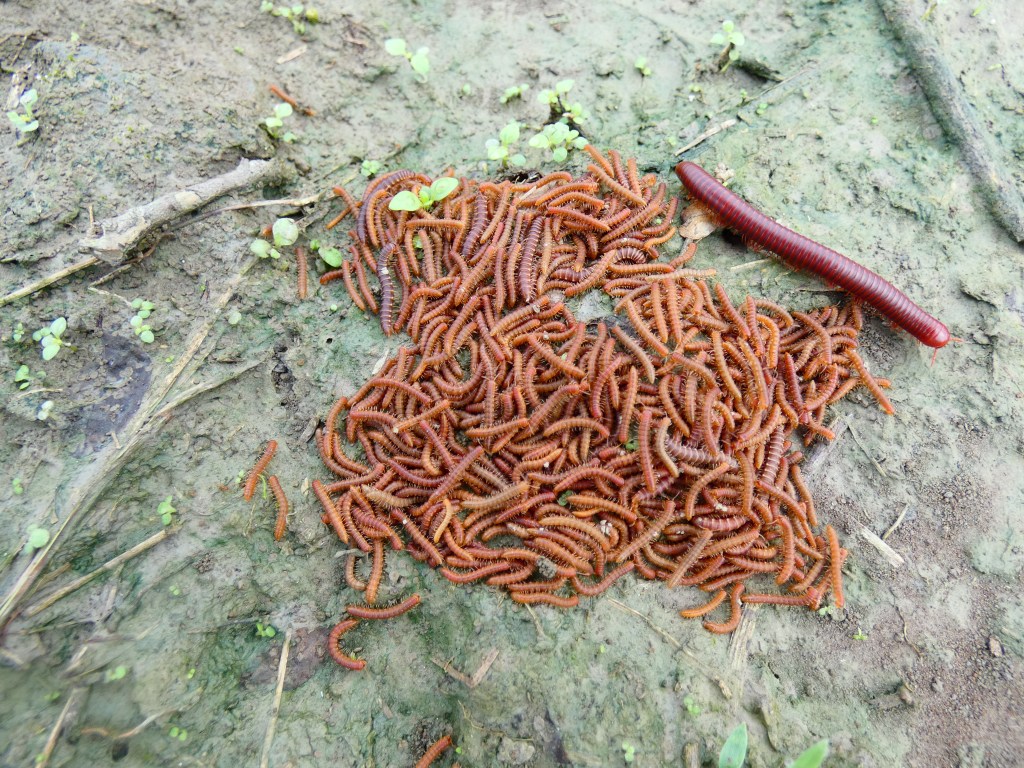
Ok, I know, these millipedes aren’t insects, but this swarm of little ones with one of the big ones was really weird.
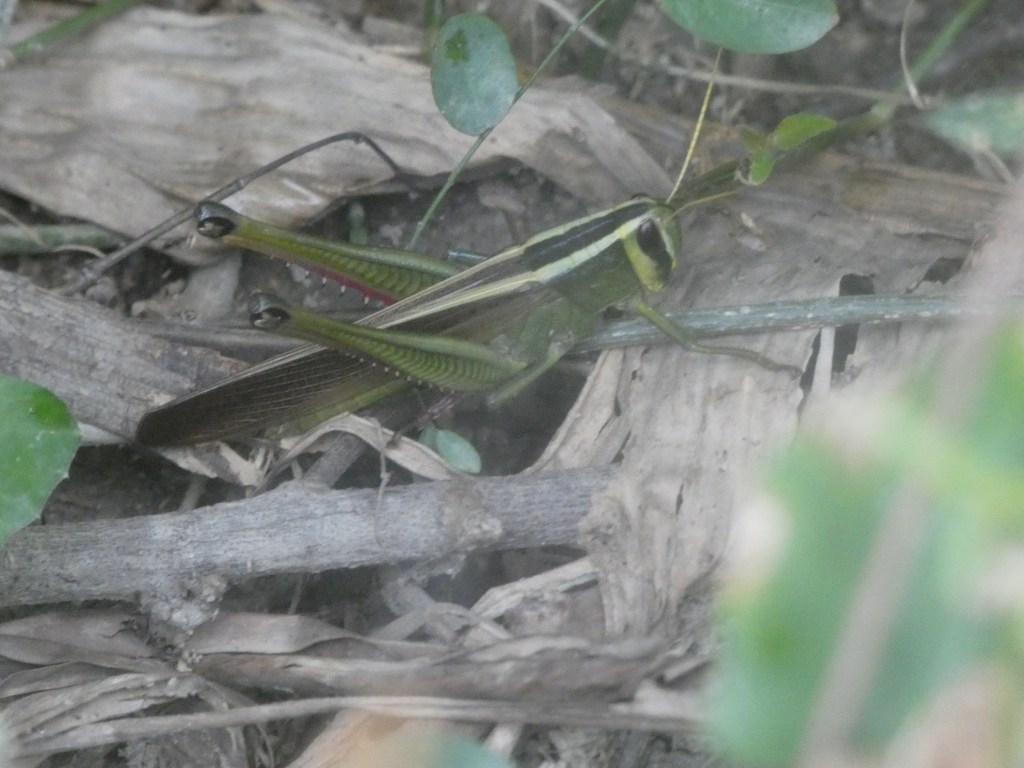
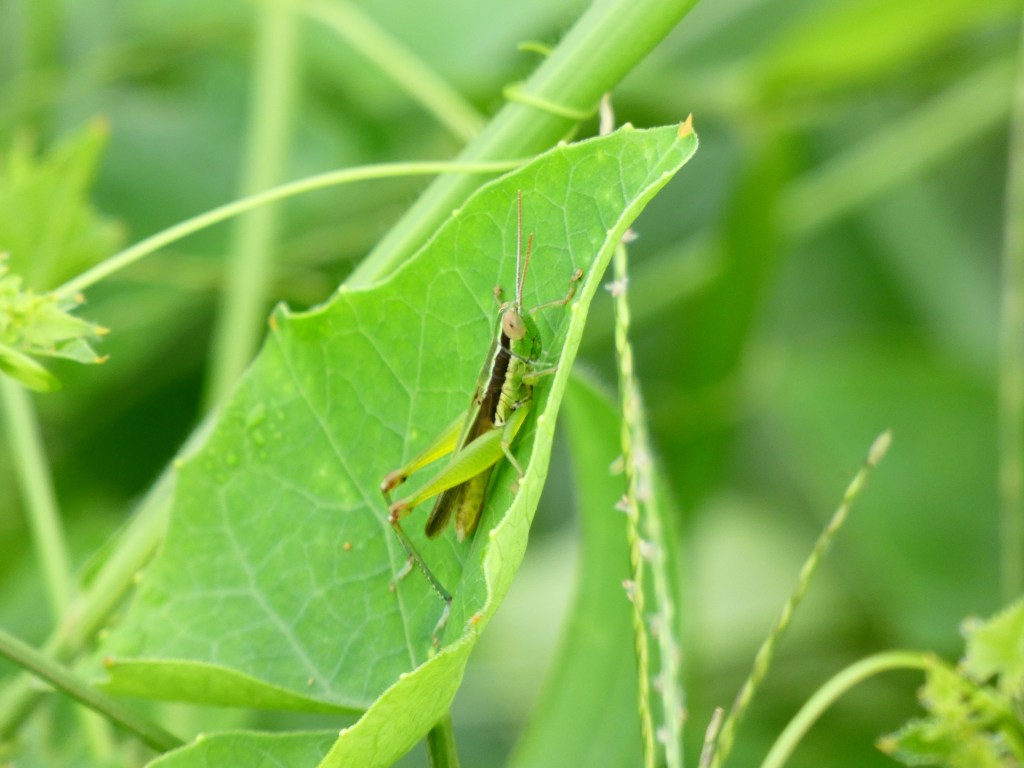
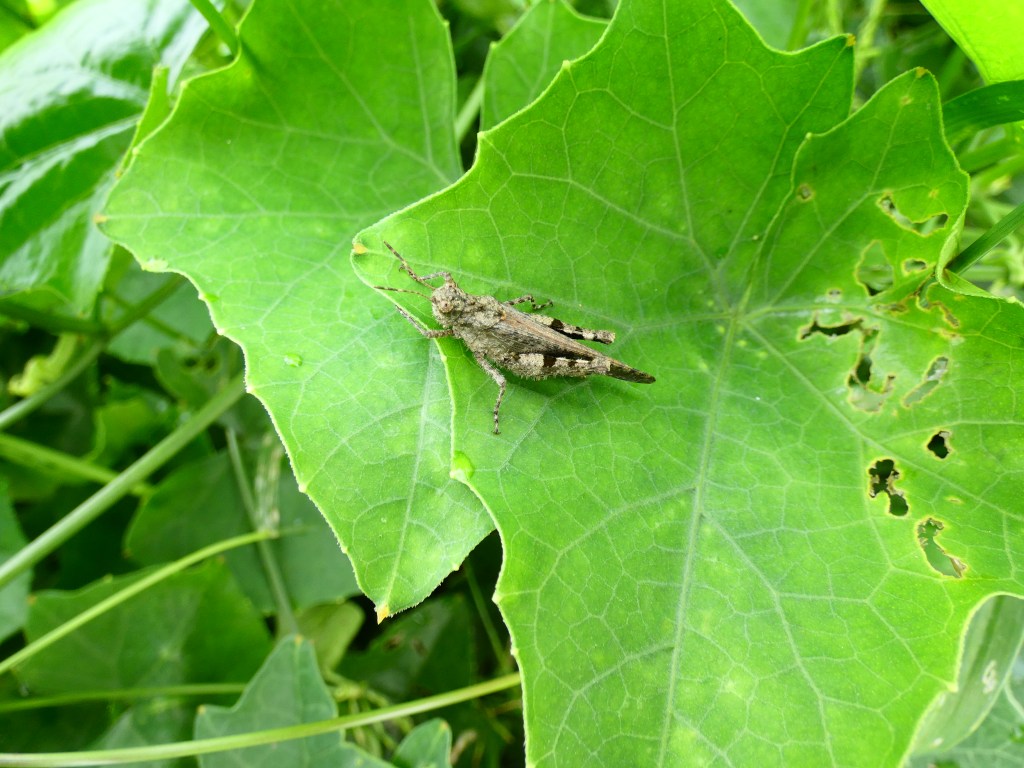
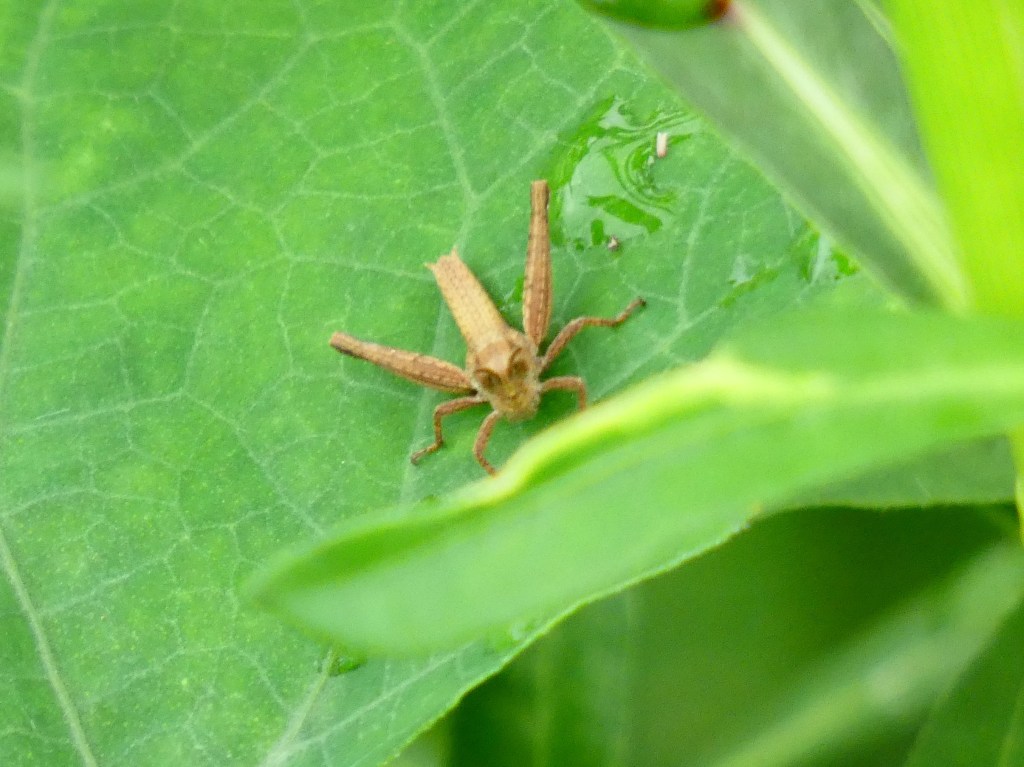
Some unidentified grasshopper
https://www.inaturalist.org/observations/50237609
Another grasshoper, maybe Genus Trilophidia?
https://www.inaturalist.org/observations/50237612
A cool fruit fly
https://www.inaturalist.org/observations/50237616
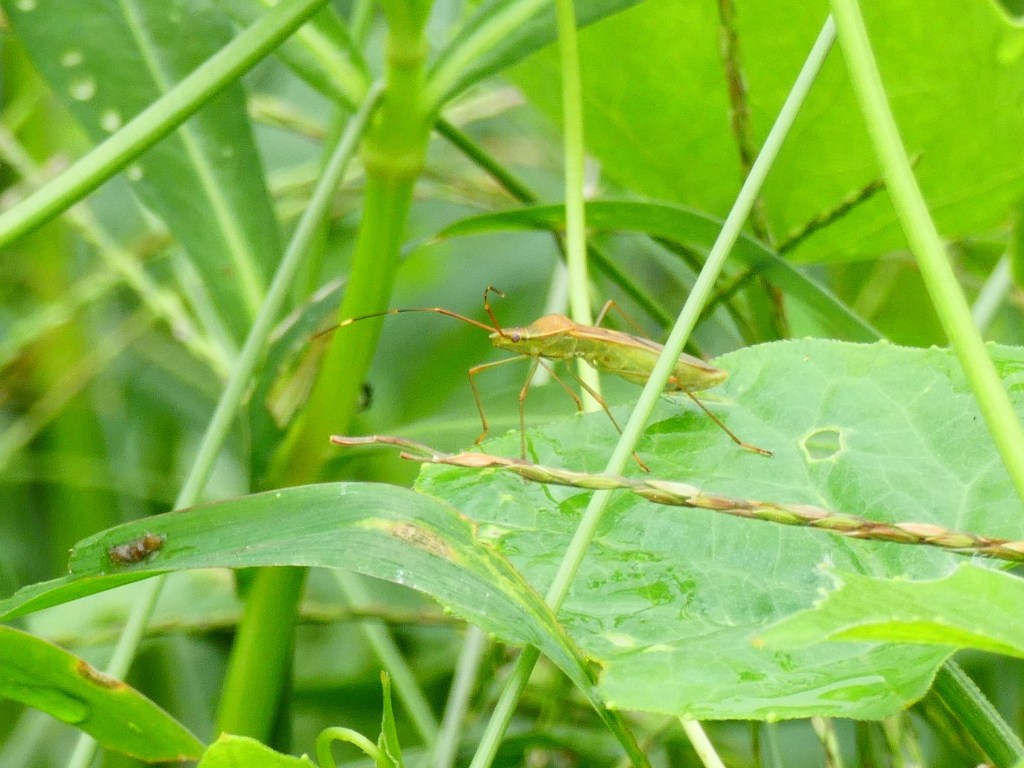
Genus Leptocorisa?
https://www.inaturalist.org/observations/50237621
Surely I’m not the only one that sees the creepy human face on this grasshopper?
https://www.inaturalist.org/observations/50237622
A yellow spider…
https://www.inaturalist.org/observations/50561437

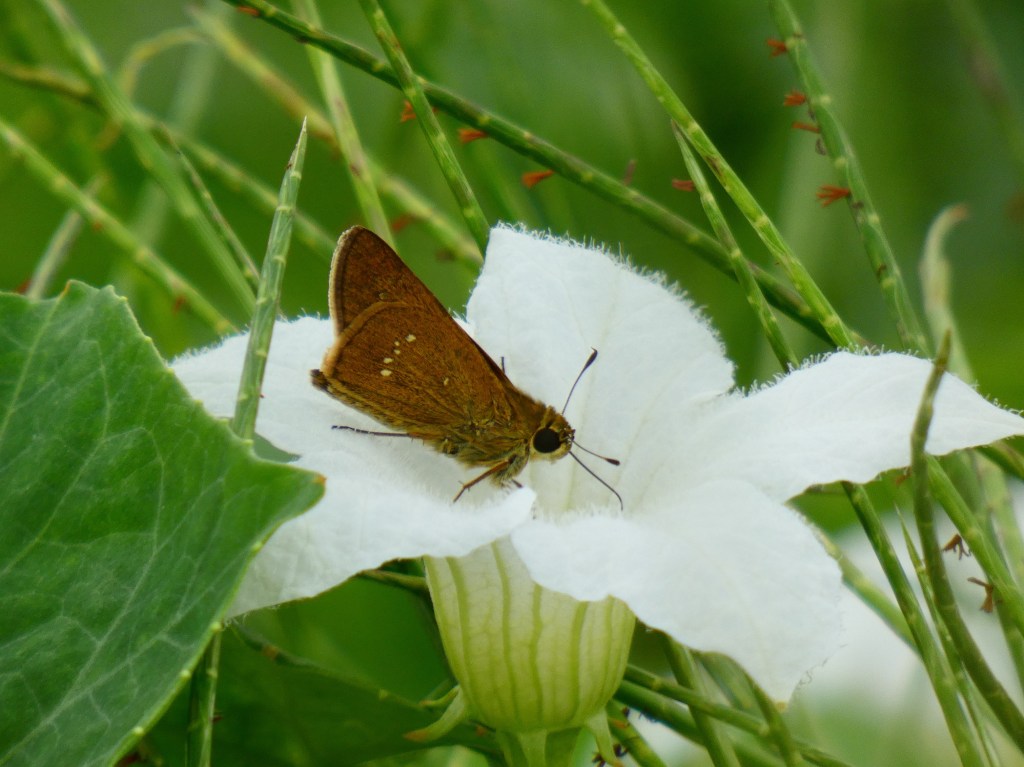
The skippers were pleasantly common which was nice since I’ve somehow never gotten photos of one before! They’re quite difficult to ID and you need upperwing shots, which of course the first one wouldn’t let me get…

Pelopidas sp
https://www.inaturalist.org/observations/50244602
Little Branded Swift (Pelopidas agna) a new butterfly species for me!
https://www.inaturalist.org/observations/50244616
A dragonfly I’ve been too lazy to ID
https://www.inaturalist.org/observations/50244624
Orange-faced Sprite or Saffron-faced Blue Dart (Pseudagrion rubriceps) was a new damselfly for me!
https://www.inaturalist.org/observations/50257828
Scarlet Basker
https://www.inaturalist.org/observations/50563473

**end of insect section for those who skipped 😉 **


We saw Black Bitterns fly out of and into a swampy area several times and wonder if they’re breeding there, but sadly there were some farmers cutting the grass there, so hopefully the bitterns will be fine.

Bitterns are absolutely impossible to see in that grassy area!
This Yellow Bittern was a little easier to see
One of the many Black Drongos
ⒸNiccolas Miller

As it started getting warmer around 9:20 we decided to start heading home since we’d already had almost 3 and a half hours of good birding and a grand total of 47 species!
eBird checklist: https://ebird.org/checklist/S70620538

All in all, a very good day out with four year birds, a new damselfly and butterfly, lots of other cool insects, and lovely cool weather for June!

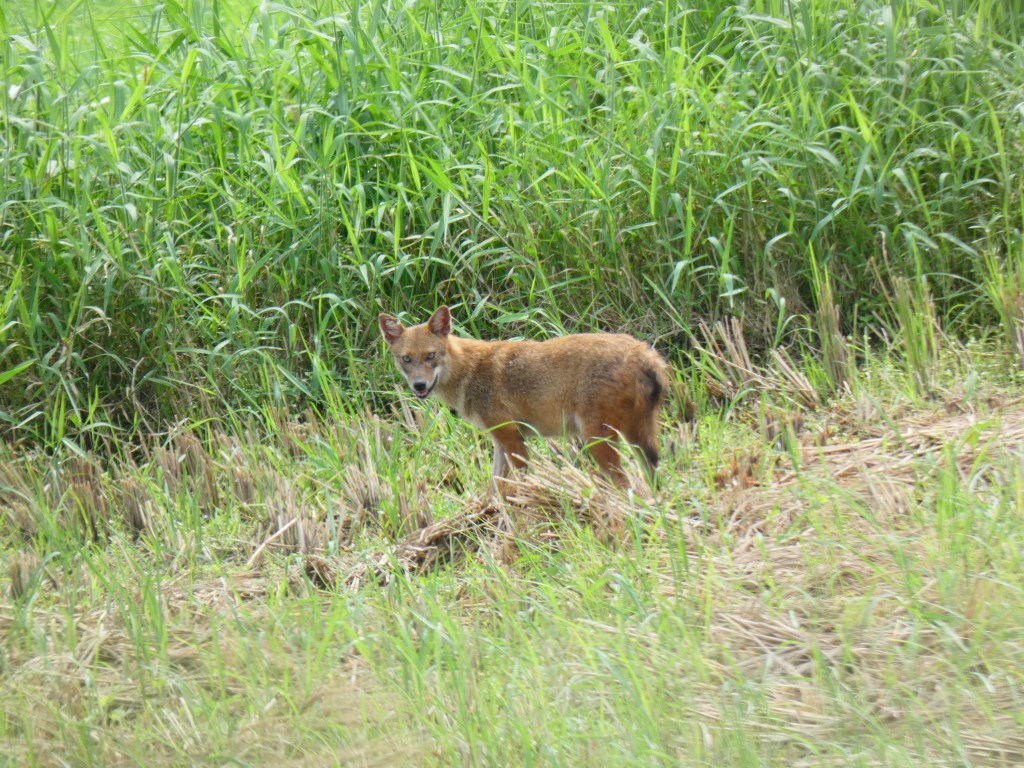
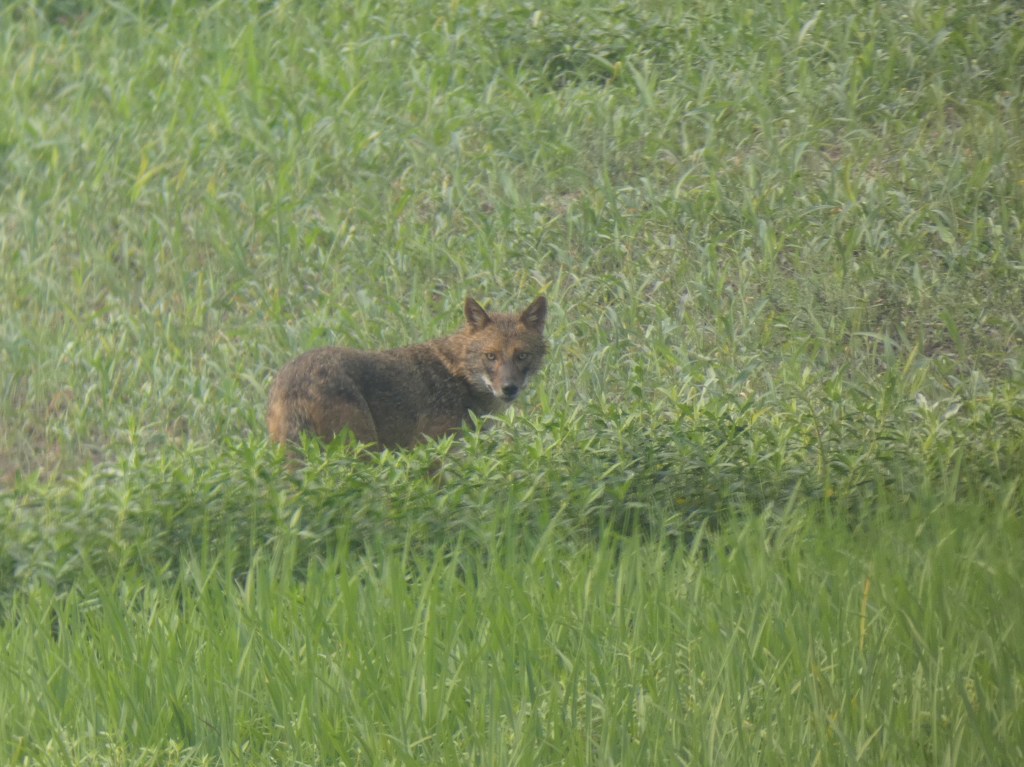
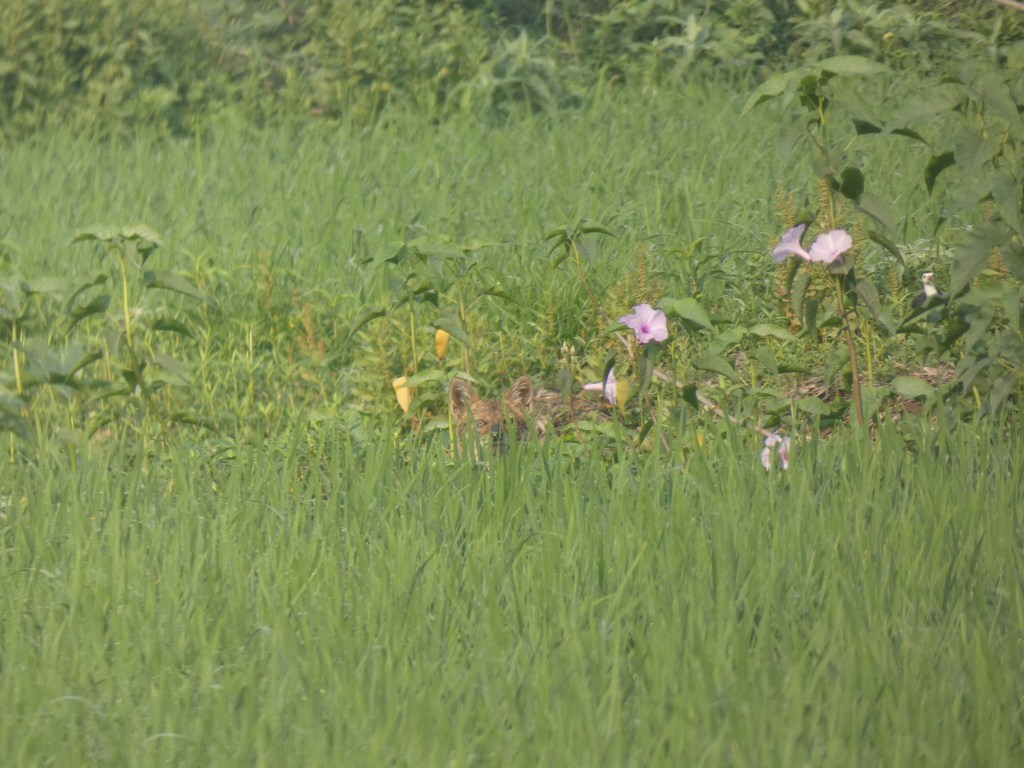
And to sign off, here’s an obligatory shot of one of the resident Golden Jackals.

Golden Jackal
ⒸNiccolas Miller

A Shearwater in Dhaka?!

Those of you who are birders and know something of where and what Dhaka is like (and who read the title) will be completely understand the incredulity I’m feeling. Yesterday afternoons birding started just like any other of my normal birding days besides that I went up to our rooftop a bit earlier than usual and super cyclone Amphan had hit the coast the evening before. Now, if you’re an avid birder from the US you probably know that hurricanes (cyclone=hurricane just in a different ocean) are known to bring odd *pelagic species above land and sometimes surprisingly inland. But there’s never before been any interesting pelagic species seen in Bangladesh because of cyclones, except for right near the coast, so I wasn’t expecting anything. My main hope was the winds would blow in some resident species that would be new for my “yard” list.
(*for any non birders, pelagic species are basically any bird that spends it’s entire life at sea except for breeding. Check out this explanation if you want more details)

So, as I said, my birding started out fairly normally. I could tell there was a decent bit of bird movement including Black Kites in slightly higher numbers than usual, one or two Little Cormorants right away which was a good sign, and I heard a Common Kingfisher flying through. All this was in the first few minutes, and I was pleased with how much activity there was and hopeful for at least something interesting.

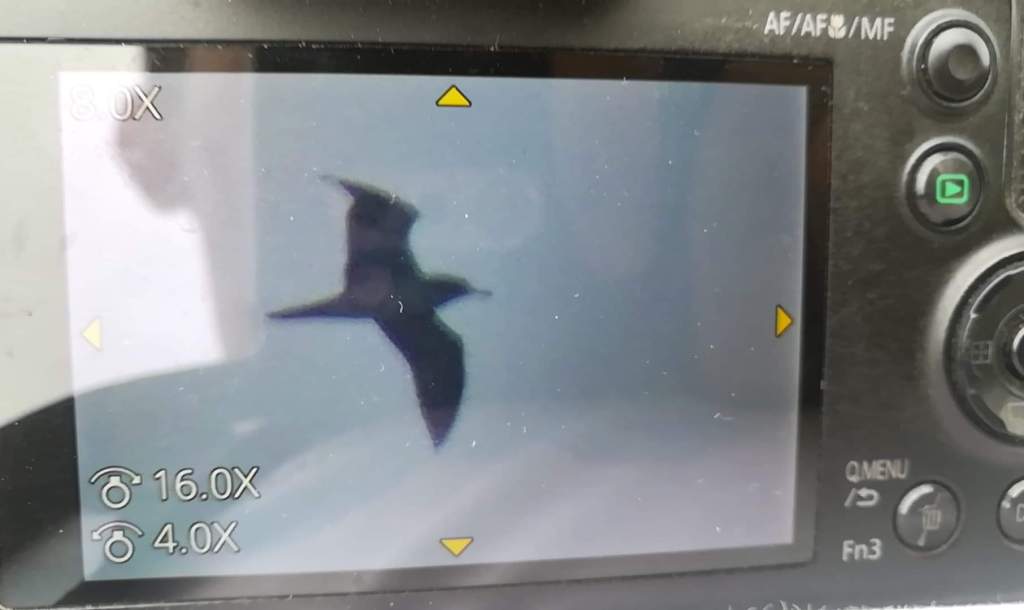
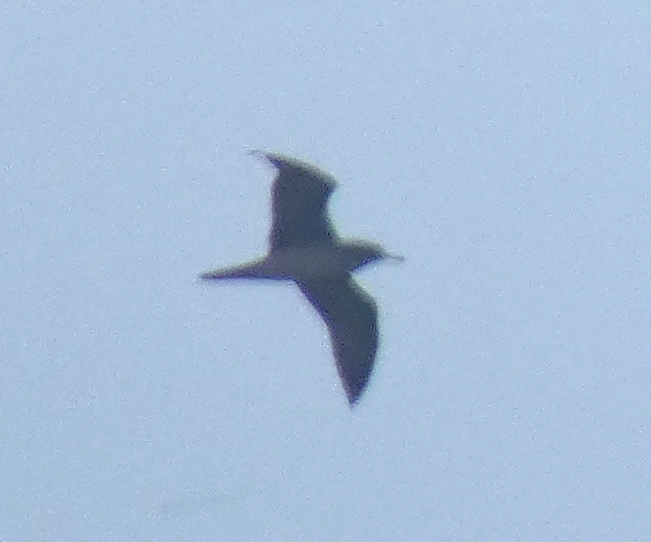
After about 4 minutes of birding I caught a glimpse of some bird flying to the right then disappearing behind some buildings. From the half a second view I caught of it’s flight style I immediately though Little Cormorant and was a bit proud to think I can recognize a cormorant from about two flaps of its wing from quite a ways away. But then, as my camera focused on it as it shot out into view again I was SHOCKED to see a long winged, fairly slender, completely brown bird! I soon realized this was some pelagic species blown way out of it’s course by the cyclone, and I snapped as many photos as I could in the 5 seconds it was in view before disappearing to the north.

I quickly checked my photos which confirmed my suspicion that it was some pelagic species and immediately sent a back of camera photo to many of my birding friends in country who were all just as shocked as I was!

Amazing back of camera snap 😂

I kept birding for at least 20 minutes, then couldn’t stand the wait any longer and went down, copied the photos onto my laptop, quickly sent them to people, then rushed back onto the roof where my brother had been keeping watch. (he sadly hadn’t seen the shearwater because he was downstairs doing chores 😦

I was quite worried that my blurry photos wouldn’t be enough to ID, but when I finished birding and posted them on Birds Bangladesh facebook group Wichyanan Limparungpatthanakij, an expert Thai birder, commented within an hour saying that from shape and structure he thought it was a Wedge-tailed Shearwater.

I knew my bird had some potential to be a first for the country since the pelagic list is pitifully low because there have been so few pelagic birding trips, but I hadn’t really expected it to actually happen! It has since been confirmed by many others to be Wedge-tailed Shearwater because the long tail rules out other all dark shearwaters and the long, slender, dark bill rules out Flesh-footed Shearwater. I can barely believe it, but I’m now the only person to have seen Bangladesh’s 707th species!

After I posted, I saw someone else had seen a Sooty Tern in western Bangladesh which was also a new record for the country (#706). West Bengal, India also had a number of unusual species blown in from the storm including multiple species of terns, at least one frigatebird, a probable White-tailed Tropicbird, and a (Swinhoe’s?) storm petrel! Needless to say this will be a day long remembered by me and the others who found cool birds, but we must all remember that for many people this cyclone was a nightmare, and caused much suffering and destruction.

You can view my checklist or my post in Birds Bangladesh group if you’re interested for more details.

If you enjoyed this post, please subscribe for more. As always, feel free to comment!
Yard Birding Surprises!

I’ve been birding from our rooftop every evening and some mornings since lockdown started and just this afternoon reached fifty species with a flyover Shikra! It’s been a lot of fun being able to bird even in the middle of Dhaka during the lockdown, and I’ve had some awesome surprises along the way! My yard list has made it to 58 with some cool new yard birds like Eurasian Hobby (a lifer!), Oriental Honey Buzzard, Black-winged Kite, and best of all a flock of 8 Glossy Ibis! The ibis were actually the first record for Dhaka division!

One thing motivating me to bird is a fun yard challenge put together by Matt Smith the founder of Fantasy Birding. He put together 7 teams of nine individuals mainly from the US and Canada, but each team also has one overseas player. The goal was to see how many species you can observe during four 2 week slots. There would be winners for each two week duration and for the whole competition. Each species observed by a team is worth a point and any new yard birds are worth a bonus point whether or not your team already has that species. My team, the Unsociable Weavers, was dead last for the first two weeks stretch, but we’ve pulled an amazing comeback and are now in first among the original 7 teams!

You can check out the leaderboard for the competition here, but you have to add in the bonus birds if you want to see who is truly in first 😉

It’s been unusually overcast for April, but that makes it cooler which is nice! Unfortunately since I’m usually birding in relatively early morning or late afternoon that means the photos aren’t great, but here’s a bunch of random photos from this month that either turned out decently or show a cool bird.

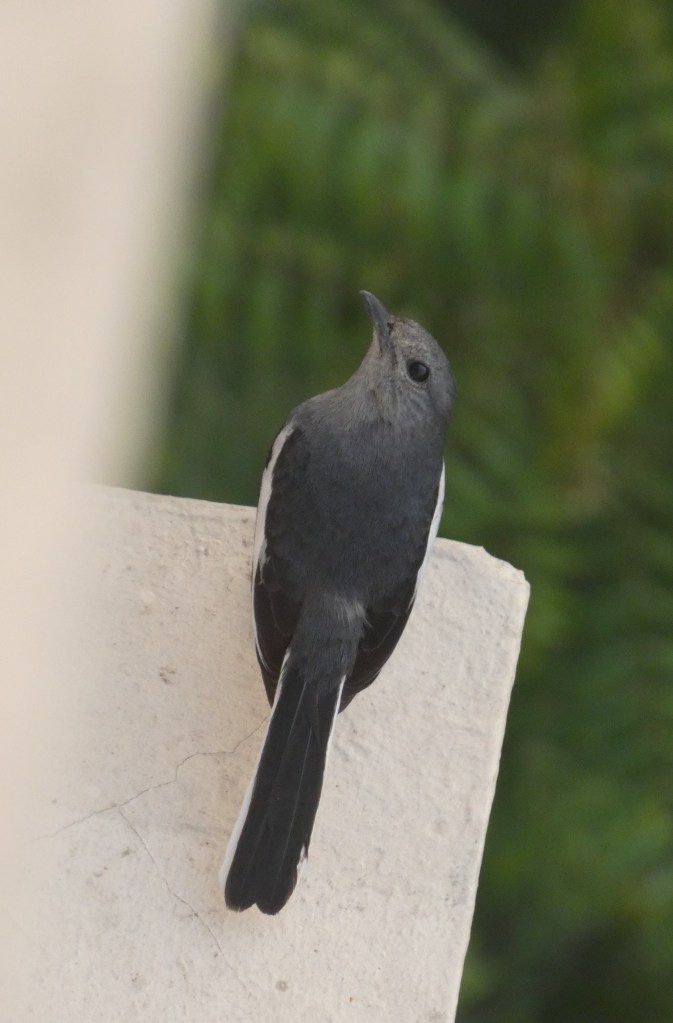
A female Oriental Magpie-Robin as seen from above
Handsome Chestnut-tailed Starling
Terrible shot of the Glossy Ibis. Definitely my best surprise from the rooftop ever!
A poor shot of a smart looking Black-winged Kite
A cute juvenile Common Tailorbird
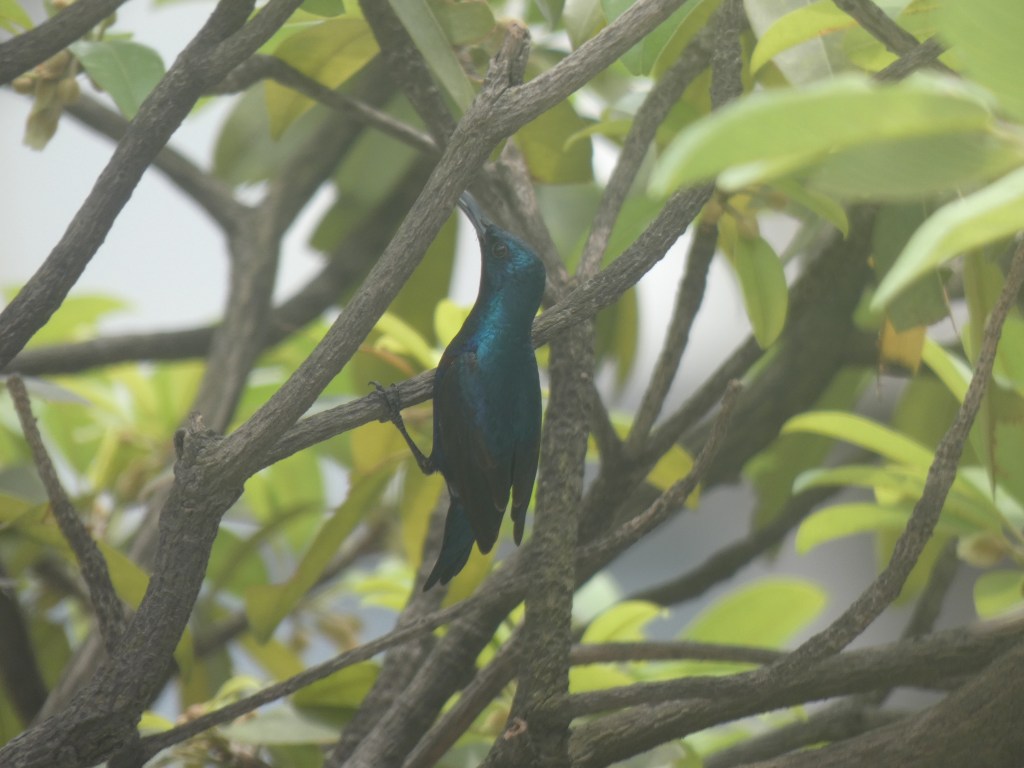
A gorgeous male Purple Sunbird that wouldn’t pose very well. He and two others were in the same bush singing away, which was the first time I’ve observed multiple males singing from the same bush.
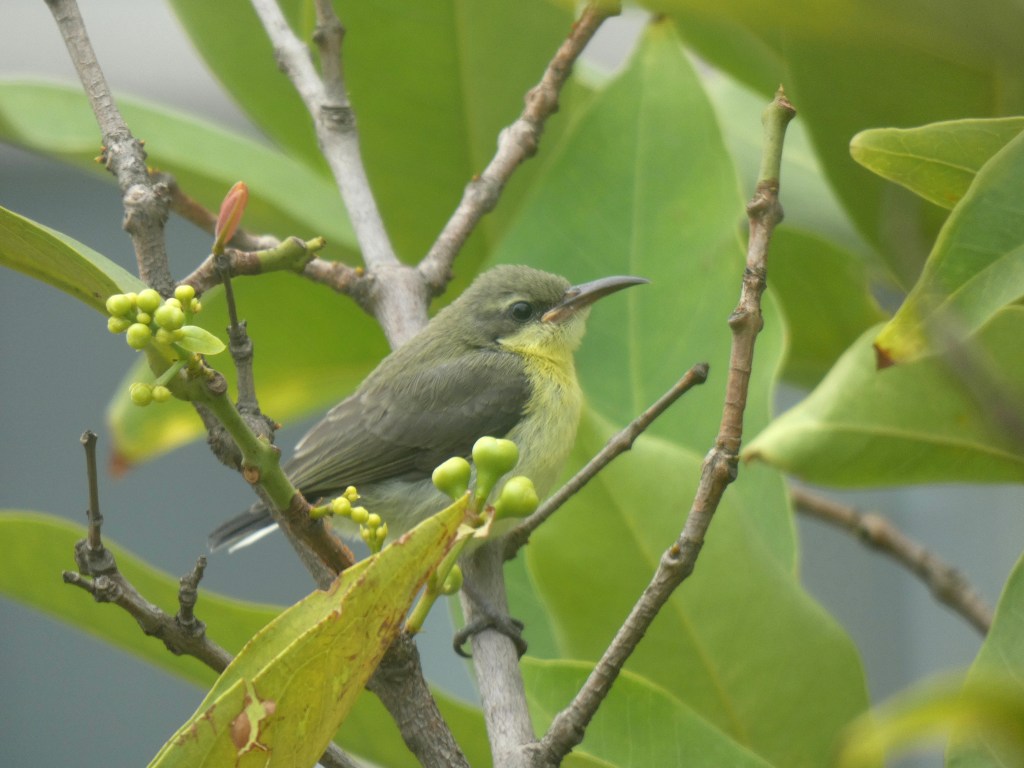
A cute juvenile Purple Sunbird

And here are a few non bird photos:

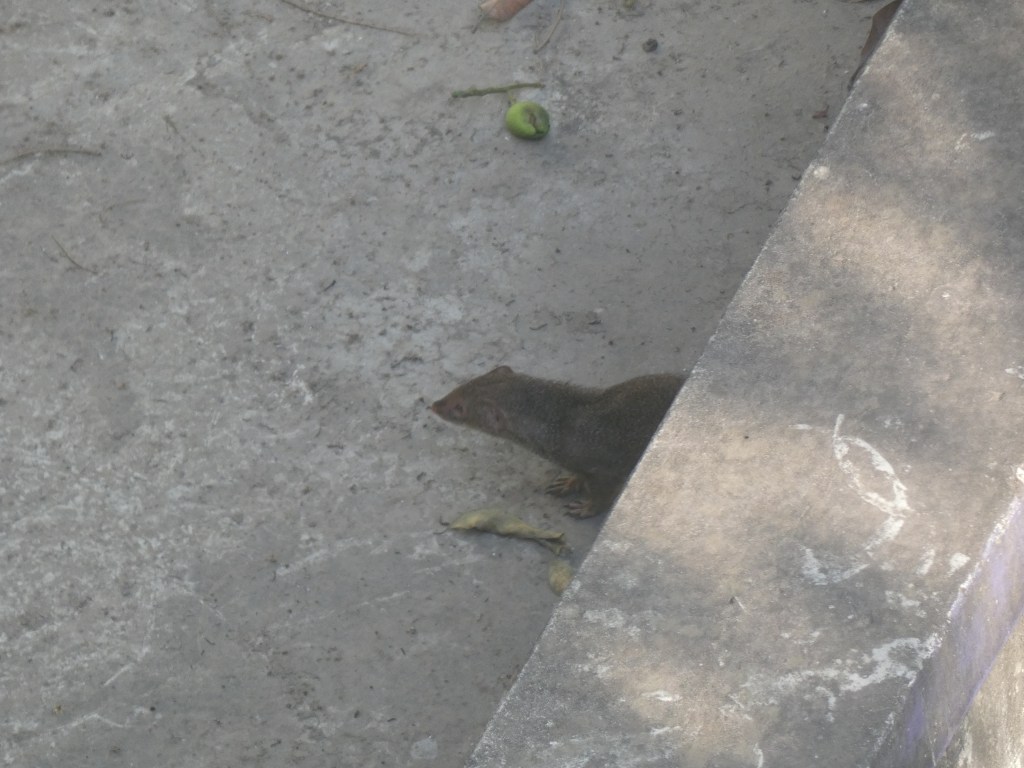
I’ts always fun to see the Small Indian Mongooses. This one was on the rooftop of a neighboring one story building, and is the only one I’ve seen during lockdown
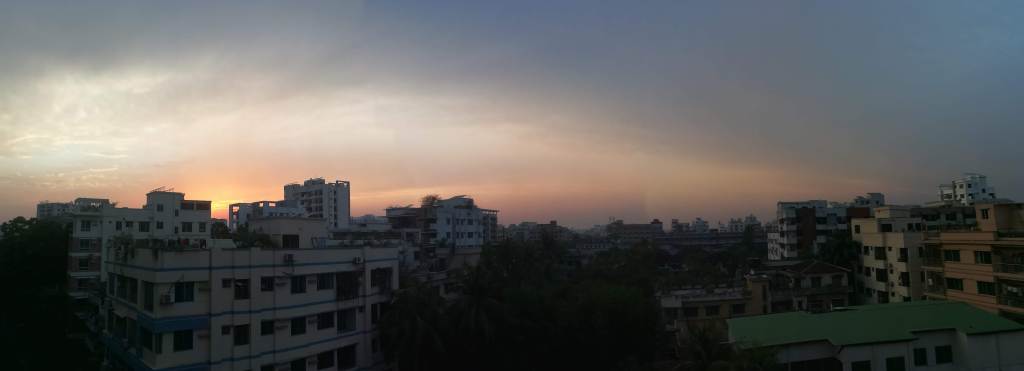
Smartphone panorama shot of a gorgeous sunset. Doesn’t do the sunset justice…
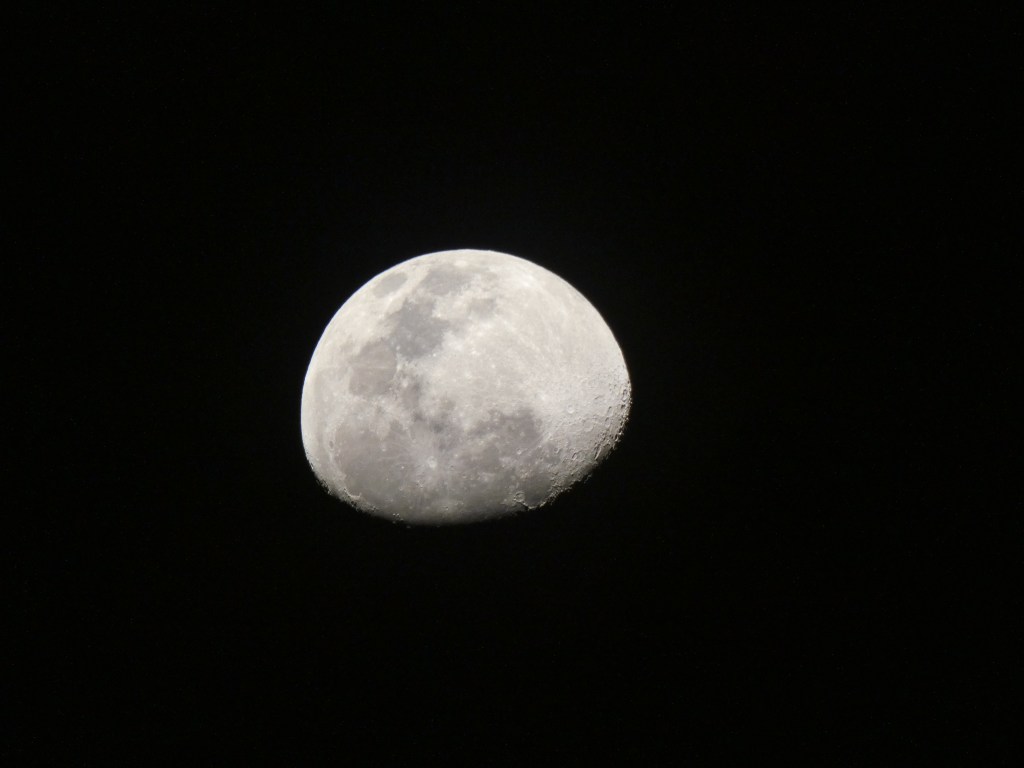
A shot of the moon that actually turned out well!

Have you been observing birds or other wildlife during the lockdown or whatever the situation is where you are?

If you enjoyed this post, please subscribe for more. As always, feel free to comment!

Cuckooshrike, Mousebirds, Citrils, and Sunbirds (Historical: Kenya pt 3)

With lockdown because of COVID I’m not getting birding done besides from our home and that doesn’t give much material for the blog so hopefully I can do more historical posts. I’ve only gotten through two days of our Kenya trip so far so I may start doing a bit less commentary and more photos to speed things up…

The 3 of November was our third day in Kenya and the lifers were slowing down after 46 in the first two days. We weren’t going anywhere for birding the next two days except just birding around the house which was pretty decent.

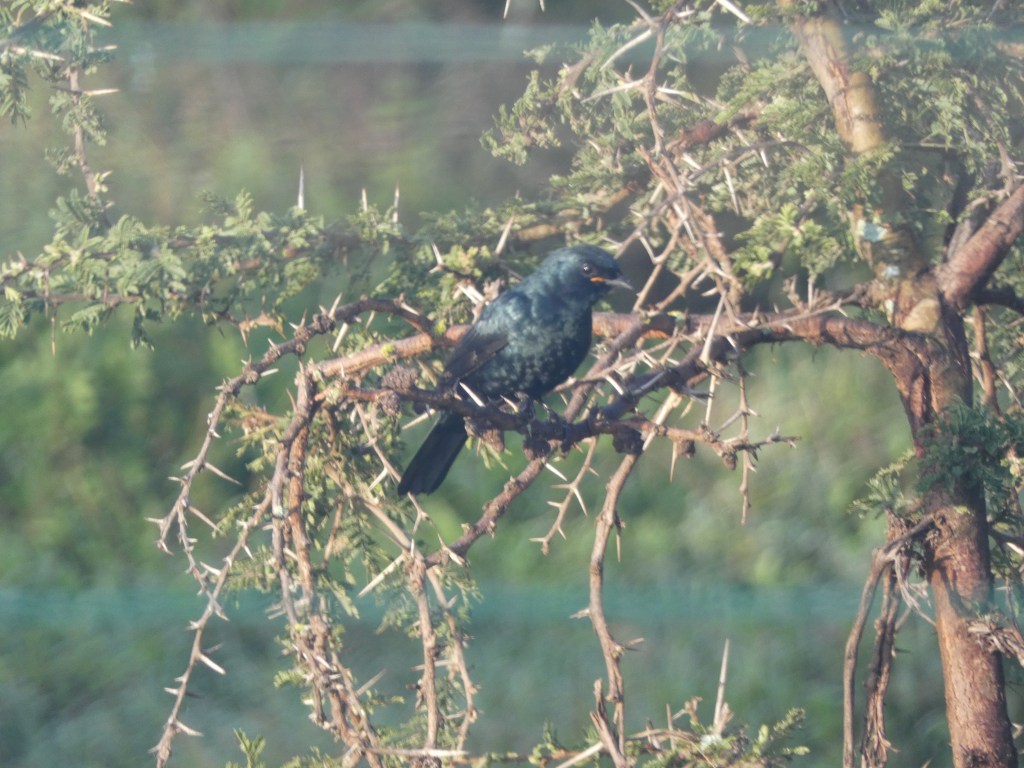
One of the first birds of the morning confused me. I thought maybe Fork-tailed Drongo though that didn’t feel right. I eventually figured out it was a Black Cuckooshrike: the first lifer of the day (#402)

Black Cuckooshrike. The orangeish gape is one of their odd features. This male is otherwise all black, but some males have yellow shoulder patches. We got to see one of those at Lake Nakuru NP later

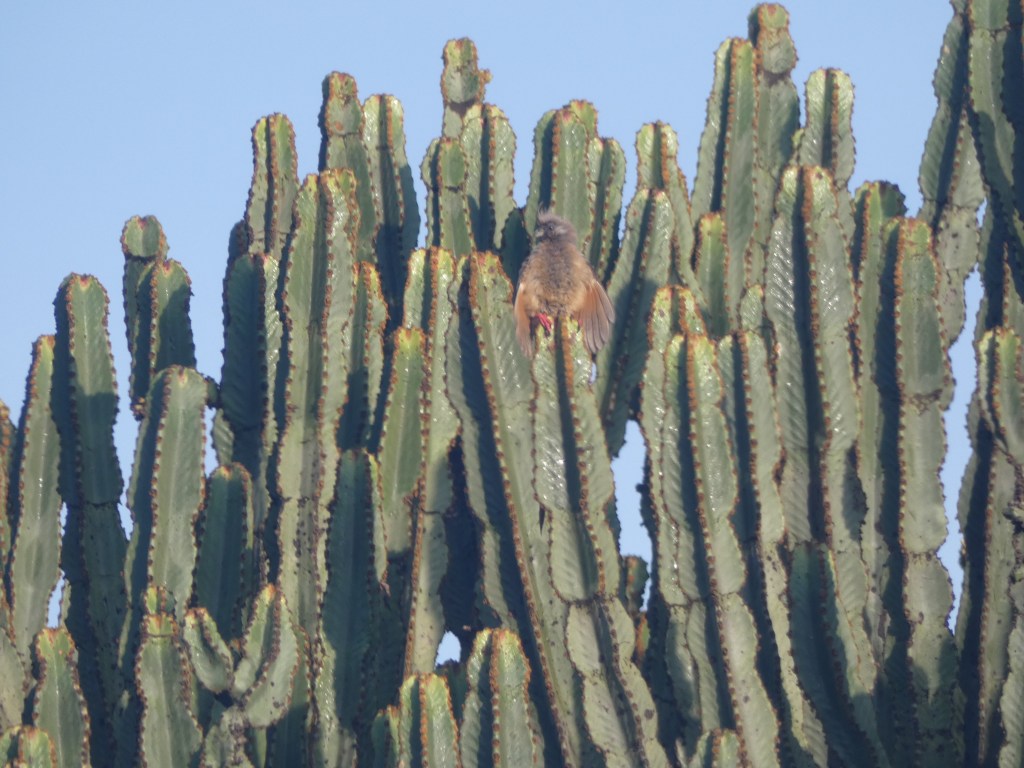
Next up was finally our first Speckled Mousebird! They’re really bizarre looking with their long tails and odd shape, but they’re fun to observe!

Speckled Mousebird on one of the many Euphorbia ingens

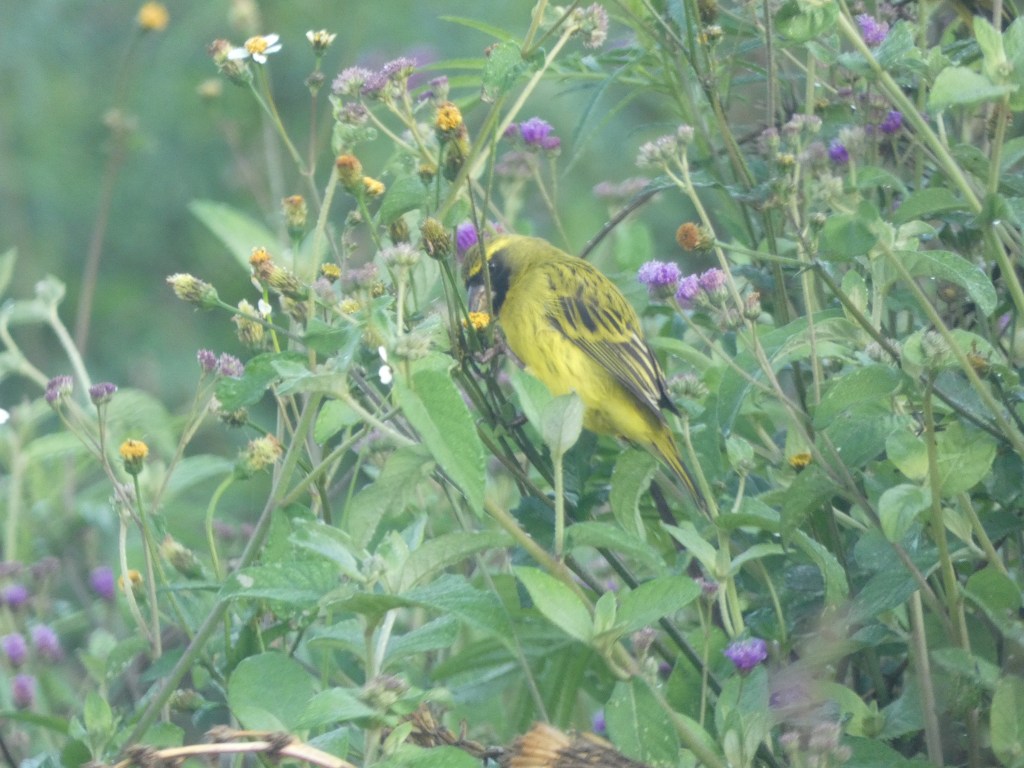
Two African Citrils, a Bronze Sunbird, and an African Grey Flycatcher were the other three lifers that morning.

A gorgeous African Citril
This Bronze Sunbird would not pose nicely for a photo, but this shows how massive* they are!
*massive is a relative term when you’re talking about sunbirds…
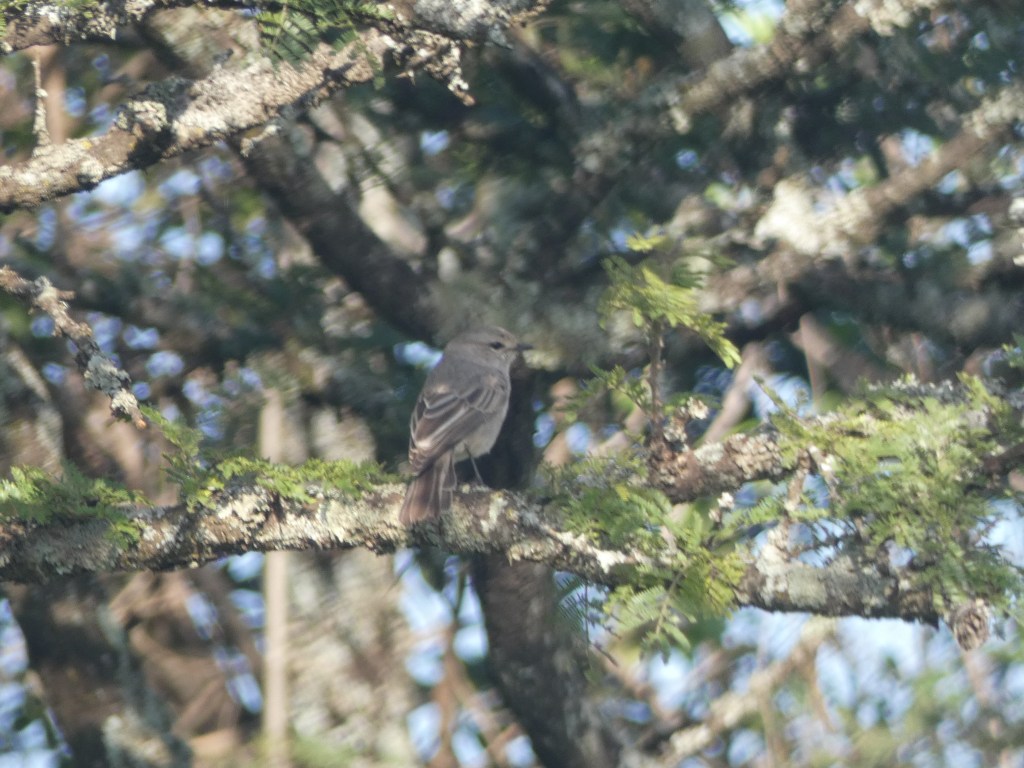
African Grey Flycatcher

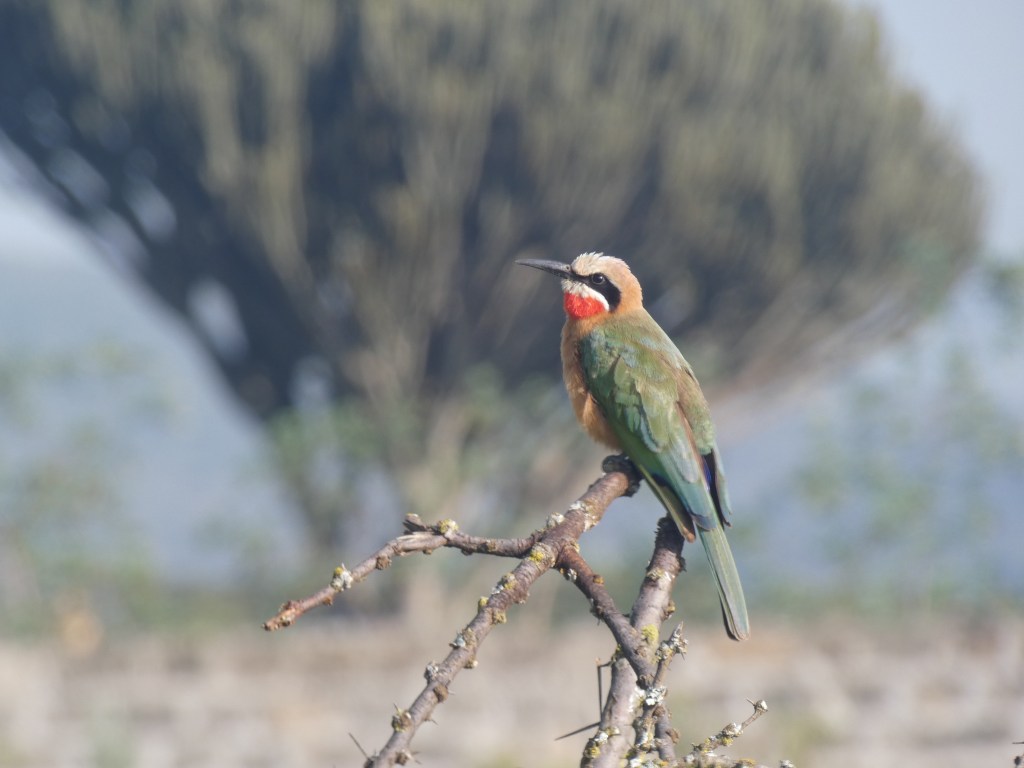
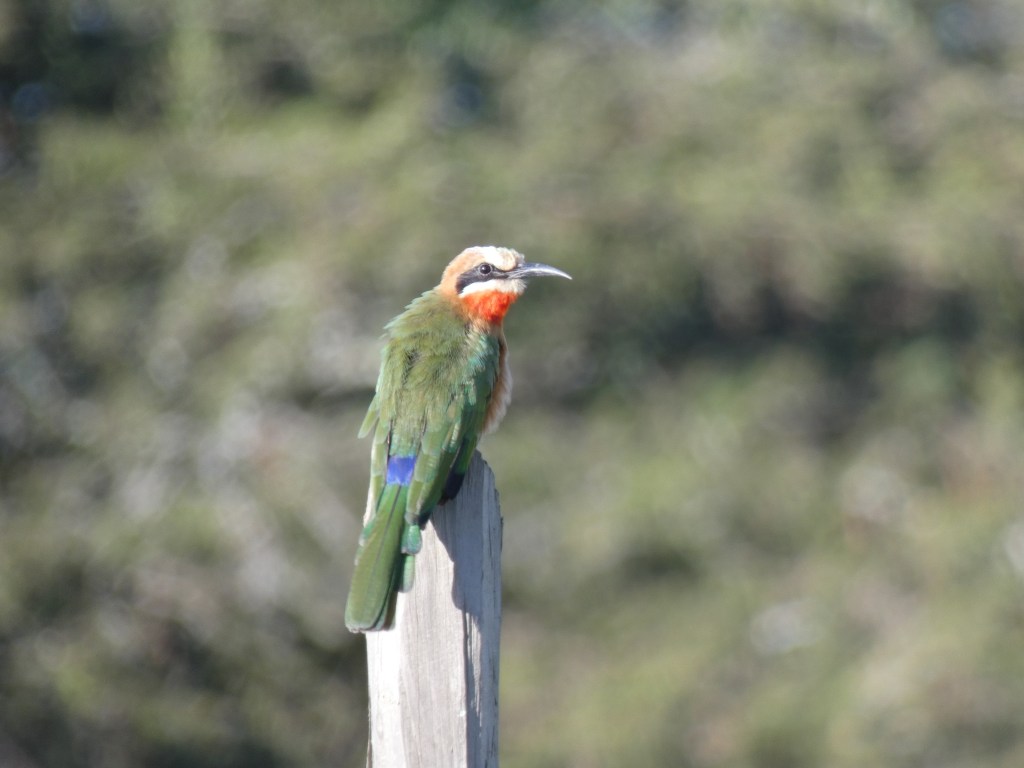
A nicely posing and preening White-fronted Bee-eater was the last highlight of our morning walk. It even allowed me some decent video footage!

White-fronted Bee-eater

That evening we enjoyed the pair of Spotted Eagle-owls again and I had a brief view of a unidentified nightjar as it swooped past, but no more lifers.

eBird checklists: the morning walk and then the evening checklist.

If you missed out on my first two post about our trip to Kenya you can catch up on them here and here, and don’t worry there’s more coming out soon! 😉

If you enjoyed this post, please subscribe for more. As always, feel free to comment!
Yard birding

COVID-19 is heavily restricting movement here in Bangladesh. The government has shut down most businesses and is encouraging people to stay at home. So we’re just hunkering down and only going out for groceries when needed. Because we homeschool it doesn’t affect our school at all. One upside to staying at home is I’ve been able to do more birding from our rooftop and been having fun getting to know the birding here better!

I’ve gotten three yard birds in the past week or two: Blyth’s Reed Warbler and Barn Owl on the same day, then Booted Eagle a few days later. The Barn Owl was actually a lifer: #593!

Many individuals and birding groups are encouraging birders to bird their yards with not going out these days. Jen Sanford has started one yard challenge on the 5MR Facebook group. On the 25th she said, “The yard challenge officially starts yesterday! We’ll keep track through April 30th (maybe longer if necessary). Bonus points for various breeding-related behaviors, cool insects/mammals/cloud formations/whatever, daily eBird checklists (5 points if you do a yard list every day during the challenge), and for colder climates, a point for each inch of snow on the ground. Nonsensical point keeping is up to each individual. Share bonus point suggestions along with your observations (don’t forget location!).”

People have really gotten into this challenge. I love numbers and keeping track of stuff, so I made a google spreadsheet of my birds seen during the challenge and any bonus points. So far I’ve gotten 30 species and 8 bonus points for a score of 38!

Most of this post will just be random photos of varying quality with some explanations. Photo opportunities aren’t usually great from our rooftop/house, but I’ve gotten a few decent shots still.

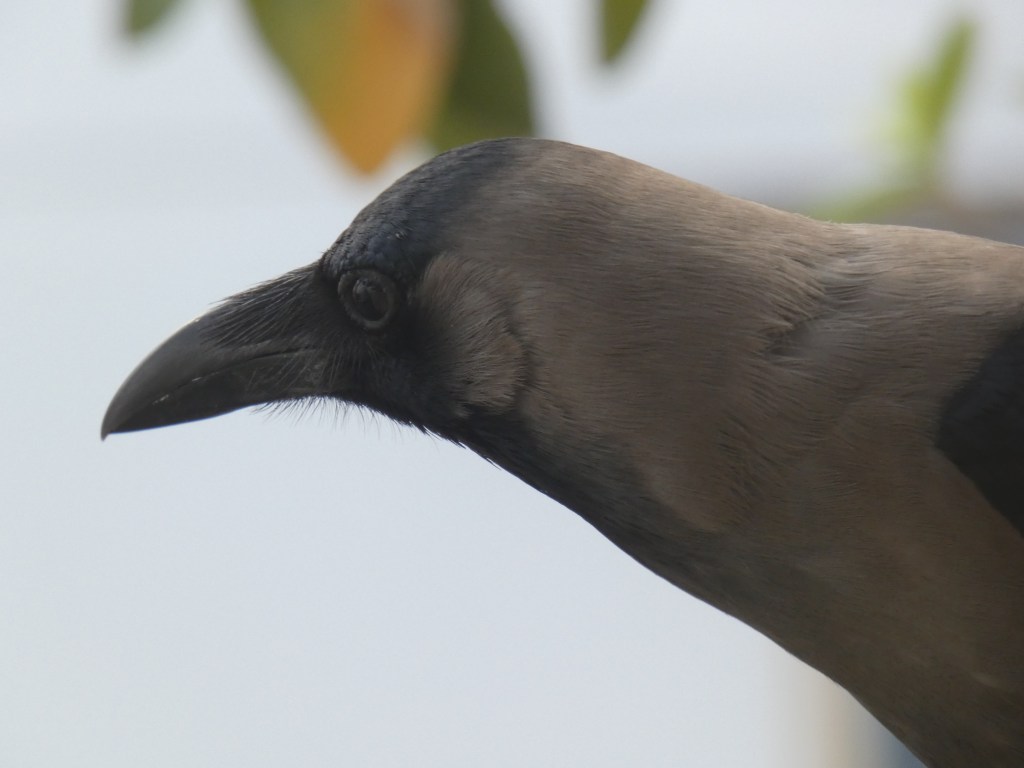
House Crow

A pair of House Crows are nesting in a palm tree right behind our house. No eggs yet, but they’re usually sitting on the nest…

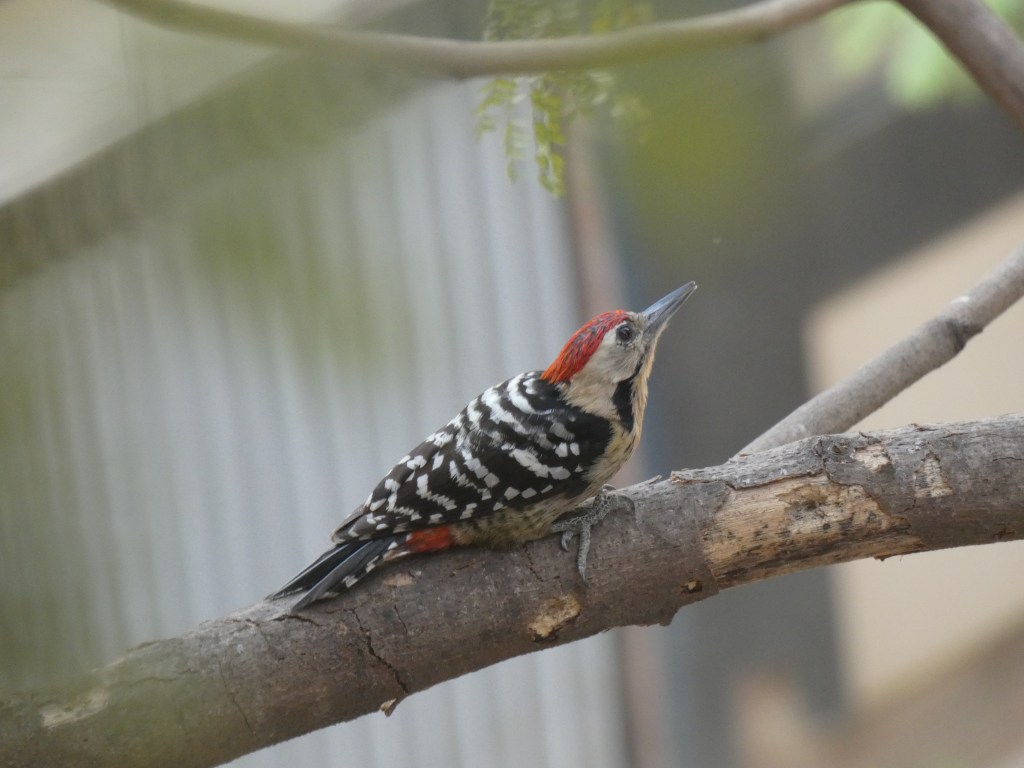
This Fulvous-breasted Woodpecker perched nicely on the krishnachura (Bangla name for a gorgeous flowering tree) just outside my 5th story bedroom window, offering my best photos of this species so far.

Eurasian Kestrel

This Eurasian Kestrel has been perching on the rebar sticking out of a building under construction nearly every single evening.

The teak tree in a neighboring plot has been easily my best producing tree. I had my first yard Blyth’s Reed Warbler in it. I’ve also seen Spotted Doves, Asian Koel, Fulvous-breasted Woodpecker, Rose-ringed Parakeet, House Crow, Common Tailorbird, Red-vented Bulbul, Chestnut-tailed Starling, Oriental Magpie-robin, House Sparrow, and Coppersmith Barbets in here. It’s also the only reliable location for Spotted Doves, and two or three can often be found perching on the one branch.

Chestnut-tailed Starlings in the teak tree
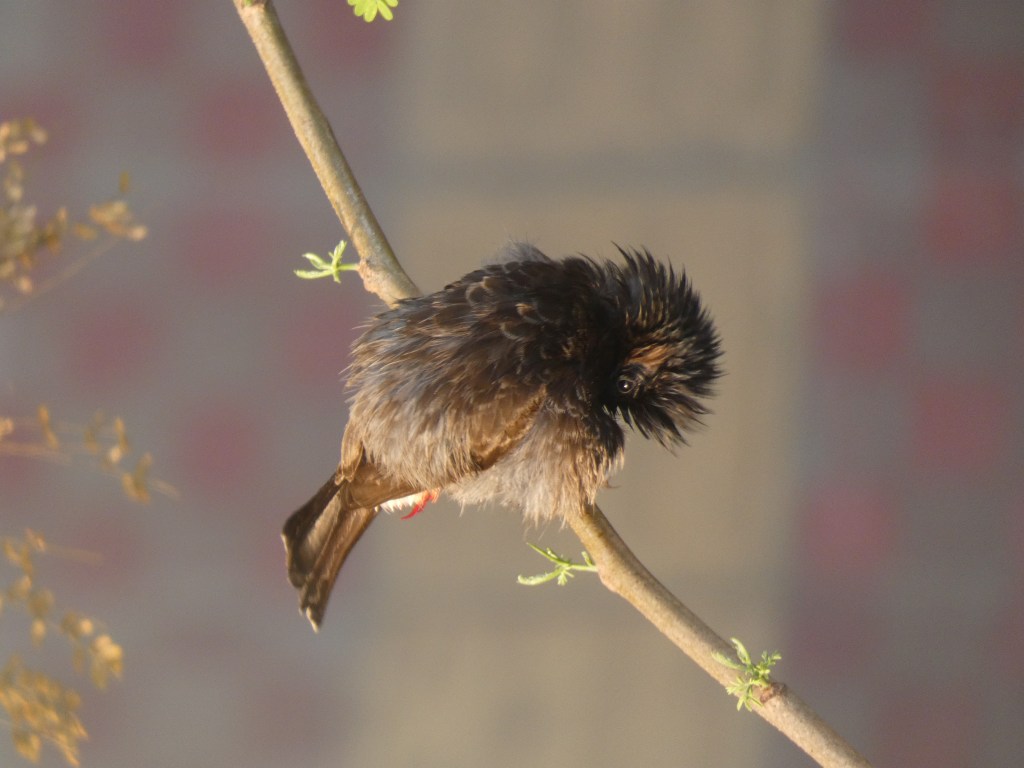
Red-vented Bulbul preening, from a birds eye view!

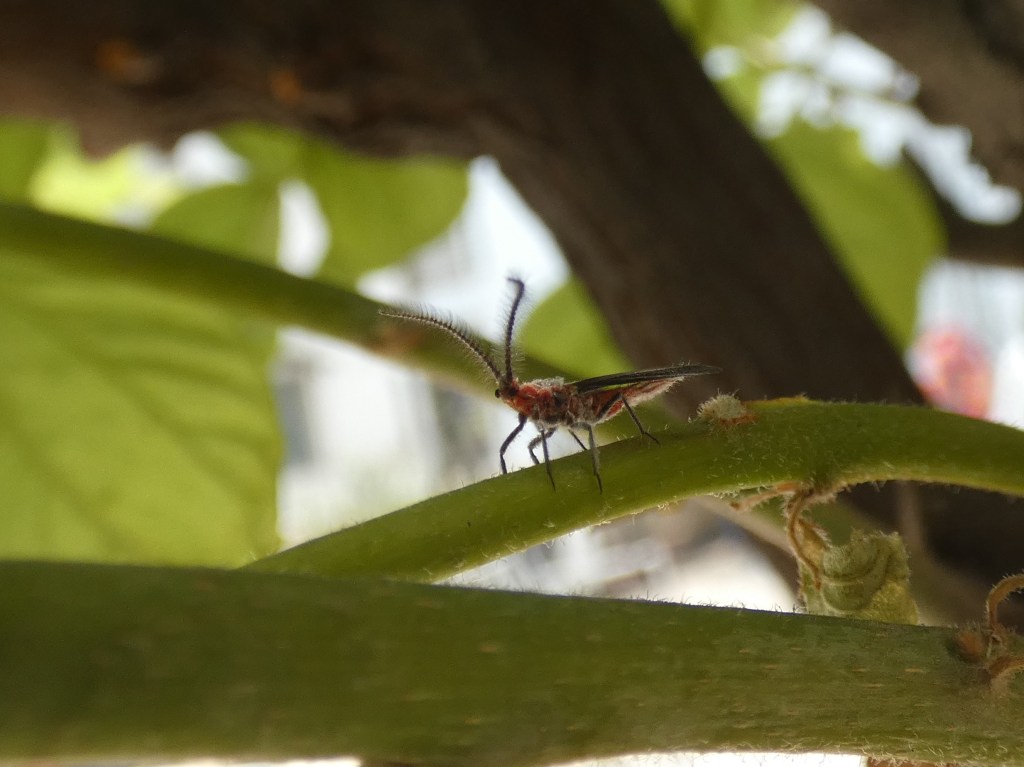
I also found this bizarrely weird and cool insect on a potted boroi tree on our rooftop. I had no clue what it was, but someone on iNaturalist identified it as a Scale Insect (Superfamily Coccoidea). My iNat observation here.

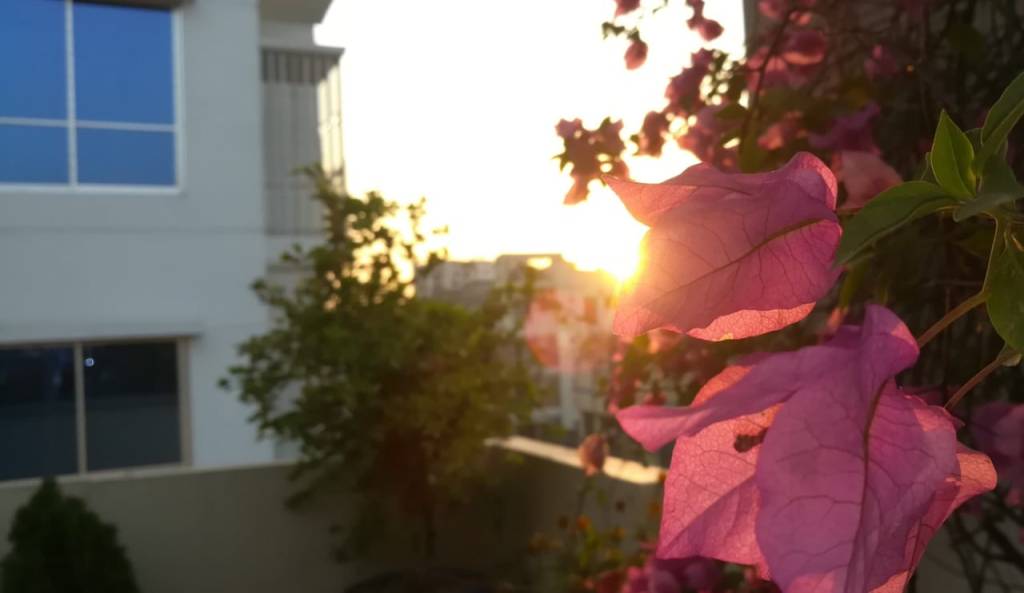
Two phone shots from this afternoon: one of the sunset and the other of sunrays coming through the bougainvillea.

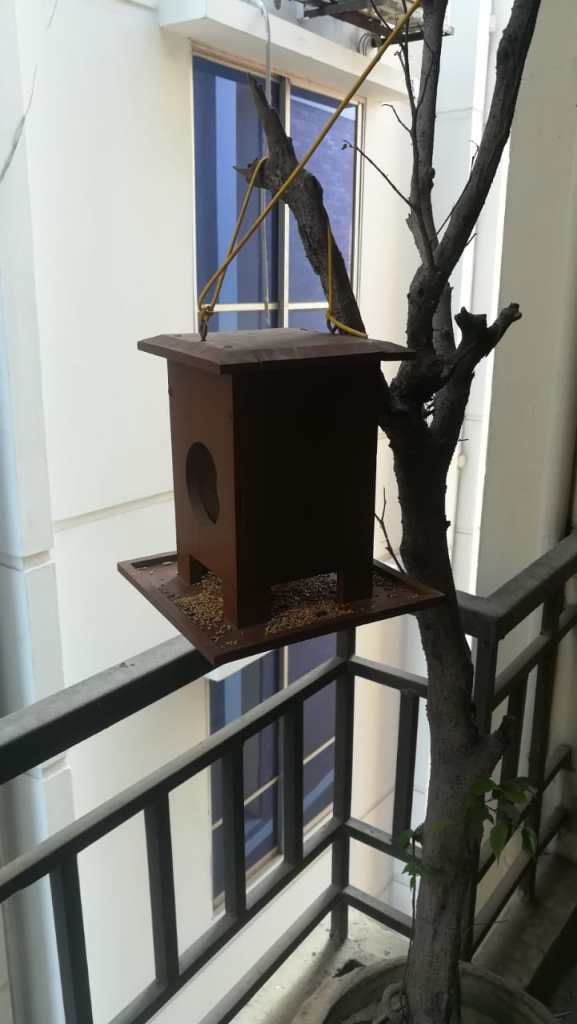
I was also able to set up a bird feeder on our side verandah. I’m expecting the House Sparrows to show up shortly, and hopefully the Indian Silverbills will find it soon as well.

Have you been doing yard birding where you are? If so, you’re welcome to comment about it, or any other ideas you have for fun things to do during these times!

If you enjoyed this post, please subscribe for more.

Birding during COVID-19

COVID-19 has been shaking the world, but if you have your trust put in the right place you need not have any fears! Thankfully coronavirus isn’t too bad here yet, and since I bike to New Vision it was fine to continue birding because I would not be using public transportation as most birders do to get there.

As usual birding was fairly slow at the beginning, since the birding habitat isn’t the best right at the beginning. A pair of Striated Grassbirds were very active and singing beautifully. One perched decently for me, though lighting wasn’t great. The other flushed from the edge of a small field as I walked along it.

Striated Grassbird
This one looks like it caught a grasshopper or something.

There were a few Bronze-winged Jacanas in the what was left of one of the large ponds, and at least 20 Little Cormorants were perched in two low trees by the water.

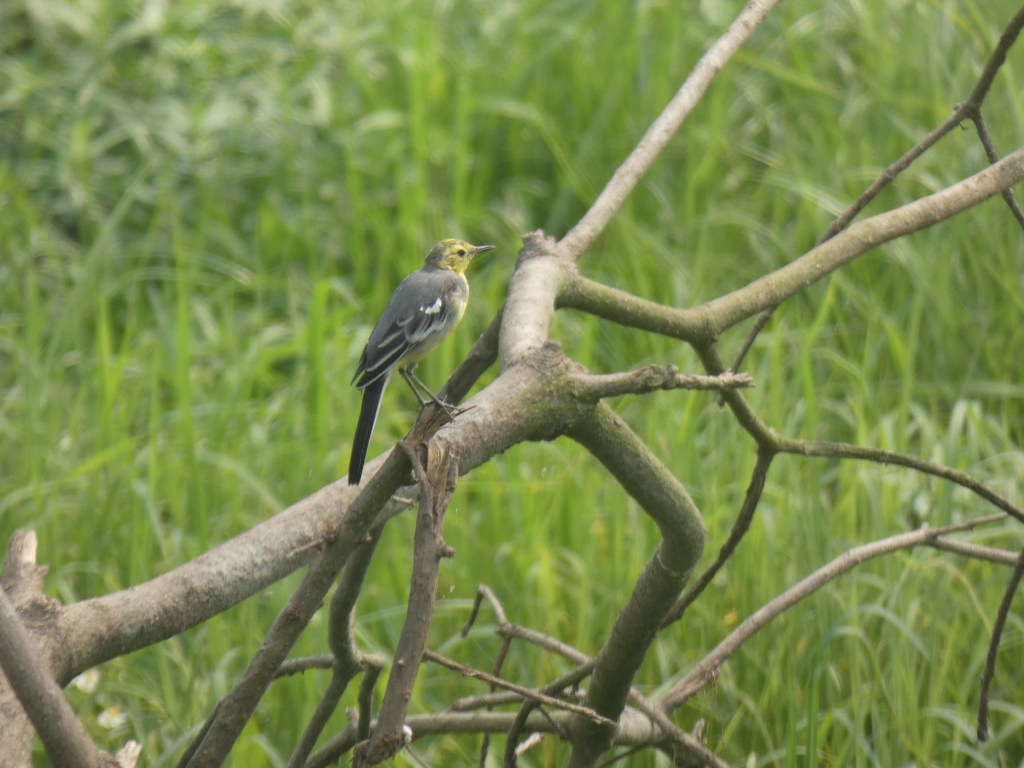
Citrine wagtails are finally in the breeding plumage, and boy are the gorgeous! The adult males never let me get very close though…

Male Citrine Wagtail in breeding plumage

One section of the path has a lot of low bushes and flowering plants that attract the butterflies. I tried to get photos of the Common Grass Yellows (butterflies) that were around there, but I had obviously forgotten how slowly you need to move for butterfly photos… The only one that didn’t fly off when I approached was hiding under a leaf.

Common Grass Yellow hiding
Gorgeous green paddyfields are typical Bangladesh countryside.

I checked the row of trees where I saw Brown Boobook once, but didn’t find it for the umpteenth time in a row… An Asian Pied Starling posed decently for a picture in that stretch of trees.

Asian Pied Starling

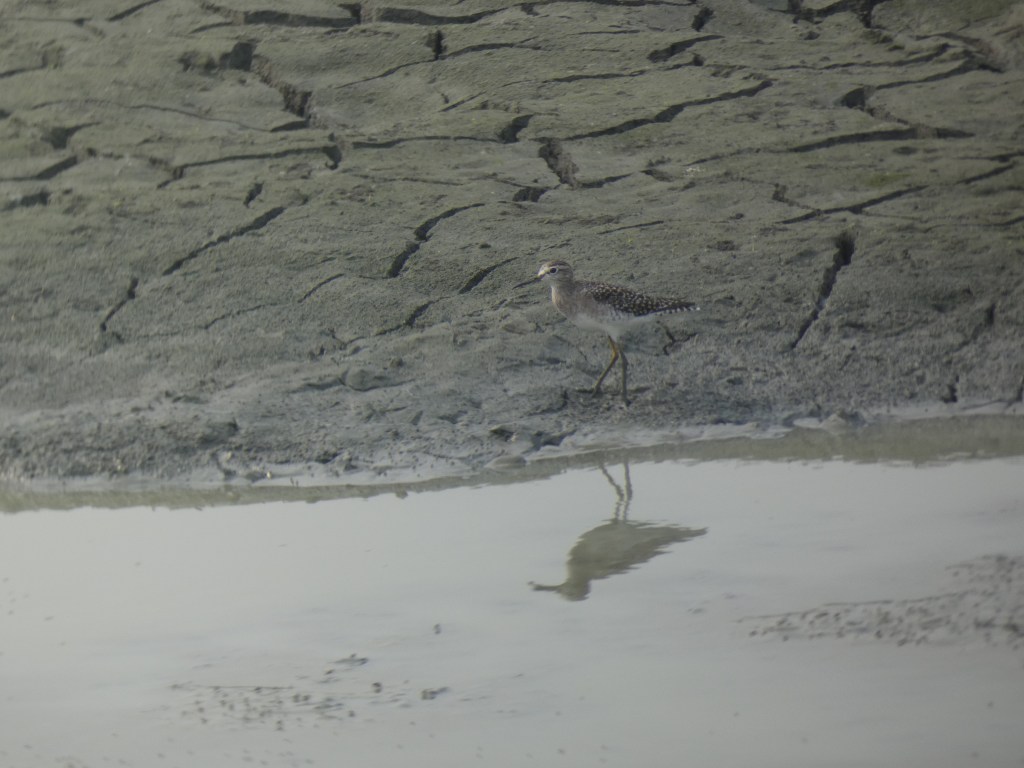
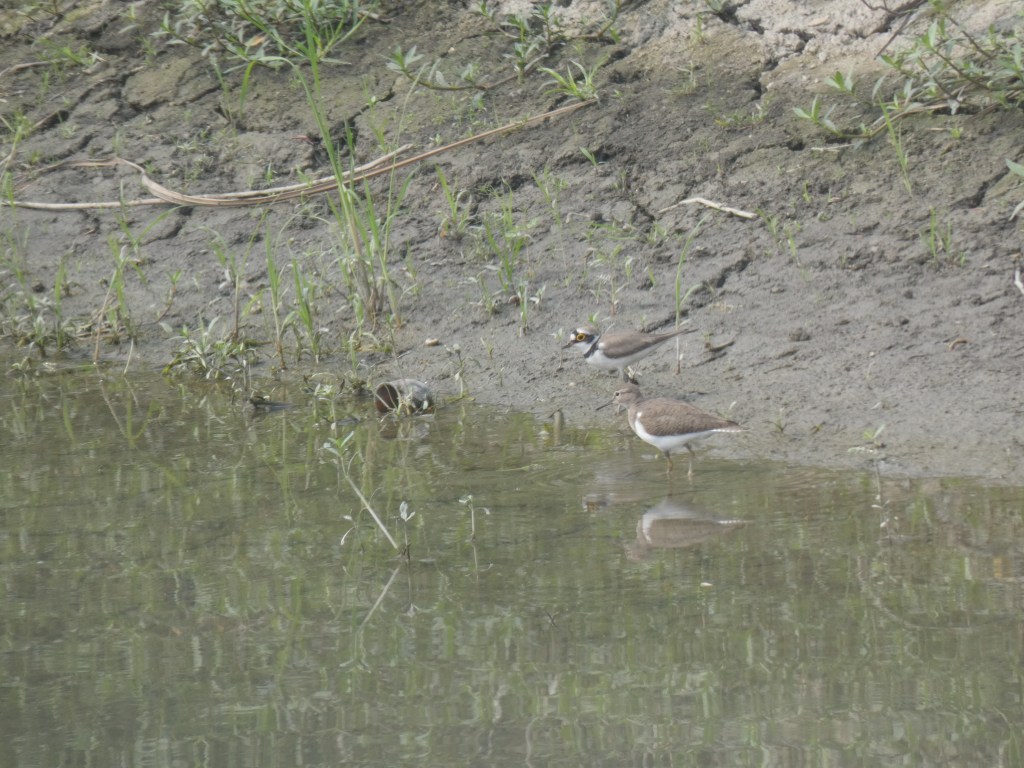
As usual there were a few waders in the main pond area. Loads of Indian Pond-herons, but also a Green and Wood Sandpipers, and a Little Ringed Plover or two.

Wood Sandpiper
Indian Pond-heron starting into breeding plumage

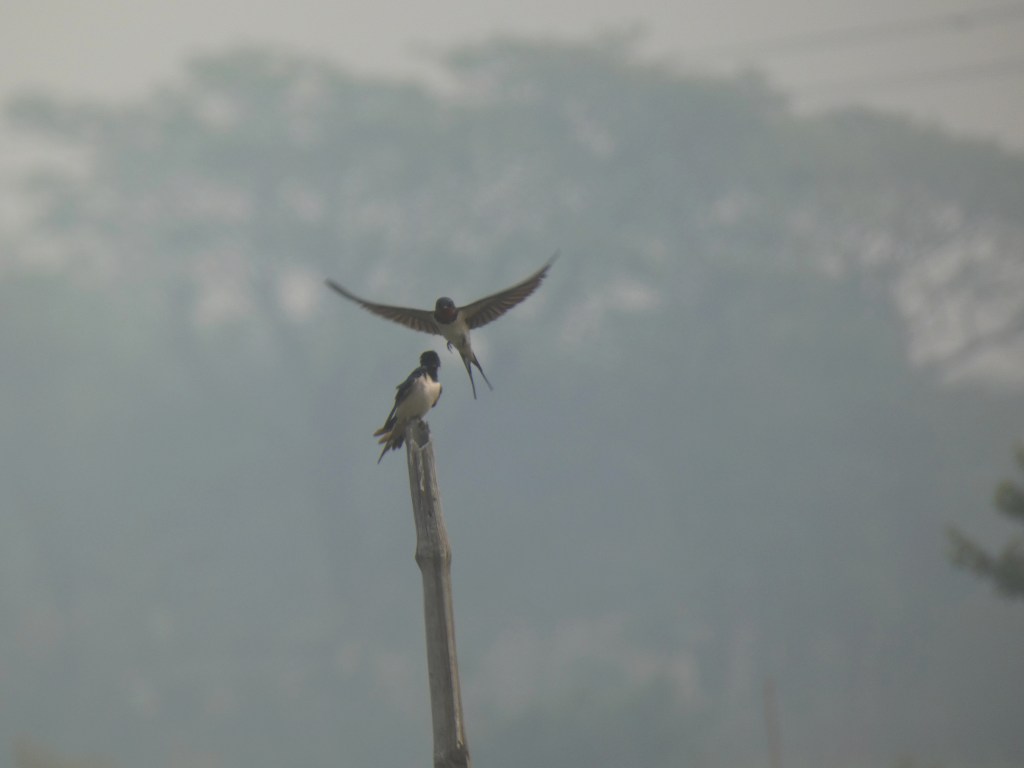
A few barn swallows were perched on poles, and fighting over them some of the time.

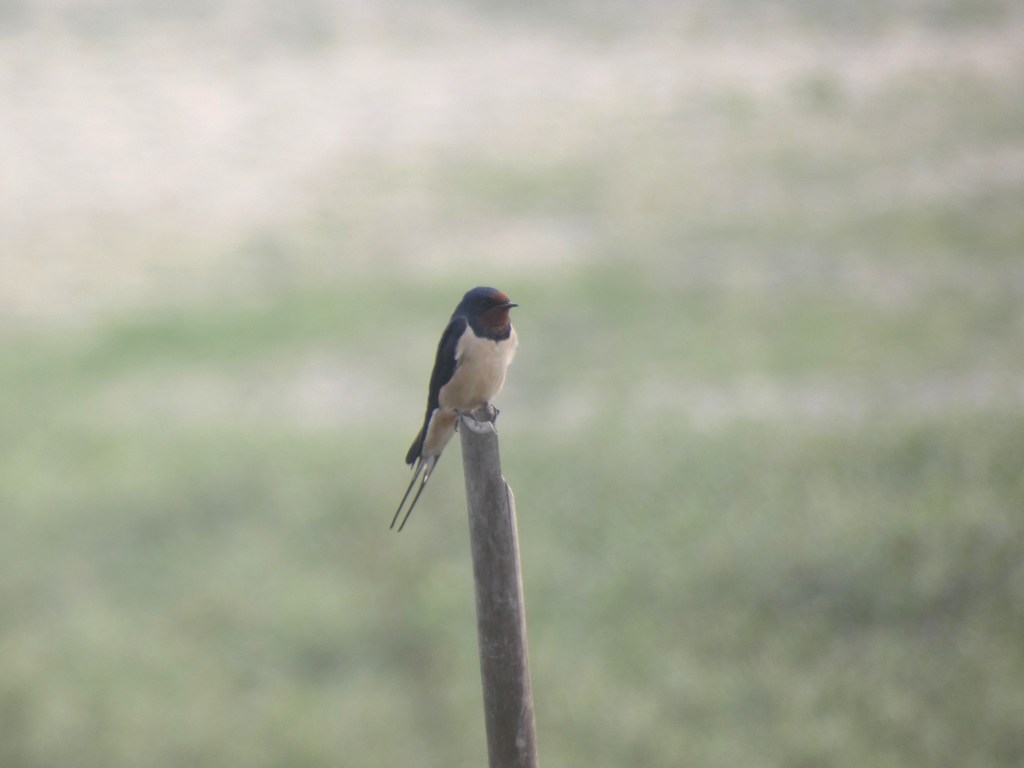
Barn Swallow
Fighting over the best perch

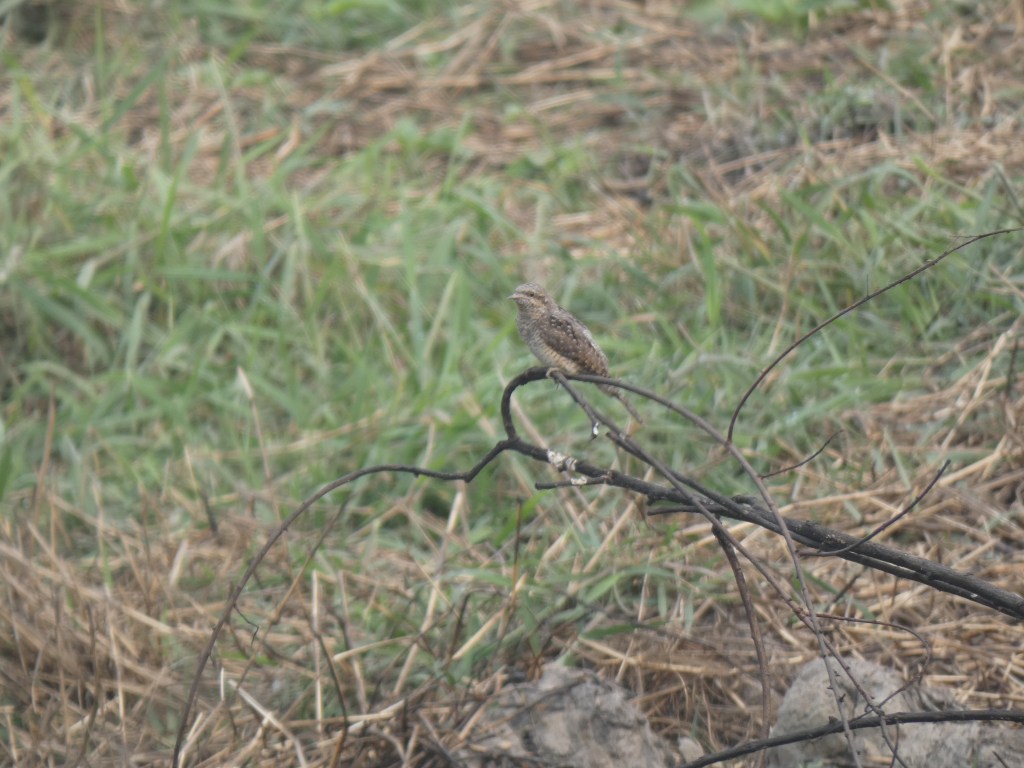
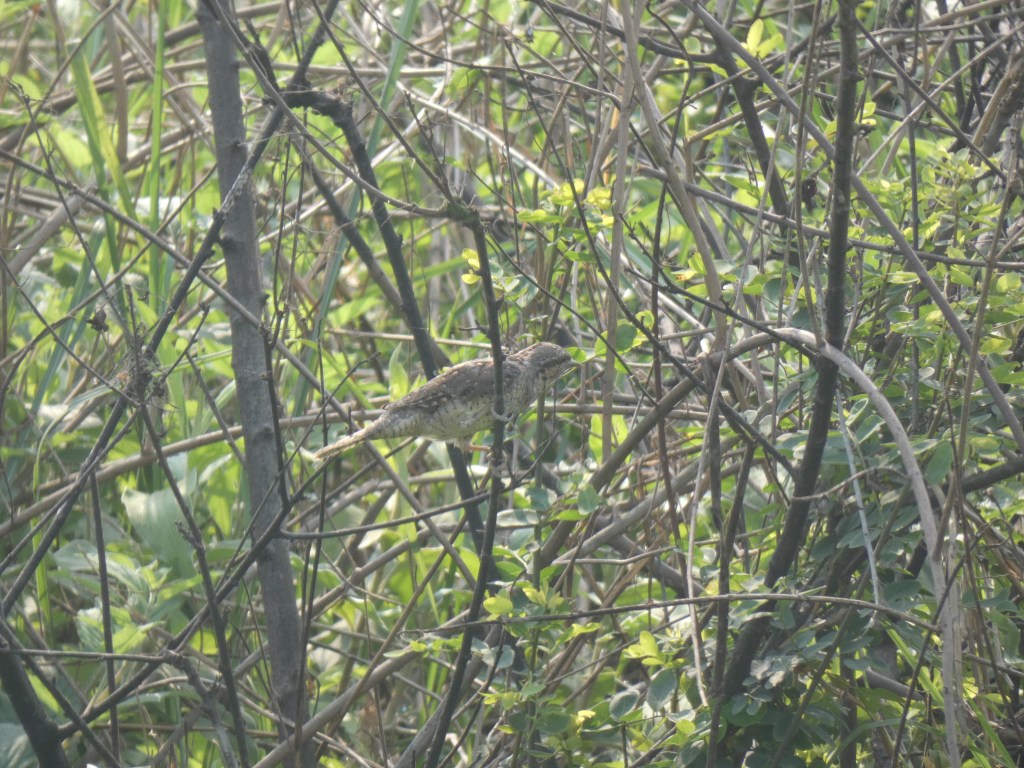
There were also two or three Eurasian Wrynecks nicely out in the open beside the path. They wouldn’t let me get very close though.

Eurasian Wryneck
One of the many resident Bronze-winged Jacanas

I checked the pond farthest back, but this time it was completely drained out… There were a number of swifts and swallows circling there though. Including what looked like a martin. Both Collared martins (Bank Swallows) and Grey-throated Martins were super common earlier this winter, with up to 300 or so the one day, but I haven’t seen any for several weeks now. Also had the Pied Kingfishers back here as usual and an Asian Pied Starling building its nest.

Pied Kingfisher landing

Coming back from the pond I had a Little Ringed Plover, Common Sandpiper, and Citrine Wagtail on the edge of the small pond where the swallows had been perching. Unfortunately just as I was leaving I saw some locals coming to catch all the fish from that pond, meaning they will also probably pump all the water out to plant crops…

Common Sandpiper and Little Ringed Plover
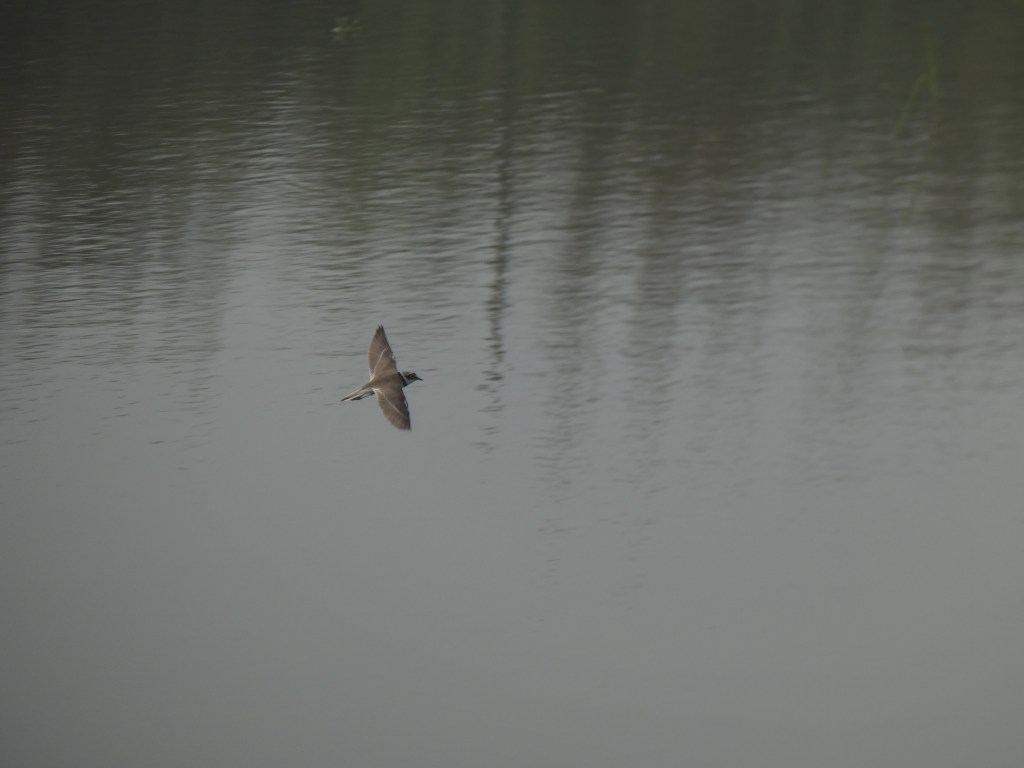
I liked how this shot of the Little Ringed Plover turned out
Working in the pond

Back in the largest pond I saw something unusual, a waterhen that appeared to be swimming from one strip of land to the next. It may have just been walking along the bottom though since I know it is very shallow.

White-breasted Waterhen swimming?

In some thick brush I had a Blyth’s Reed Warbler singing, which was a first for me. I asked Sayam Chowdhury and he confirmed that this wasn’t unusual and Blyth’s Reed can stay until late April. I got a poor quality recording of it. I also had another Acrocephalus warbler calling more than usual from another thick clump of bushes, but haven’t IDed it yet. I think probably Clamorous Reed Warbler.

Citrine Wagtail posing nicely with paddyfield in the background

Both Common and White-throated Kingfishers perched quite nicely for me.

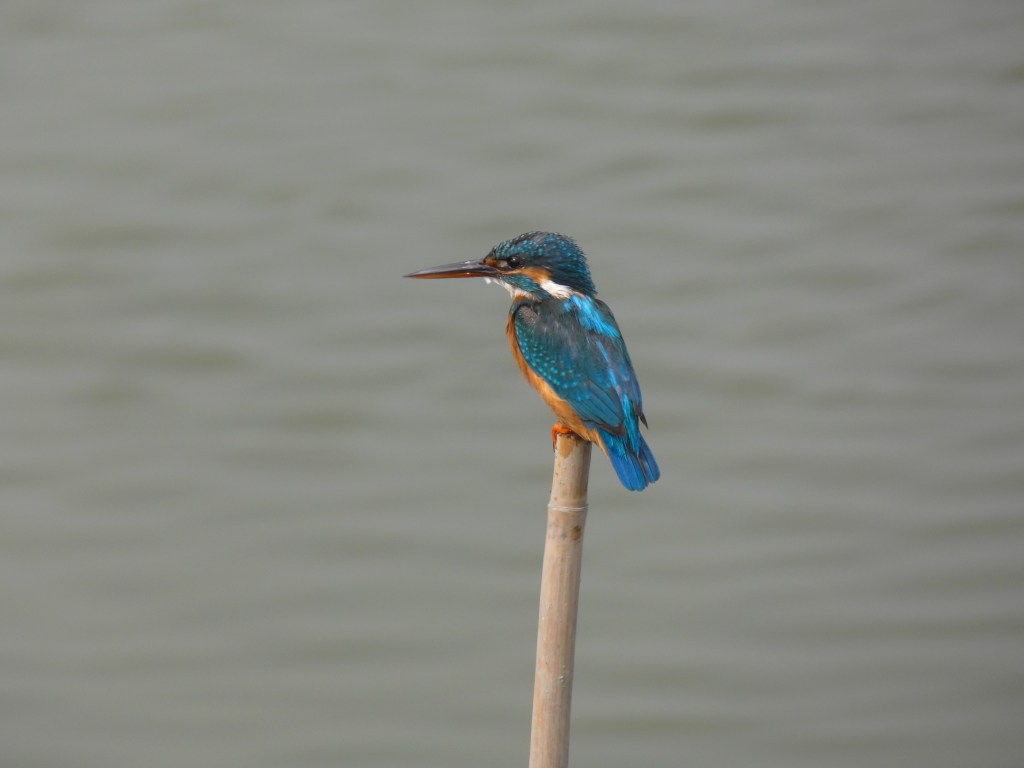
Common Kingfisher
White-throated Kingfisher
Goldan Jackal that looked like it was carrying something in its mouth. It dropped whatever it was when it stopped to look at me.

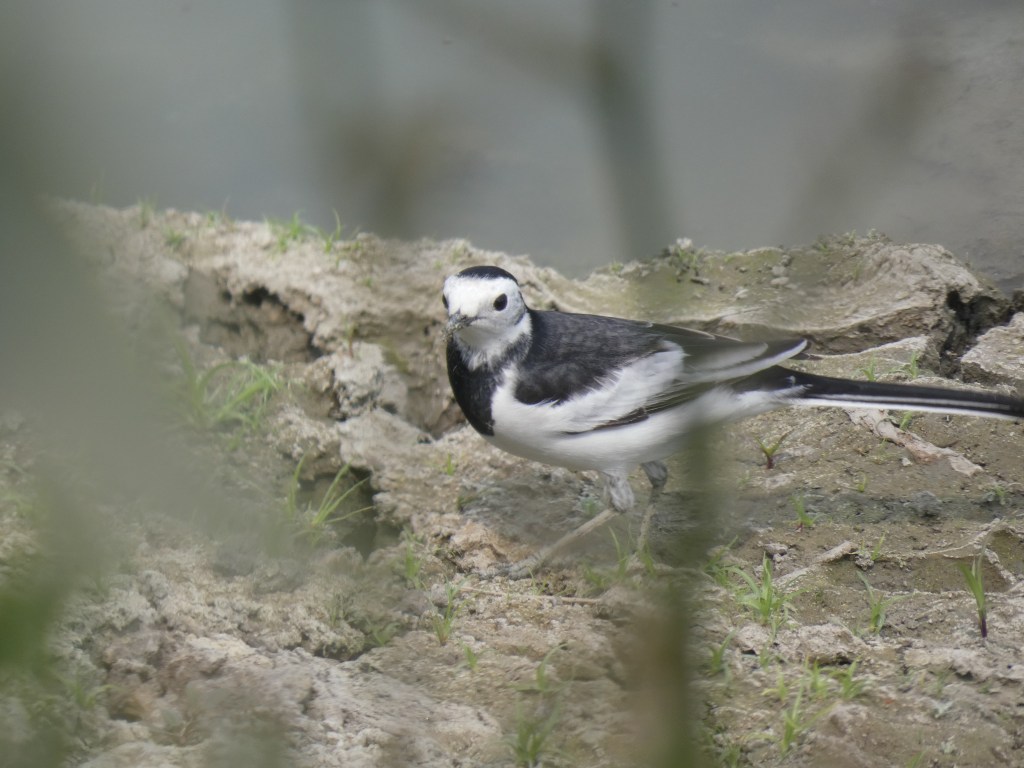
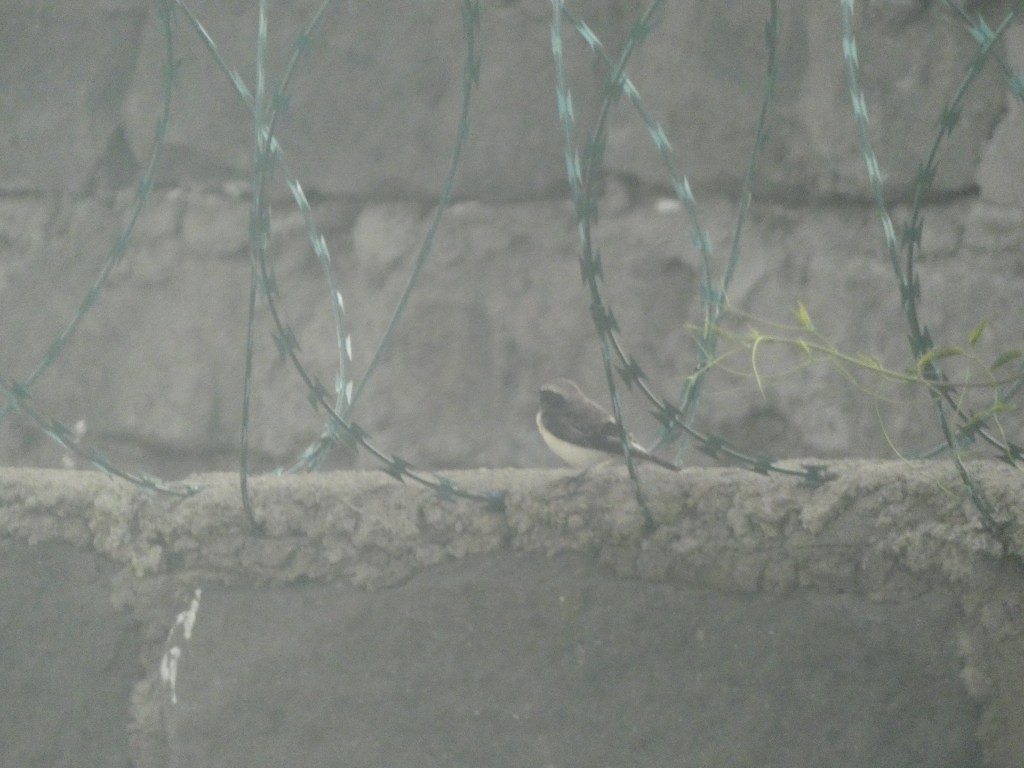
There wasn’t much bird movement on the way back to the bikes except for the first White Wagtail of the day. Some other wildlife provided fun distractions along the way though.

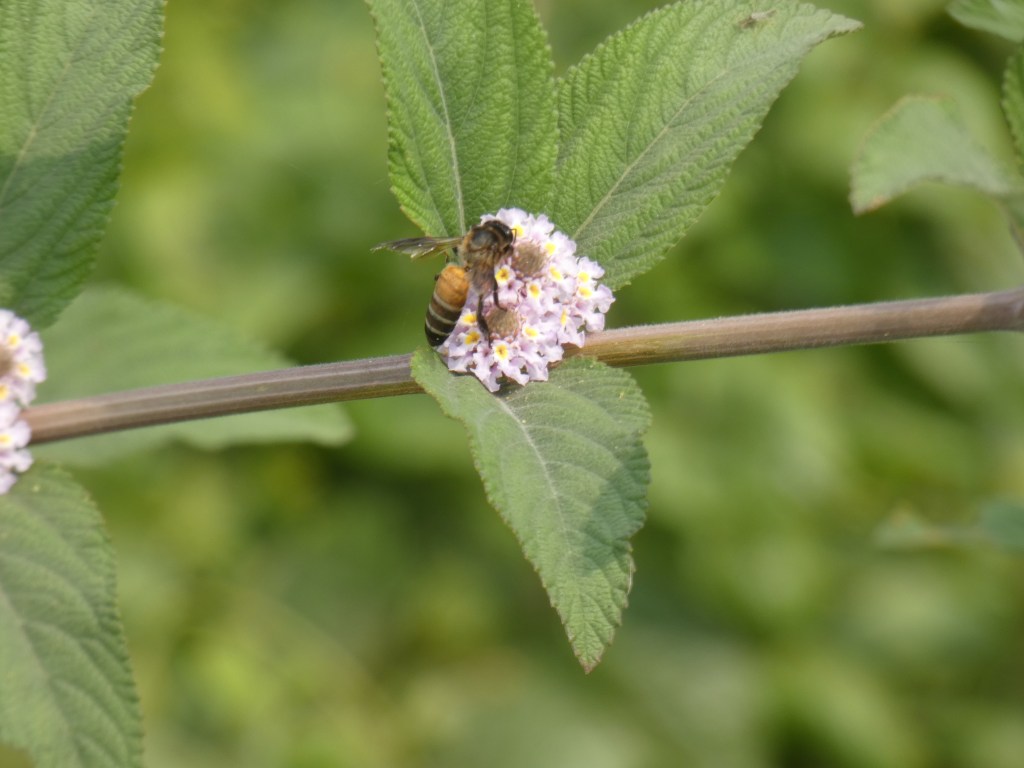
Giant Honeybee
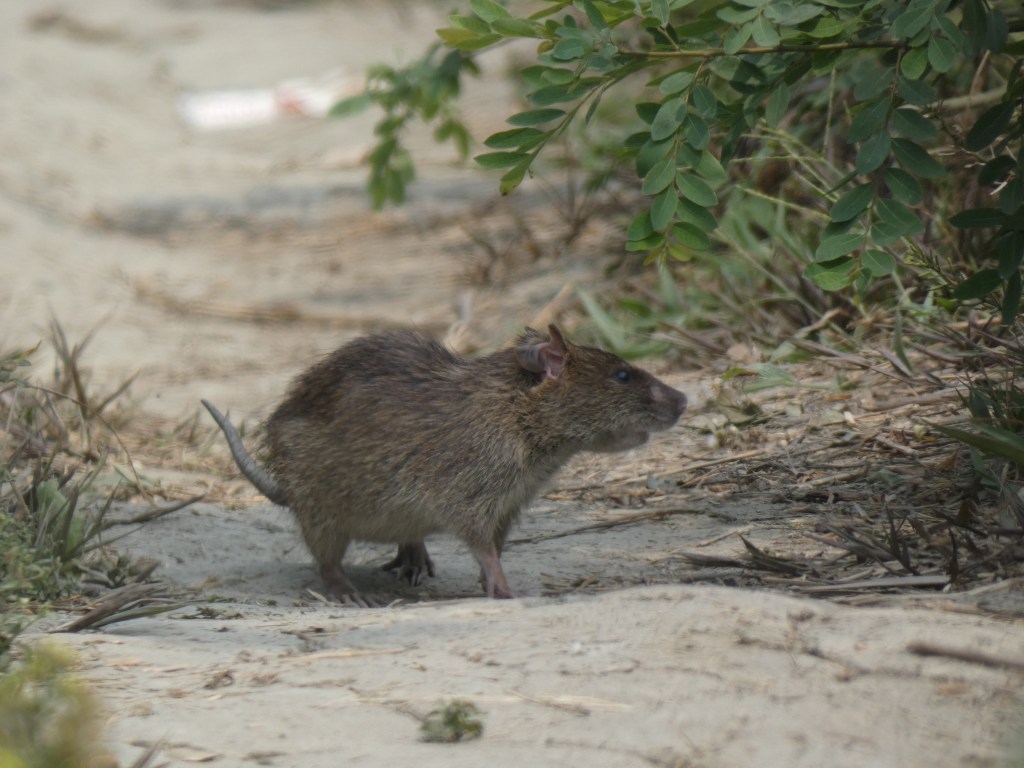
Kind of ugly Lesser Bandicoot Rat. There are only four observations on iNaturalist, two of which are mine!
White Wagtail

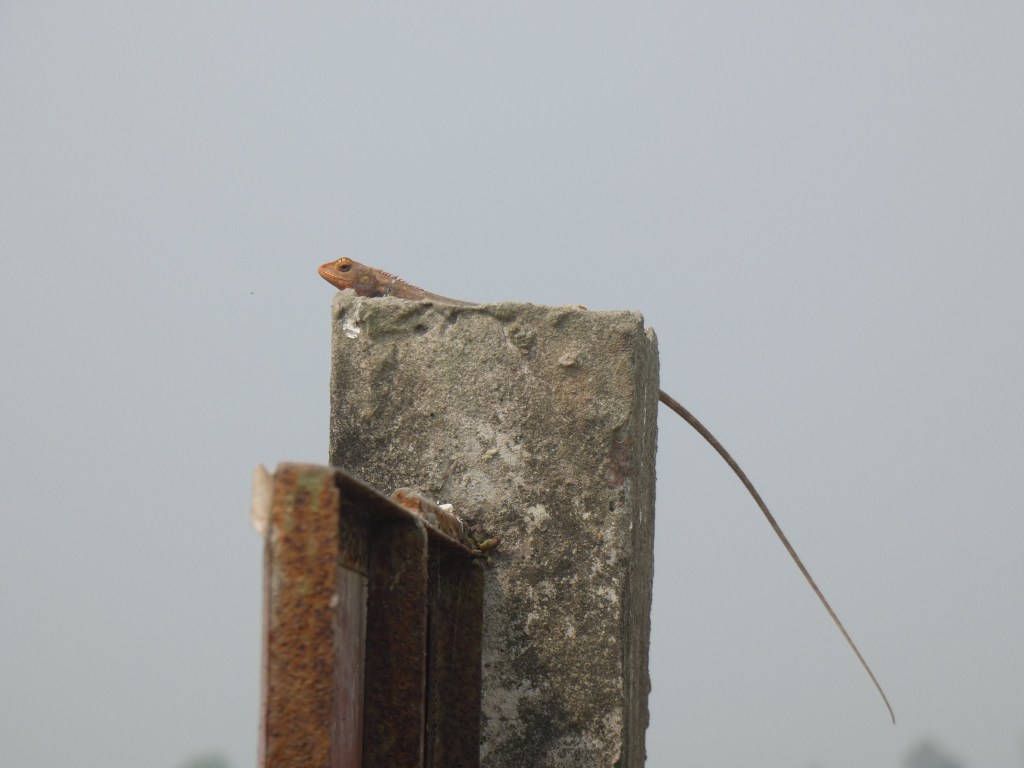
Once I got back to my bike, I noticed a handsome Changeable Lizard just chilling (well technically warming itself in the sun…) on the top of the concrete pole I had locked my bike. It was easily over a foot long including the tail.

Impressive tail!
Getting closer
Tight crop showing awesome detail!

I ended up with 51 species (of birds) plus a number of other animals, and some decent photos. As I was biking back home I realized I hadn’t thought of COVID-19 even once while I was birding!

eBird checklist: https://ebird.org/checklist/S65996023

If you enjoyed this post, please subscribe for more. As always, feel free to comment!
New Vision: dead kingfisher and cormorant 😢

I was able to bird New Vision again this weekend. By now it’s getting hot, and the bike ride though only 7 miles is starting to be a bit more wearing. While I was out it was probably mid to upper 80s (F) and thankfully humidity is still down in the 50s, but it’s not too long till we have temps in the low 90s and humidity in the 70s. 🥵

Because Nic decided not to join this time I was able to take his camera and get my own photos for once. Pretty much the first bird was a Pied Kingfisher which posed nicely allowing me my best shots of the species yet!

Pied Kingfisher

Zitting Cisticolas were very vocal as they did their characteristic flying high and calling, but this behavior doesn’t allow for photos. Wasn’t particularly birdy at the beginning, though I enjoyed two jackals sham fighting (no photos), then another jackal tried to hide from me when it saw me taking his picture.

Golden Jackal trying to hide

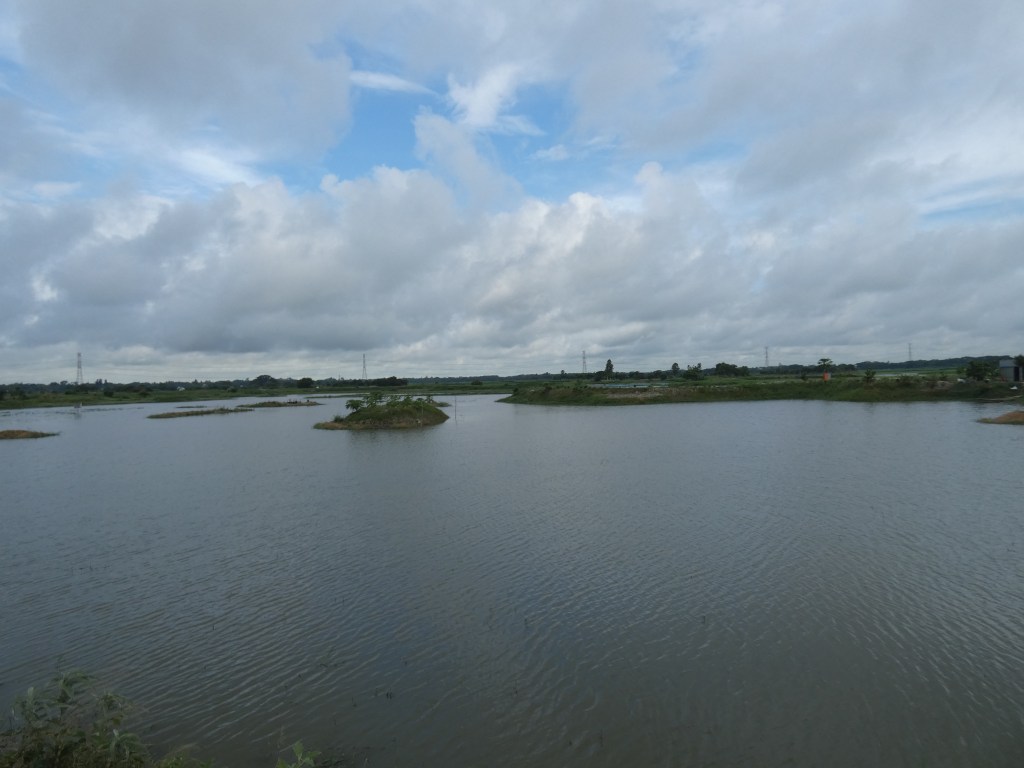
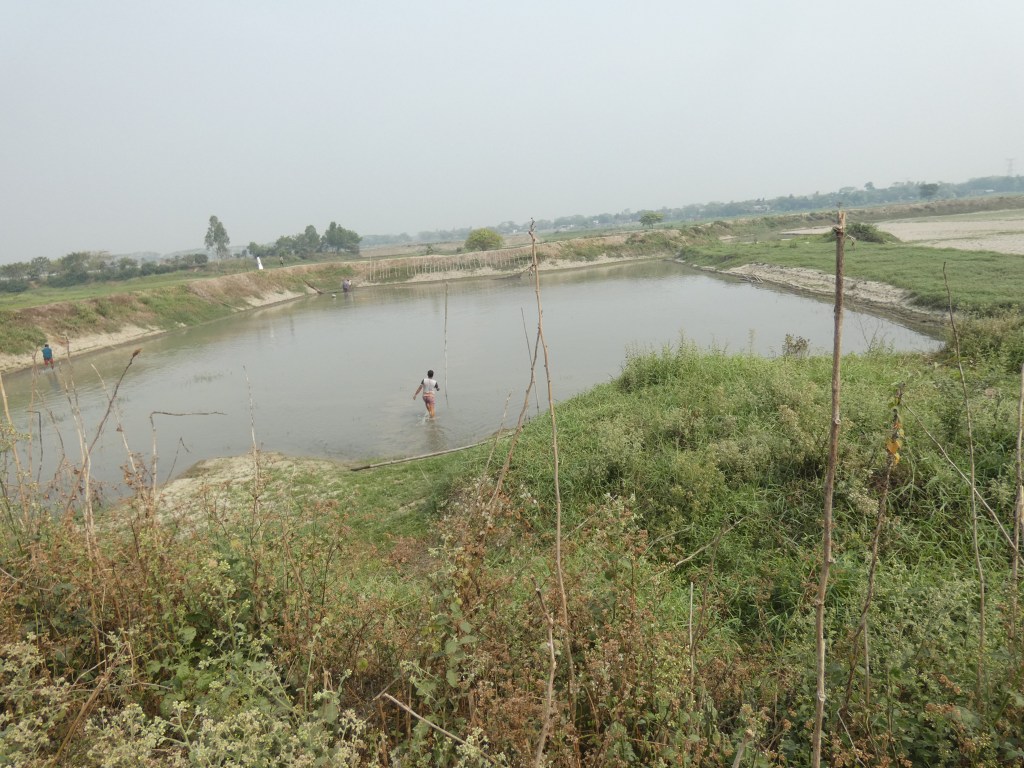
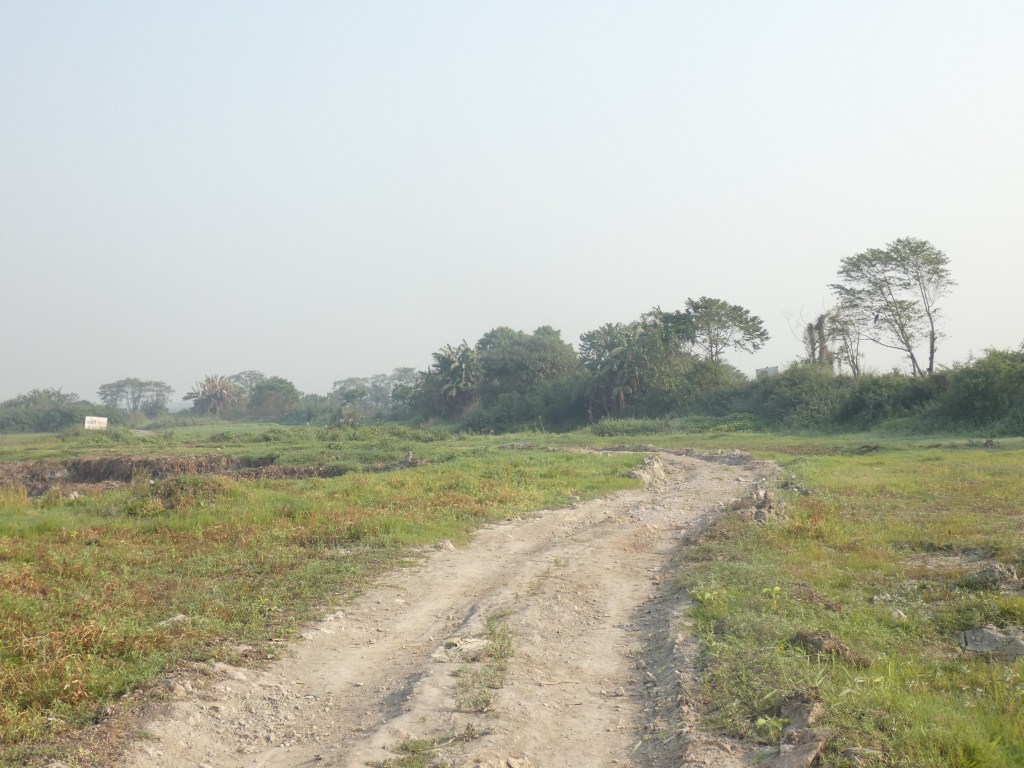
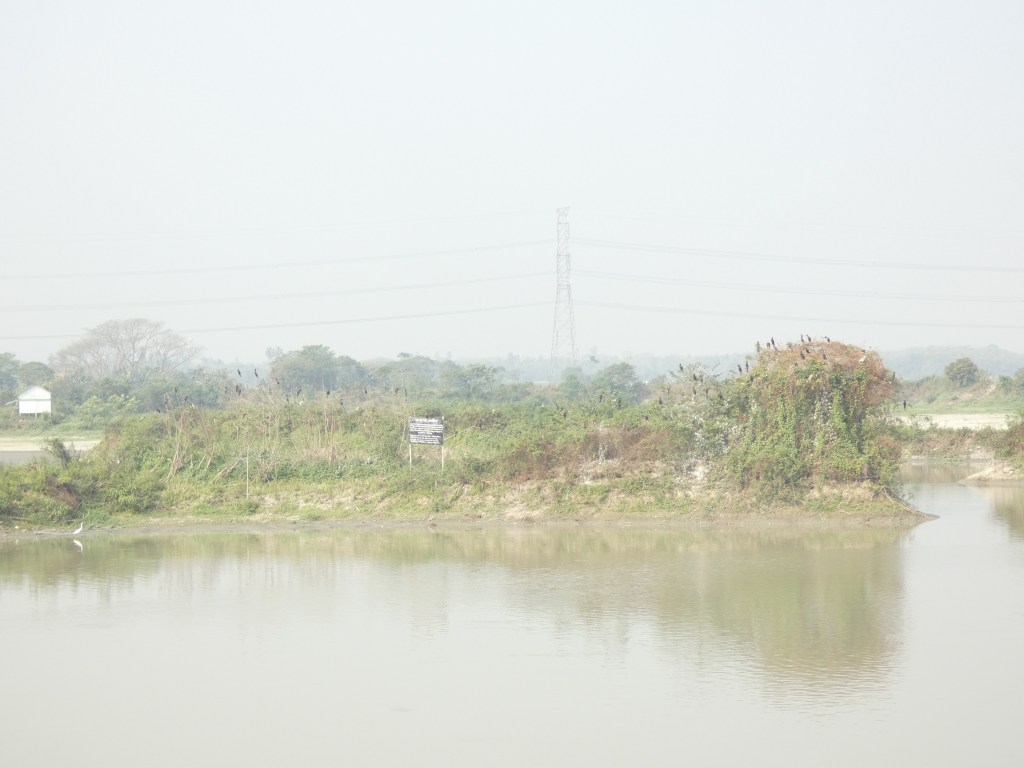
This is fairly close to the entrance and gives you a bit of a feel for what the area is like, though most of the time you are walking trails around small ponds and rice fields.

I noticed a small flock of swallows coming my way and was pleasantly surprised to see they were all Red-rumped Swallows! My highest count for here by three and interesting to see they’re still around despite the Barn Swallows being almost all gone (I only saw one barn swallow!).

I heard a beautiful song I couldn’t quite place, so I moved towards it and saw a Siberian Rubythroat hop into thicker brush. I tried to thread a shot through the twigs, but failed as you can see.

About as good as my Rubythroat shots usually are. Though I have had decent ones

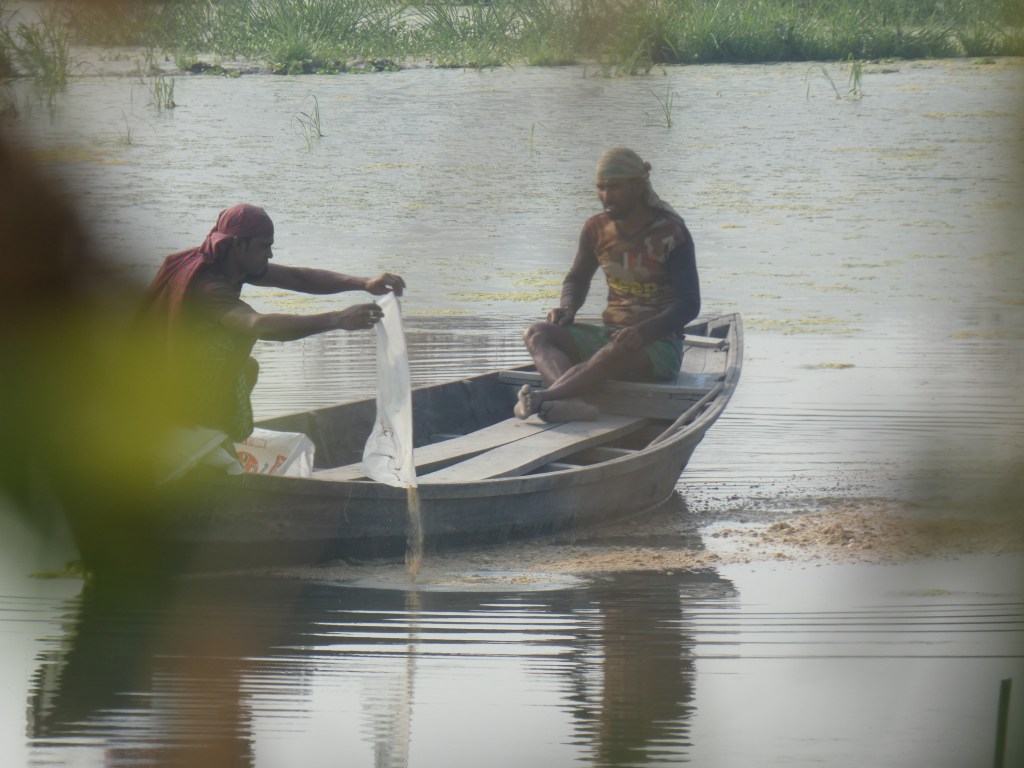
These guys were dumping something into the water. Have no idea what, though.

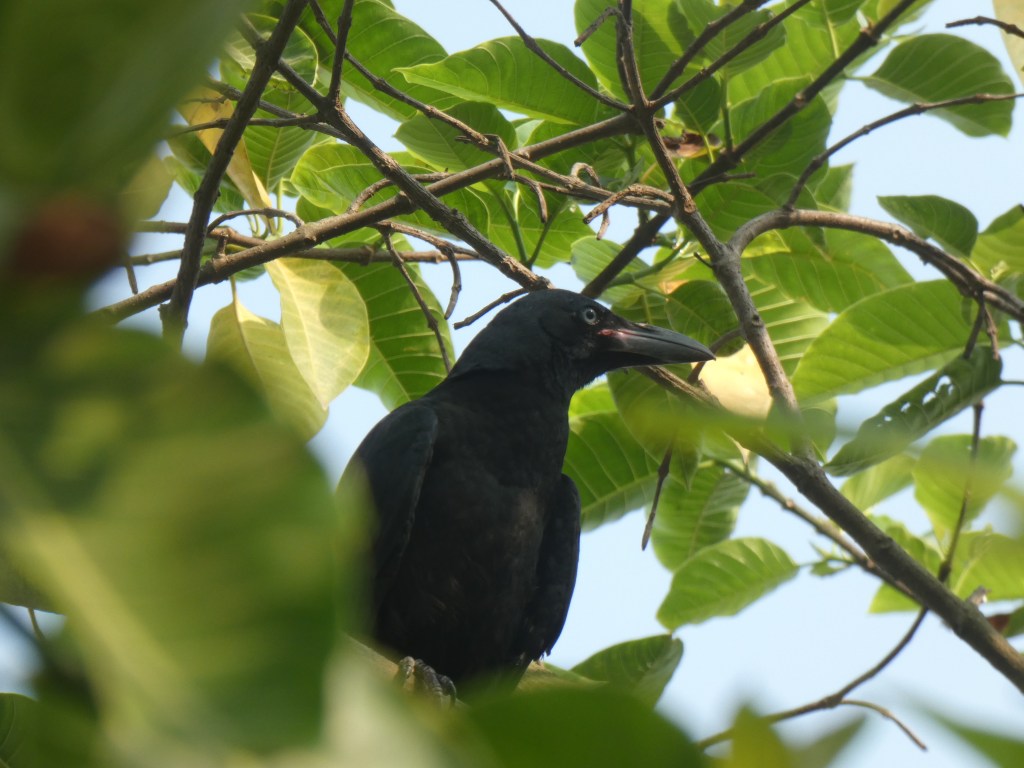
Found my first young bird of the year, a Large-billed Crow. I had seen them on a nest two weeks ago and noticed it was empty today, but didn’t necessarily expect to find them.

young Large-billed Crow

Birding was fairly slow, so I kept an eye out for insects as well.

Giant Honeybee
https://www.inaturalist.org/observations/39917538
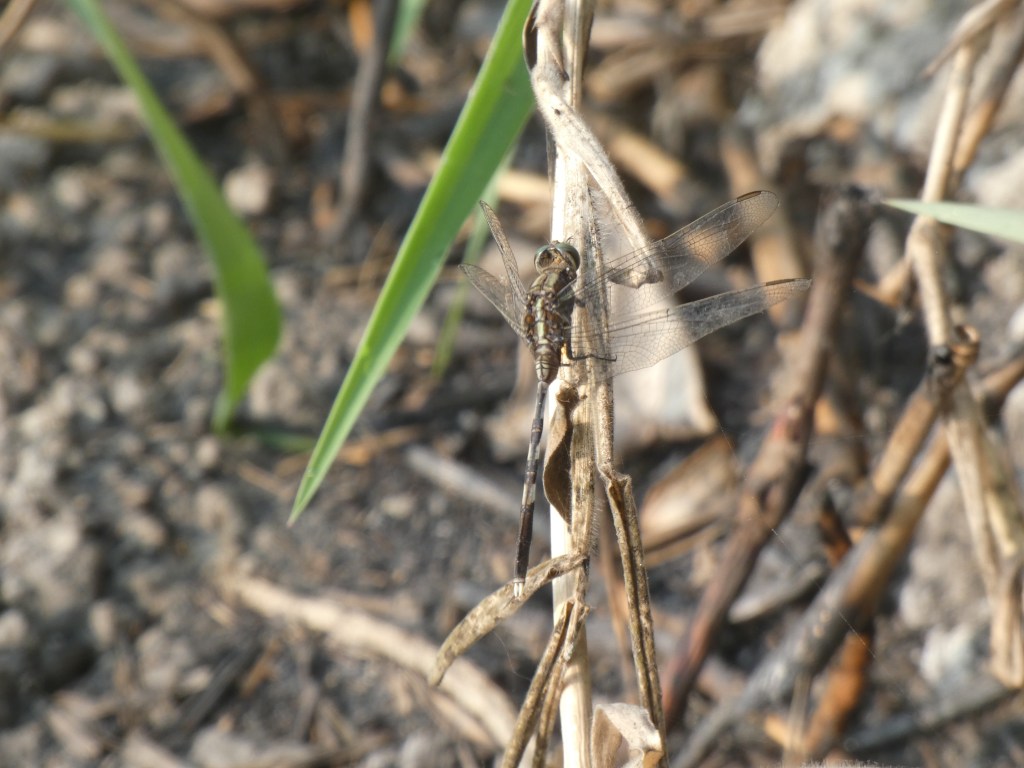
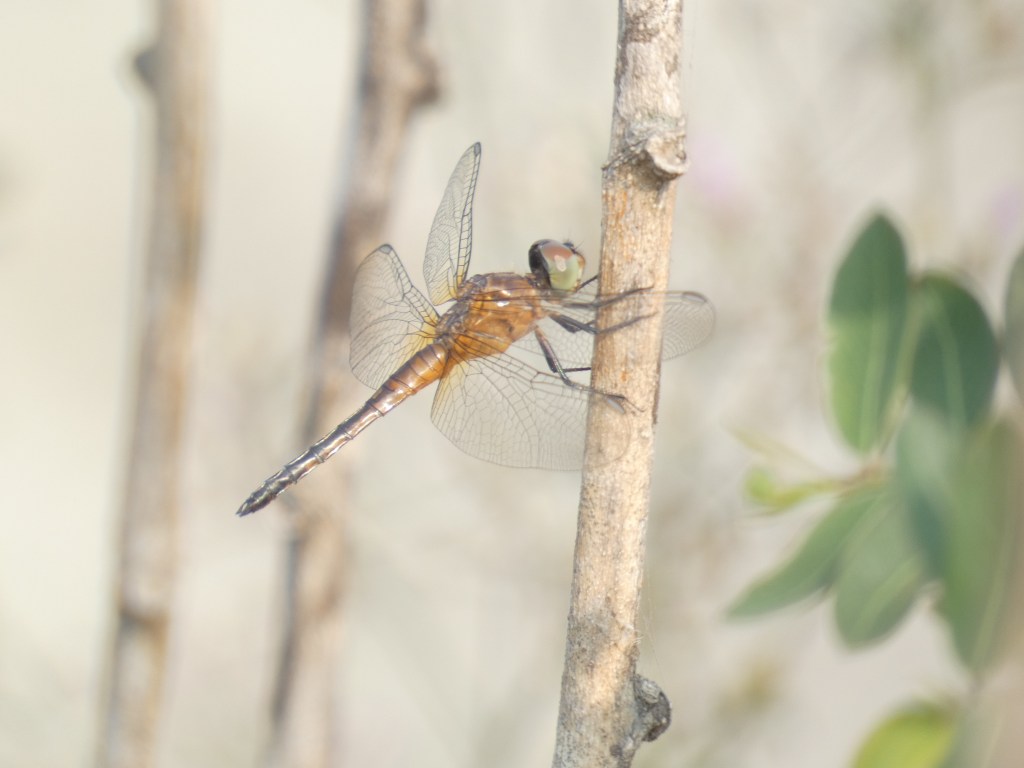
I think Green Marsh Hawk, not completely sure though
https://www.inaturalist.org/observations/39917537

In the one rice field I saw the only Common Sandpiper of the morning, and the nearly dried up pond had many Indian Pond Herons, a few Wood Sandpipers, one Green Sandpiper, and two Little Ringed Plovers. The bushes in the middle held at least 50 Little Cormorants and the two resident Striated Herons also made their appearance in the general area.

Loads of cormorants
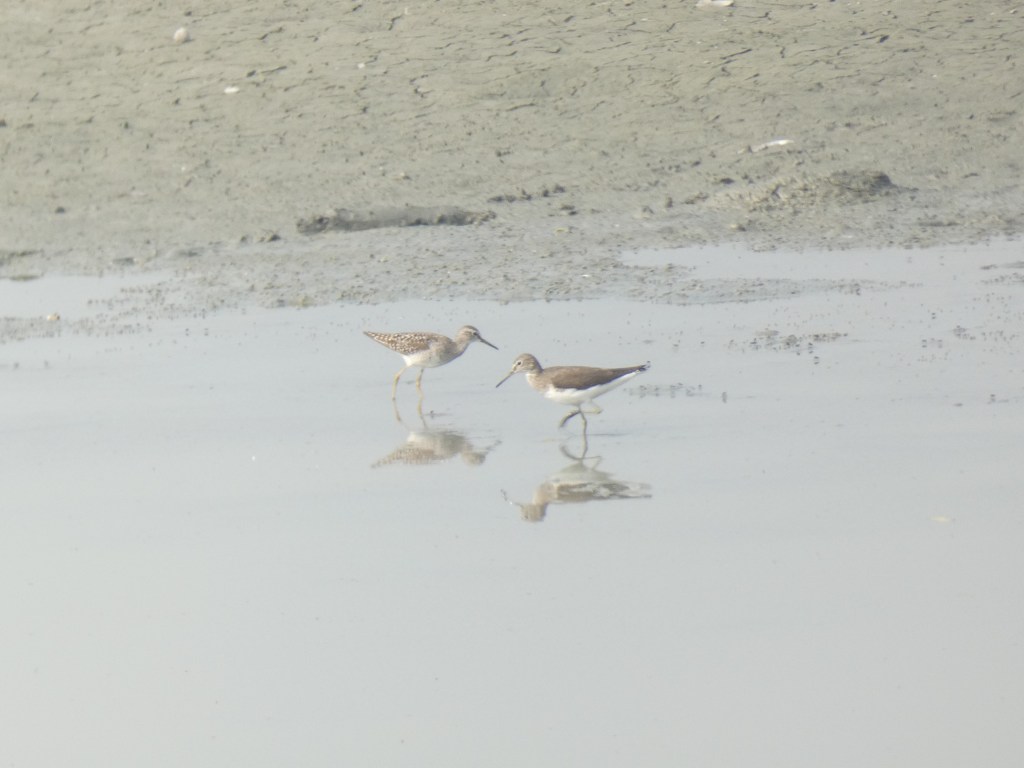
Wood (left) and Green (right) Sandpiper comparison shot

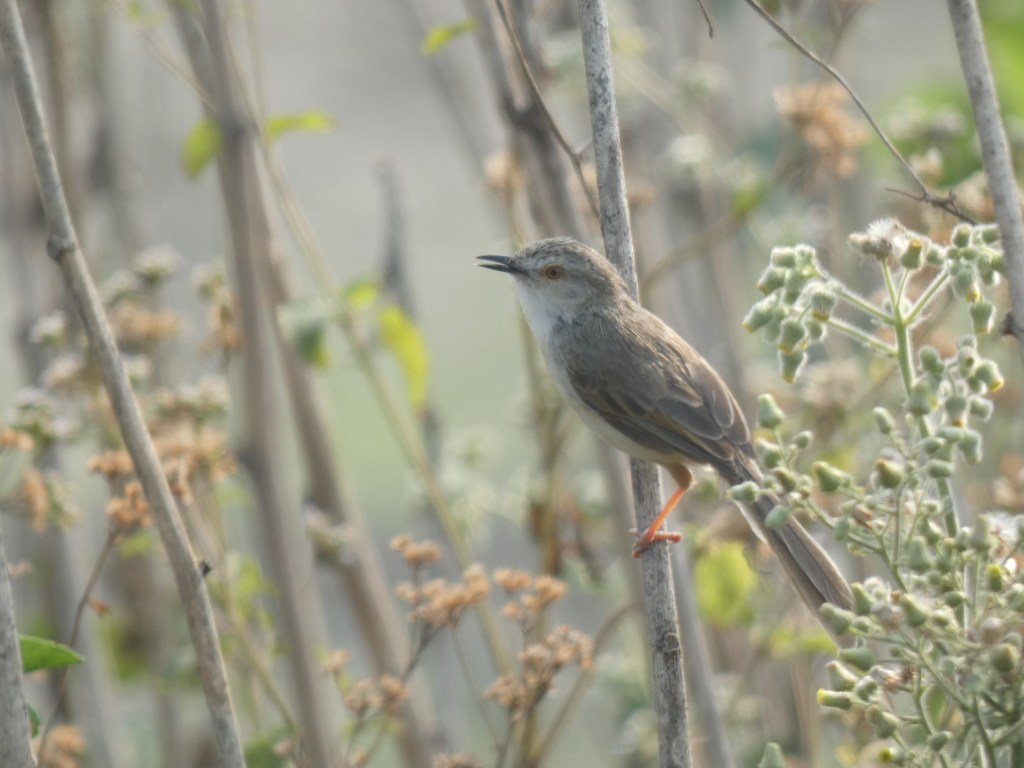
The row of okra plants always hold some small birds. Earlier in the season this was the most reliable spot to find the rare Booted Warblers (rare in BD, but they’ve wintered at this location the last three years), but this morning only two of the many resident Plain Prinias and some unidentified Skimmer (dragonfly) were there.

Plain Prinia posing nicely
Unidentified skimmer
https://www.inaturalist.org/observations/39917545

This time I decided to take the path a little farther than I usually do and ended up being glad of this decision. First up was a Eurasian Wryneck. I had thought these had already left, but apparently not.

Eurasian Wryneck
Not so great shot of a cool looking bird.
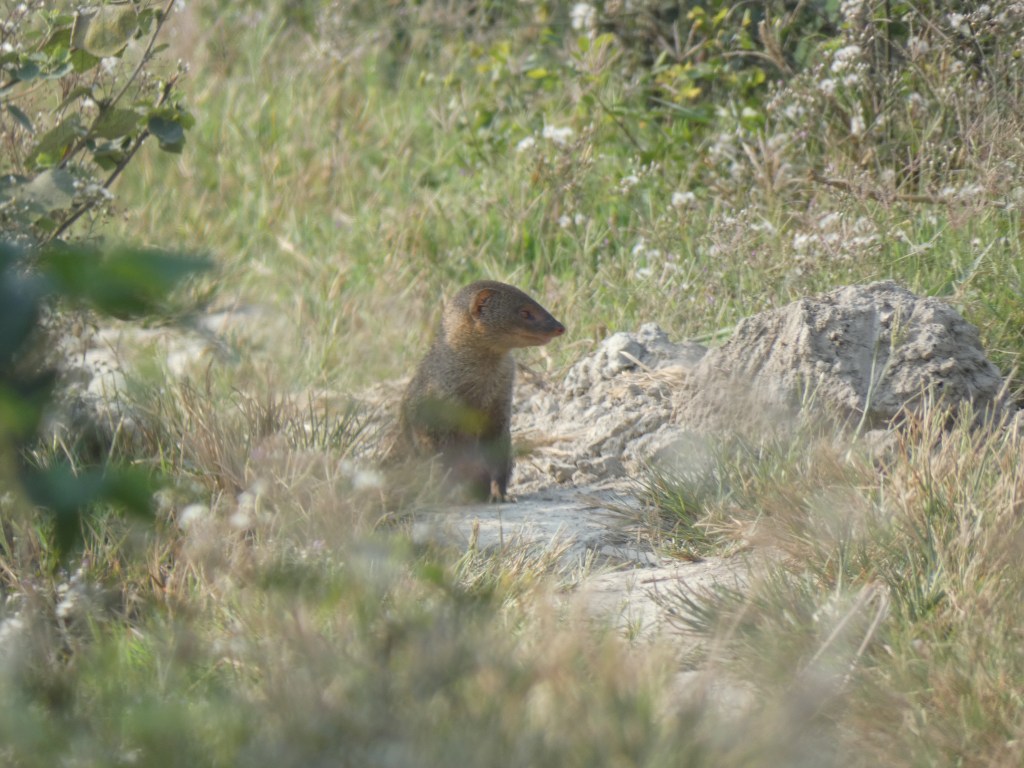
Small Indian Mongoose

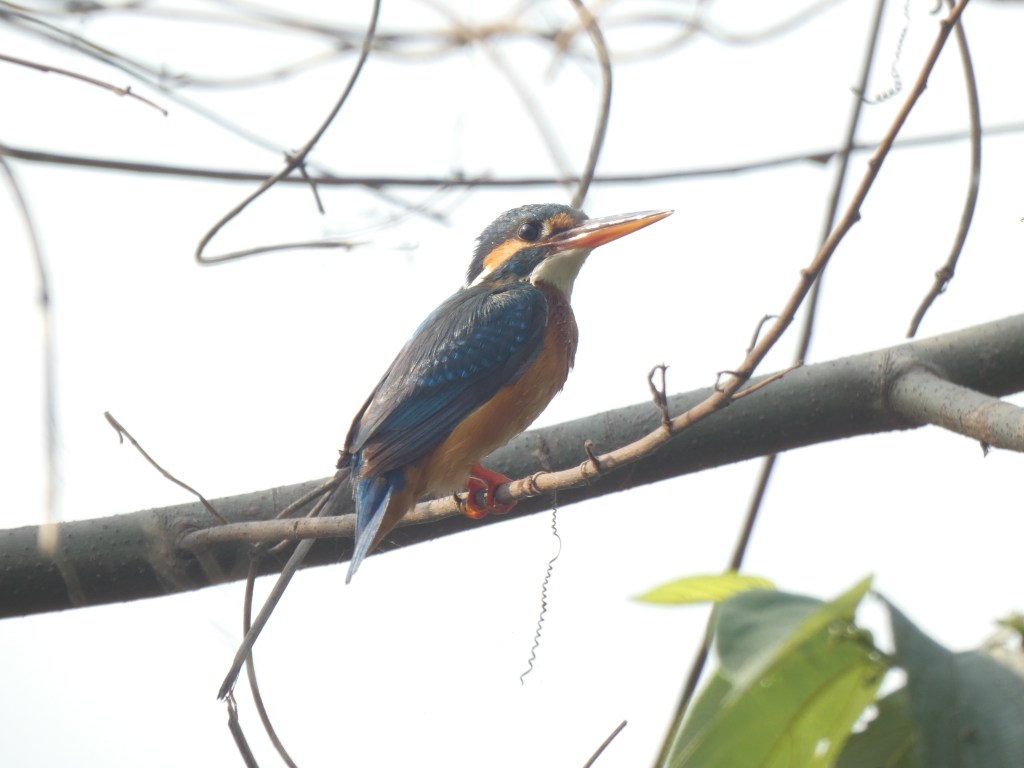
A Common Kingfisher gave me great close up views, though the pictures didn’t turn out well because the lighting was bad.

Common Kingfisher

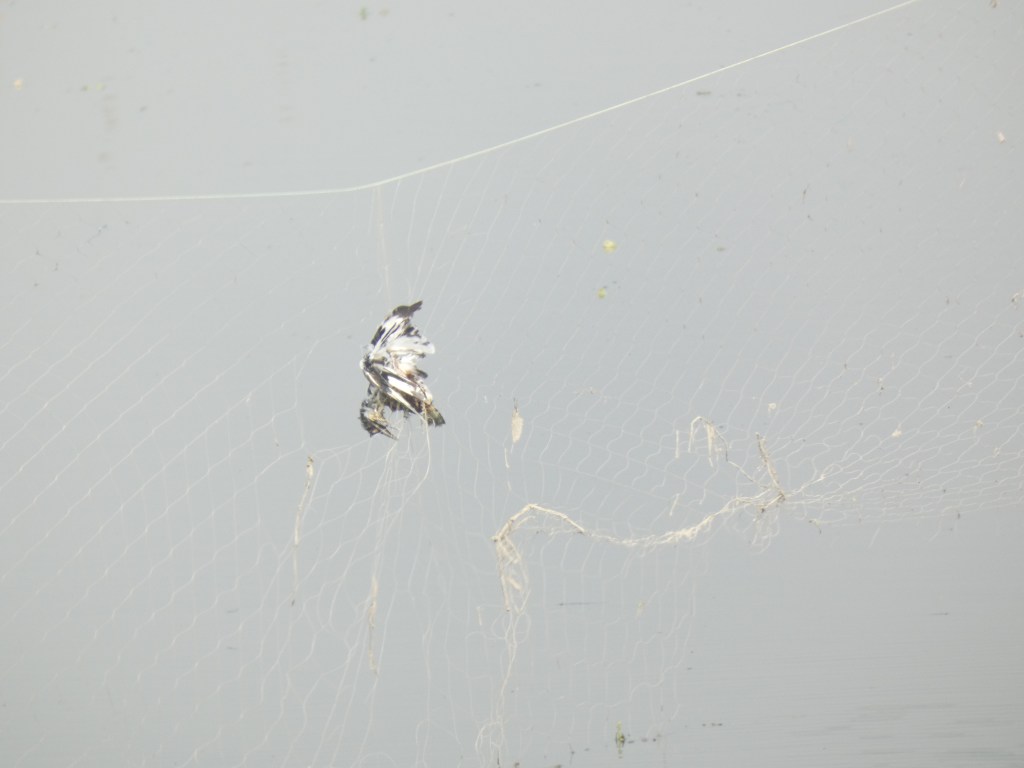
Worst part of the day was finding this Pied Kingfisher dead stuck in a net put up to keep the birds off the water.

dead Pied Kingfisher

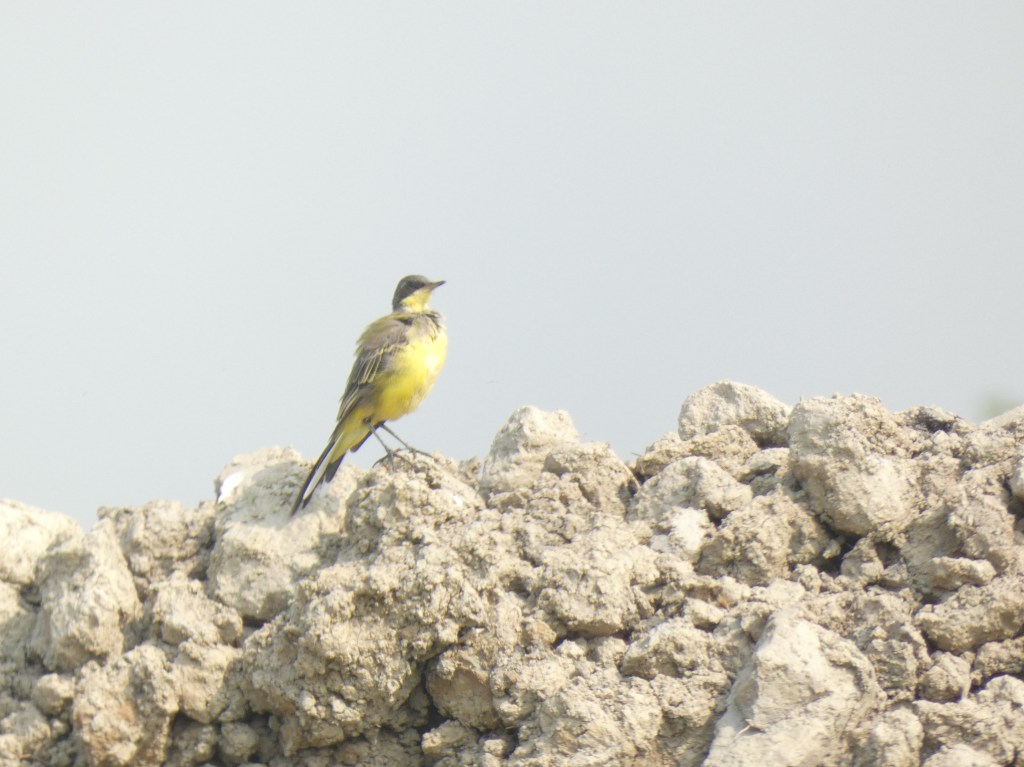
I noticed a bunch of wagtails out in the rice fields, and with how many it was I was guessing they were yellow wagtails. Recently it was discovered that both Eastern and Western are possible in Bangladesh instead of only Western. They’re very hard to separate especially in nonbreeding plumage, Eastern has darker ear coverts than crown and no subocular stripe whereas Western has ear coverts concolorous with crown and a subocular stripe. But the most reliable way to differentiate is by calls. Soundbirding has good article that can help with ID by calls.

When we had discovered that both are possible I went back through my photos and videos from last March and found that a large flock from here was actually Eastern! Since the status of both species here is now somewhat unsure it’s fun to try to get good enough photos and recordings to ID them. This flock of wagtails was indeed yellow wagtails, but I’m still not sure which. I got some bad quality phone recordings of their flight calls which should hopefully do the trick, but I need one of the experts to confirm. For now they are down as Western/Eastern Yellow Wagtail.

Yellow wagtail…

The above photo is only one of the many I took of varied individuals. If you want to see photos of others or listen to the recording you can check out the eBird checklist linked at the end of the post.

After spending enough time walking those ridiculously narrow paths in the paddy fields and trying to keep from falling into the water (Rice is grown in several inches of water) and after spending enough time following the wagtail flock I decided to head home as it was getting quite hot. I didn’t see much on the way back except one of the many rats, a few Citrine wagtails coming into breeding plumage, and a Grey Pansy (butterfly).

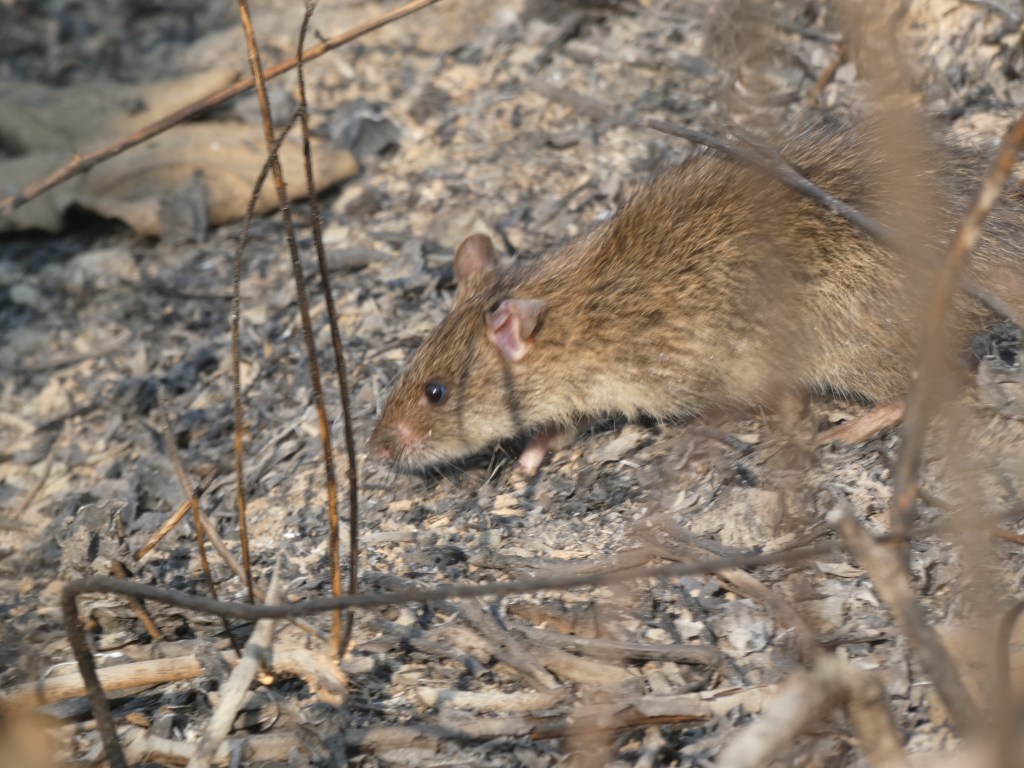
Brown Rat?
I know you can find Bandicoot rats here, but I’m pretty sure this is just a Brown Rat.
Citrine Wagtail
Grey Pansy

Right near my bike I found a pile of black feathers that I don’t think had been there earlier in the morning. I uploaded it to iNaturalist and they were identified as the remains of a Little Cormorant. Hopefully it wasn’t another case of people illegally hunting the local birds here, but I don’t really know.

As I unlocked my bike a Eurasian Kestrel flew past to round out the morning at 52 species. Not too bad for mid March.

eBird checklist: https://ebird.org/checklist/S65734521

If you enjoyed this post, please subscribe for more. As always, feel free to comment!

Historical: Cordonbleus, Waxbills, and more(Kenya pt 2)

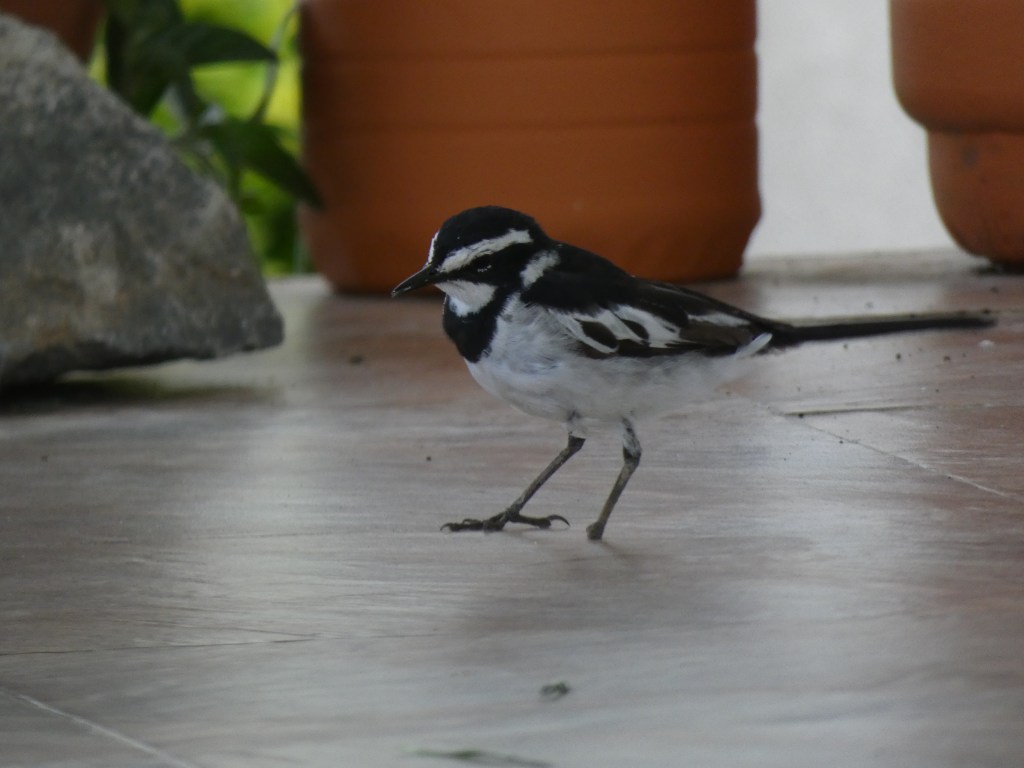
I woke up bright and early our first morning in Kenya to the gorgeous song of an African Pied Wagtail just outside my window! I of course had to check to see what it was and enjoyed its “wagging” around the sidewalk. I also noted a wheatear on the back wall which I IDed as Pied Wheatear, our first lifer of the day! Nic and I quickly got dressed, grabbed my binos and our cameras and headed out for some birding.

*I’m fairly confident on the ID of the wheatear, but when I posted a better shot of presumably the same individual from a few days later on iNaturalist two fairly reputable sources claimed it was Abyssian Wheatear. I’ll have to sort this out…

Blurry, through the window shot of the wheatear

We immediately had lots of birds: nicely posing Laughing Dove, Superb starlings, loads of swallows, which at first glance looked to be all Barn Swallows, were on the wires.

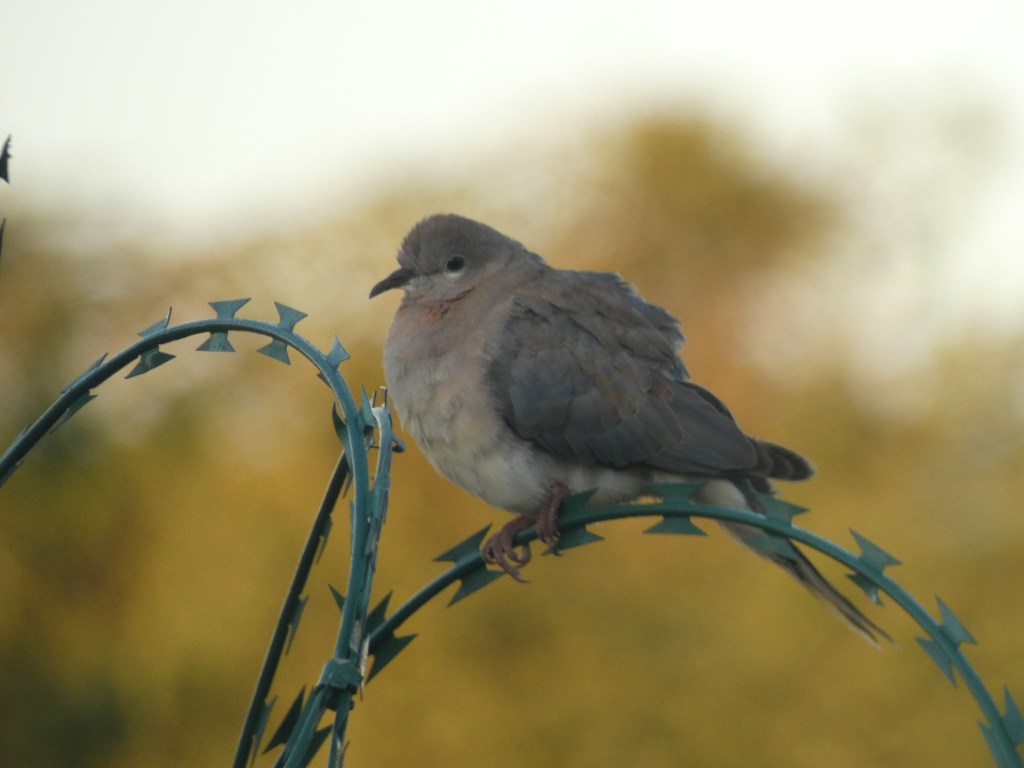
Apparent immature Laughing Dove posing with a nice background. Unfortunately not tack sharp…

Unfortunately after the laughing dove shot I somehow bumped the white balance (WB) setting on my camera and it made all the rest of my shots an awful blue! 😞 I’ll have to see if I can somehow edit them to fix that. Because of that many of these shots are from Nic, but if so they are marked as his.

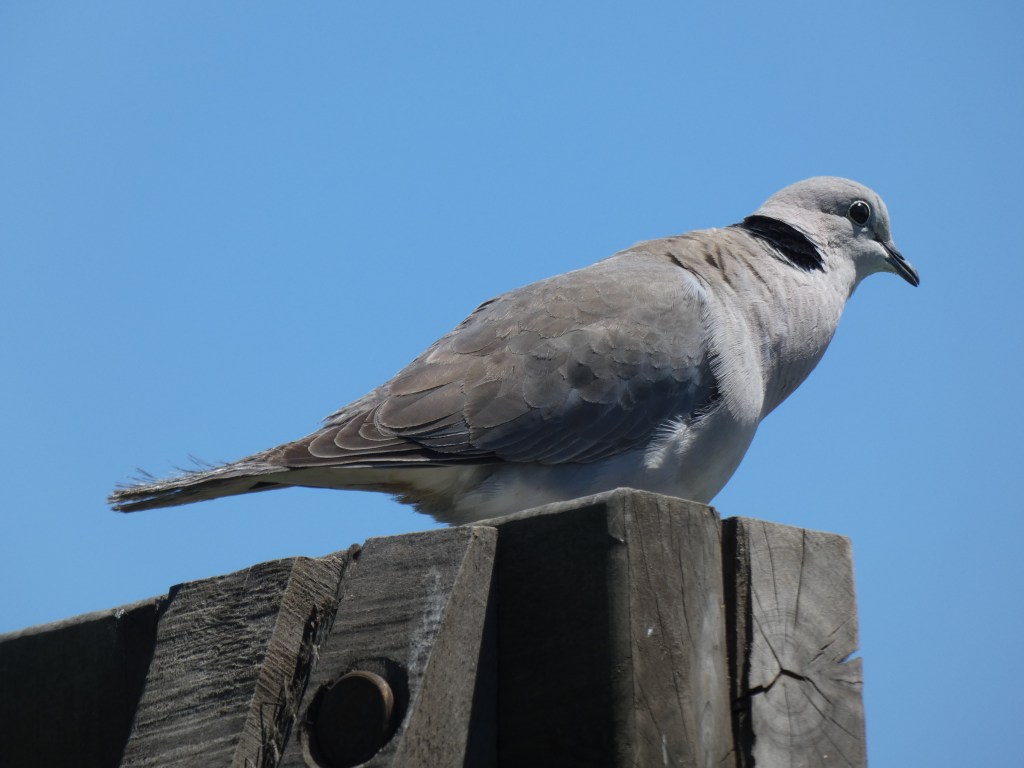
We had loads of lifers in the hour and a half we birded: Red-eyed Dove, Ring-necked Dove, and Laughing Dove were the common dove species we picked up.

Ring-necked Dove from later in the day
©Niccolas Miller

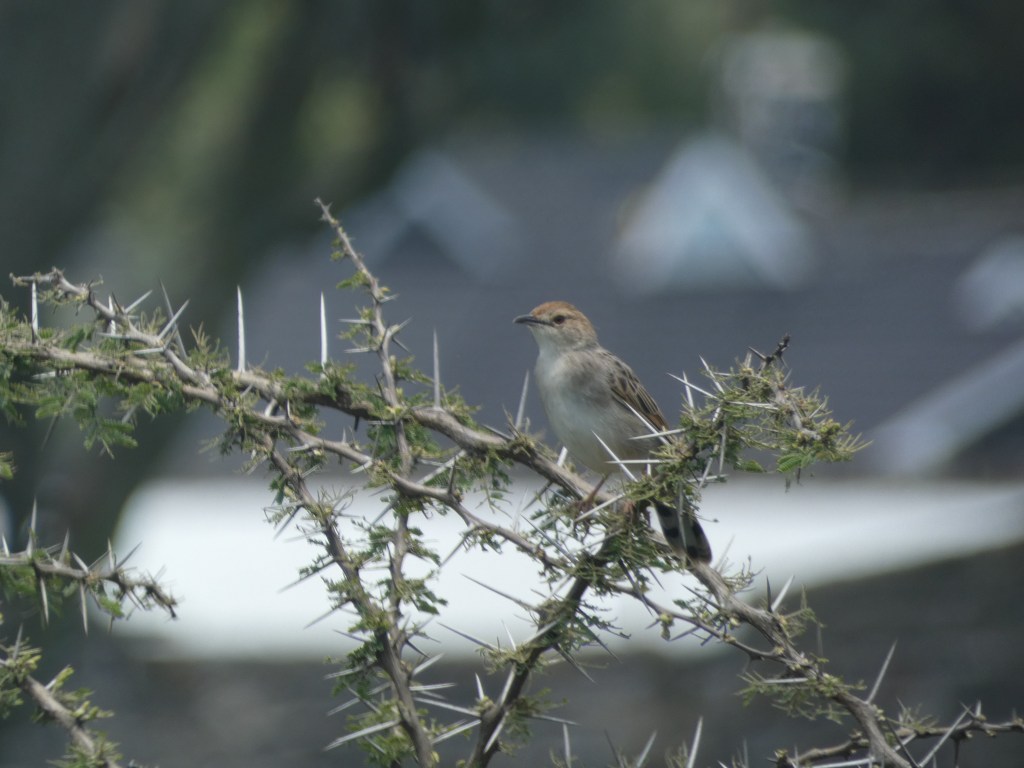
African Sacred Ibis and Black Goshawk both gave us short views as they flew over. Chinspot Batis was one of the lifers I was looking forward to, but it didn’t allow for more than very blurry shots. African Thrush, Wire-tailed Swallow, Common Waxbill, Red-cheeked Cordonbleu, and Streaky Seed-eater were some more of the many lifers.

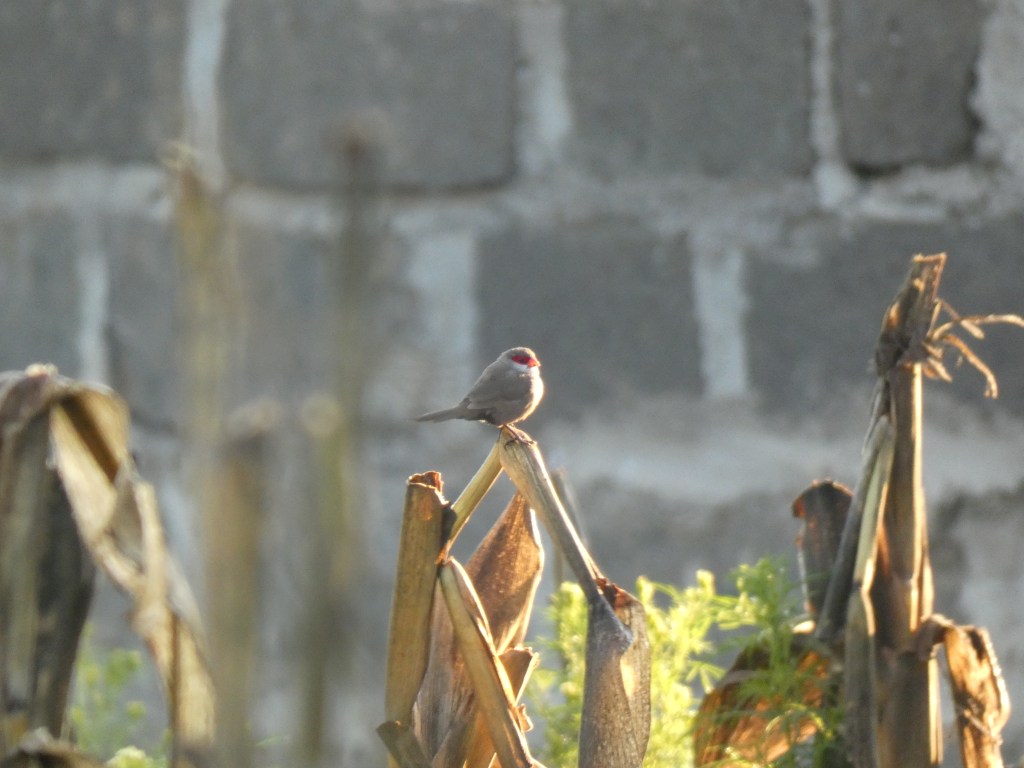
Common Waxbill
©Niccolas Miller
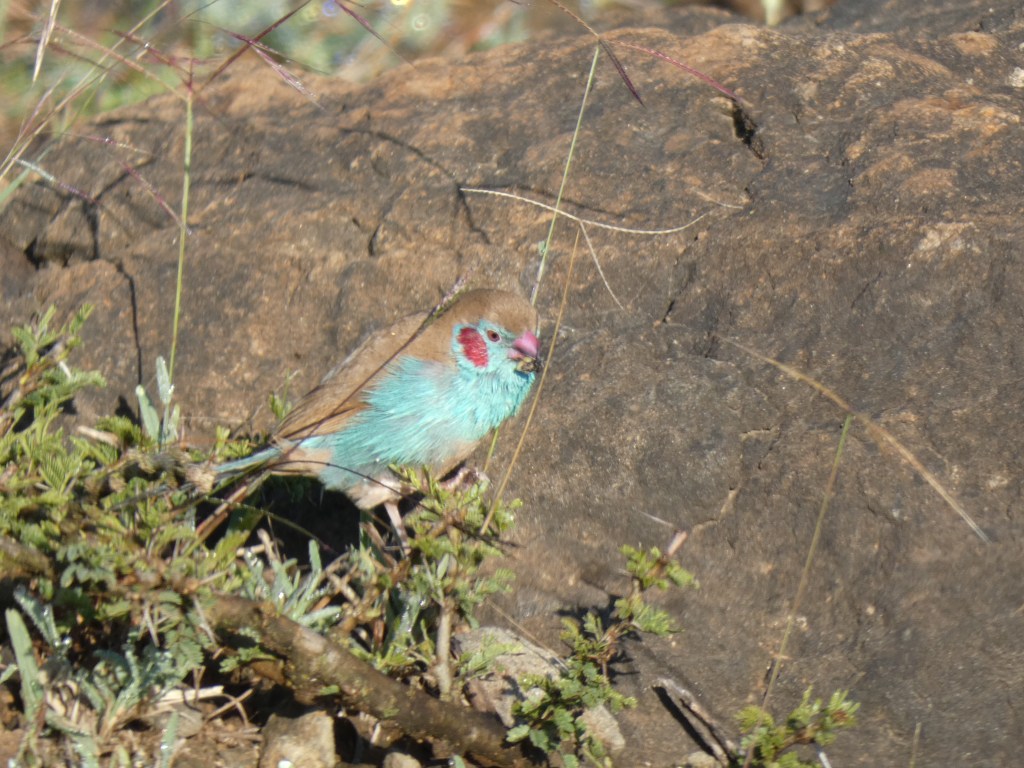
Red-cheeked Cordonbleu. Such beauties!
©Niccolas Miller
White-fronted Bee-eater
©Niccolas Miller

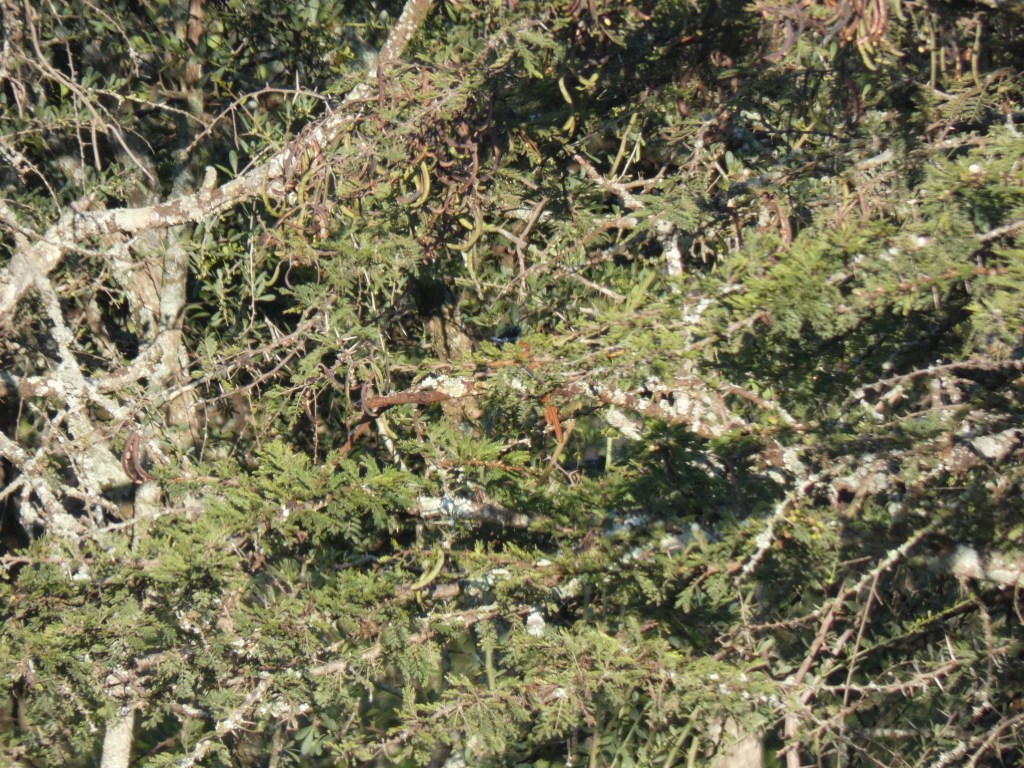
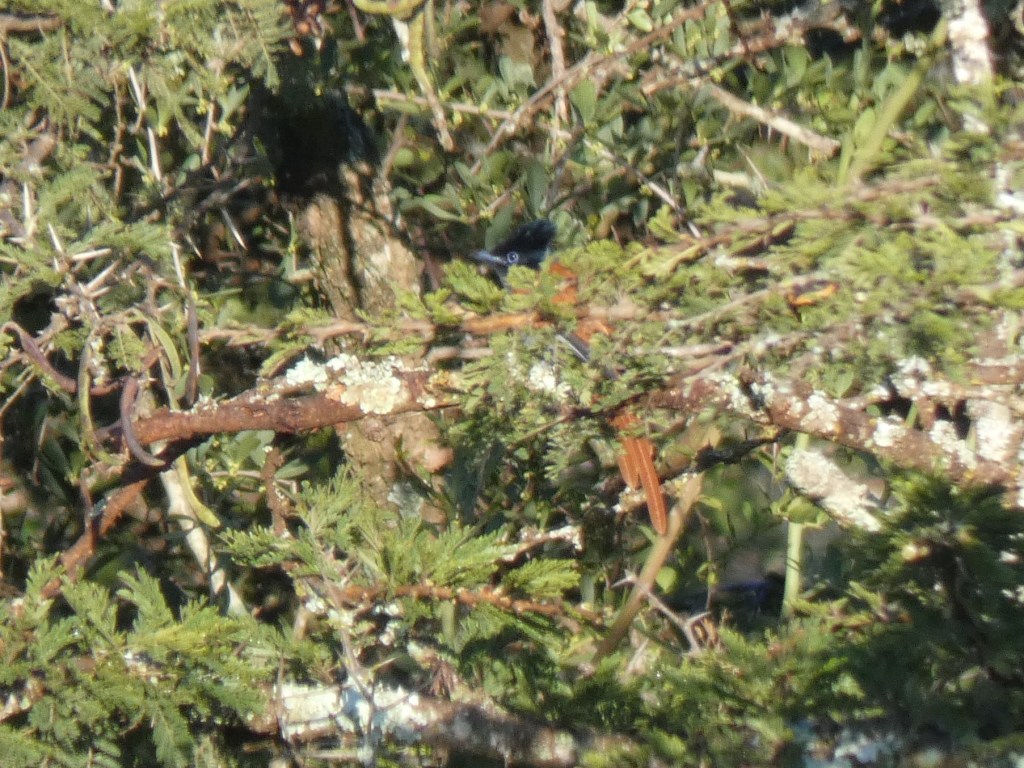
Can you find the African Paradise Flycatcher?

©Niccolas Miller

There he is!

There he is!
©Niccolas Miller

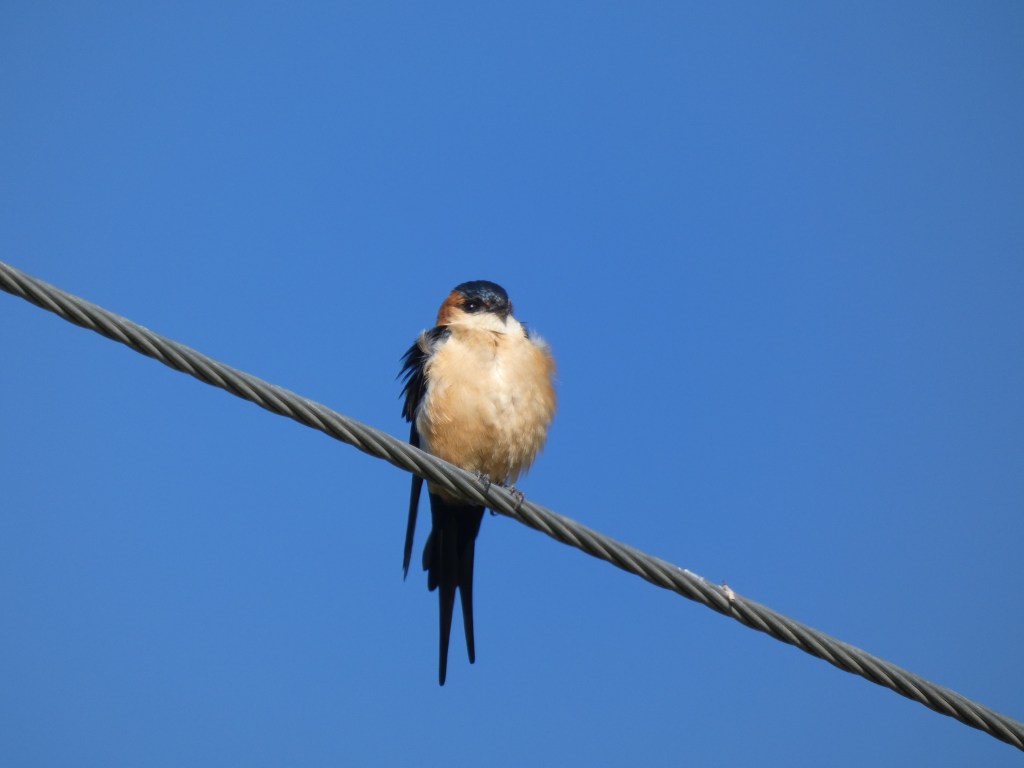
Some of the swallows on the wire:

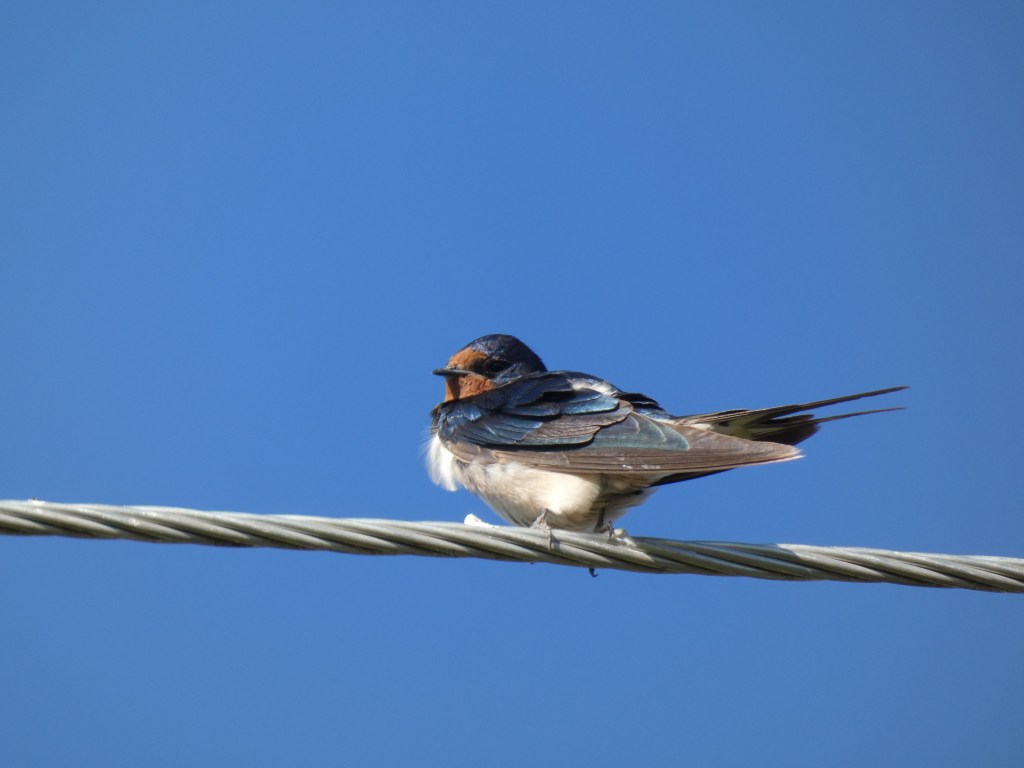
Red-rumped Swallow
©Niccolas Miller
Barn Swallow
©Niccolas Miller
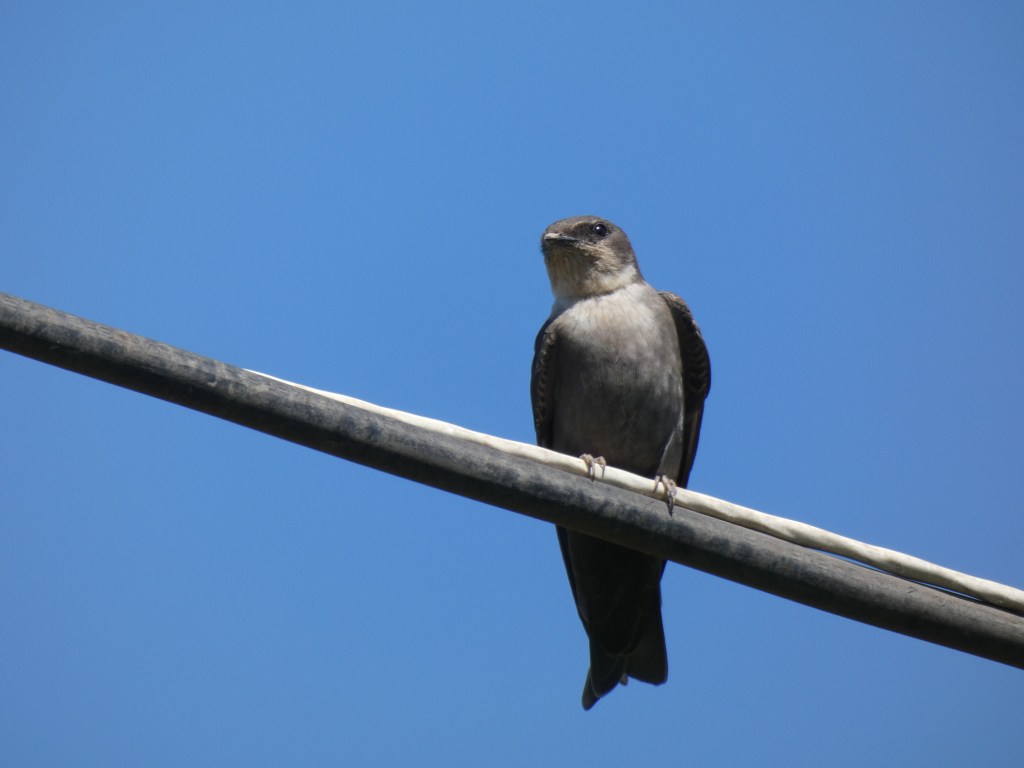
Rock Martin
©Niccolas Miller

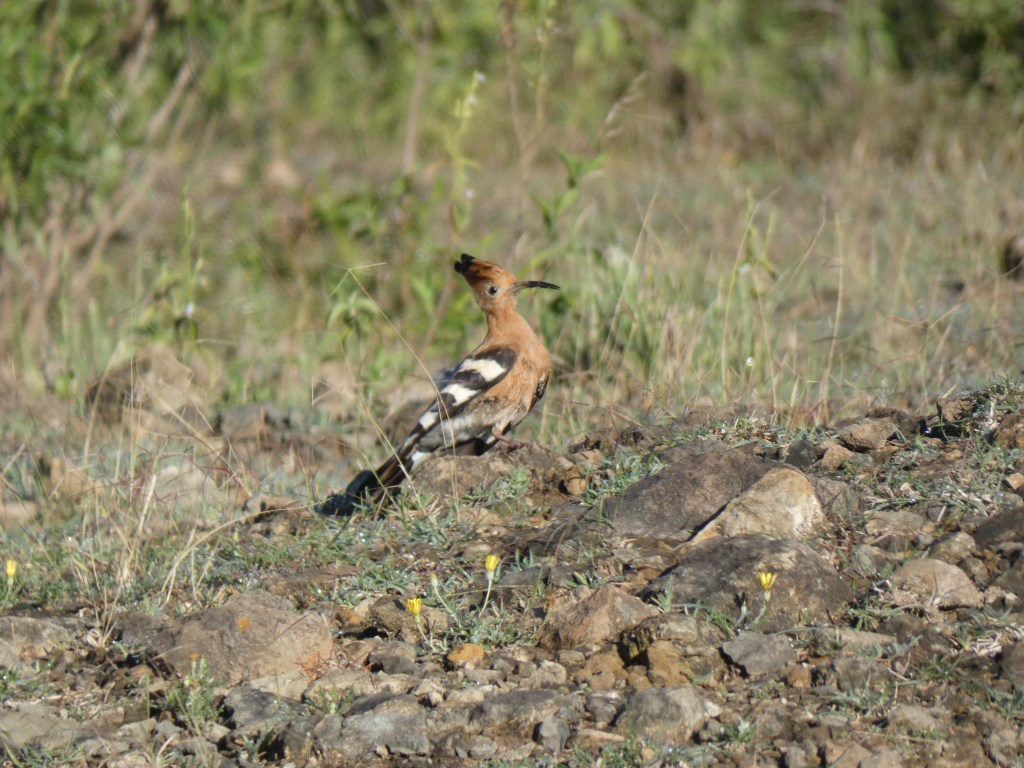
Nice views of two Eurasian Hoopoes was fun, though they weren’t lifers.

Eurasian Hoopoe
©Niccolas Miller

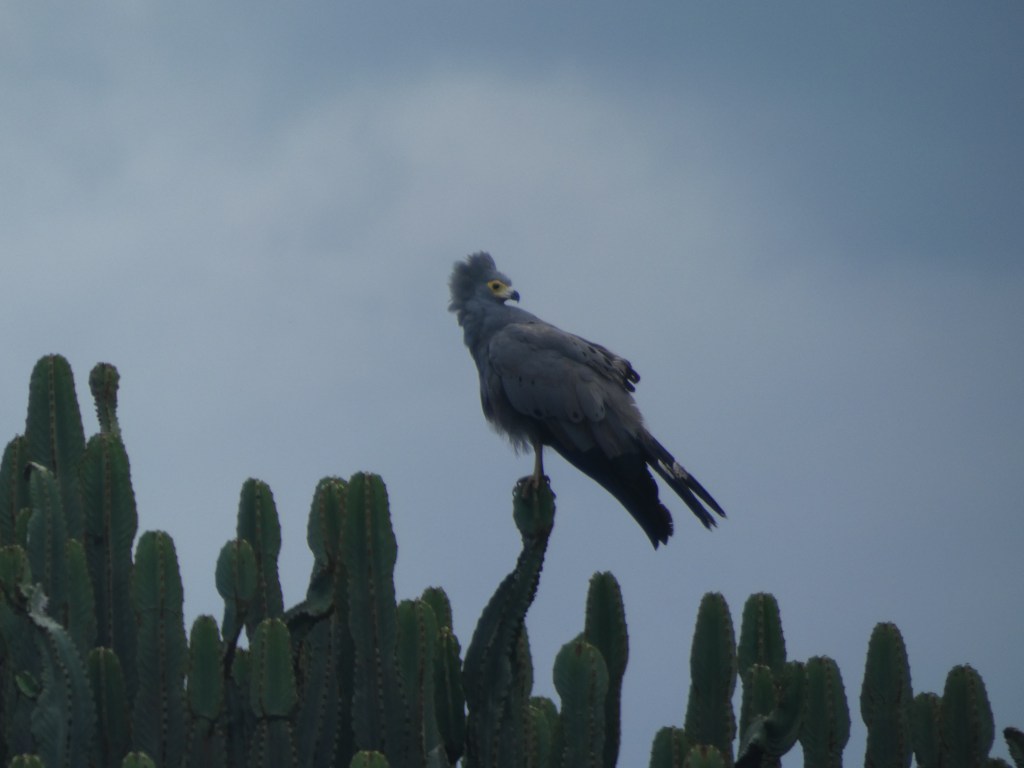
Through the rest of the day we had a nice number of raptors and other birds as we mainly just stayed at the house. Booted Eagle, Steppe Eagle, African Harrier Hawk, Black-winged Kite, Augur Buzzard, Black Goshawk, and Black Kite were the raptors of the day all within a few hundred yards of my aunt and uncles house!

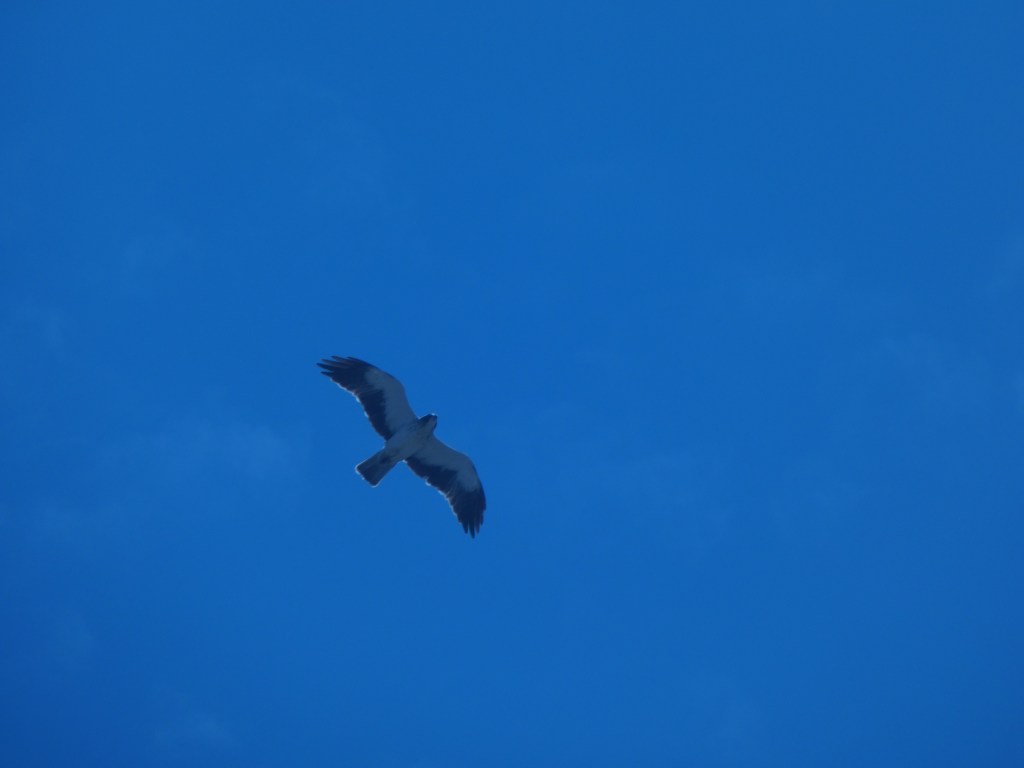
Booted Eagle (sorry for the wacked WB)
African Pied Wagtail on the back porch. Poor thing is missing it’s one foot, but was getting along so well we barely noticed.
©Niccolas Miller
Common Bulbuls hanging out
©Niccolas Miller

African Harrier Hawk was definitely the highlight of the afternoon! Such a bizzare looking bird!

African Harrier Hawk
Rattling Cisticolas were quite common and VERY vocal.
Gorgeous male Scarlet-chested Sunbird

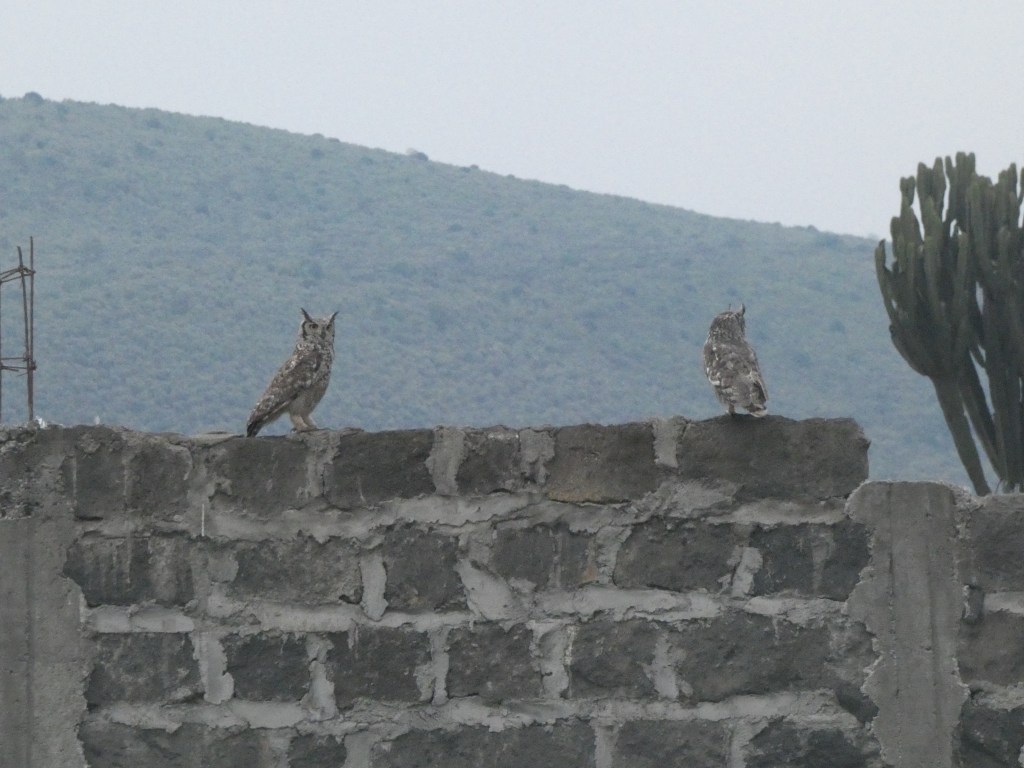
We went out on a short walk in the late afternoon and didn’t have anything interesting until we saw a pair of Spotted Eagle-owls near the edge of the forest! Owls are one of my favorite bird families and getting them when so unexpected was super cool! They were being harassed by a pair of Fork-tailed Drongos (lifer) and an African Thrush was “scolding” them.
Spotted Eagle-owls!
All in all a great first full day, with 23 lifers taking me to exactly 400!!

eBird checklists for the day: https://ebird.org/checklist/S61105542 (morning walk), https://ebird.org/checklist/S61106430 (late morning from the house), https://ebird.org/checklist/S61107813 (afternoon short walk to get closer to the Harrier Hawk), https://ebird.org/checklist/S61108781 (mid afternoon from the house), https://ebird.org/checklist/S61113584 (late afternoon walk including the owls)

If you enjoyed this post, please subscribe for more. As always, feel free to comment!