Birding JU: Brown Fish-Owl!

Nic and I finally got the time to go out to Jahangirnagar University (JU) this weekend. JU is a beautiful campus and well known birding hotspot just outside Dhaka. During the winter there are many migrants with the highest numbers being several thousand Lesser Whistling Ducks (most common duck in Bangladesh). Most of the migrants have already left by the end of February, so we were a little late, but still expected fun birding.

We were joined by my young birding friend Elias Thomas, and were planning on meeting up with Auritro Sattar, a young local birder who attends JU, once we got there. We pulled in at 7:30 and had birds as soon as we got out of the car. A few Yellow-footed Green-pigeons perching in a dead tree were fun again and we had nice views of a Black-rumped Flameback checking out a hole in a tree. Of course there were also the obligatory mynas, and loads of noisy Jungle Babblers.
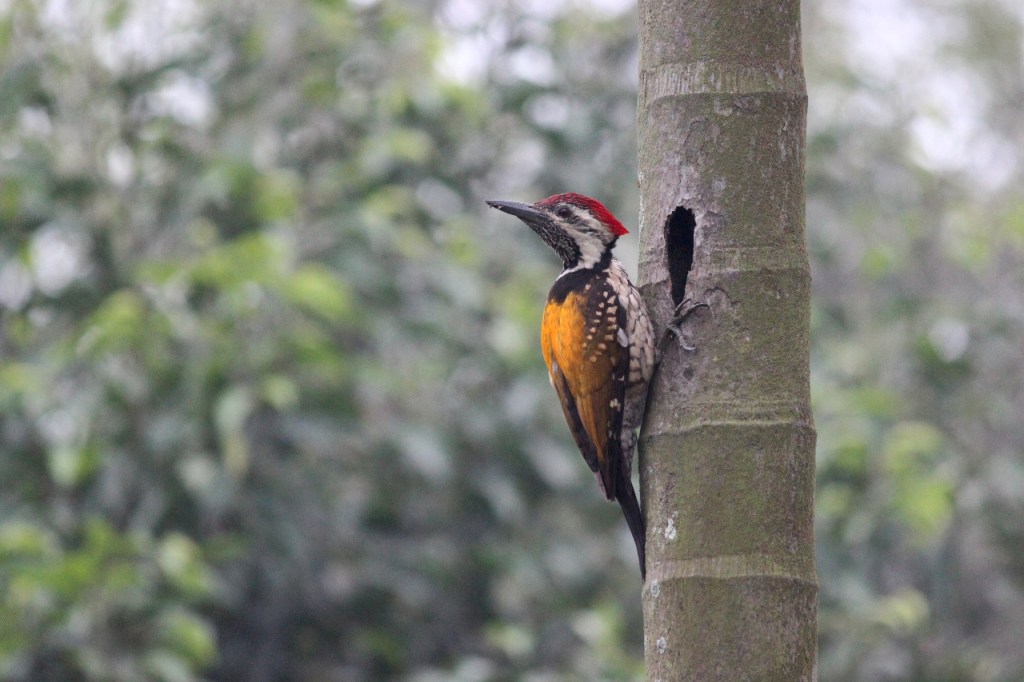
Black-rumped Flameback
©Elias Thomas

*many of these photos are not my own as my camera is currently needing repairs. If they aren’t mine then the caption will make that clear.

We started heading toward the botanical garden area which is usually good for birding. Along the way we heard a call we recognized but couldn’t place, so we went to investigate. We finally traced it to its source, three Stork-billed Kingfishers in a large tree calling to each other. They were also my first year bird of the day. (#180) Here’s a recording of Stork-billed Kingfishers from Xeno-canto.

Also right around there we noticed a nice little grove of trees that was fenced off. We checked the sign and it said it was the “Butterfly Garden”. From the outside we saw a fun Bronzed Drongo, also a year bird.

As we walked the main road we got nice close up views of Rose-ringed Parakeets and a Lineated Barbet right together, though no photos since the lighting was bad. Then we turned off onto the path that leads to the gymnasium since that area is always good birding. We immediately had our first water birds: Bronze-winged Jacanas, White-breasted Waterhens, Lesser Whistling Ducks, and an Asian Openbill.
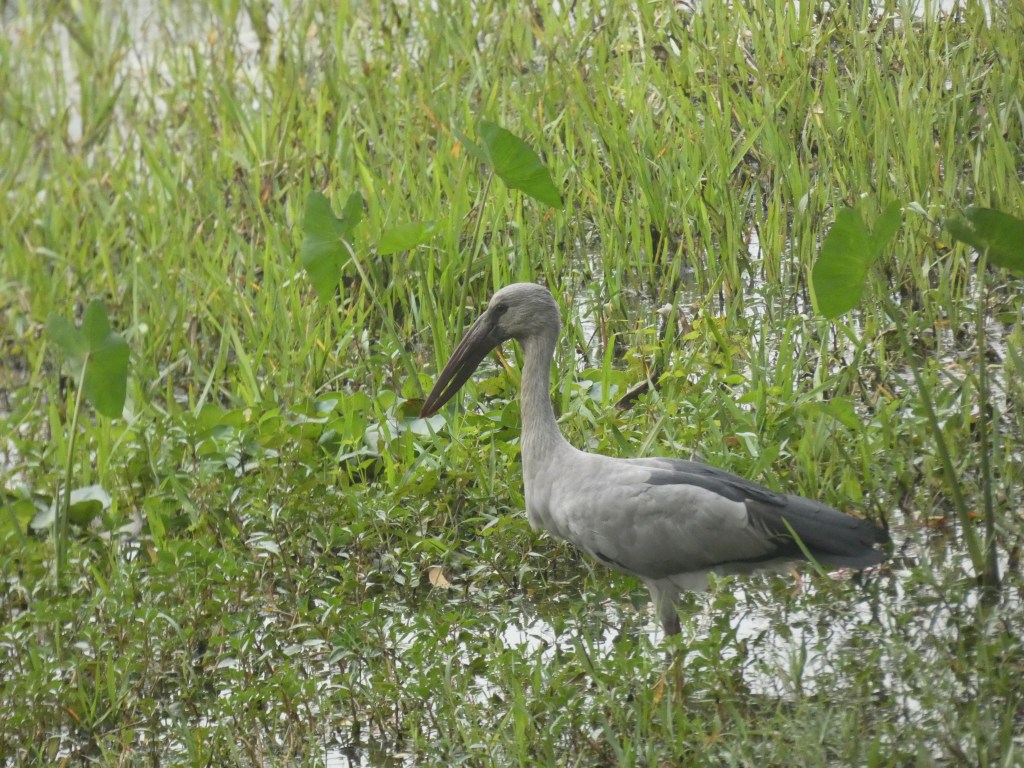
Asian Openbill
©Niccolas Miller

At this point Auritro caught up with us and we finished the necessary formalities of meeting, then proceeded with the birding. He took us up to where he knew Little Grebes tend to be as Elias hadn’t seen them yet this year, and wanted better photos as well. We had three grebes right where he thought they’d be as well as multiple Openbills along the side of the lake. Also in some brush we had a Zitting Cisticola and two Grey-breasted Prinias (year bird).
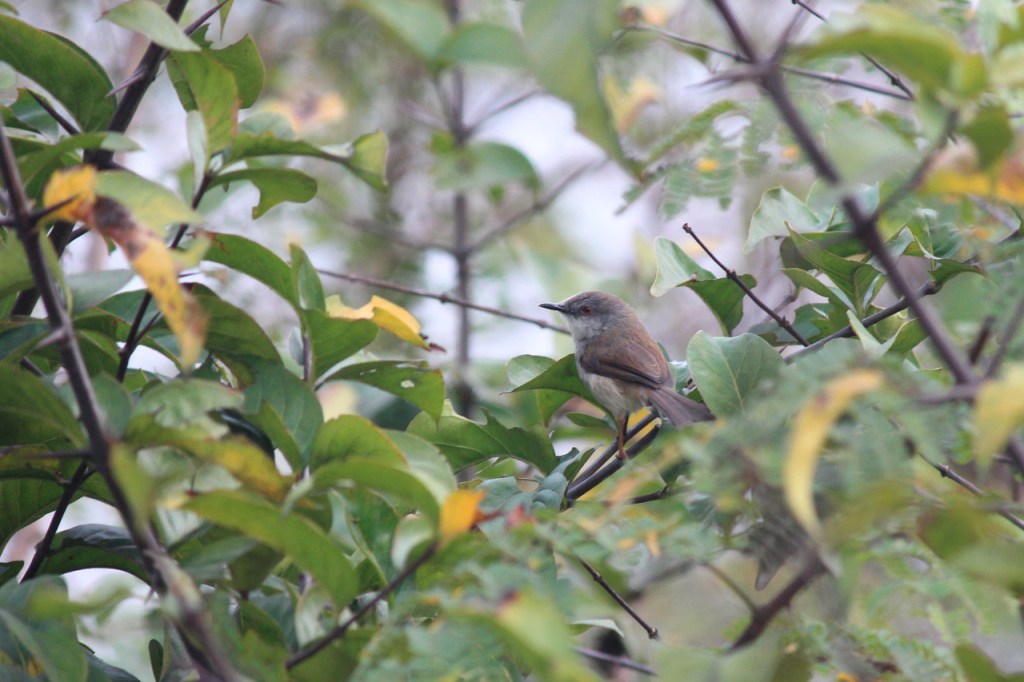
Grey-breasted Prinia
©Elias Thomas

As we retraced our steps on the path back to the main road we saw a raptor hop in the tree just in front of us. It turned out to be an Oriental Honey Buzzard.
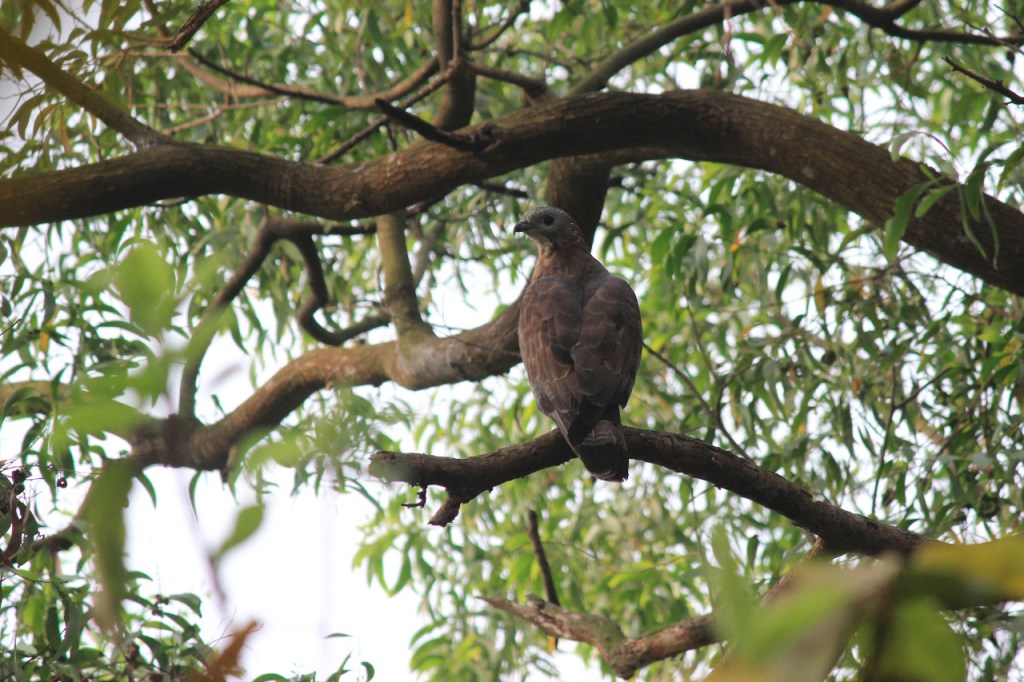
Oriental Honey Buzzard
©Elias Thomas

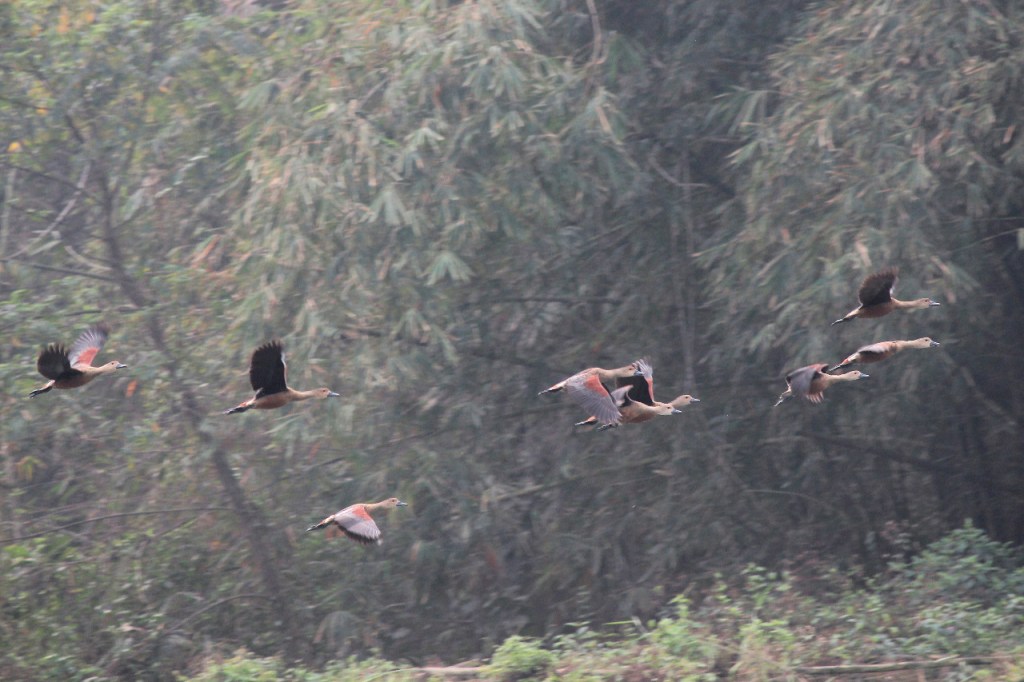
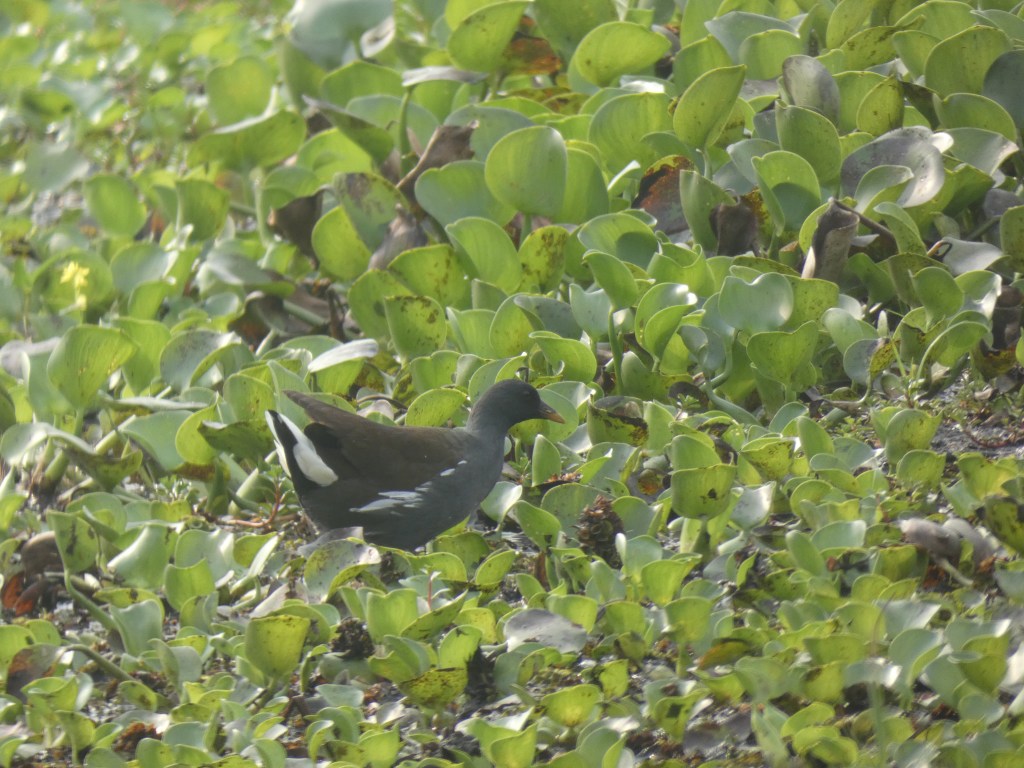
Next we checked another small pond and had a nice flock of about 250 Lesser Whistling Ducks. Way down from earlier in the winter, but still more than in the summer. Also had a small flock of Cattle Egrets and a number of Little Cormorants. We also picked up Eurasian Moorhen near there.
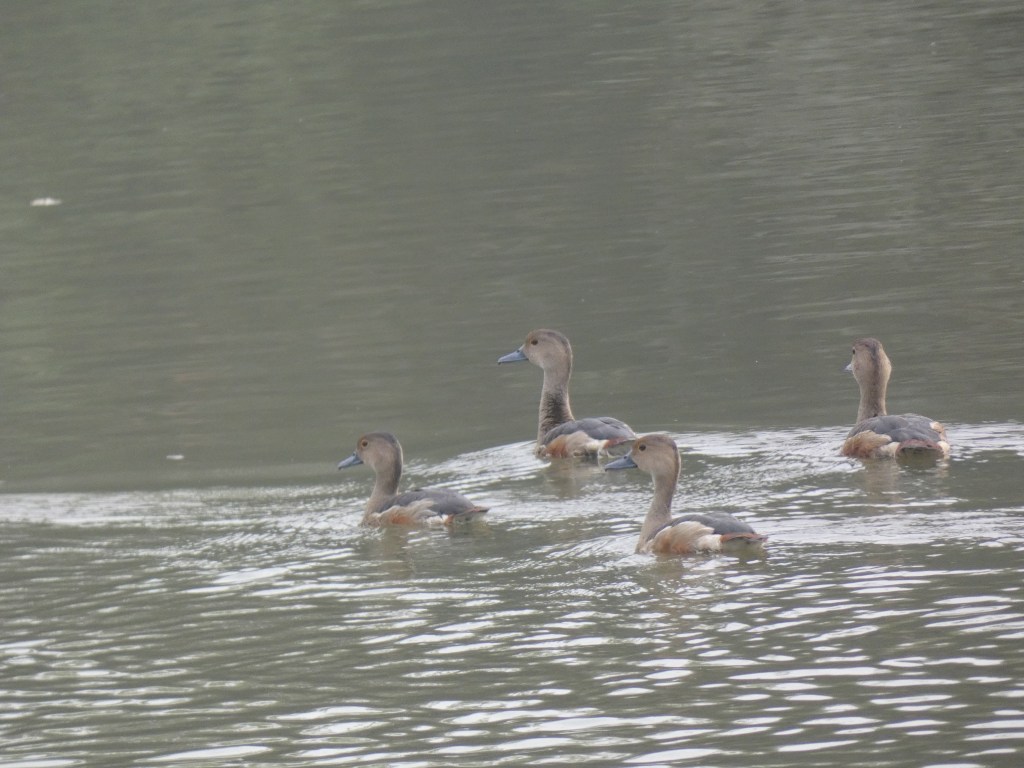
Lesser Whistling Ducks
©Niccolas Miller
Lesser Whistling Ducks in flight
©Elias Thomas
Eurasian Moorhen
©Niccolas Miller

When Auritro mentioned the possibility of Crested Serpent Eagle in a patch of trees we jumped at the chance! I had just seen them for the first time in Srimangal (eastern Bangladesh) last month, but hadn’t had good photo opportunities and would love to see one around Dhaka. I knew they had been seen here fairly regularly over the last few months, but I didn’t know where. Sure enough, we got it almost as soon as we entered the woodland. Shikra and Common Hawk Cuckoos were also fun to see perched in there.
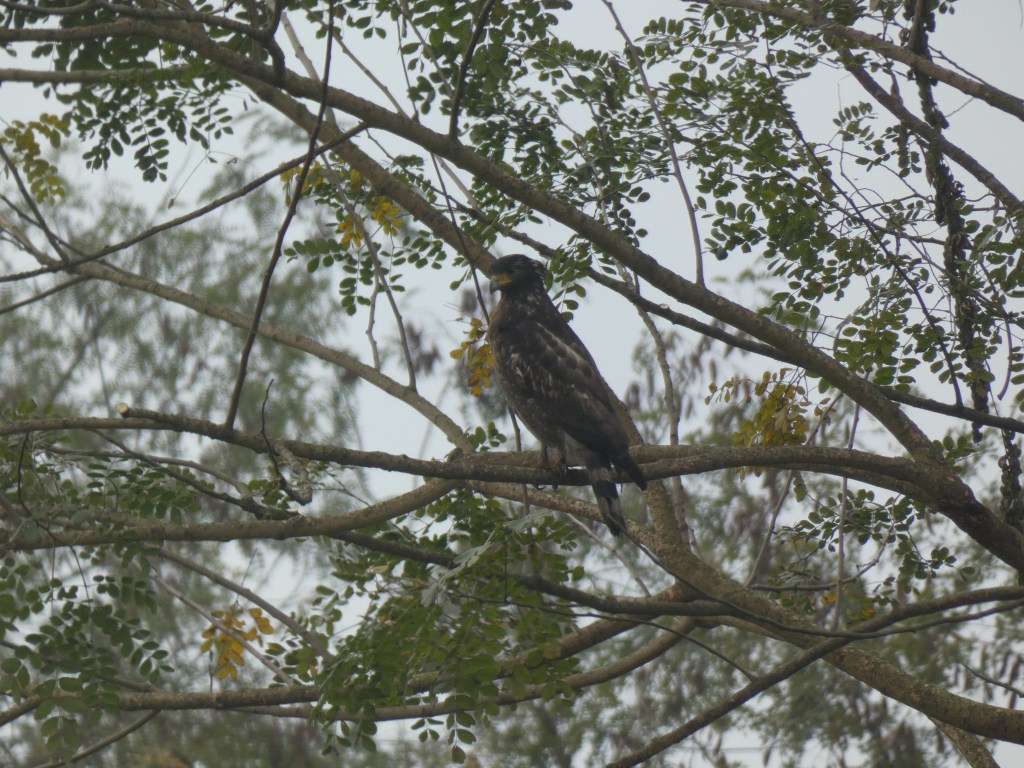
Crested Serpent Eagle
(my photo)

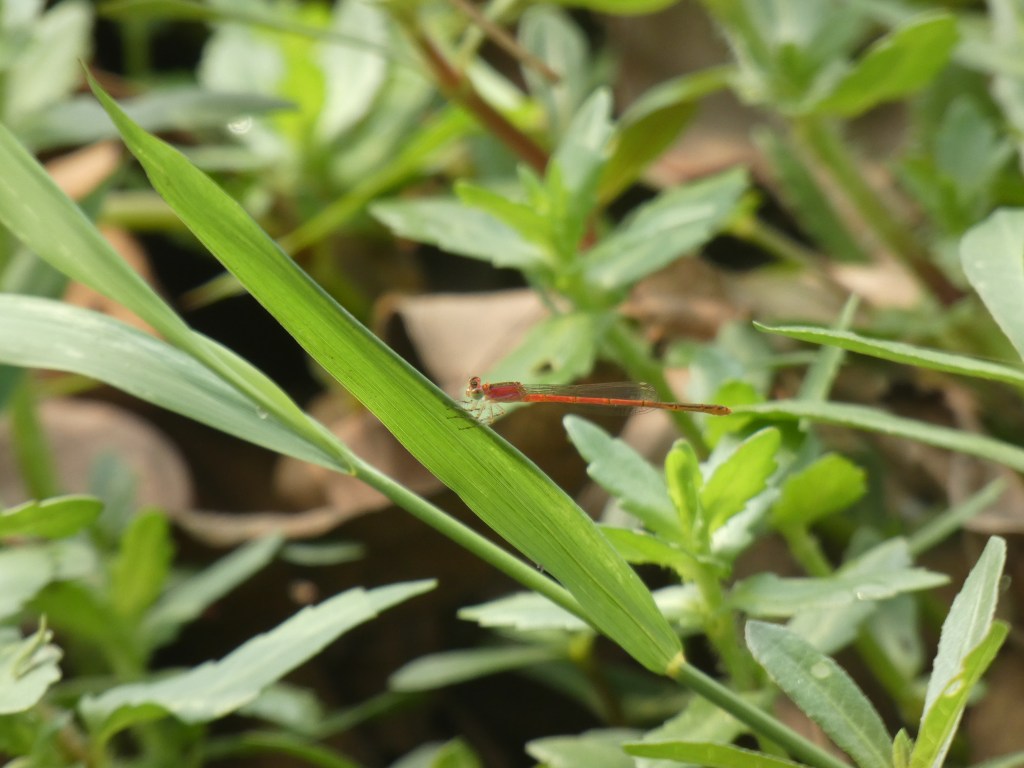
We spent around 20 minutes sitting there watching the Serpent Eagle hoping it would do something interesting, but it just felt like sitting around. I found the damselflies in the area interesting though.
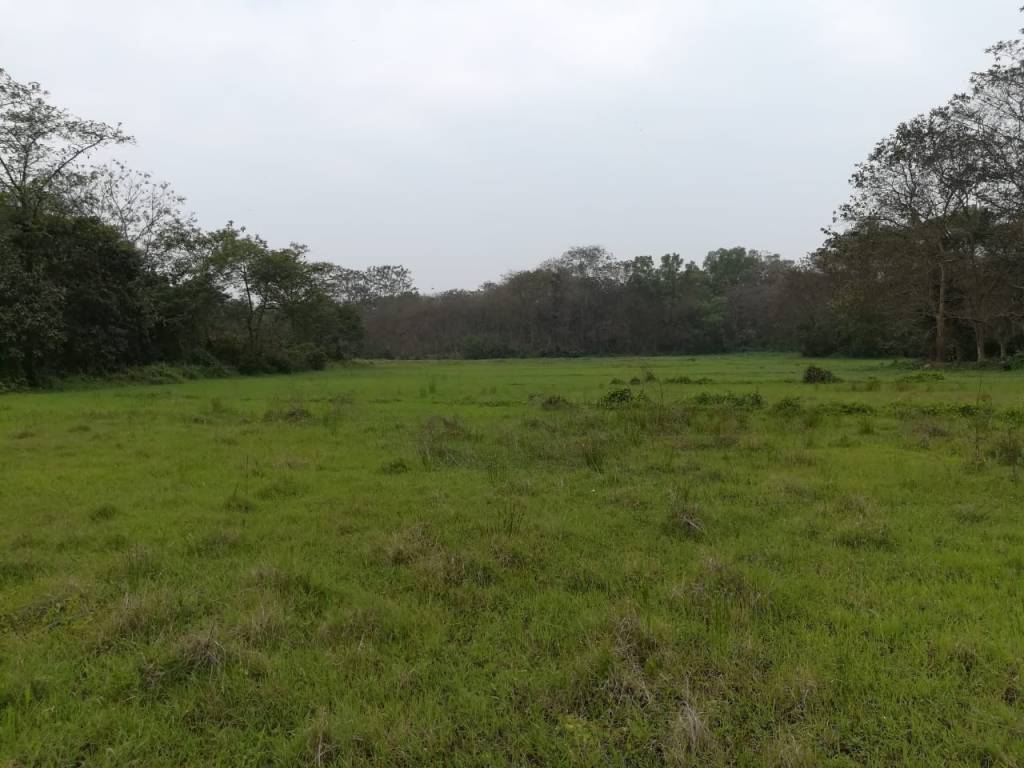
Phone shot of area where the serpent eagle was hanging out
Unidentified damselfly. Closest I can get is Coromandel Marsh Dart, though this is bigger than other ones of that species I’ve seen and looks pretty different.
Wandering Midget
Orange-tailed Marsh Dart

As we slowly worked our way back in the general direction of the main gate we picked up a cool Common Myna that had extra white on the wing. Not sure if this should be called partial leucism or not?
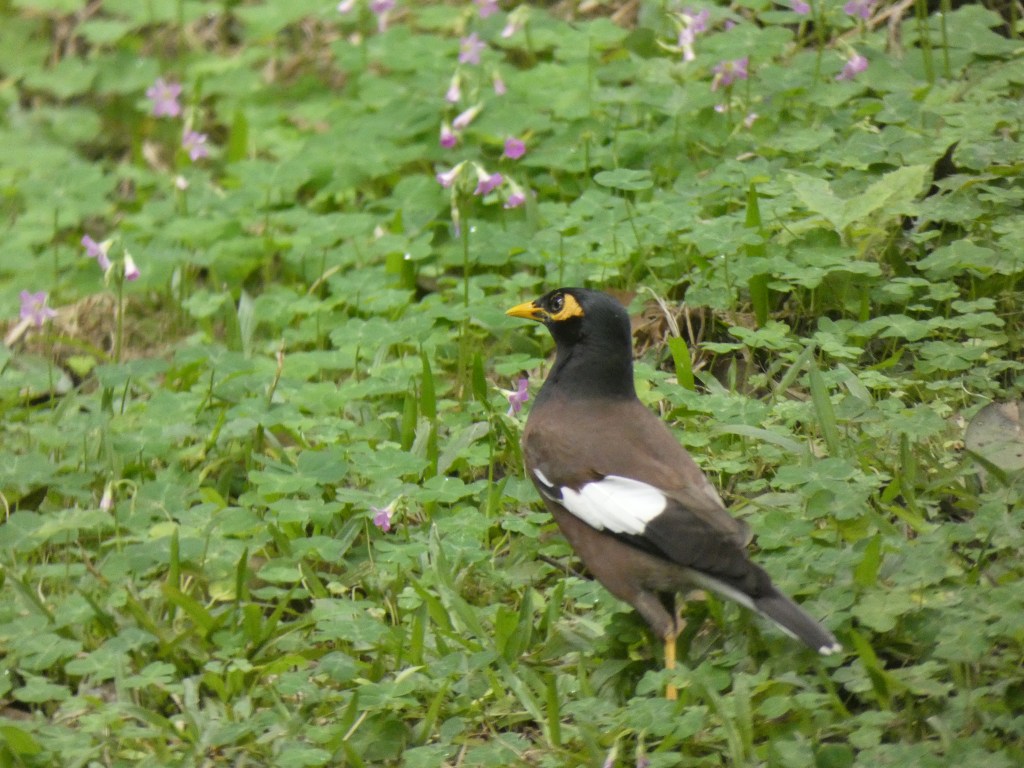
Odd Common Myna
©Niccolas Miller

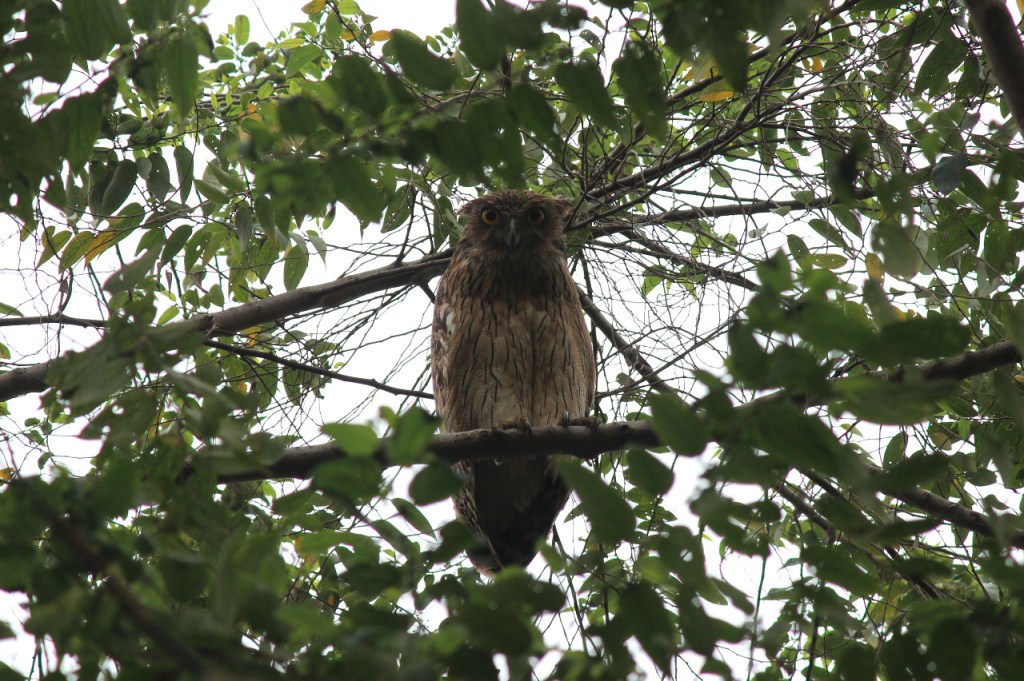
Another bird Auritro mentioned as a possibily was Collared Scops Owl. They’re quite common in Bangladesh and I’ve heard them before, but they’re hard to see and I still hadn’t caught up with one. So we decided to look for some in their favorite bamboo habitat. We spent a decent amount of time slowly scanning the bamboo, when I happened to look at the top of another tree and saw a big brown shape. I immediately thought Brown Fish Owl! Then second guessed myself thinking maybe it’s just a big bee hive. So I took a look through my binos, and sure enough it was a fish owl with it’s back turned! They’re fairly common in Bangladesh, but like most owls can take some work to find.
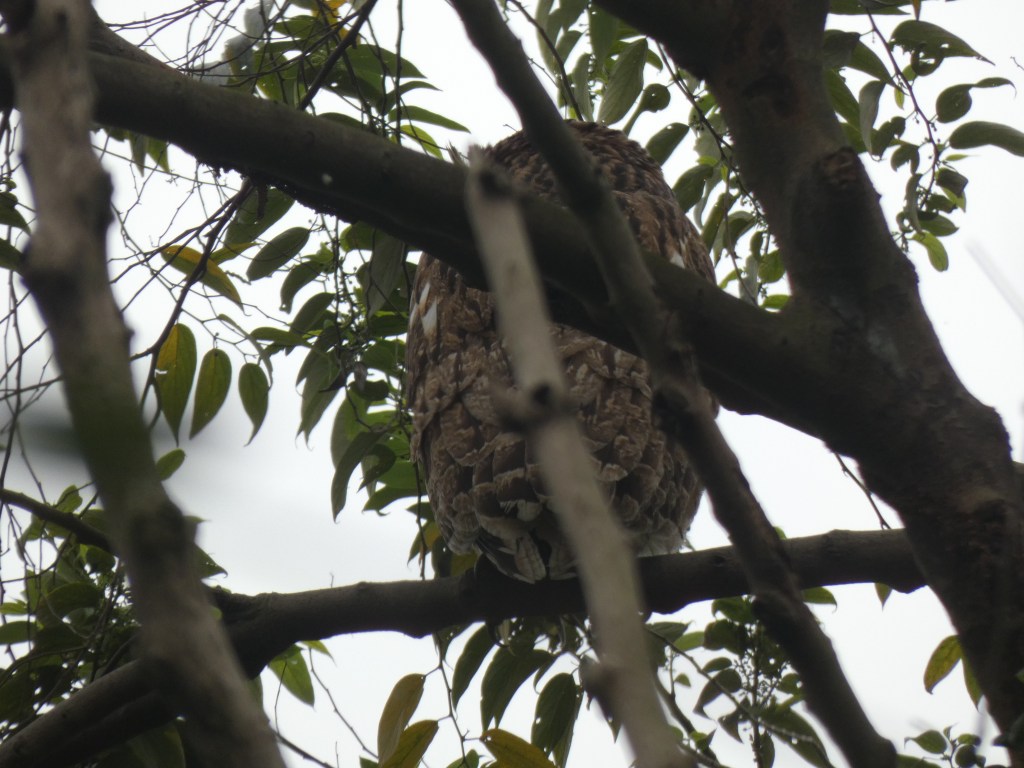
Brown Fish Owl from behind
©Niccolas Miller
Much better view!
©Elias Thomas

We birded for another hour or so, but without finding much of interest except a Plaintive Cuckoo that was a year bird.
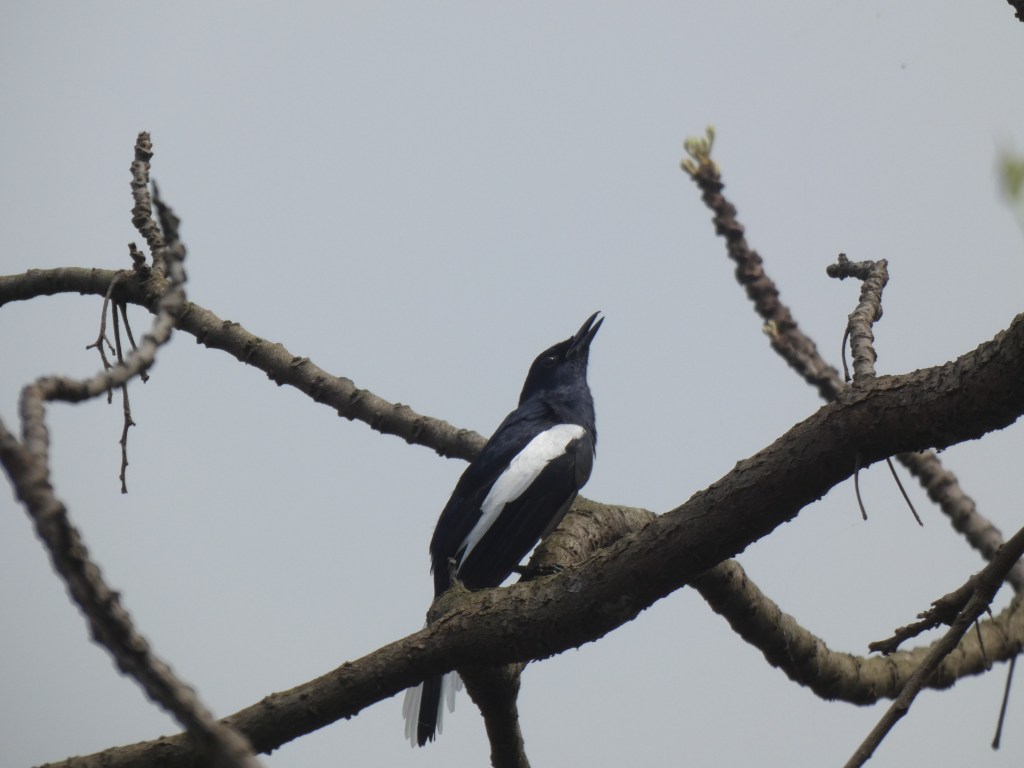
It’s that time of year again! Oriental Magpie-robin showing off
©Niccolas Miller
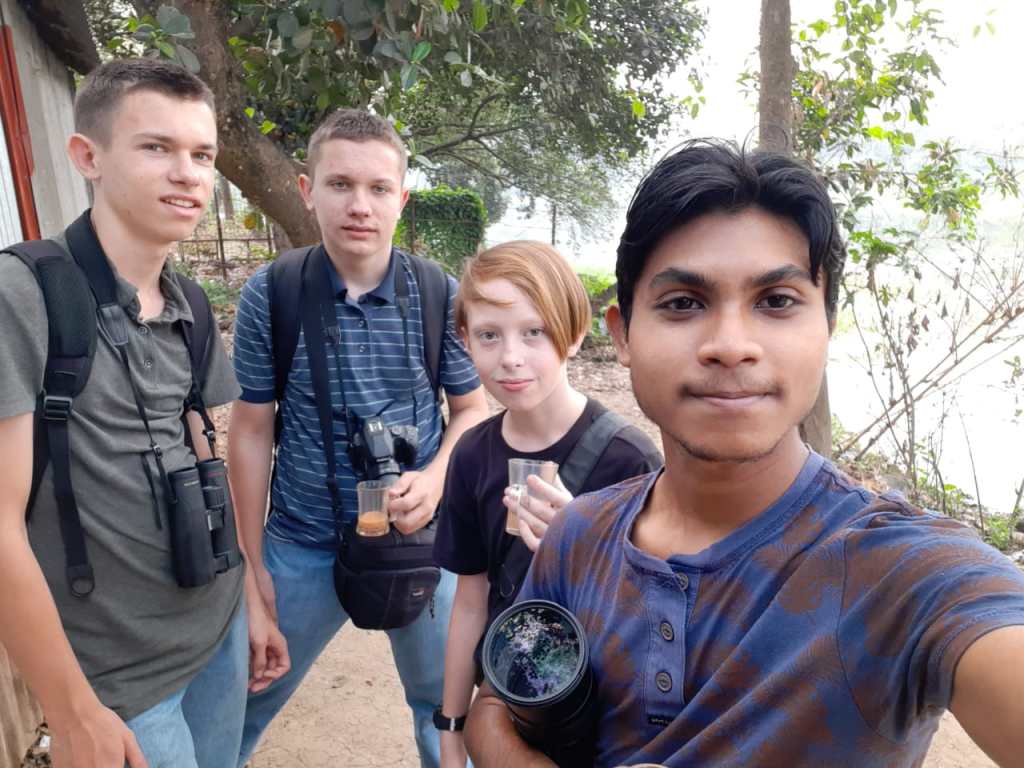
Happy birders!
From L to R: me, Nic, Elias, and Auritro

All in all quite a good day out despite many winter migrants being gone already. 55 species in 4 hours with 8 year birds (up to 187) and 1 lifer (#591).

eBird checklist: https://ebird.org/checklist/S65478981

If you enjoyed this post, please subscribe for more. As always, feel free to comment!
Historical: Kenya November 2019

“I can’t believe we’re actually here!” I thought as our plane touched down at the Jomo Kenyatta International Airport in Nairobi, Kenya! We had been planning this vacation since early in the year to visit my aunt and uncle who live in Nakuru. Of course I was excited to be able to spend some time with extended family, but I was at least as excited (ok, maybe more. Sorry!) about all the awesome birds I would be able to see here, and our families planned Masai Mara safari! I had 356 species on my lifelist before the trip, and I was hoping/expecting to cross 500 at some point on this trip.

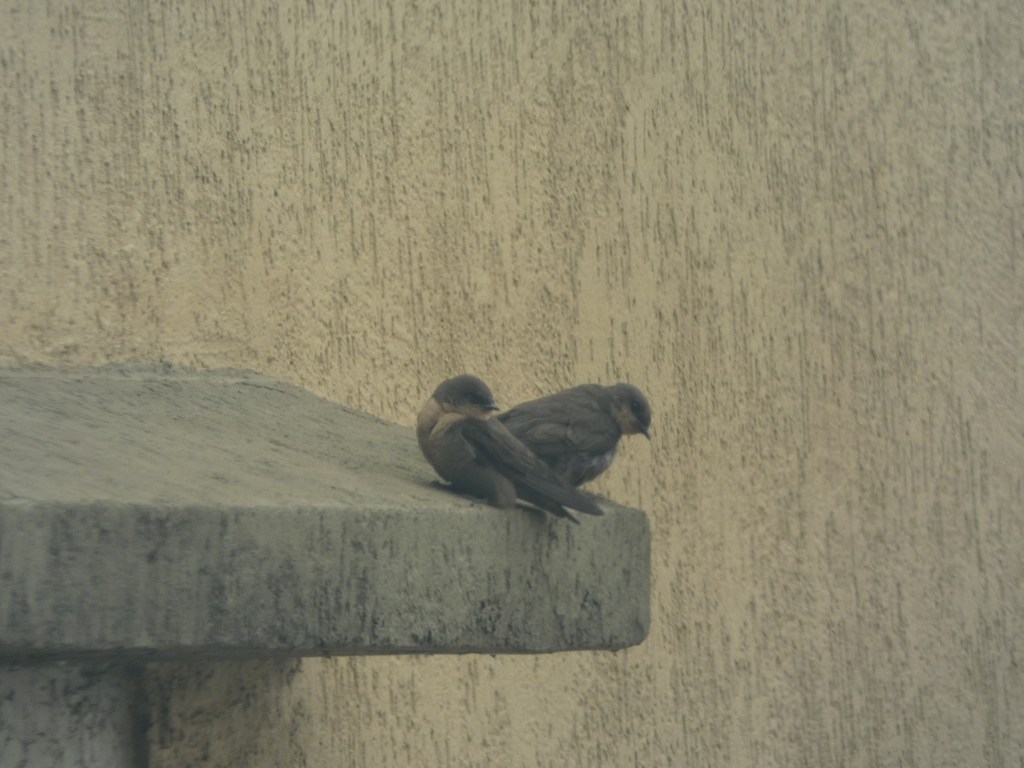
The first birds and first lifer I saw were a large flock of Little Swifts circling near the runway. As we taxied in I picked up 2 more lifers in African Palm Swift and Pied Crow. Then as we filled out forms near a window I got my first African Pied Wagtail and then two Rock Martins perched on a ledge on the side of the airport wall. Also had nonlifer Cattle Egrets, House Sparrows, and Black Kites.

Airport checklist: https://ebird.org/checklist/S61092217

Rock Martins

We had a joyful reunion with my aunt and uncle and their young family then we got in the vehicle and started on our way to Nakuru. After about an hour we stopped at a Java House for lunch. We had a nice table in the open-air and had a good meal, but I was looking for any birds that could possibly be around. Had swifts again, a few “yellow-billed” Black Kites, and a few Pied Crows. Then we got two lifers: a nice looking Long-tailed Fiscal and 2 Kenya Rufous Sparrows. No photos of anything, but with those lifers I was now up to 362.

Checklist from Java House: https://ebird.org/checklist/S61092304

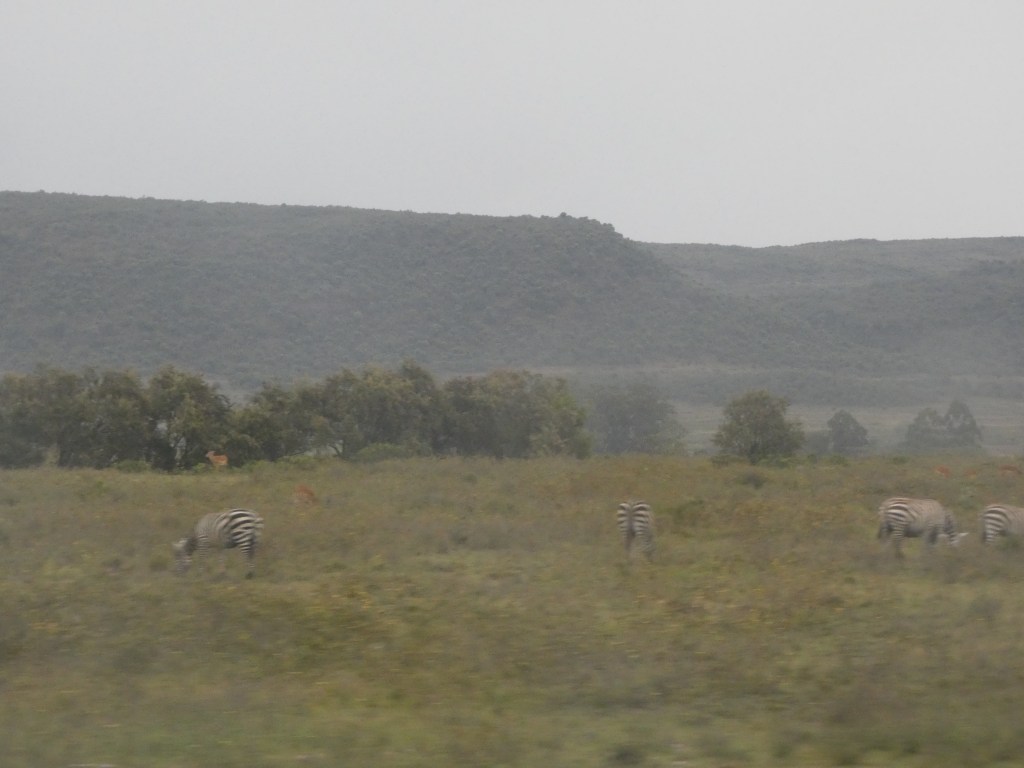
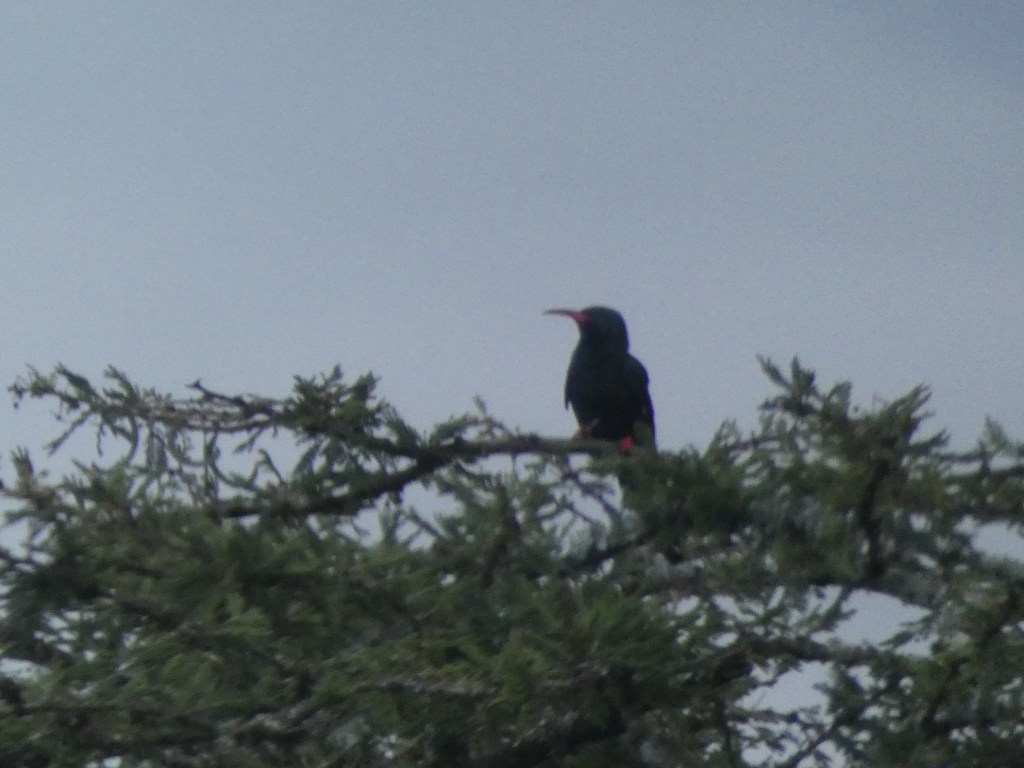
Then we got back in the vehicle bracing ourselves for the several hours of driving left. Along the way we got a few more lifers with Augur Buzzard, Superb Starling, African Sacred Ibis, Crowned Lapwing, Northern Ant-eater Chat, Hadada Ibis, and Speckled Pigeon. As well as a possible Fan-tailed Raven, which unfortunately I couldn’t confirm and didn’t see later in the trip, so no lifer. 😢 (I didn’t have checklists for these birds from the drive so my lifelist numbers will be low as these are slowly added on other checklists.) Also along the way we had some of our first nonbird wildlife with a few Zebra, Impala, and Grant’s (?) Gazelle.

Sorry, AWFUL photo of the zebras and impala. (taken through a window of a moving vehicle) I promise there will be better wildlife photos later…

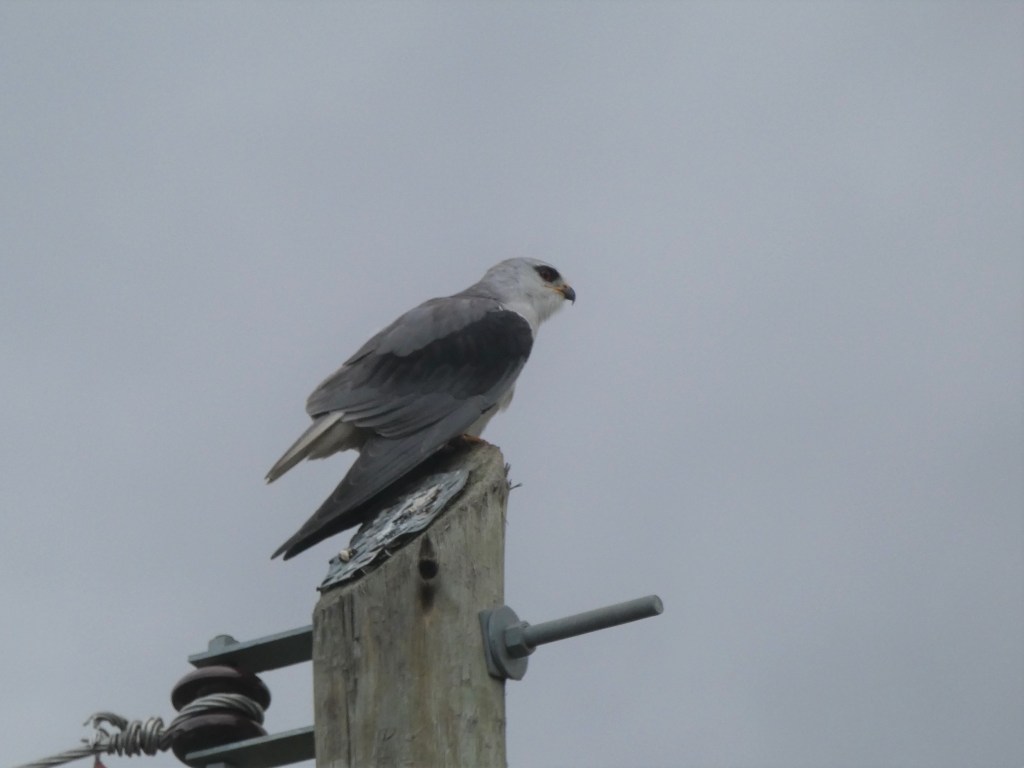
We finally reached my aunt’s nice little house right outside Lake Nakuru NP around 5:30 PM. My brother and I waited (a bit impatiently) as we unloaded the van and took our bags into the house, but as soon as we could be grabbed our cameras and binos and headed out to do a bit of birding before dark. First bird as we stepped out of the door was a Black-winged Kite perched on the telephone pole directly in front of the house. (not a lifer as I’d seen them in Bangladesh a few times) A Superb Starling on the wire gave us our first good views of the species, and two circling Red-rumped Swallows were the first lifer.

Black-winged Kite

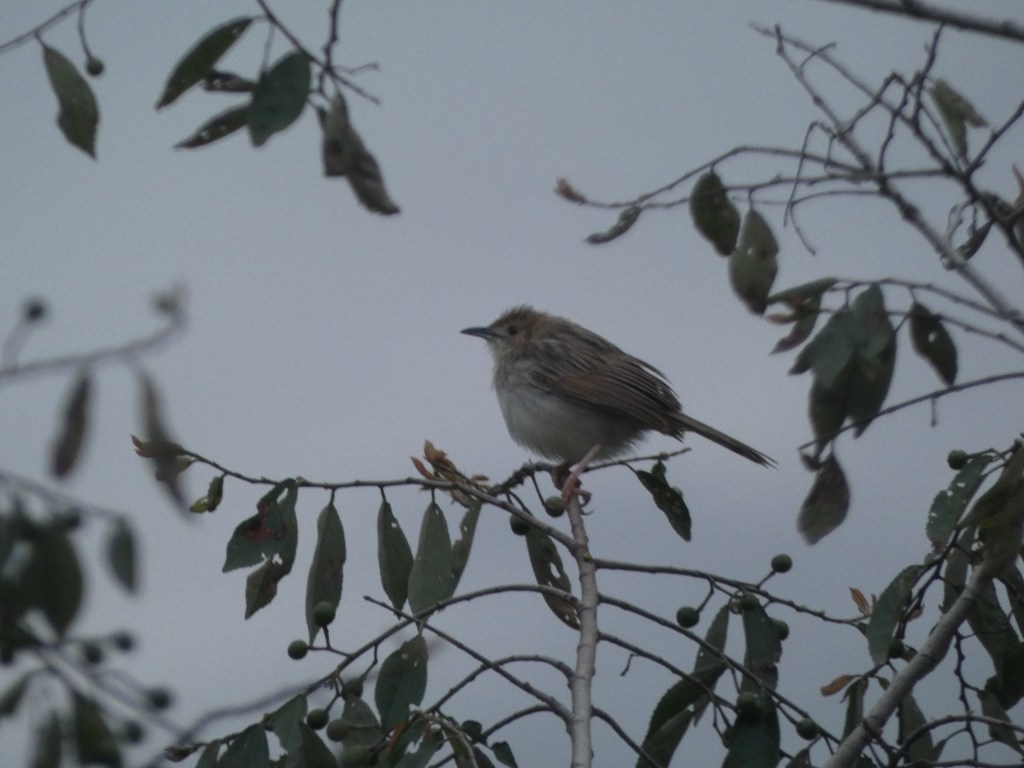
Nic and I started walking along a small trail leading to a slightly rolling open area right next to the National Park. It was mainly just grassy with a few small bushes, but immediately inside the park fence was a track then a decent number of short trees (Sorry, I’m no good at dendrology and don’t know the species). This all looked like promising birding area for the days to come. Along the path we got our first Rattling Cisticola rattling away on a brushy tree in the only compound between us and the park. In the tops of the trees in the park we had a cool Green Woodhoopoe, and a small brown bird that puzzled us. After getting some help with the ID it turned out to be a Brown Parisoma. (Sorry for the upcoming poor quality photos. It was getting quite dark so these are barely even good enough for record shots, but gotta give you a taste of what we saw.)

Rattling Cisticola
Green Woodhoopoe. Awful photo of a very cool bird.

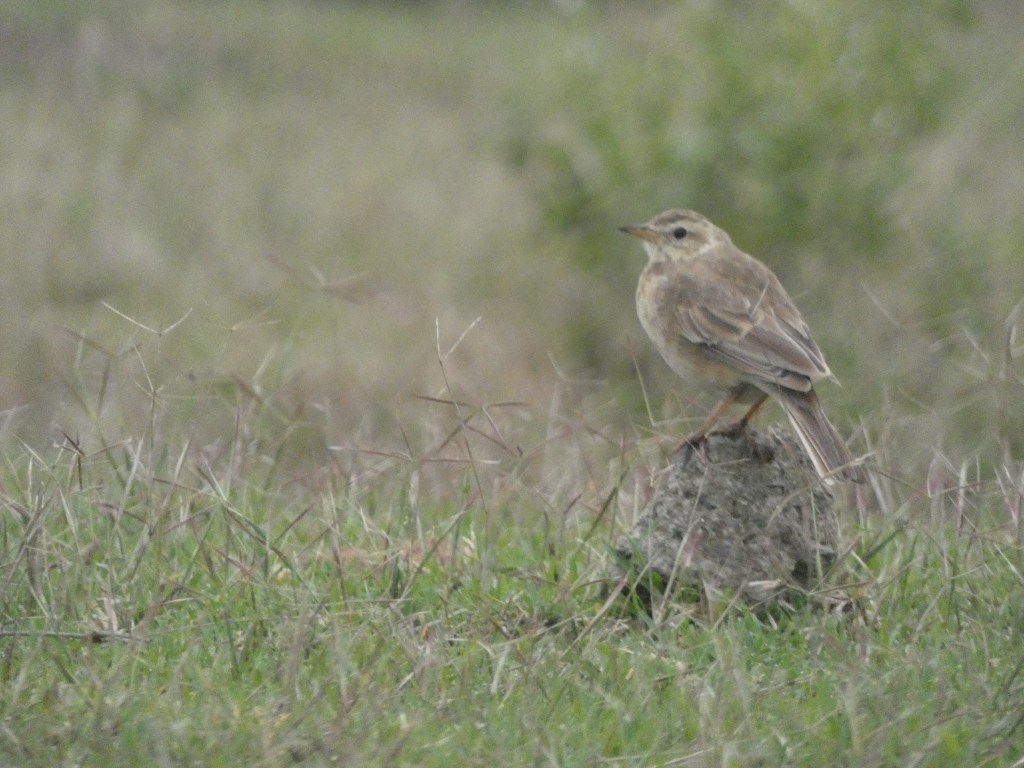
On the wall of an empty compound was a female Northern Wheatear, then in the grass we found one of both African and Plain-backed Pipits.

Plain-backed Pipits

Other lifers, once lighting got even worse, were a drab looking Scarlet-chested Sunbird, 2 Common Bulbuls, a Purple Grenadier, and a flyover Pin-tailed Whydah. 18 species in 40 minutes of subprime birding time wasn’t too bad and the 9 lifers were sure fun. I was already up to 376 and had nearly two weeks of lifers to come!

Checklist: https://ebird.org/checklist/S61092652

Thanks for taking the time to read this post. If you enjoyed it please subscribe to my blog. Also please feel free to comment!
My First Blog Post: Birding New Vision

New Vision Eco City

*This is a photo I took at New Vision last month of ripe mustard fields

This weekend my brother and birding companion Niccolas (Nic) and I went out to my favorite birding hotspot: New Vision Eco City. It’s about a 7 mile bike ride from our home, to this bit of wetland/farmland that birders have discovered has amazing bird diversity. After the rainy season and through much of the winter New Vision is basically just a wetland, but as spring has begun (Bengali spring is in mid February) the locals are pumping out the water and burning many of the bushes so they can grow rice. This happens every year, but it’s always a bit discouraging to see the bird numbers go down as the work progresses.

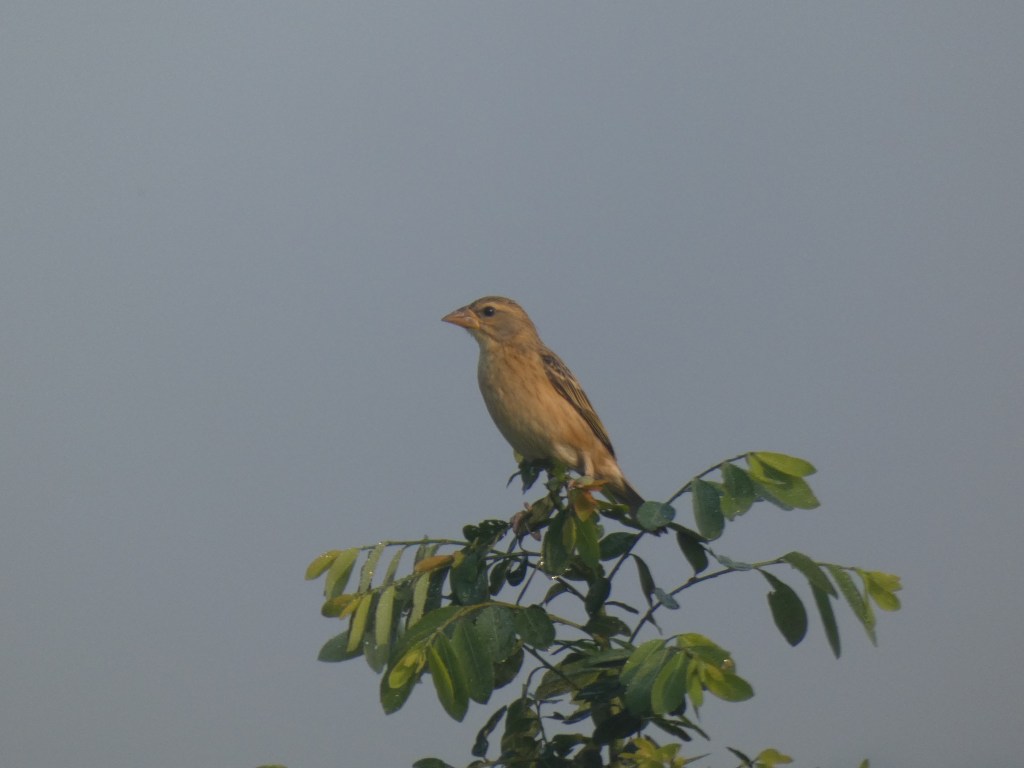
We were going to meet up with three local birders, which is something I’ve been enjoing doing more often recently. Nic and I were the first ones there, so we just started birding. First birds we saw and photographed were six nonbreeding Baya Weavers. They are common during the breeding season and then up until November/December, but I’ve noticed in January and February they have been a bit harder to come by.

Baya Weaver

*all photos are Ā© Niccolas Miller (unless marked otherwise) as my camera is in the US for repairs.

Then we moved on to the slightly overgrown path that leads along the second largest of the now very shallow ponds. In a large patch of reeds we had our first (and only) Scaly-breasted Munias, along with a Dusky Warbler and a persistently calling Blyth’s Reed Warbler. Out in the pond were unusually large numbers of Indian Pond Herons (40+), with a few Wood Sandpipers and Little Cormorants mixed in.

As we moved farther along the path I noted a bird far out in some brush. I snapped a few photos, but could barely see the bird when I looked at them. I then proceeded to completely forget about that bird until I was going through photos for this post, and found that it was actually 2 Striated Babblers! 5MR bird #135 total, and 103 for the year. (My goal for the year is 150)

My TERRIBLE photo of the Striated Babblers

After that we saw a flock of 25 beautiful Red-collared Doves in a large tree right above the babblers. A pair of Large-billed Crows on their nest in the same tree was also the first sure sign I had seen of nesting this year.

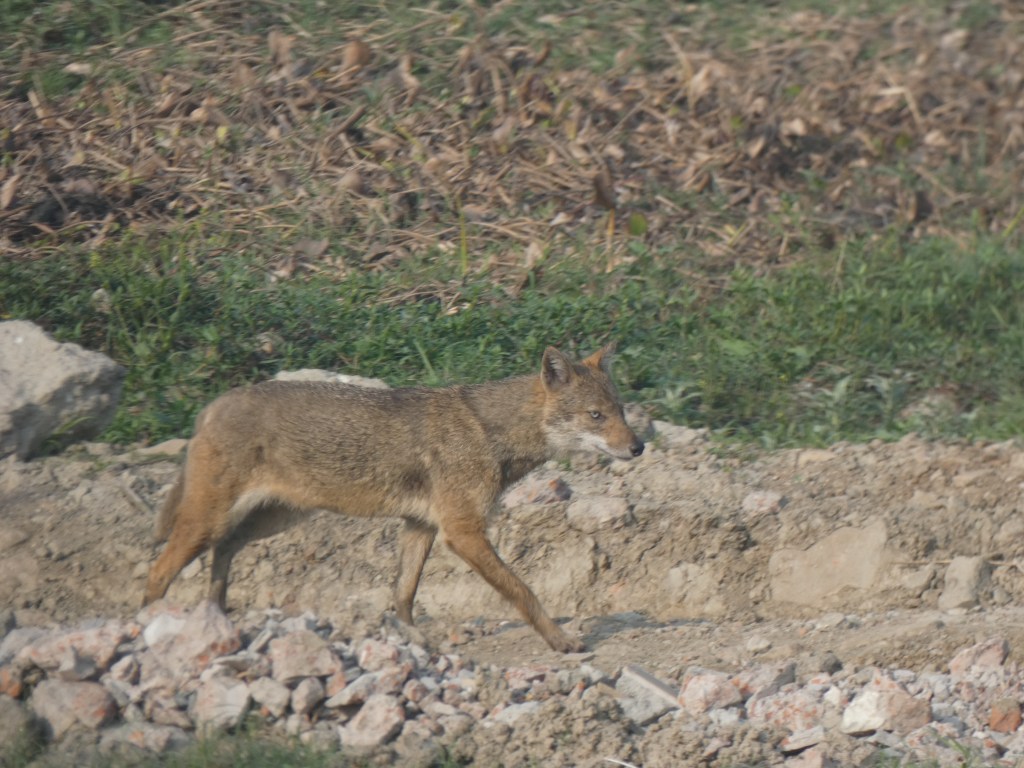
One of the local Golden Jackals. This one seemed to have something wrong with its left back leg as it dragged that leg as it trotted along

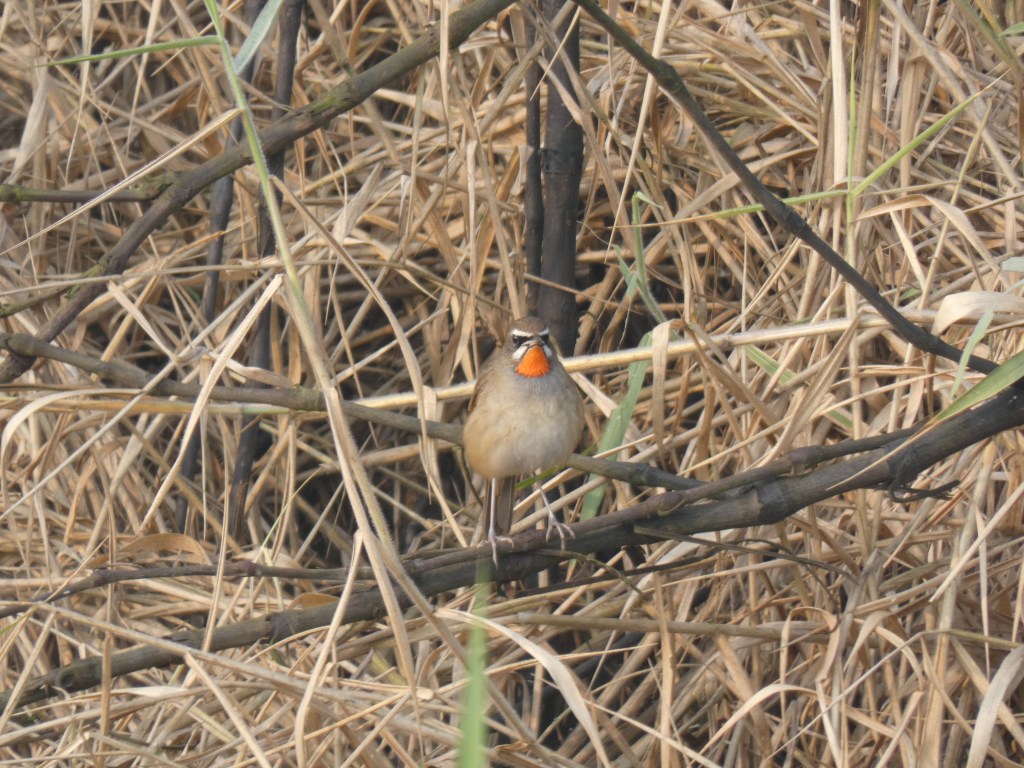
Brief views of one of the secretive Siberian Rubythroats was fun again, though didn’t get to see it’s throat for which it is named.

One of my older shots of a Rubythroat from the same location

After the Rubythroat disappeared into even thicker brush, I saw Zaber Ansary, one of the local birders, coming along the path. He stopped and went down near where we had seen the munias. When he caught up with us he told us what he had been photographing. It was a pair of Rubythroats which he gotten nice shots of (you can view his photos on the eBird checklist I give a link to at the bottom). Fun to figure out that there are at least 3 “Rubys” around.

Zaber suggested we go down and explore the dried up bottom of the largest fish pond. There were few shorebirds and waders where there was still some water including: Wood and Green Sandpipers, Little Egrets, and several Little Ringed Plovers. We also had a flyover Red-rumped Swallow which was the first new month bird of the day: #161.

Green Sandpiper
Little Ringed Plover
Fluffing up
My phone shot of Jungle cat tracks Zaber found

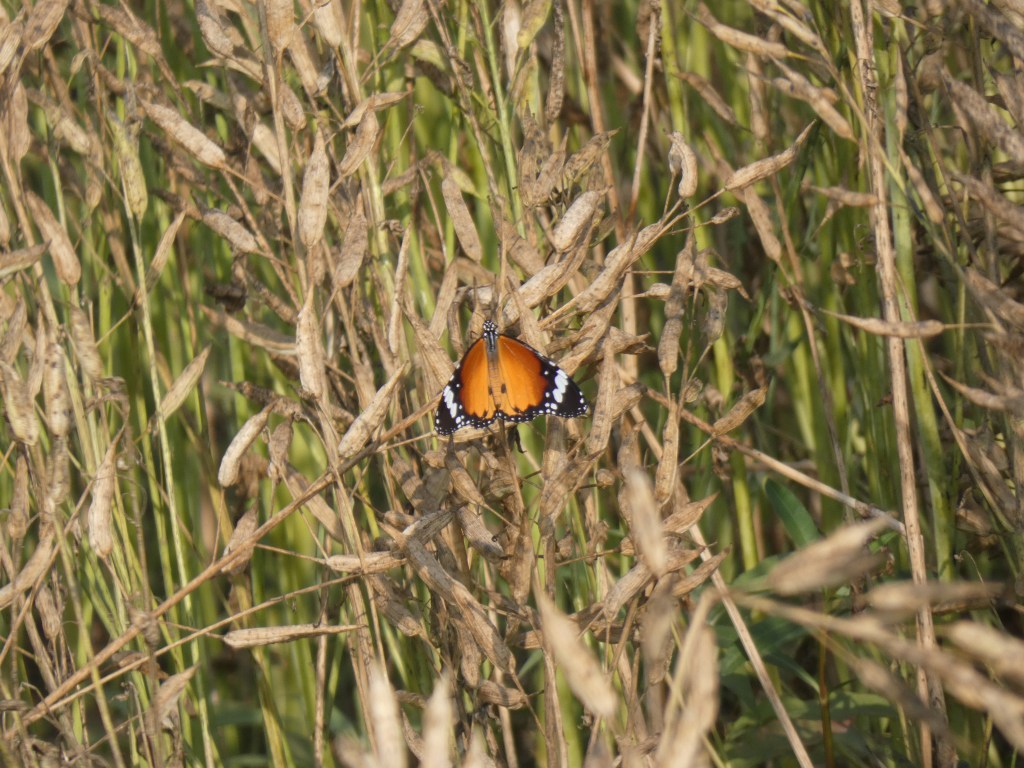
After exploring the dried up area of the pond we went to a corner of the path and waited for the other two to arrive. While waiting I saw my first Plain Tiger butterfly of the year

My shot of the Plain Tiger

We met up with the other two birders, and did our normal slow loop of the large (dried up) fish pond and beside some of the fields. Along the way we discovered that one of the ponds we had expected to stay full had also been pumped out. 😦

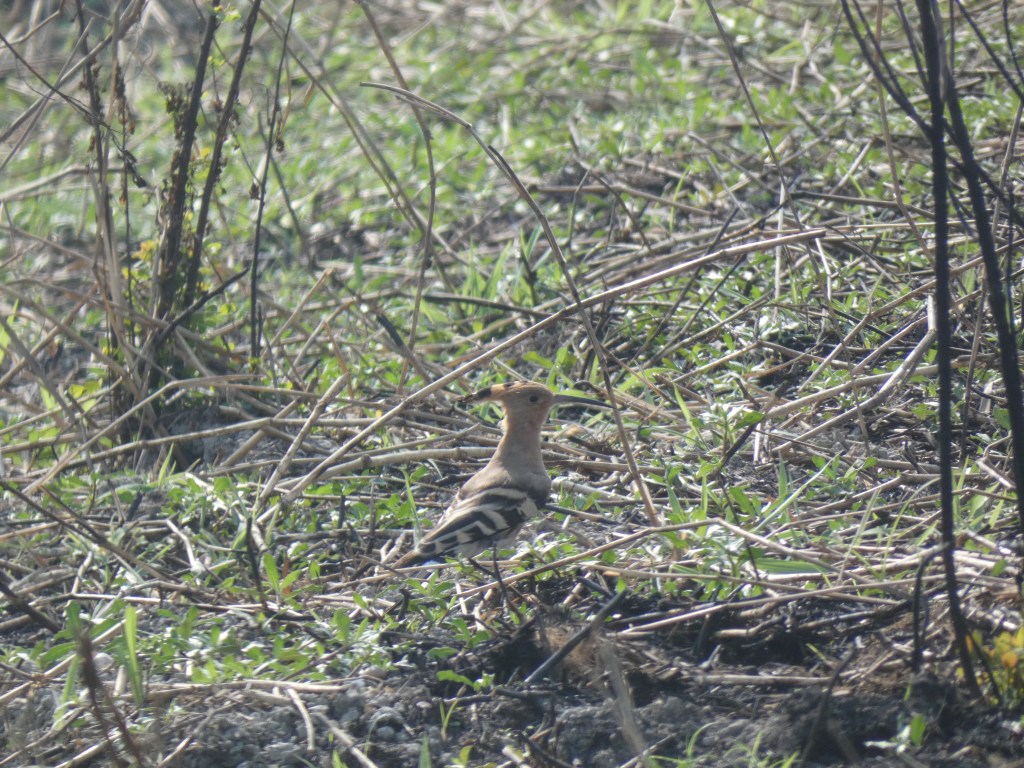
Some highlights were two Eurasian Hoopoes and a Booted Eagle for #162 of the month. Unfortunately no decent photos of the eagle, though Zaber got one you can see on the checklist.

One of the many resident Bronze-winged Jacanas
One of the two Eurasian Hoopoes

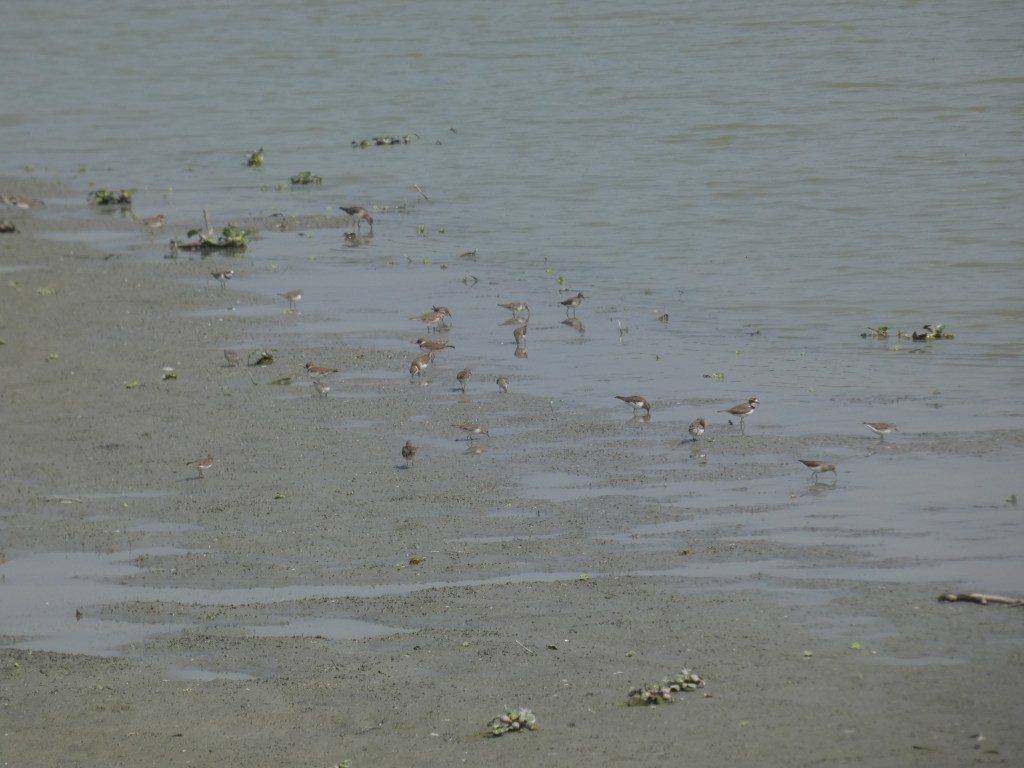
Towards the end of the loop we saw a large of small waders. At first glance I thought Wood Sandpipers along with Little Ringed Plovers, but Zaber was right when he said stints. Turns out it was at least 35 Temminck’s Stints along with a decent number of Little Ringed Plovers.

Part of the mixed flock of Temminck’s Stints and Little Ringed Plovers

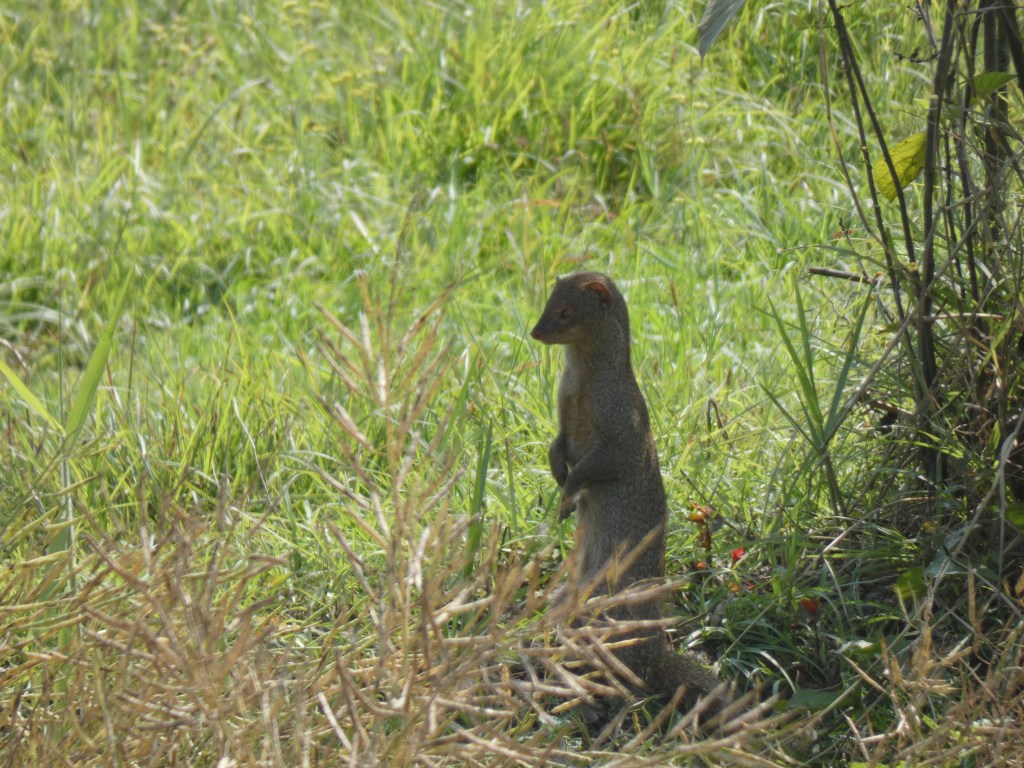
We had a fun non bird ending when I noticed a Small Indian Mongoose (quite common here) in an unusual pose. It was standing on its hind legs which reminded us of a Meerkat. šŸ˜‰

Small Indian Mongoose

We saw 56 species with one new 5MR bird: Striated Babbler. Babbler is also obviously new for my list for this hotspot (#111). Here’s the checklist.

All in all a fun day out, despite no “exciting” birds for any of us. It’s just always good to be out enjoying God’s creation!!

This is the first post on my new blog. I’m just getting it going, so stay tuned for more. Please feel free to leave any comments, advice or questions you may have. Also please subscribe to this blog so you know when I post updates. šŸ™‚

About me

I’m a teenage birder originally from Kansas USA, but I’ve grown up in Dhaka, Bangladesh. I’ve always enjoyed nature especially birds, but hadn’t really gotten into birding, identification, and photography until our family went on a weekend trip to the Sundarbans in southern Bangladesh with several other families. Since then I have just gotten more and more interested in all things nature. I’m especially into birding, but I also enjoy photographing and identifying all other wildlife.

BirdingBDandBeyond will basically be a public journal of my birding excursions, and whatever other wildlife I encounter along the way. I hope to show you the beauty of Bangladesh and its birds, as well as documenting any trips I happen to take outside of Bangladesh and the birds I see there. Hopefully you can get a fresh view of the beauty of God’s creation, and catch a glimpse of his love and majesty.

My two citizen science platform profiles: