New Vision Eco City
*This is a photo I took at New Vision last month of ripe mustard fields
This weekend my brother and birding companion Niccolas (Nic) and I went out to my favorite birding hotspot: New Vision Eco City. It’s about a 7 mile bike ride from our home, to this bit of wetland/farmland that birders have discovered has amazing bird diversity. After the rainy season and through much of the winter New Vision is basically just a wetland, but as spring has begun (Bengali spring is in mid February) the locals are pumping out the water and burning many of the bushes so they can grow rice. This happens every year, but it’s always a bit discouraging to see the bird numbers go down as the work progresses.
We were going to meet up with three local birders, which is something I’ve been enjoing doing more often recently. Nic and I were the first ones there, so we just started birding. First birds we saw and photographed were six nonbreeding Baya Weavers. They are common during the breeding season and then up until November/December, but I’ve noticed in January and February they have been a bit harder to come by.
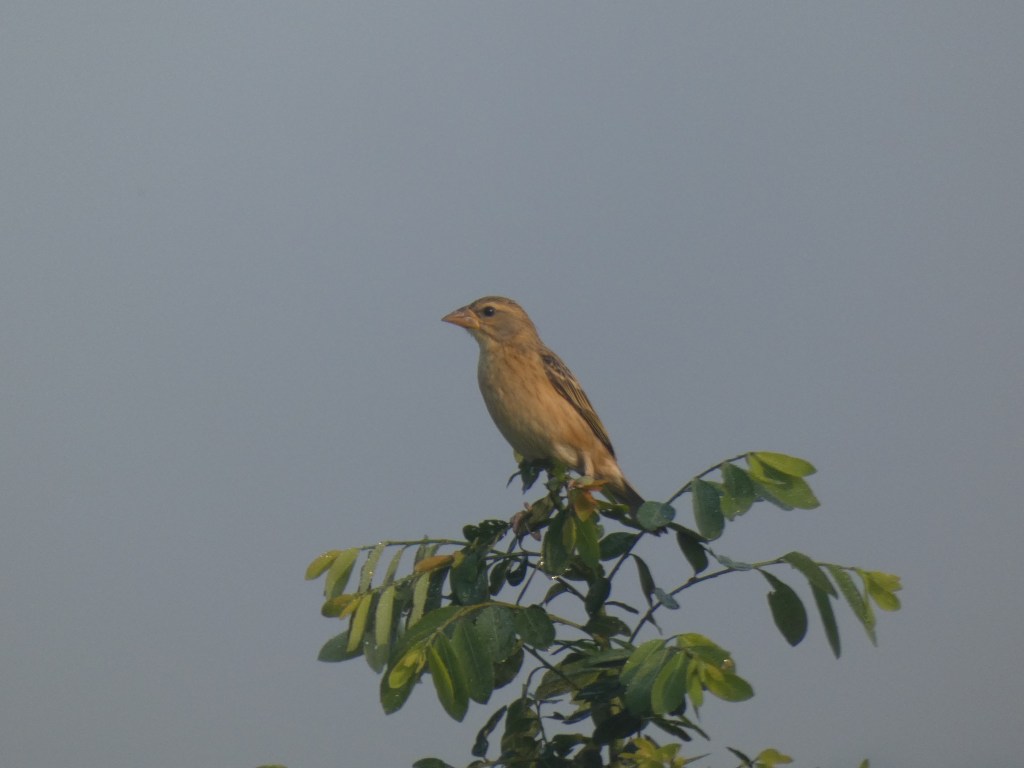
*all photos are © Niccolas Miller (unless marked otherwise) as my camera is in the US for repairs.
Then we moved on to the slightly overgrown path that leads along the second largest of the now very shallow ponds. In a large patch of reeds we had our first (and only) Scaly-breasted Munias, along with a Dusky Warbler and a persistently calling Blyth’s Reed Warbler. Out in the pond were unusually large numbers of Indian Pond Herons (40+), with a few Wood Sandpipers and Little Cormorants mixed in.
As we moved farther along the path I noted a bird far out in some brush. I snapped a few photos, but could barely see the bird when I looked at them. I then proceeded to completely forget about that bird until I was going through photos for this post, and found that it was actually 2 Striated Babblers! 5MR bird #135 total, and 103 for the year. (My goal for the year is 150)

After that we saw a flock of 25 beautiful Red-collared Doves in a large tree right above the babblers. A pair of Large-billed Crows on their nest in the same tree was also the first sure sign I had seen of nesting this year.
Brief views of one of the secretive Siberian Rubythroats was fun again, though didn’t get to see it’s throat for which it is named.
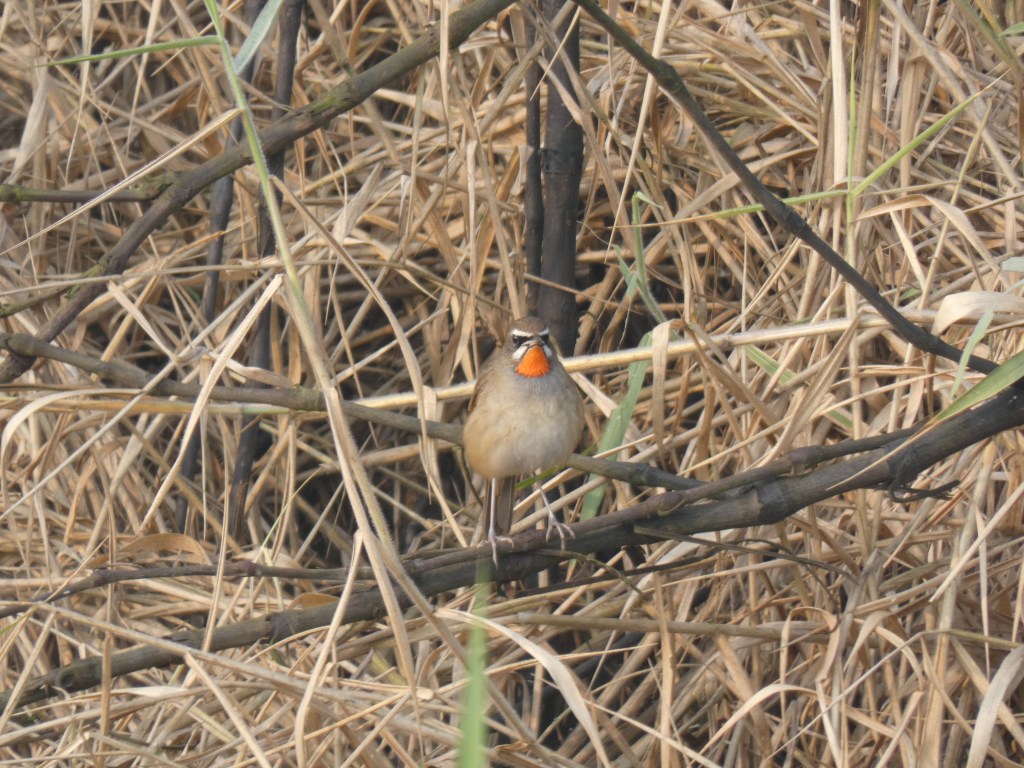
After the Rubythroat disappeared into even thicker brush, I saw Zaber Ansary, one of the local birders, coming along the path. He stopped and went down near where we had seen the munias. When he caught up with us he told us what he had been photographing. It was a pair of Rubythroats which he gotten nice shots of (you can view his photos on the eBird checklist I give a link to at the bottom). Fun to figure out that there are at least 3 “Rubys” around.
Zaber suggested we go down and explore the dried up bottom of the largest fish pond. There were few shorebirds and waders where there was still some water including: Wood and Green Sandpipers, Little Egrets, and several Little Ringed Plovers. We also had a flyover Red-rumped Swallow which was the first new month bird of the day: #161.


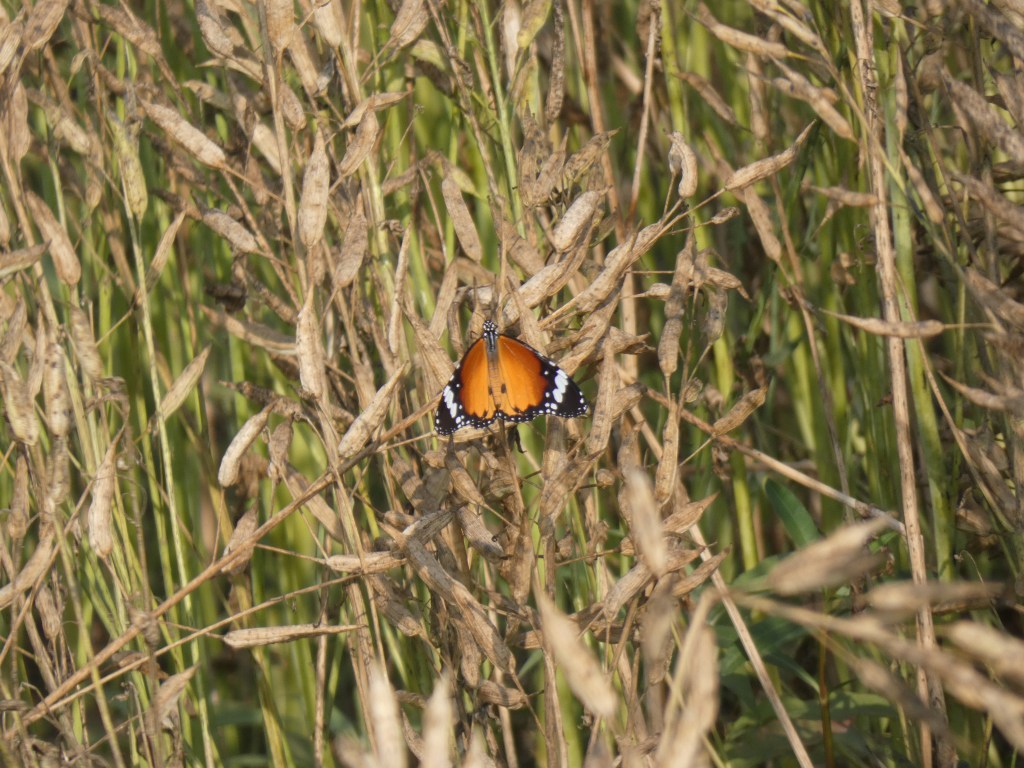
After exploring the dried up area of the pond we went to a corner of the path and waited for the other two to arrive. While waiting I saw my first Plain Tiger butterfly of the year
We met up with the other two birders, and did our normal slow loop of the large (dried up) fish pond and beside some of the fields. Along the way we discovered that one of the ponds we had expected to stay full had also been pumped out. 😦
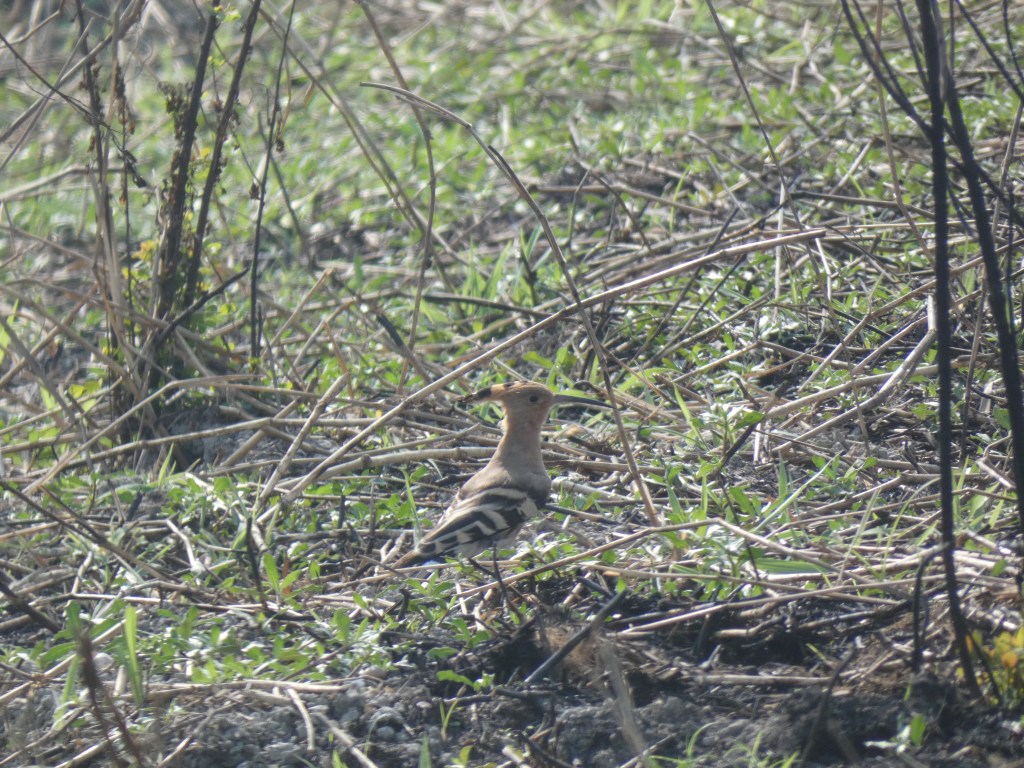
Some highlights were two Eurasian Hoopoes and a Booted Eagle for #162 of the month. Unfortunately no decent photos of the eagle, though Zaber got one you can see on the checklist.

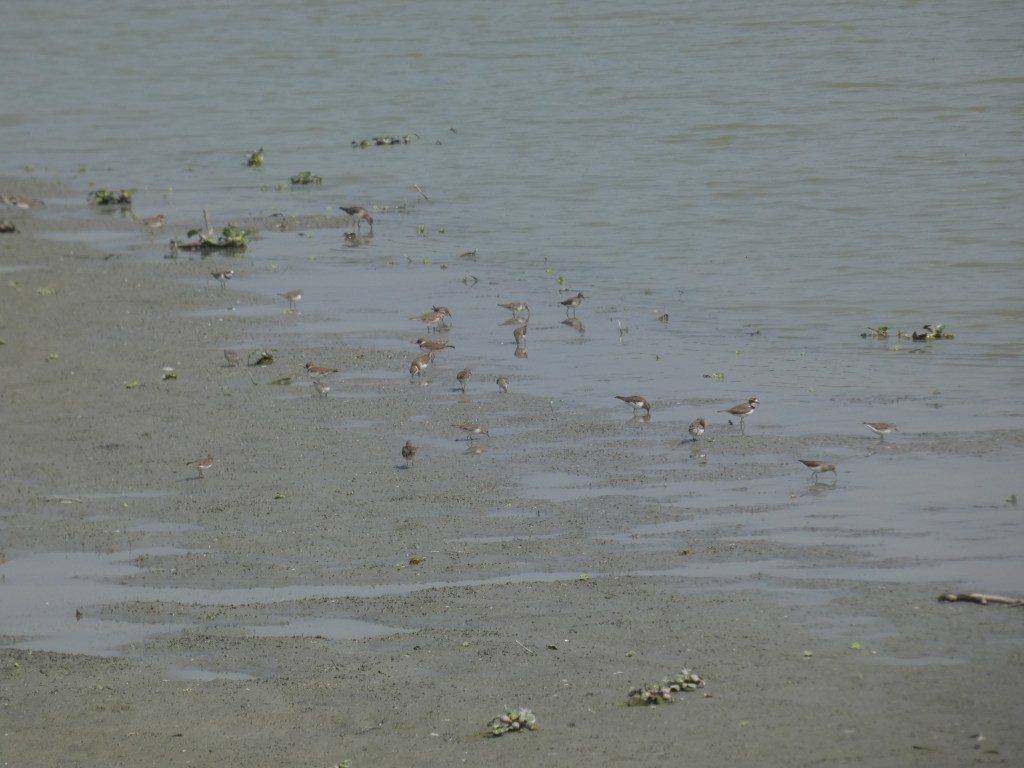
Towards the end of the loop we saw a large of small waders. At first glance I thought Wood Sandpipers along with Little Ringed Plovers, but Zaber was right when he said stints. Turns out it was at least 35 Temminck’s Stints along with a decent number of Little Ringed Plovers.
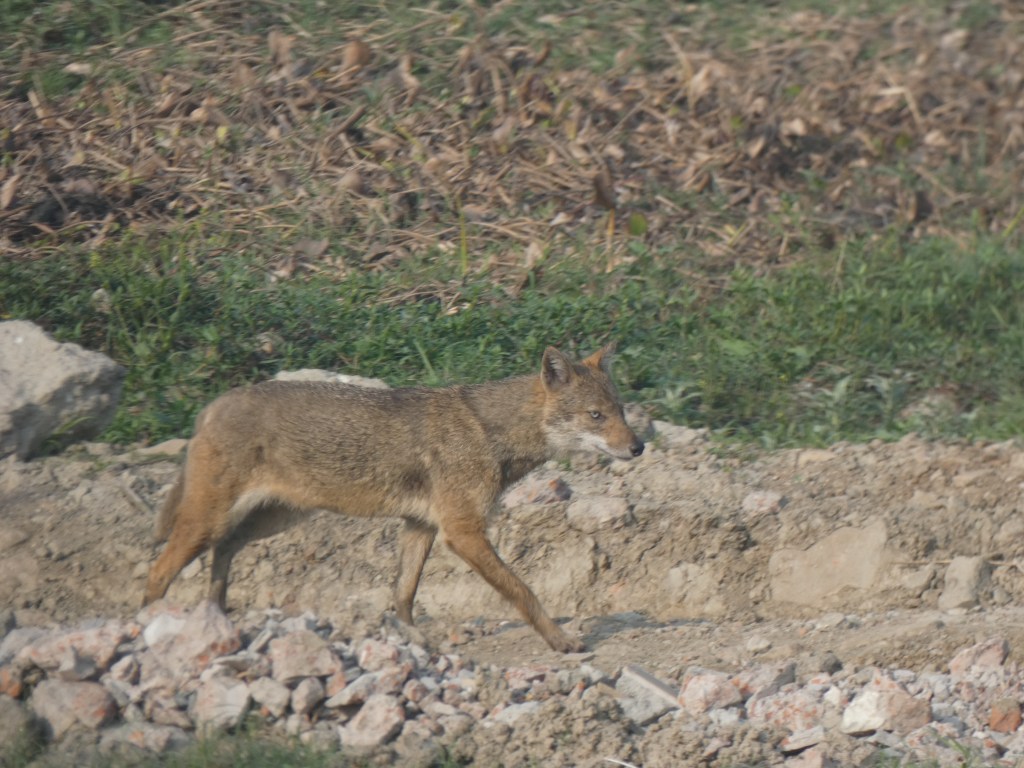
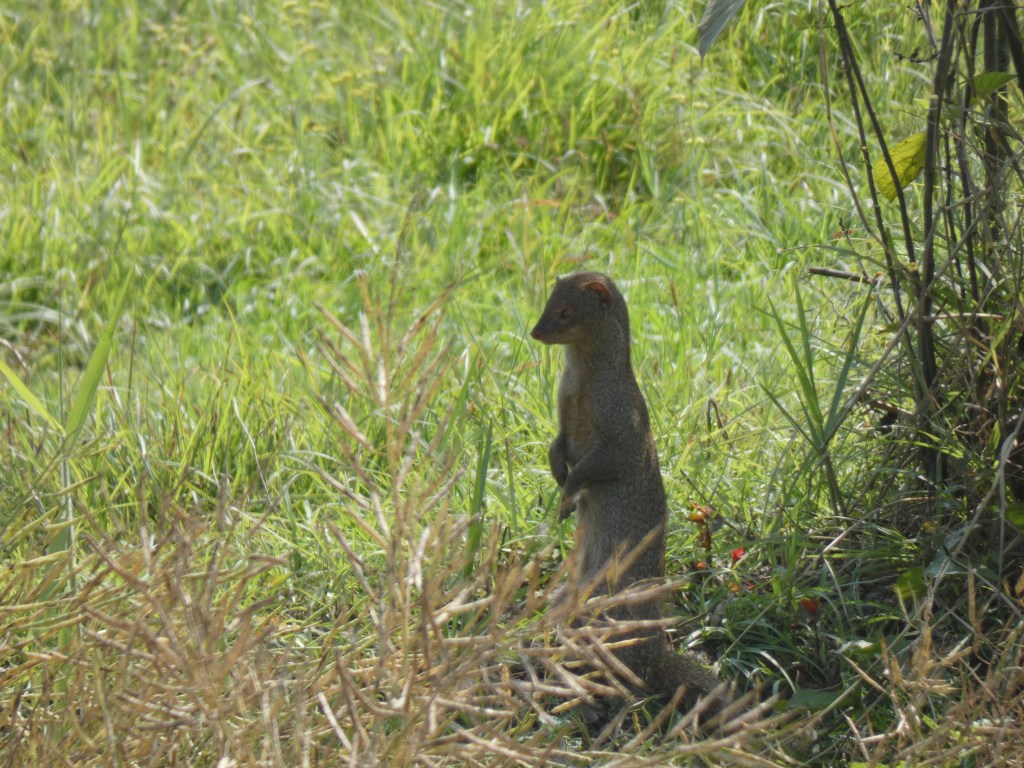
We had a fun non bird ending when I noticed a Small Indian Mongoose (quite common here) in an unusual pose. It was standing on its hind legs which reminded us of a Meerkat. 😉
We saw 56 species with one new 5MR bird: Striated Babbler. Babbler is also obviously new for my list for this hotspot (#111). Here’s the checklist.
All in all a fun day out, despite no “exciting” birds for any of us. It’s just always good to be out enjoying God’s creation!!
This is the first post on my new blog. I’m just getting it going, so stay tuned for more. Please feel free to leave any comments, advice or questions you may have. Also please subscribe to this blog so you know when I post updates. 🙂
 BirdingBDandBeyond
Thanks for this running commentary of your visit!
LikeLiked by 1 person
Great blog Seth. Found it from Bird Forum. Looking forward to seeing what you spot in Bangladesh.
LikeLiked by 1 person
Thanks for reading!
LikeLike