Nic and I finally got the time to go out to Jahangirnagar University (JU) this weekend. JU is a beautiful campus and well known birding hotspot just outside Dhaka. During the winter there are many migrants with the highest numbers being several thousand Lesser Whistling Ducks (most common duck in Bangladesh). Most of the migrants have already left by the end of February, so we were a little late, but still expected fun birding.
We were joined by my young birding friend Elias Thomas, and were planning on meeting up with Auritro Sattar, a young local birder who attends JU, once we got there. We pulled in at 7:30 and had birds as soon as we got out of the car. A few Yellow-footed Green-pigeons perching in a dead tree were fun again and we had nice views of a Black-rumped Flameback checking out a hole in a tree. Of course there were also the obligatory mynas, and loads of noisy Jungle Babblers.
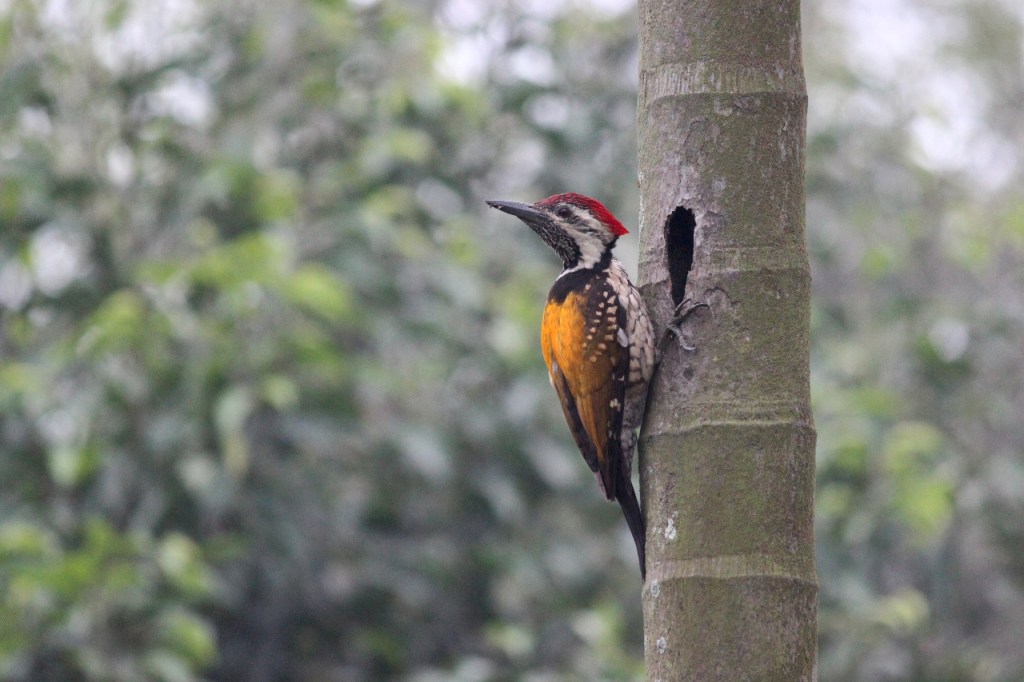
©Elias Thomas
*many of these photos are not my own as my camera is currently needing repairs. If they aren’t mine then the caption will make that clear.
We started heading toward the botanical garden area which is usually good for birding. Along the way we heard a call we recognized but couldn’t place, so we went to investigate. We finally traced it to its source, three Stork-billed Kingfishers in a large tree calling to each other. They were also my first year bird of the day. (#180) Here’s a recording of Stork-billed Kingfishers from Xeno-canto.
Also right around there we noticed a nice little grove of trees that was fenced off. We checked the sign and it said it was the “Butterfly Garden”. From the outside we saw a fun Bronzed Drongo, also a year bird.
As we walked the main road we got nice close up views of Rose-ringed Parakeets and a Lineated Barbet right together, though no photos since the lighting was bad. Then we turned off onto the path that leads to the gymnasium since that area is always good birding. We immediately had our first water birds: Bronze-winged Jacanas, White-breasted Waterhens, Lesser Whistling Ducks, and an Asian Openbill.
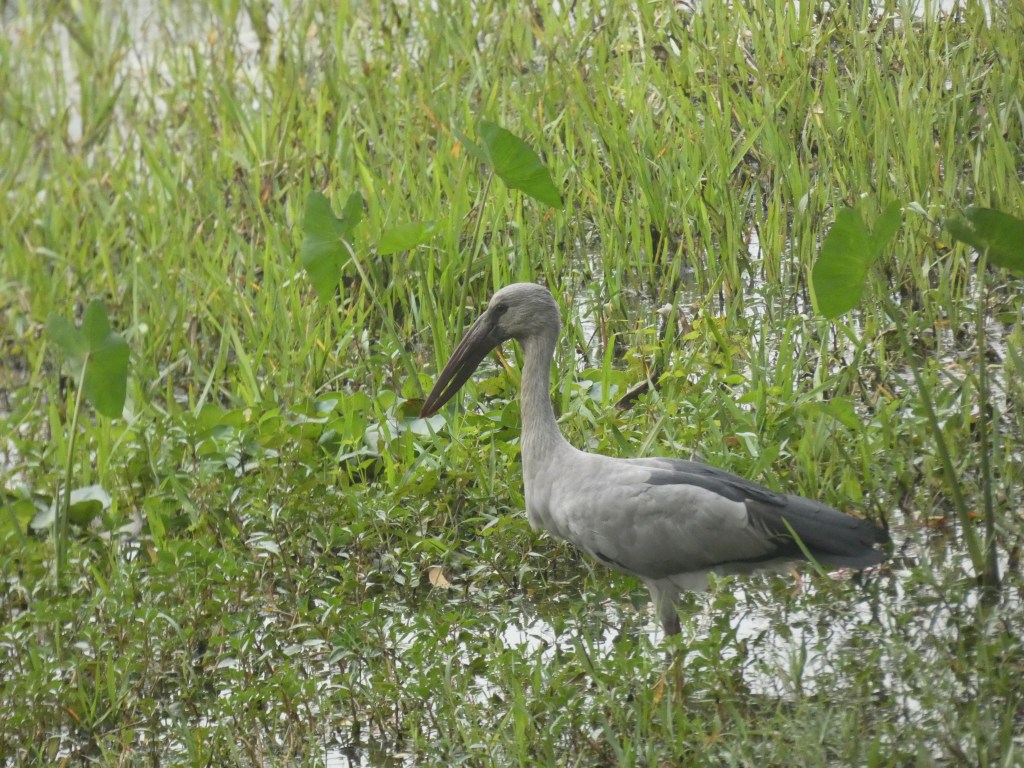
©Niccolas Miller
At this point Auritro caught up with us and we finished the necessary formalities of meeting, then proceeded with the birding. He took us up to where he knew Little Grebes tend to be as Elias hadn’t seen them yet this year, and wanted better photos as well. We had three grebes right where he thought they’d be as well as multiple Openbills along the side of the lake. Also in some brush we had a Zitting Cisticola and two Grey-breasted Prinias (year bird).
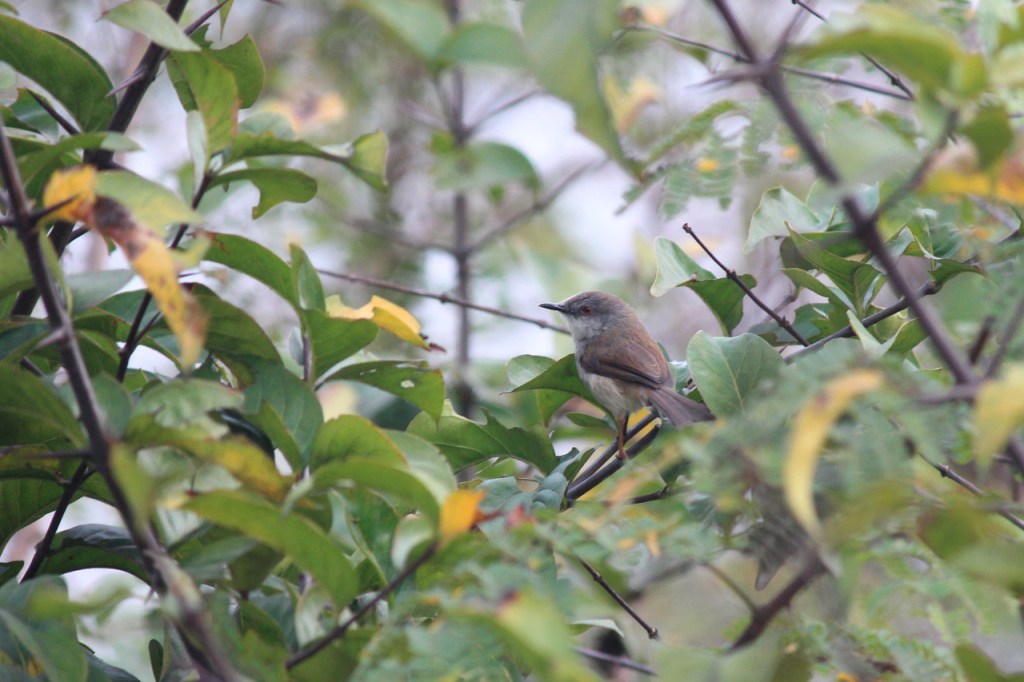
©Elias Thomas
As we retraced our steps on the path back to the main road we saw a raptor hop in the tree just in front of us. It turned out to be an Oriental Honey Buzzard.
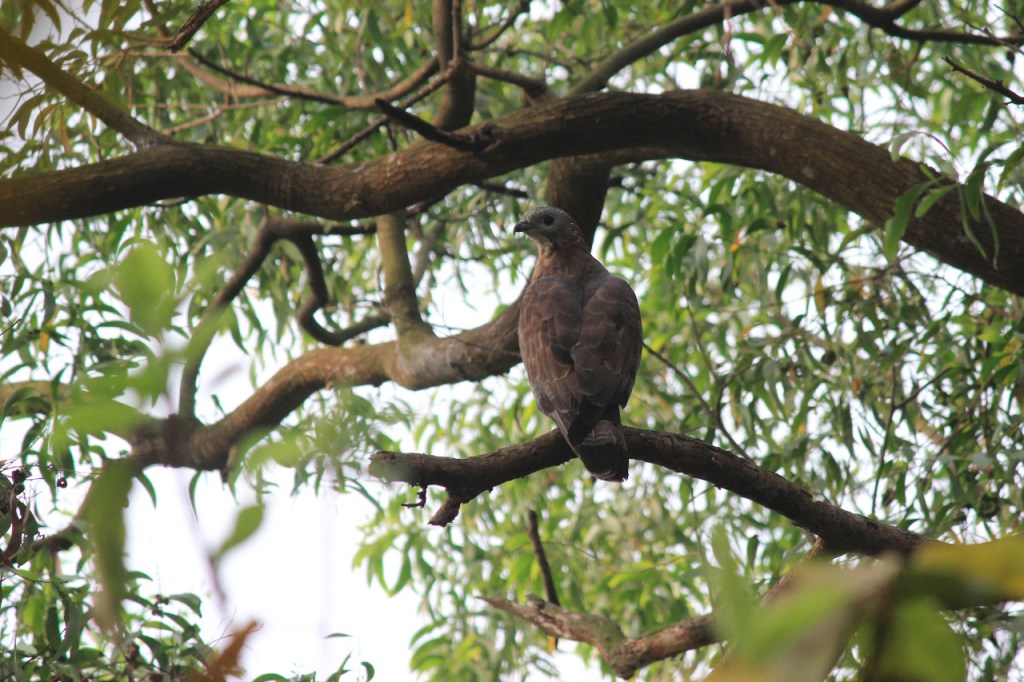
©Elias Thomas
Next we checked another small pond and had a nice flock of about 250 Lesser Whistling Ducks. Way down from earlier in the winter, but still more than in the summer. Also had a small flock of Cattle Egrets and a number of Little Cormorants. We also picked up Eurasian Moorhen near there.
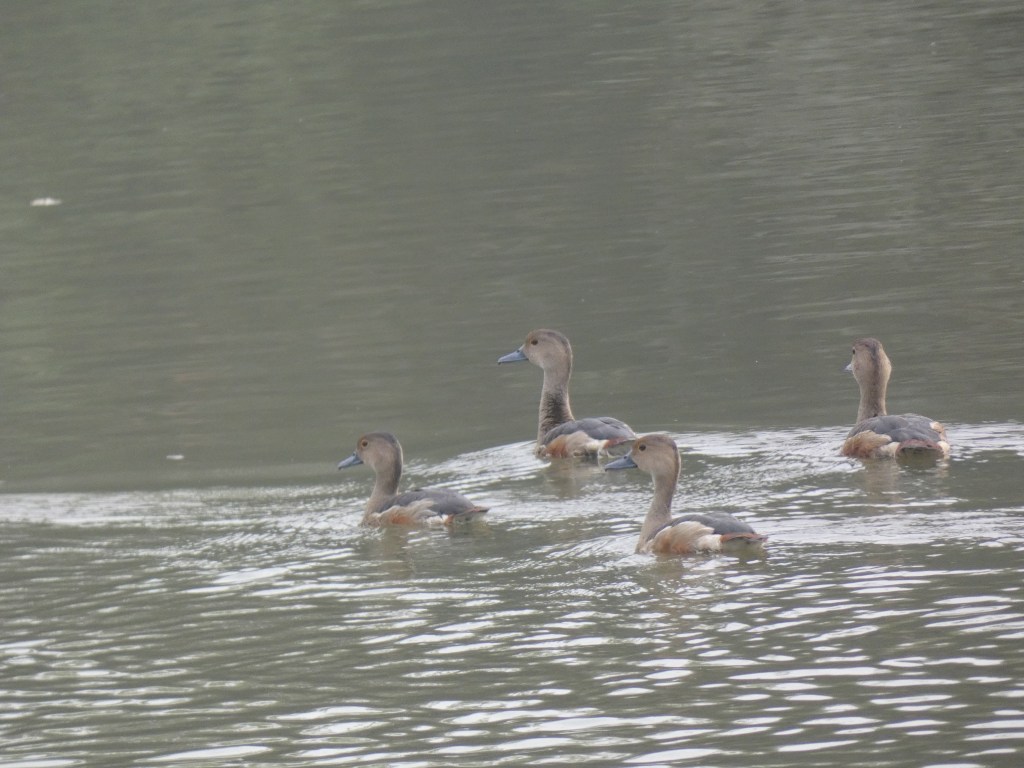
©Niccolas Miller
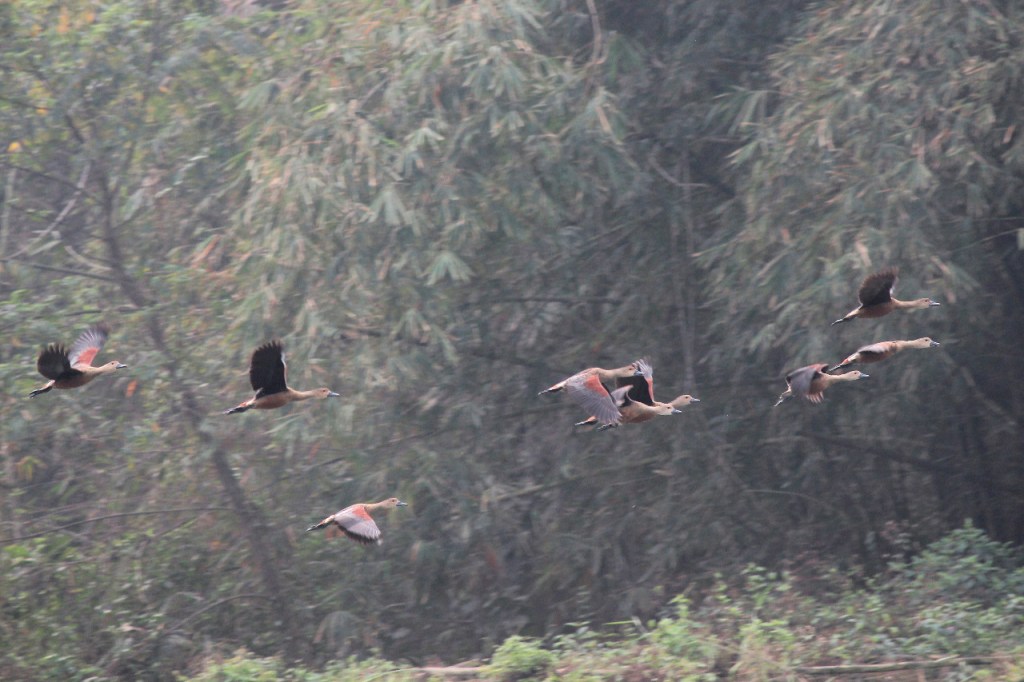
©Elias Thomas
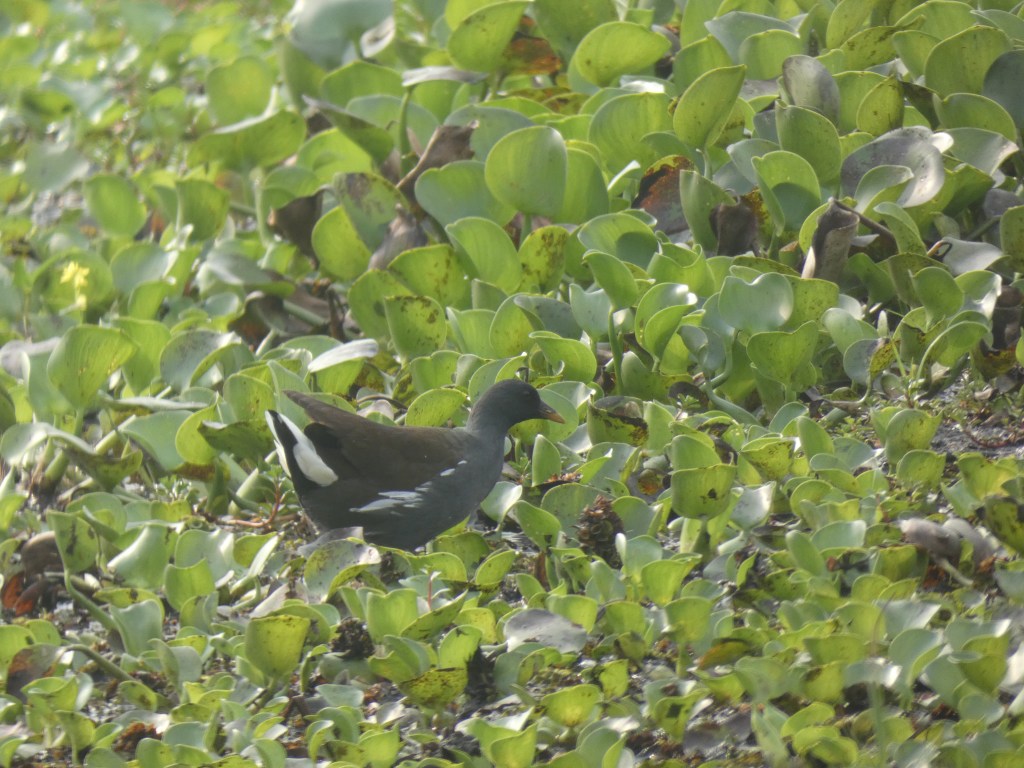
©Niccolas Miller
When Auritro mentioned the possibility of Crested Serpent Eagle in a patch of trees we jumped at the chance! I had just seen them for the first time in Srimangal (eastern Bangladesh) last month, but hadn’t had good photo opportunities and would love to see one around Dhaka. I knew they had been seen here fairly regularly over the last few months, but I didn’t know where. Sure enough, we got it almost as soon as we entered the woodland. Shikra and Common Hawk Cuckoos were also fun to see perched in there.
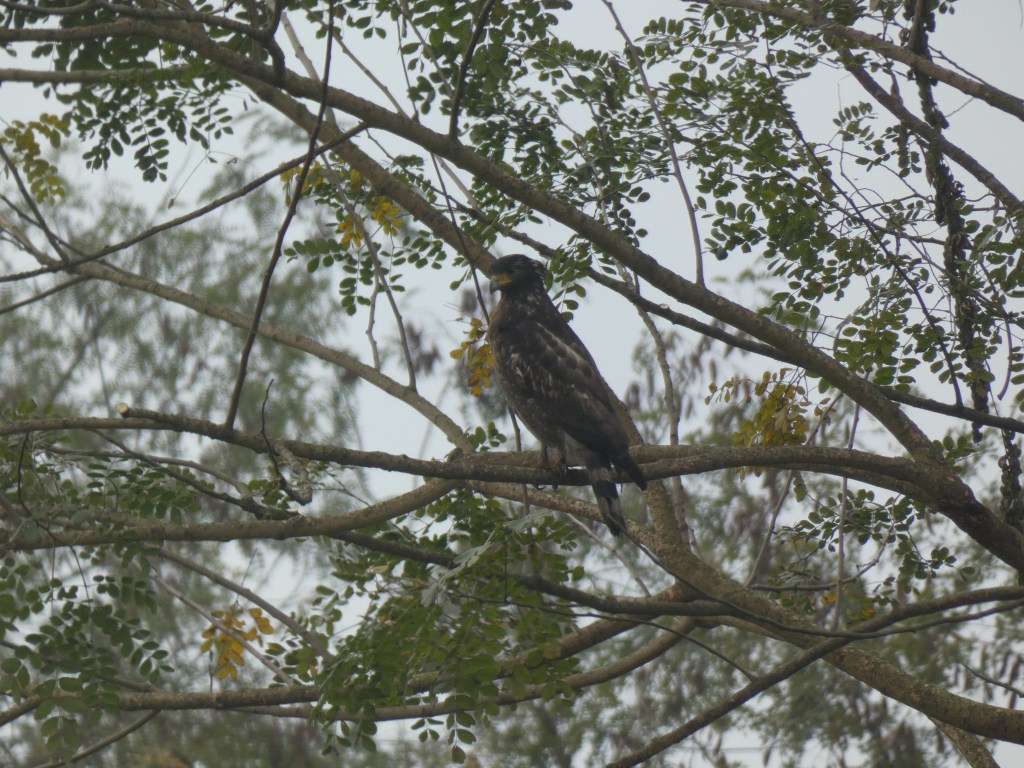
(my photo)
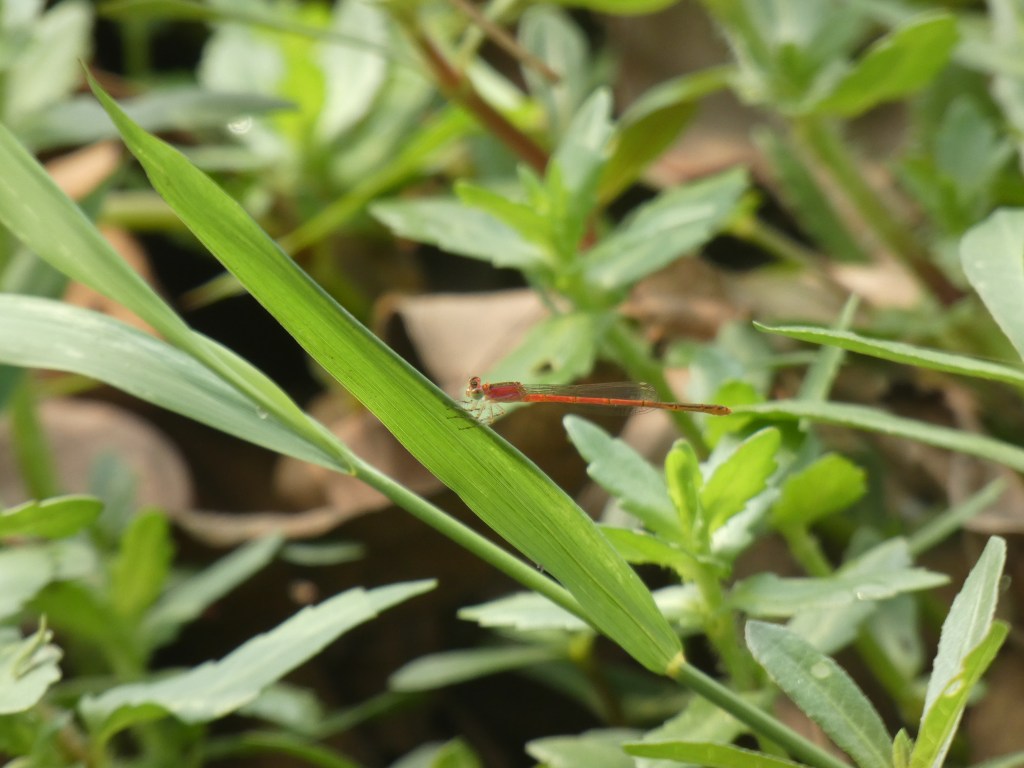
We spent around 20 minutes sitting there watching the Serpent Eagle hoping it would do something interesting, but it just felt like sitting around. I found the damselflies in the area interesting though.
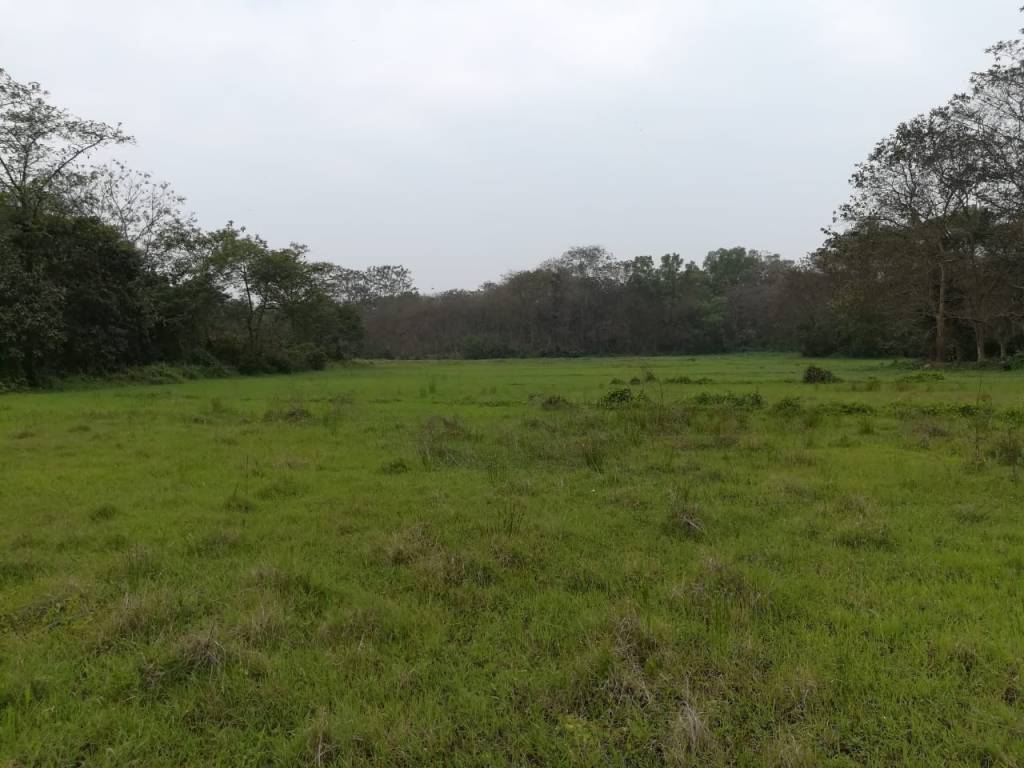


As we slowly worked our way back in the general direction of the main gate we picked up a cool Common Myna that had extra white on the wing. Not sure if this should be called partial leucism or not?
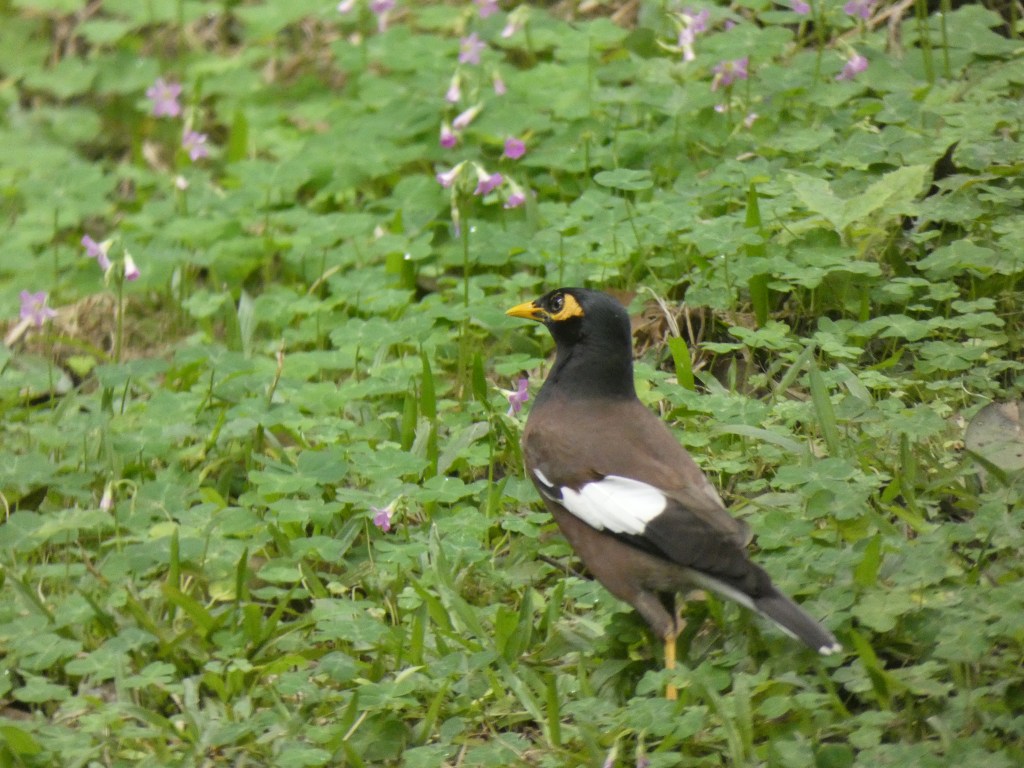
©Niccolas Miller
Another bird Auritro mentioned as a possibily was Collared Scops Owl. They’re quite common in Bangladesh and I’ve heard them before, but they’re hard to see and I still hadn’t caught up with one. So we decided to look for some in their favorite bamboo habitat. We spent a decent amount of time slowly scanning the bamboo, when I happened to look at the top of another tree and saw a big brown shape. I immediately thought Brown Fish Owl! Then second guessed myself thinking maybe it’s just a big bee hive. So I took a look through my binos, and sure enough it was a fish owl with it’s back turned! They’re fairly common in Bangladesh, but like most owls can take some work to find.
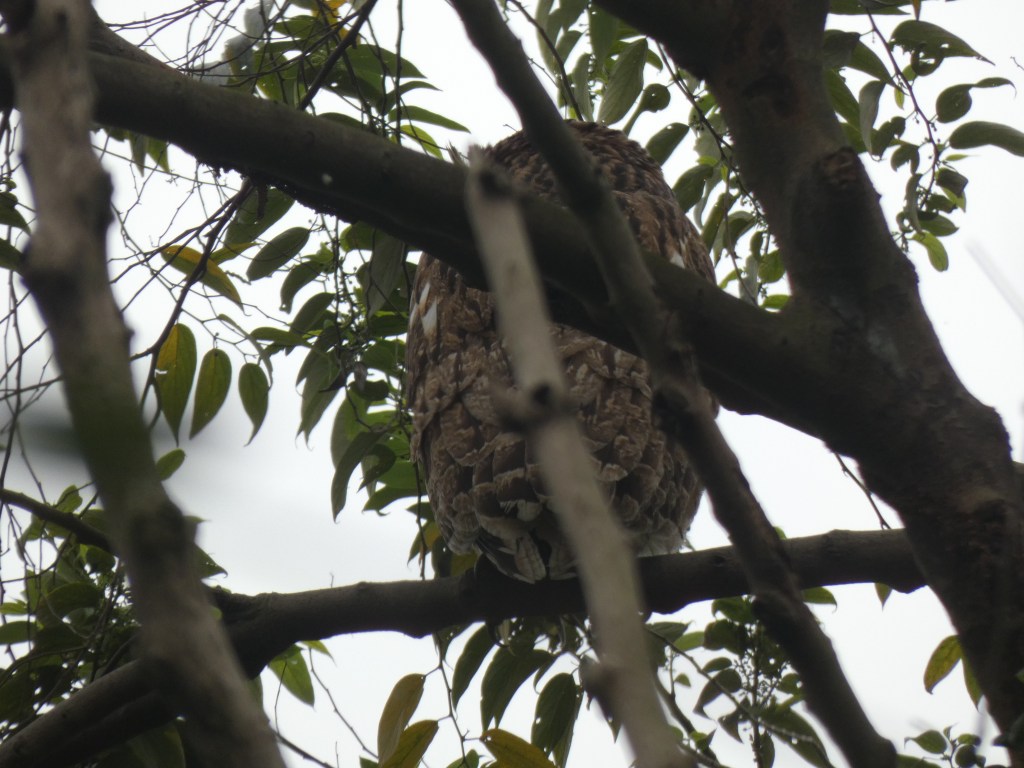
©Niccolas Miller
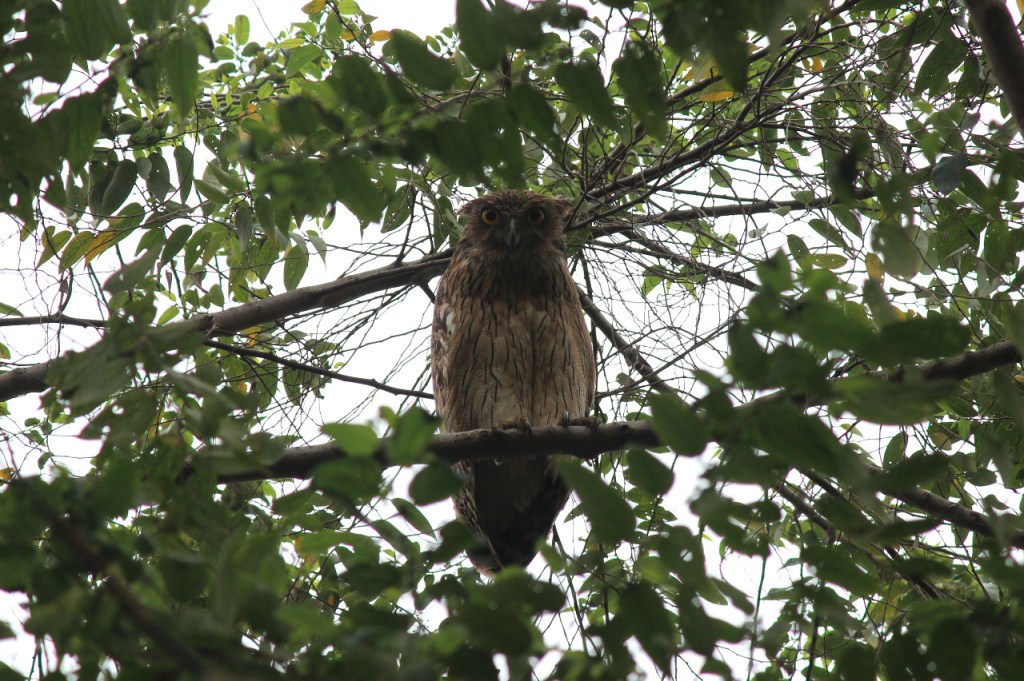
©Elias Thomas
We birded for another hour or so, but without finding much of interest except a Plaintive Cuckoo that was a year bird.
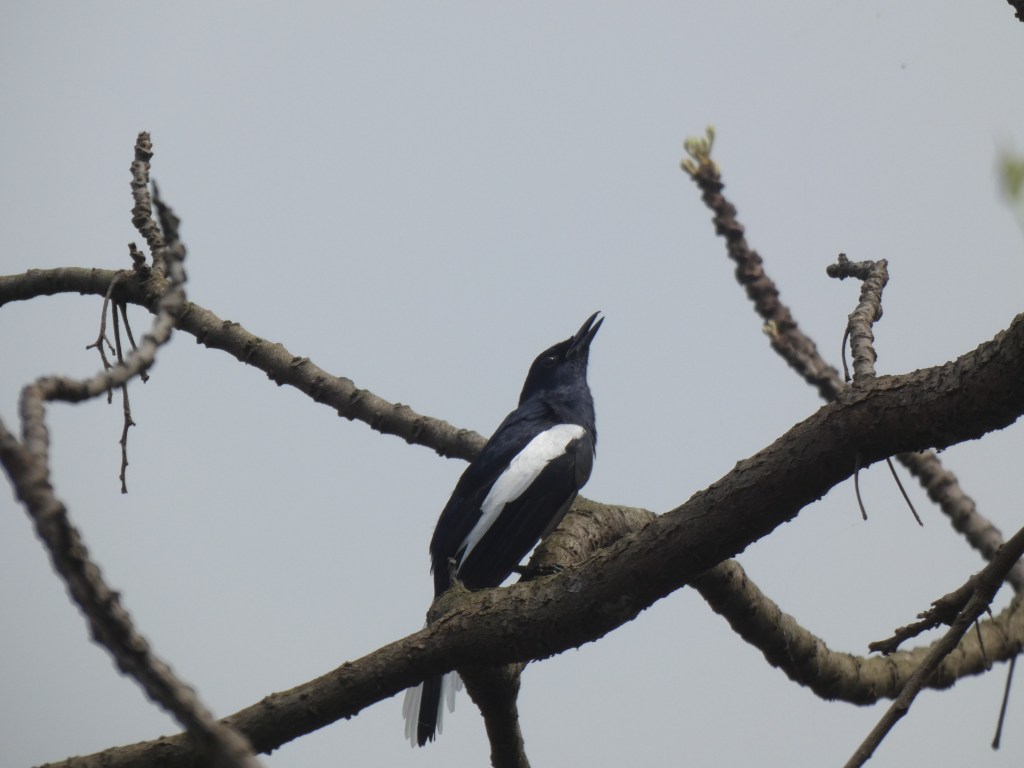
©Niccolas Miller
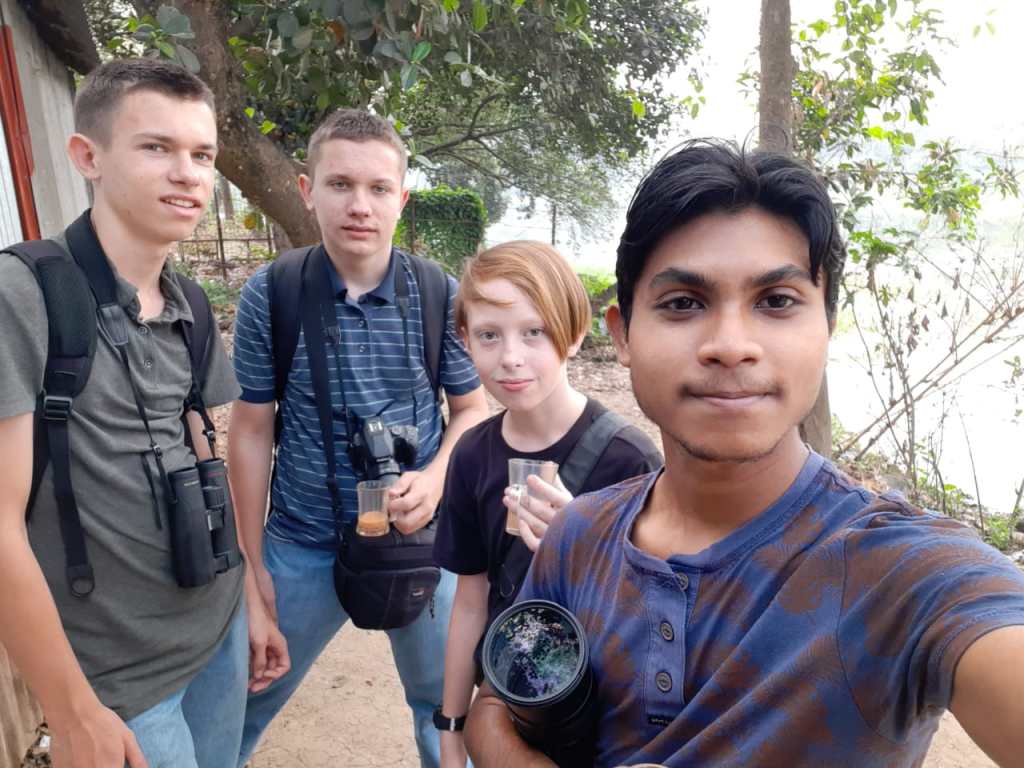
From L to R: me, Nic, Elias, and Auritro
All in all quite a good day out despite many winter migrants being gone already. 55 species in 4 hours with 8 year birds (up to 187) and 1 lifer (#591).
eBird checklist: https://ebird.org/checklist/S65478981
If you enjoyed this post, please subscribe for more. As always, feel free to comment!
 BirdingBDandBeyond
Amazing Clicks Seth! You have taken your hobby to a great level, keep it up! Looking forward for more!
LikeLiked by 1 person
Seeing the unseen life in my beloved campus after loooong 5 years is quite mesmerizing! Thanks a lot Seth!
LikeLiked by 1 person
There is an incredible amount of diversity there! Over 200 species of birds have been seen, plus many mammals, reptiles, amphibians…
LikeLike
Great work, and a nice post!
LikeLiked by 1 person
Thanks!
LikeLike
You’re welcome!
LikeLike
Nice post, Seth! I’ve only heard a Brown Fish Owl once (in Shivapuri) and have never seen one.
Here’s a recent checklist from my local area: https://ebird.org/checklist/S65551602
I found three Kalij Pheasants, which was unexpected : )
LikeLiked by 1 person
Yeah, you just have to sort of luck into fish owls, here at least. I heard it’d been about 8 months since they were last seen, but then it was 4! A pair with two young.
Kalij pheasant are so cool! Hopefully coronavirus won’t prevent our having a chance at them in May! 🙂
LikeLike