
Last weekend Nic and I woke up at 4:40 am to get ready to bike out to Purbachal to try for the elusive Watercock! My friend Elias Thomas had been able to get the location from another birder and we were going to meet Elias about halfway to Purbachal and go bird together. The obvious goal was Watercock which is a rare breeder near Dhaka and uncommon in Bangladesh as a whole and it would be a lifer for Nic and me! We also hoped for one or two year birds with Red Avadavat and Indian Cuckoo both being possibilities.
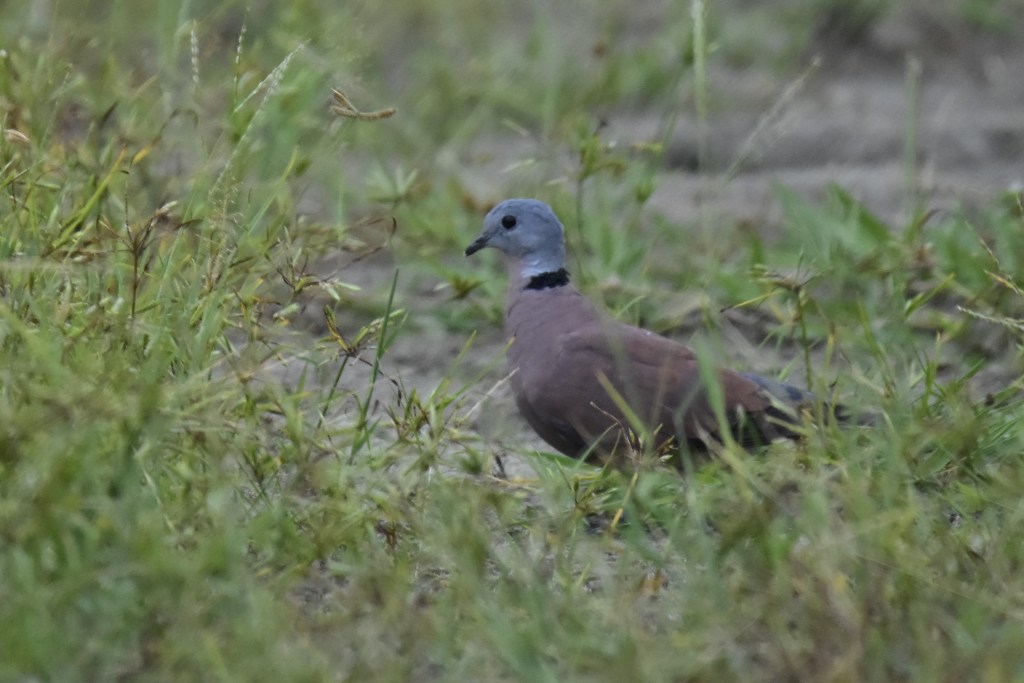
As soon as we reached the major Purbachal highway we started seeing some interesting birds as we biked along with a few highlights being two Black-winged Kites, Red-collared Doves, and several far off munias in flight. As we finally turned off the main road I caught a glimpse of several munias including a Tricolored in some tall grass beside the road so I quickly stopped and snapped a few photos which turned out to be my best photos of Tricolored yet, though not as good as others I would get later in the day. Finally off the main road we biked a little more slowly and kept an eye out for birds. Nothing too interesting along there, but we were clearly in decent habitat.
Finally after biking nearly 25 km total we reached the watercock spot and locked up our bikes. There were a number of weaver and munias in the low grass (rice) near where we parked our bikes and a Yellow Bittern flew in and immediately managed to disappear.
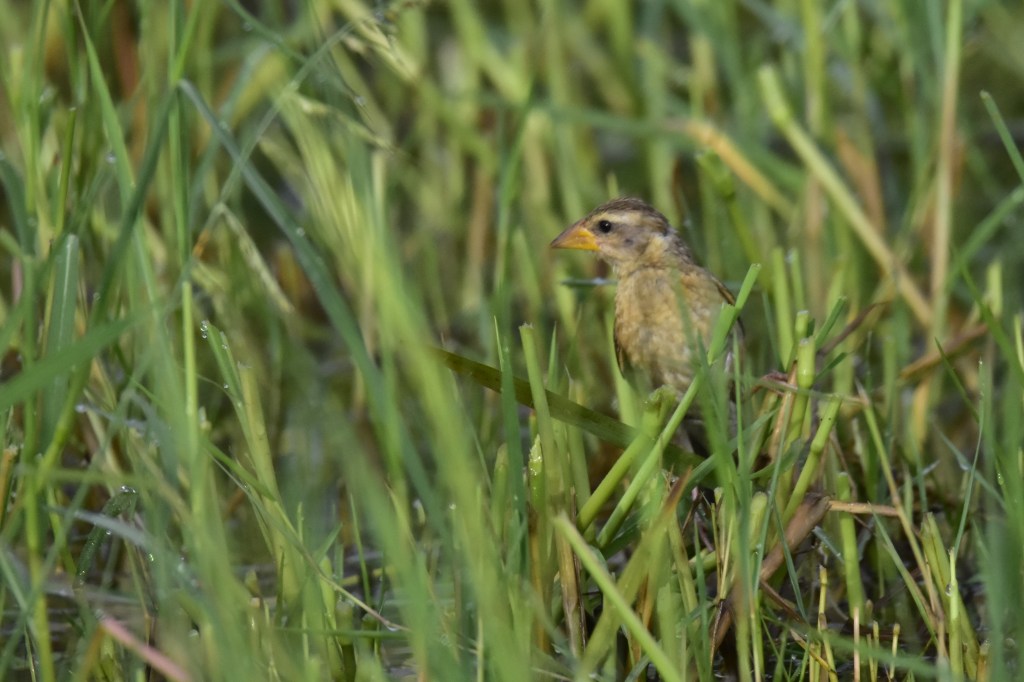
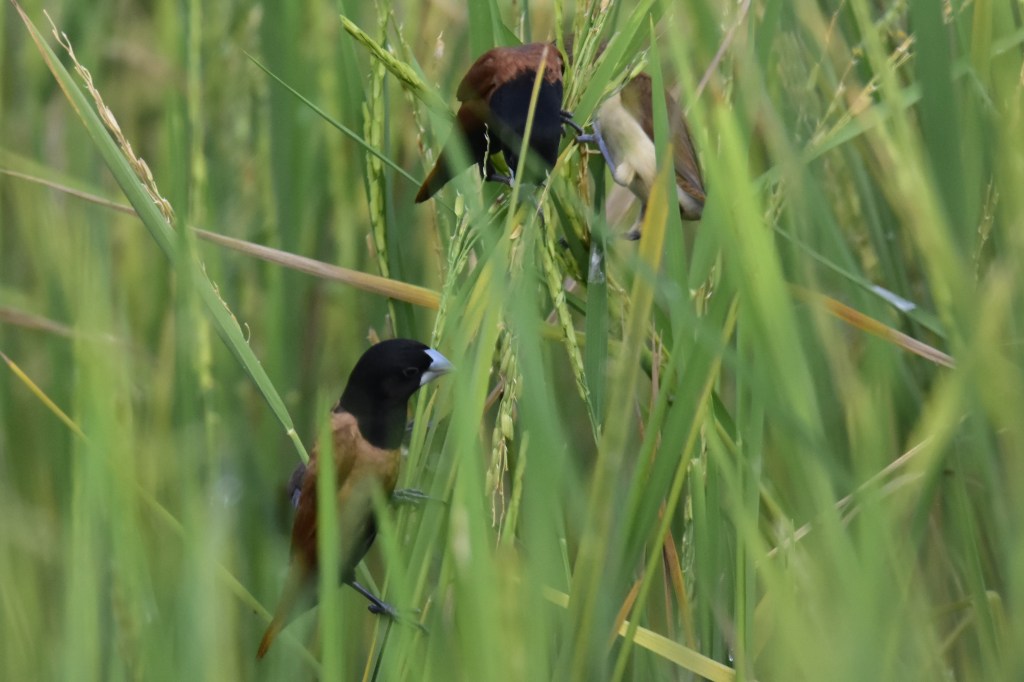
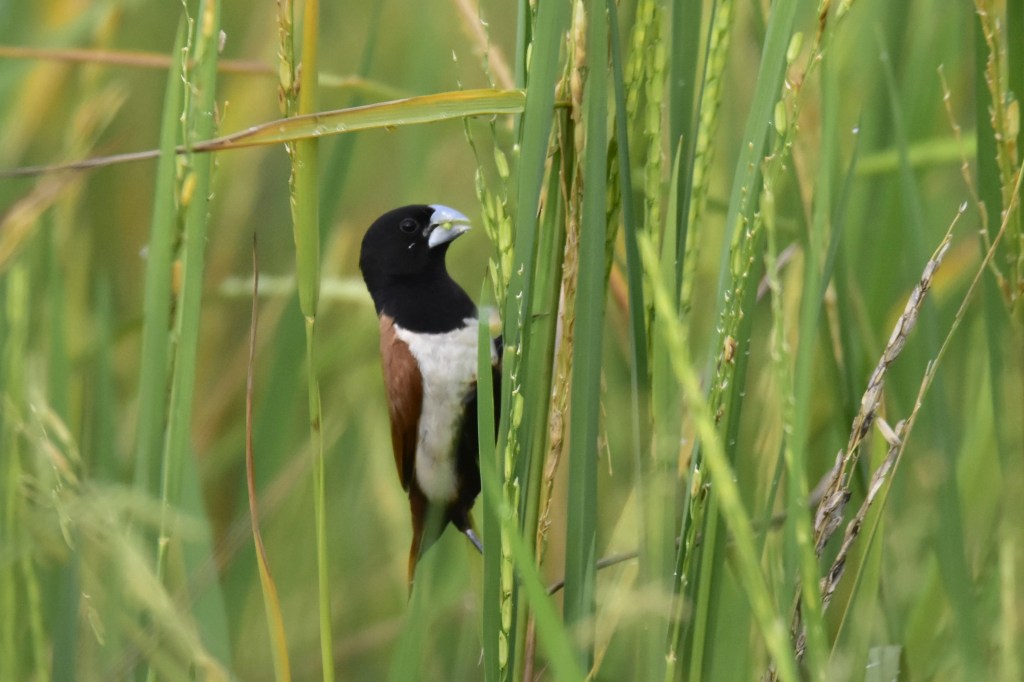
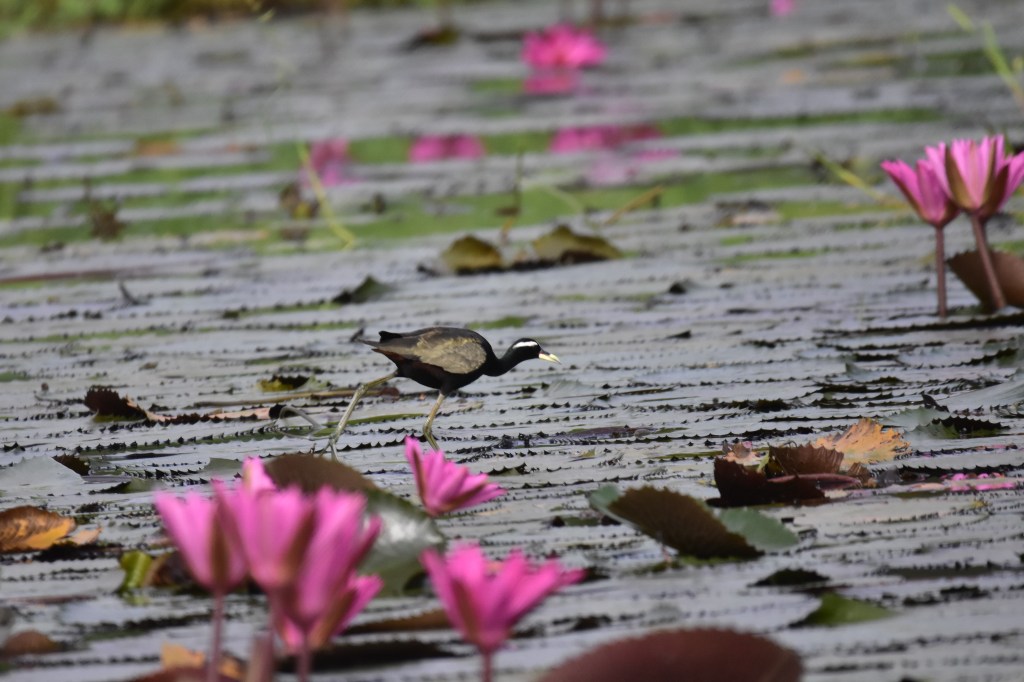
Right across from where we locked up was a large pond filled with water lilies which I immediately recognized from photos I’ve seen of watercock presumably from the same pond. The details Elias had gotten said the watercock were usually at this or another marshy area just down the road and often heard before being seen. We spent some time at both places listening and looking but no apparent luck. Suddenly our heart rates skyrocketed (at least mine did anyway!) when we saw some brownish waterbird fly at the end of the second marshy area and we quickly headed that direction. While we (im)patiently waited for whatever it was to fly again a Red-breasted Parakeet flew over, not a year bird but still fun to see. Then suddenly we saw two Greater Painted Snipe fly through! Year bird #209! We snapped a few bad in flight photos and watched where they went and decided to follow and see if we could get any better photos. We also realized that what we had seen fly in the marshy area must’ve been another painted snipe.
We tracked the snipe down and found where they had landed, but couldn’t get any good shots unfortunately.
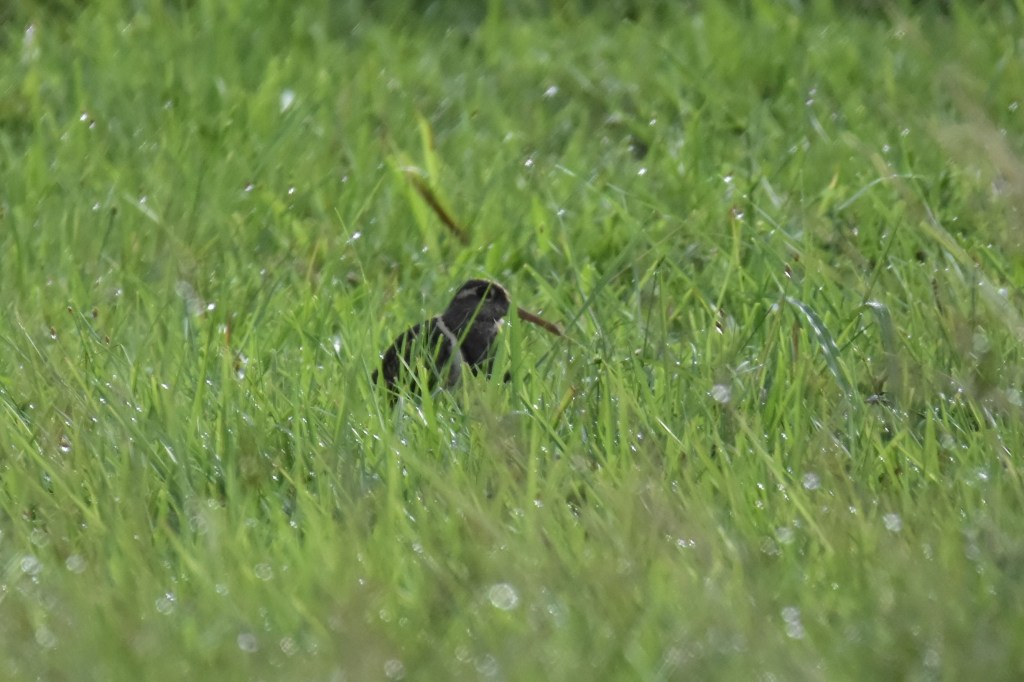
This is one of the few species where the female is much more colorful than the male
We came back and spent more time around the water lily pond, looking and listening for watercock while chowing down some snacks. We saw two photogenic Bronze-winged Jacanas as well as a White-breasted waterhen but no watercock…
Yellow bittern were also common in the area though no decent photos. Spent a bit of time trying to get photos of some more Chestnut Munias, but they managed to stay behind just enough grass that the photos didn’t turn out well.
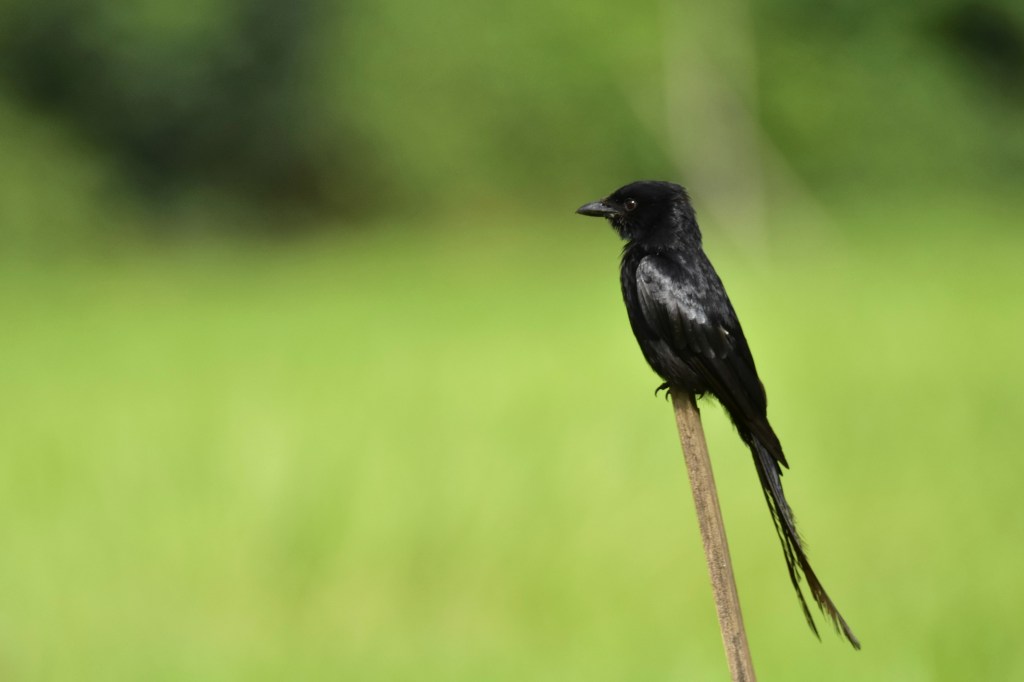
This Black Drongo was a little more obliging and posed nicely in bright sunlight with a great background. Image is a little soft though and not as tack sharp as I’d wish.
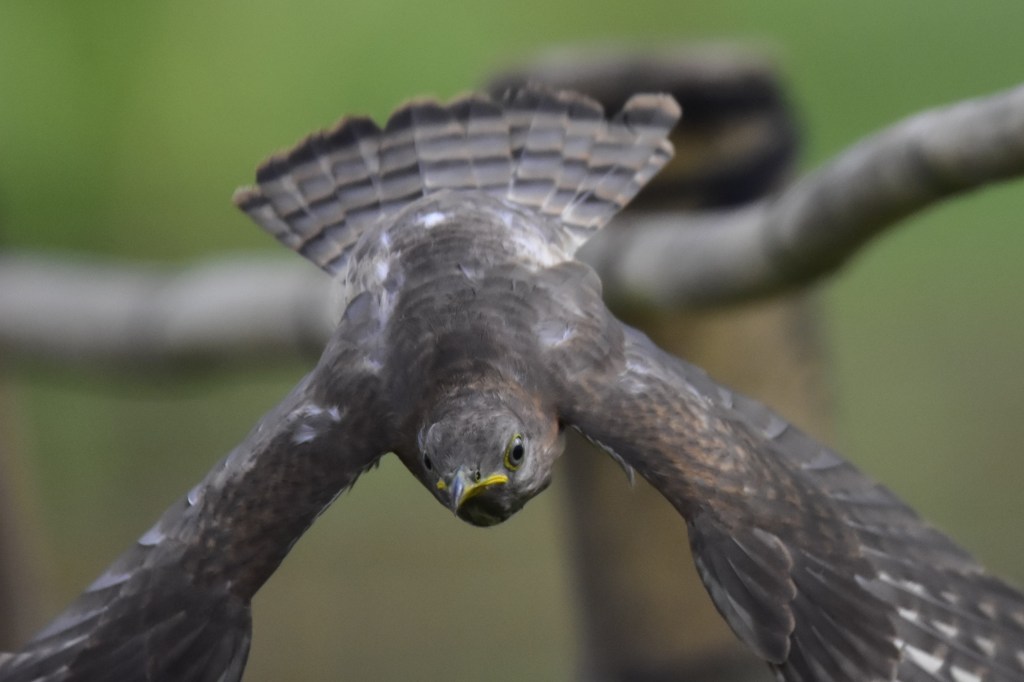
After about two hours of birding and as it was getting a little later in the morning we decided to move on to another good birding spot which although it didn’t have a chance at watercock did have a good chance for Red Avadavats which would be a year bird for me plus several other species that would be new for our day list which was already in the upper 40s! As we walked to our bikes we saw a young Common Hawk Cuckoo perching nicely in the open.
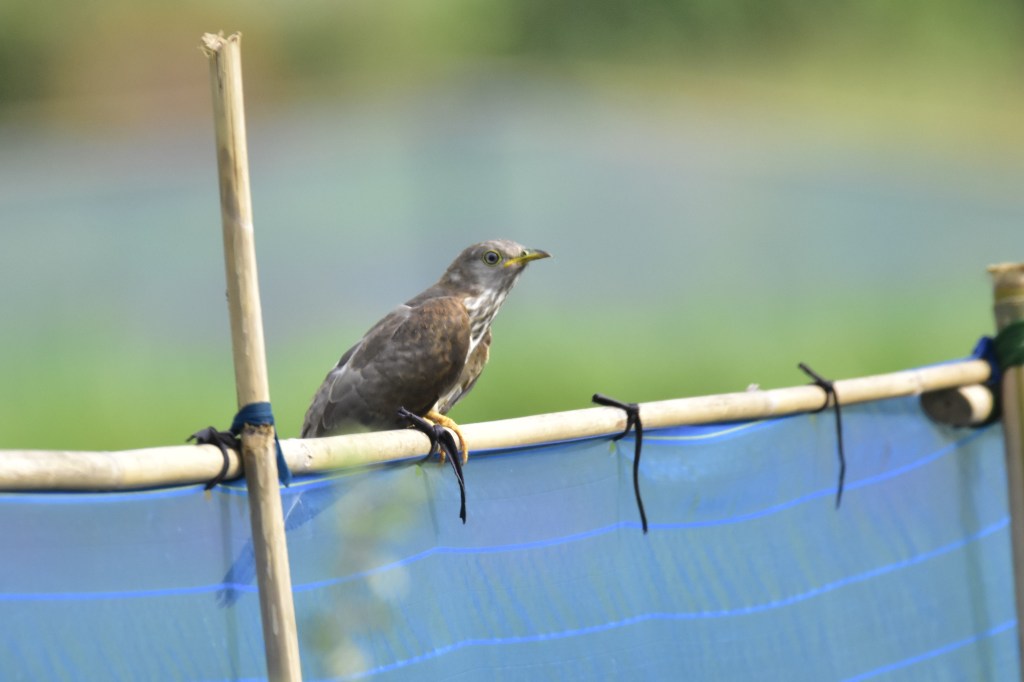
After we took a few photos it flew across to the other side of the road and allowed us to approach closer for more photos.
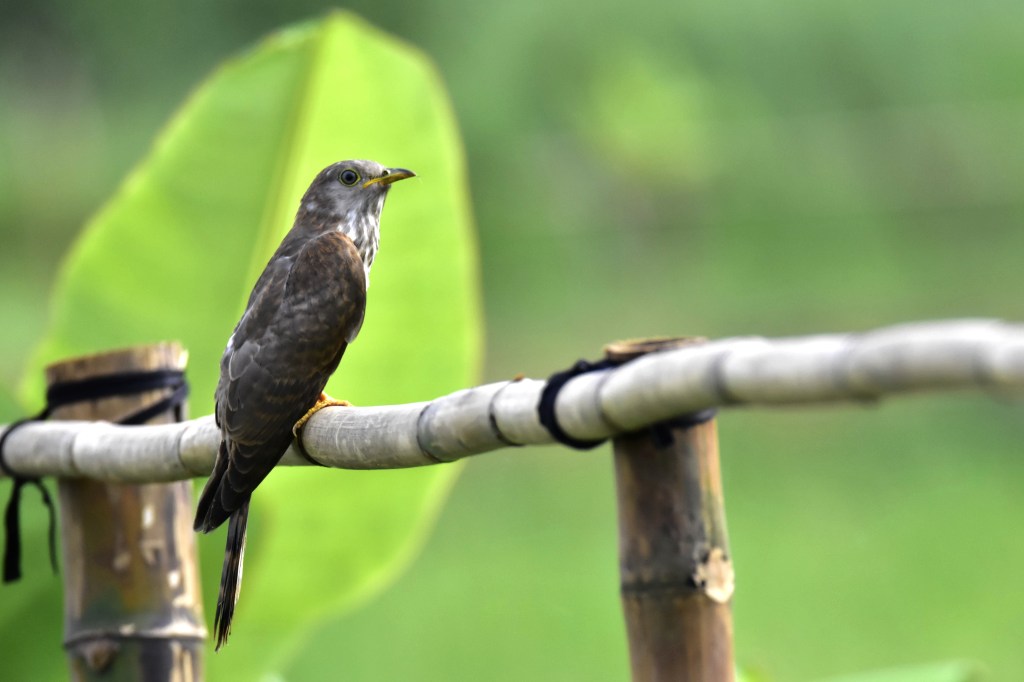
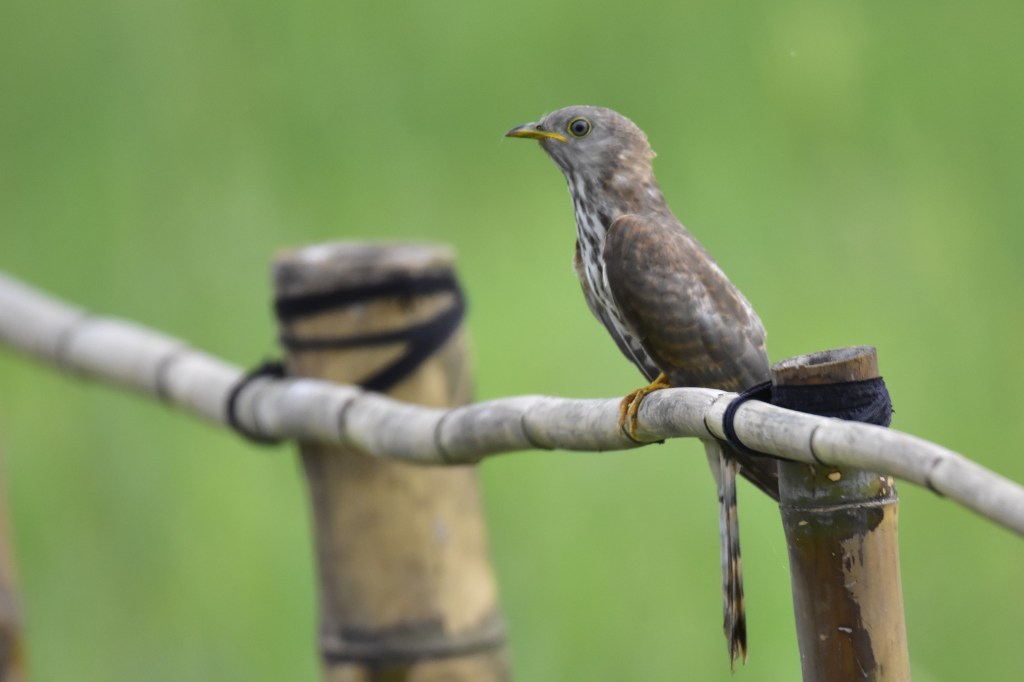
After a several minute photo shoot it got bored and dived down to the ground for some reason and I was just able to catch it in flight
We finally left here and biked a few kilometers to the other spot Elias has visited a number of times. After locking our bikes we reached the spot where they had entered previously and found it completely flooded, but feeling a little adventuresome and not wanting to stop birding for the day we decided to wade through the nearly waist deep water to the dry ground we could see 50-100 feet in.
Very few birds right at the beginning except some Spotted Doves and Zitting Cisticolas but we did see two Golden Jackals.
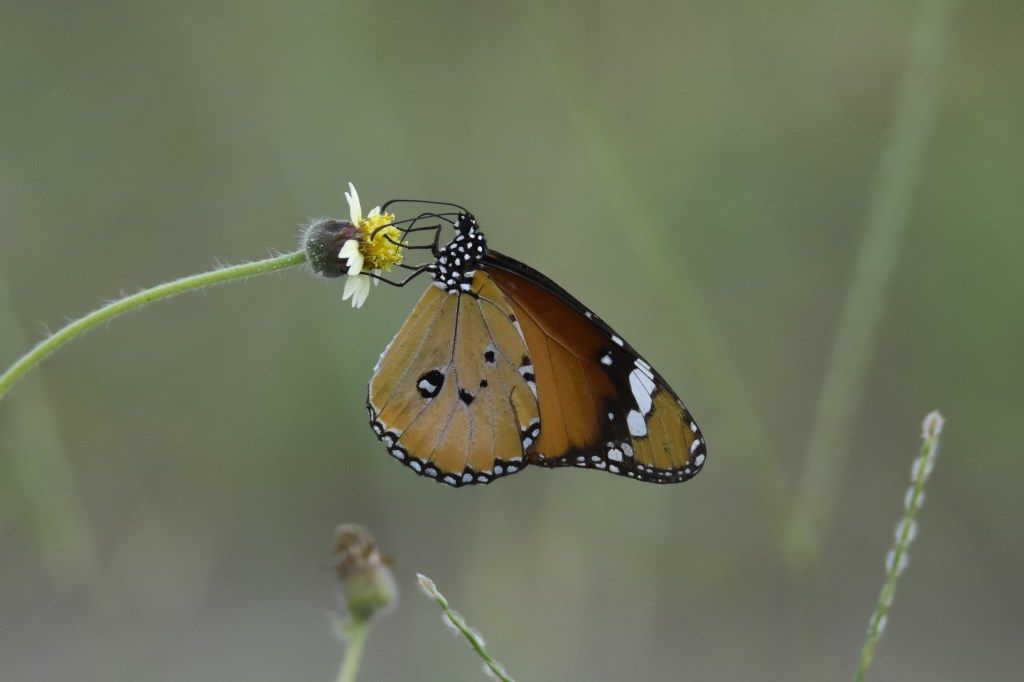
butterfly
As we went farther in we started seeing more and more doves including lots of Red-collared Doves. There were at least 80 doves total with just over half being Red-collared Doves. We heard then saw 2 Red-wattled Lapwings that were new for the day. There were also several Bengal bushlarks around and multiple munias that didn’t let us get close and more small birds flying and calling shrilly which we figured out were the avadavats, year bird #210.
We kept going farther in and discovered more marshy areas and suddenly flushed 3 Yellow Bitterns and a painted snipe all from basically the same small patch in front of us!
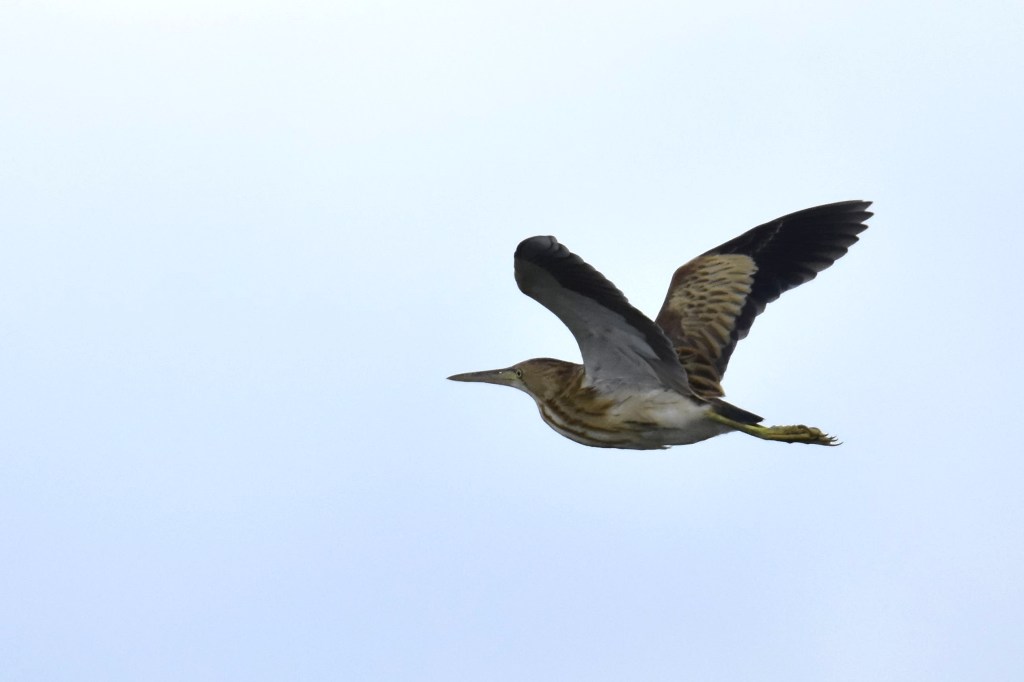
We wanted to go farther in, in another section of the swampy area, but were soon stopped by very thick grass. One highlight from the swampy areas were a new dragonfly species for me: Grizzled Pintail (Acisoma panorpoides)!
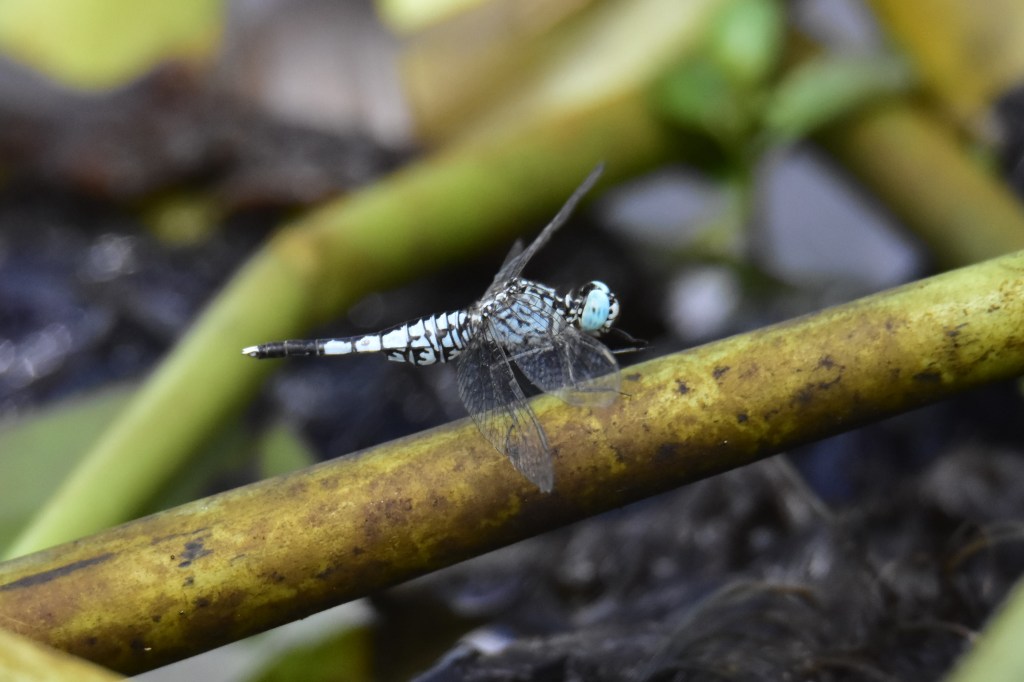
We kept trying different areas including wading through grassy marshy area for about ten minutes trying to get to a large pipe from which we could’ve seen a larger more open water area, but never could reach that pipe…
As we came out of the swampy areas we saw a raptor flying off with something in its talons. Snapped a few photos and realized it was a Red-necked Falcon! From photos I think the kill was maybe a swift or swallow, but waiting to hear from an expert on that. There were many many asian palm swifts around and a few barn swallows so either is possible, though judging from structure I’m kinda leaning toward the swallow theory.

This area has some really interesting relatively undisturbed habitat with both dry and wet grasslands.
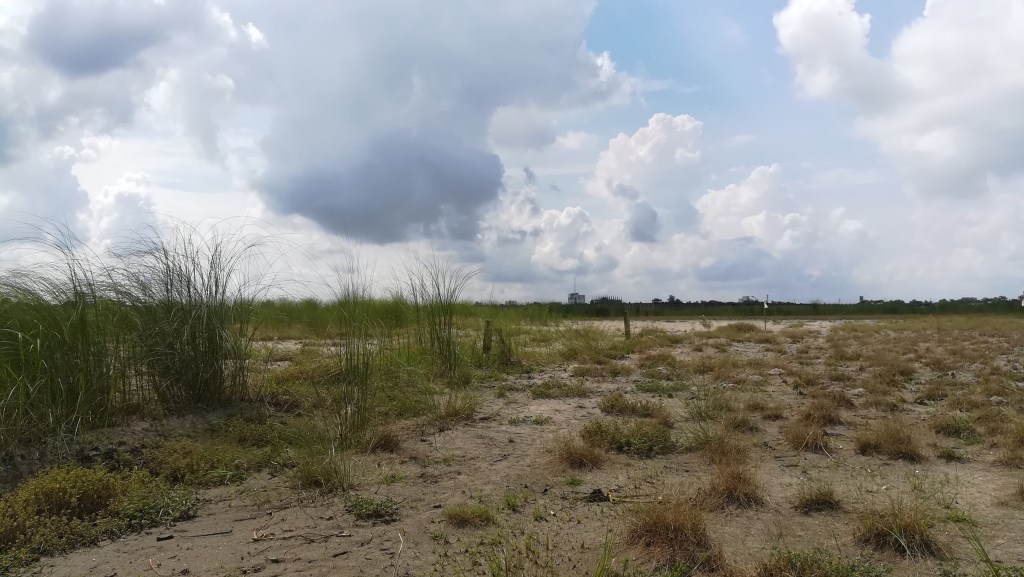
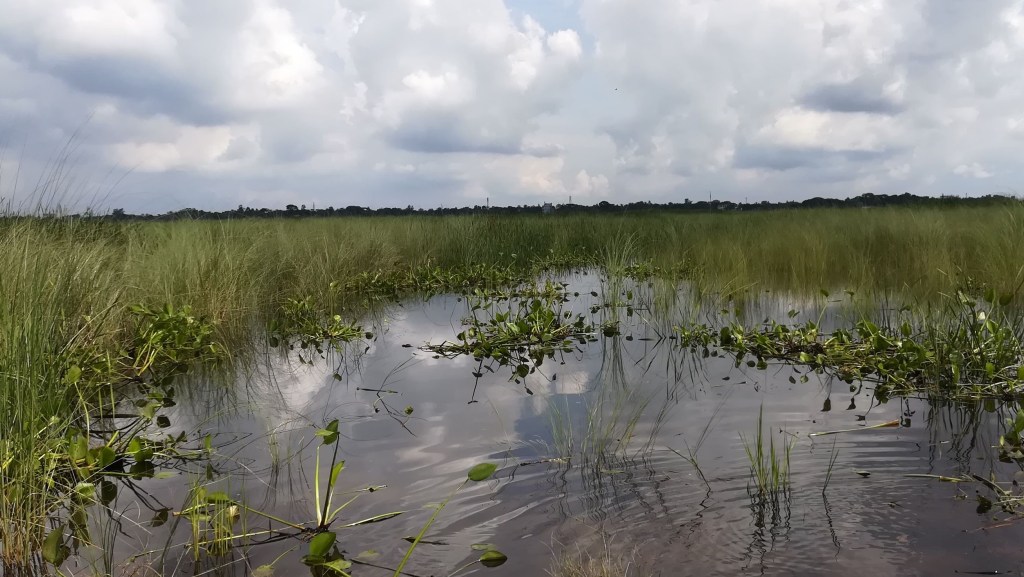
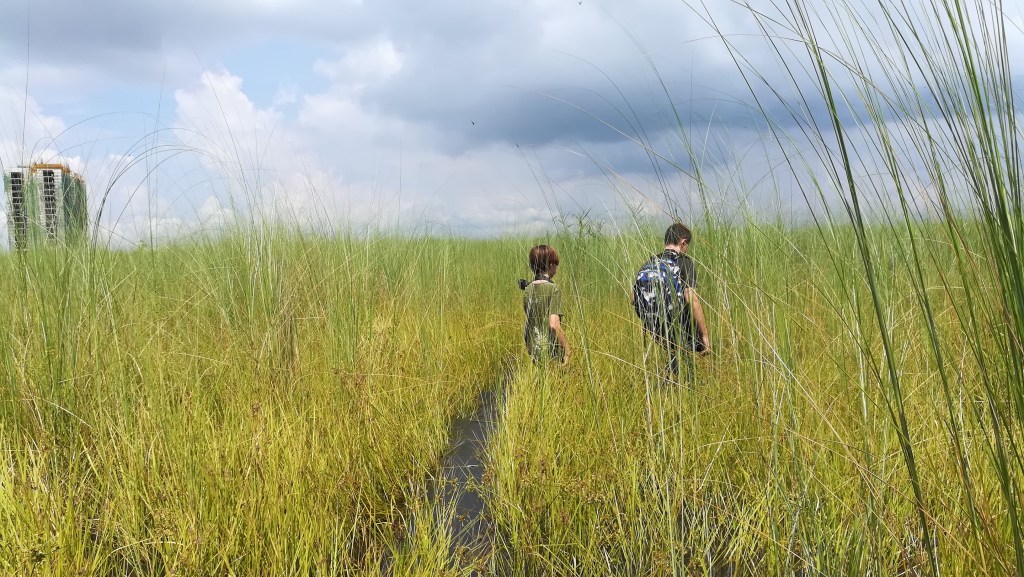
We eventually decided we needed to leave and I was actually kinda looking forward to wading out again through the cool water as a bit of respite from the almost unbearably bright sunshine!
eBird checklists: the watercock spot (eBird location is purposefully not the actual watercock spot but is a spot we birded a bit) and the swampy grassland.
Once I was finally home after biking a total of over 50 kilometers that morning in both bright sun and pouring rain I was really able to appreciate what an awesome day of birding it had been, despite missing my most hoped for target we had seen 58 species including two year birds taking my year list to 210 which is quite respectable for how limited traveling has been due to covid. Birding Purbachal was super fun and I hope to again in the next month or so since I still need that watercock!
If you enjoyed this post, please subscribe for more. As always, feel free to comment!
 BirdingBDandBeyond
Wonderful, exciting stuff.
LikeLiked by 1 person
Really an unexplored beauty. Lived so many years near by but have never been.
LikeLiked by 1 person
Your blog post gives a nice idea of this rather unknown area
LikeLiked by 1 person